Floating Desks: 11 Wall-Mounted Office Ideas
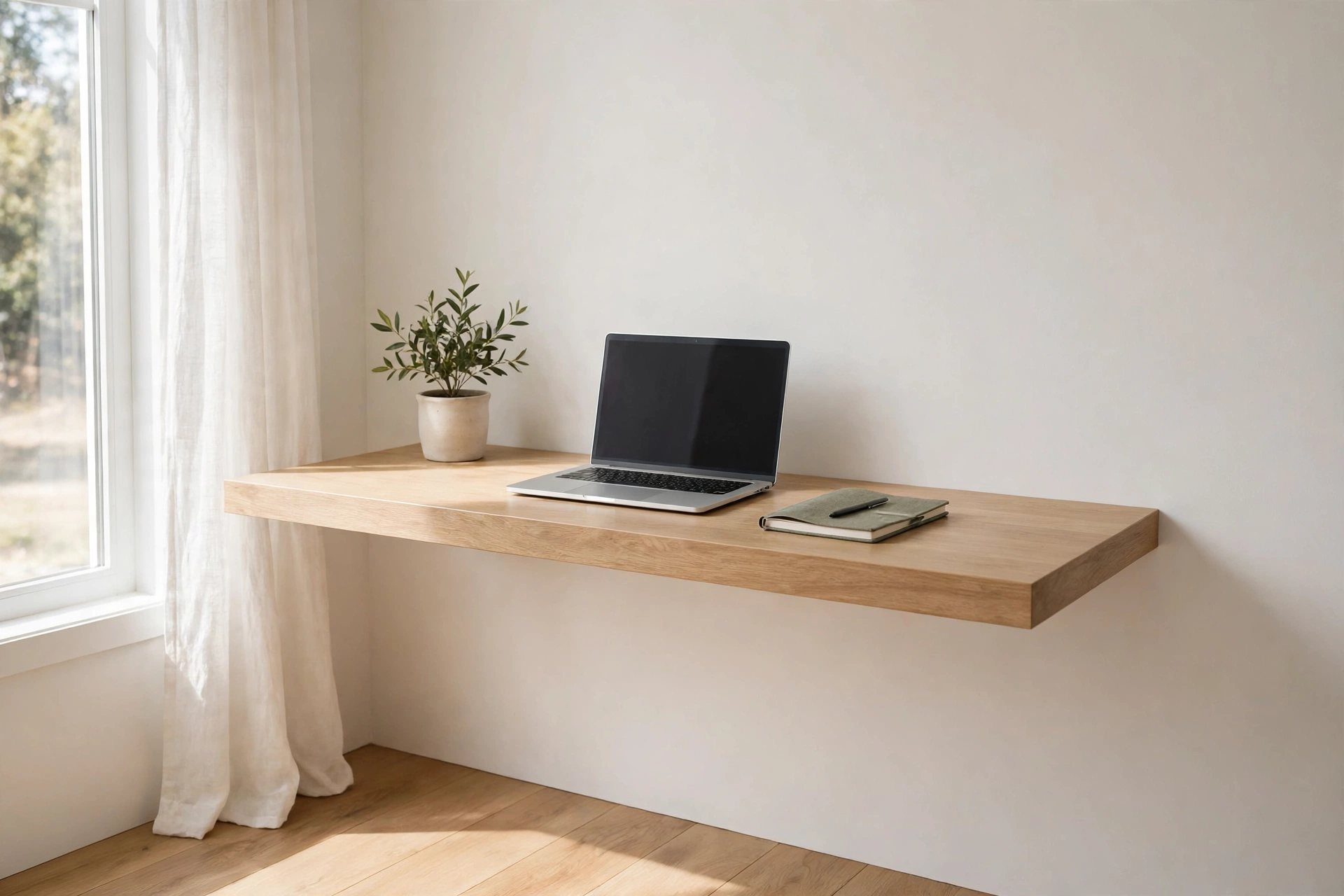
A floating desk has no legs. It bolts straight to the wall, the floor underneath stays clear, and a room that felt too small for a desk suddenly has one. Done right, it is the cheapest way to carve a real workspace out of a spare corner. Done wrong, it sags or pulls out of the wall.
This guide covers 11 wall-mounted office ideas that work in small rooms, in the order you should think about them: first the wall and the measurements, then the desk itself. Most cost less than a basic freestanding desk once the brackets are counted.
Before you buy anything: the order of work
Floating desks fail in a predictable order, so check things in this order too. First, find the studs — anchor into solid timber or masonry, not plasterboard alone, or the desk will droop under a laptop and a monitor. Second, set the height: about 73–76 cm (29–30 inches) for sitting work, measured to the top of the desk surface. Third, check the depth: 50–60 cm is enough for a laptop and a notebook, while a monitor on a stand wants the deeper end. Fourth, sit in your chair and check your knees clear the underside with the desk at that height. Only then pick the style.
1. The single-plank classic
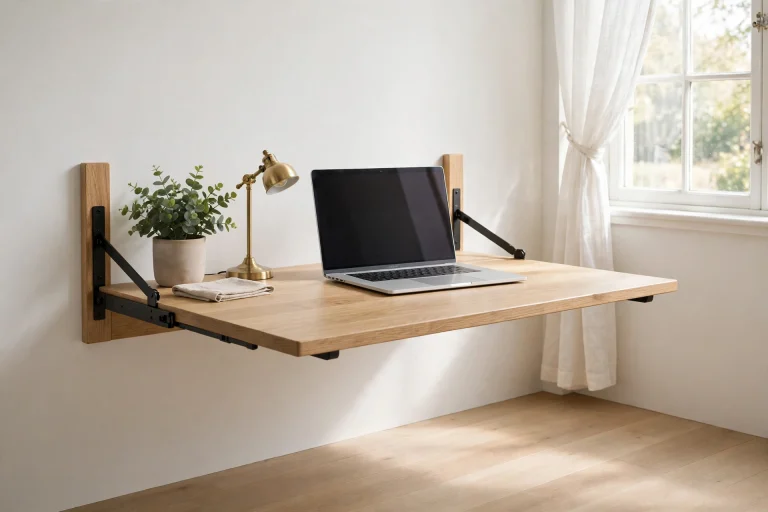
The simplest floating desk is a thick plank, two or three heavy brackets, and nothing else. A solid wood or plywood slab 120 cm wide and 50 cm deep holds a laptop, a notebook and a lamp comfortably, and the clean underside makes a small room look bigger because you can see the floor all the way to the wall.
Keep the plank thick — at least 3–4 cm — or it will flex in the middle over time. Brackets rated for 30 kg or more each are the norm for this job, and two into studs beats four into plasterboard every time. This is the best first floating desk: cheap, and easy to move if you get the height slightly wrong.
2. Floating desk with drawers
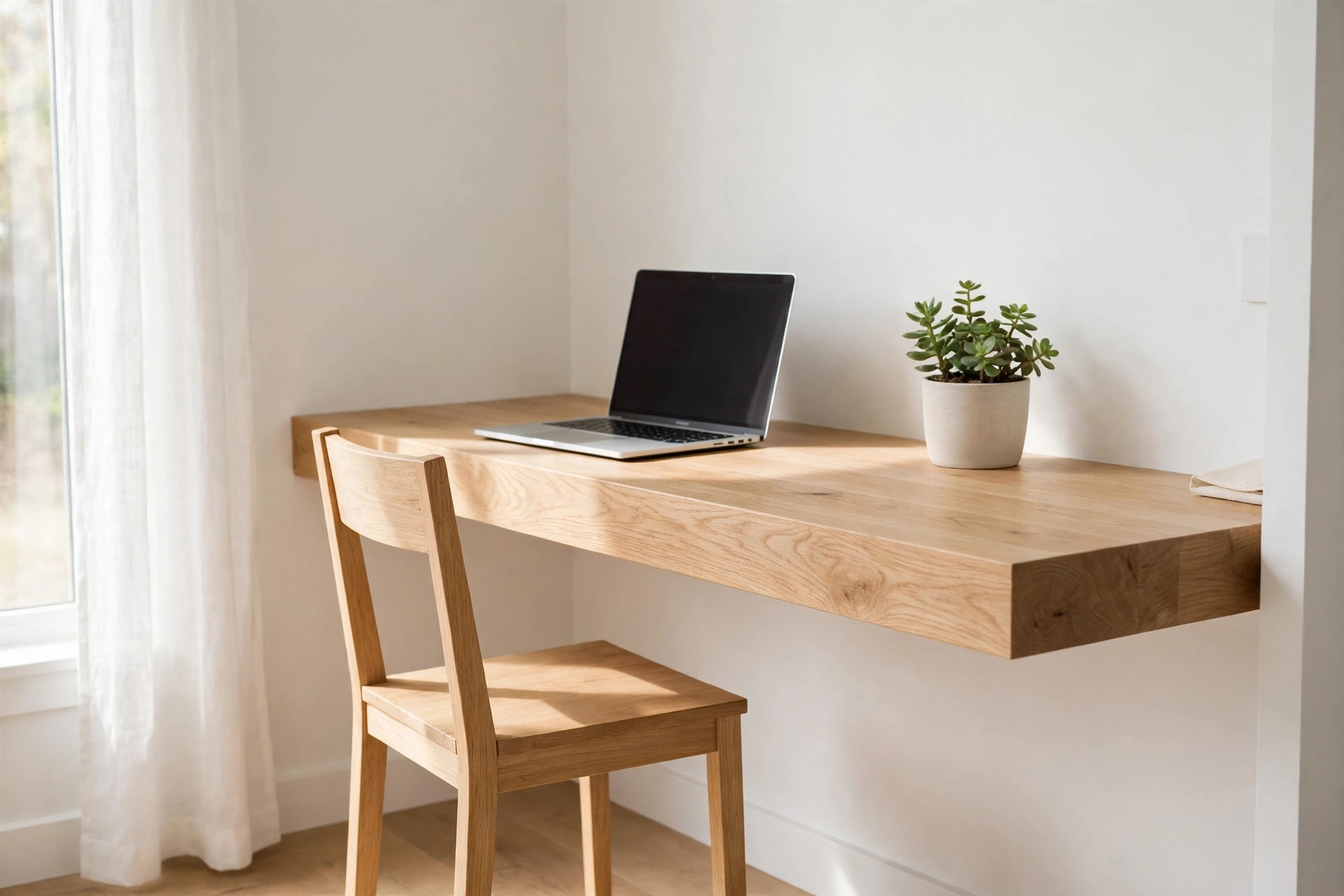
A floating desk earns its keep when it also hides the clutter. A shallow drawer unit hung under the slab — or a desk with drawers built into its front edge — gives you a home for chargers, pens and paperwork without adding a pedestal that eats floor space.
Keep the drawers shallow, about 10–12 cm deep inside, so they hold the small stuff and do not force you to sit further back. One wide drawer beats two narrow ones. Expect roughly $80–$200 for a ready-made drawer desk, but you save the cost of a separate storage box.
3. The corner wrap
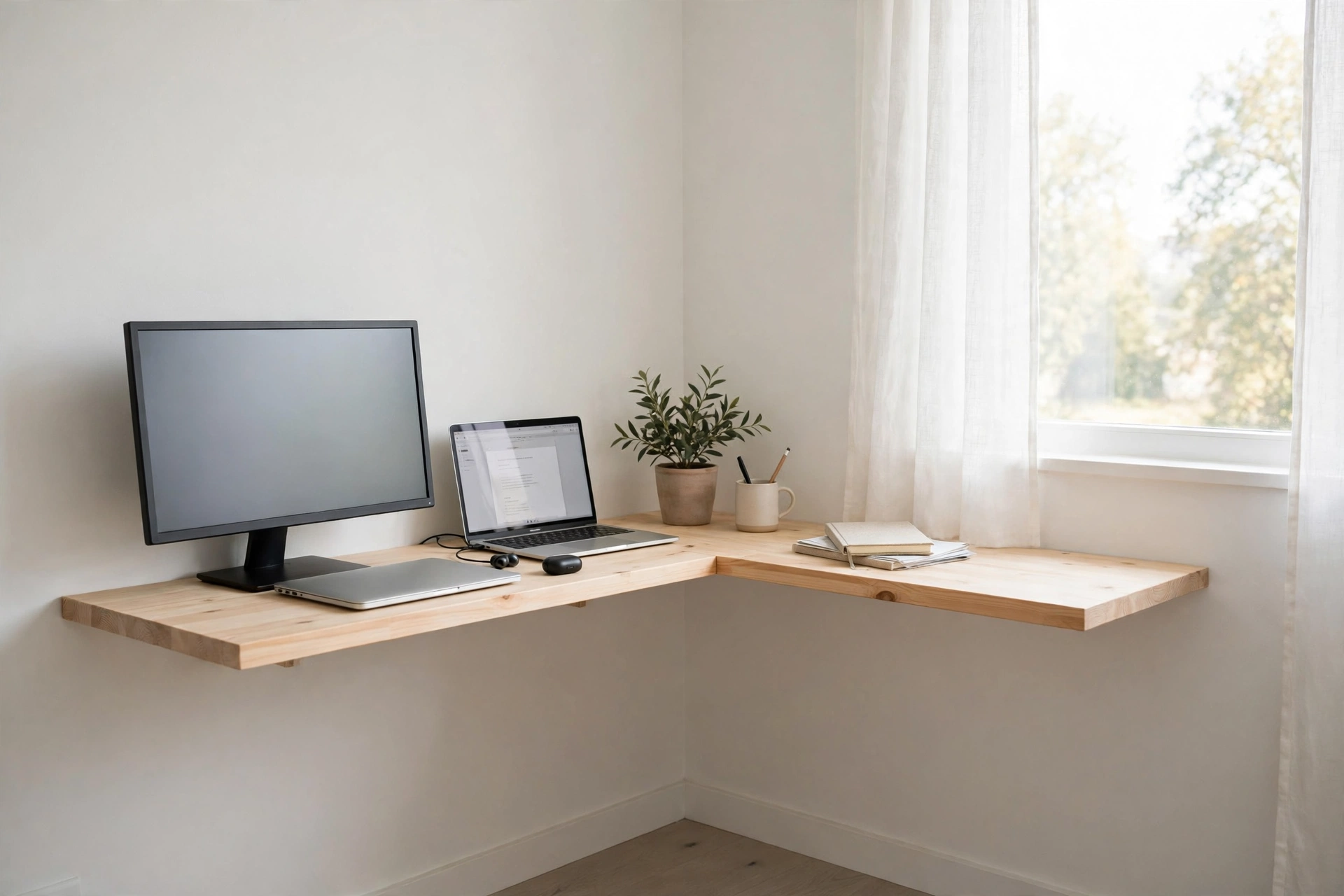
Corners are wasted space in most small rooms, and a floating desk is the easiest way to claim one. Two slabs meeting at right angles give you an L-shaped surface: laptop on one arm, notebook and coffee on the other, and no leg in the corner digging into your knee.
Measure both walls before you order — corners are rarely a perfect 90 degrees in older houses, so a small gap at the join is normal and easy to hide with a strip of matching trim. The corner wrap suits two-monitor work better than any single straight desk of the same footprint, because the second screen sits on the return arm.
4. Floating desk with shelves above
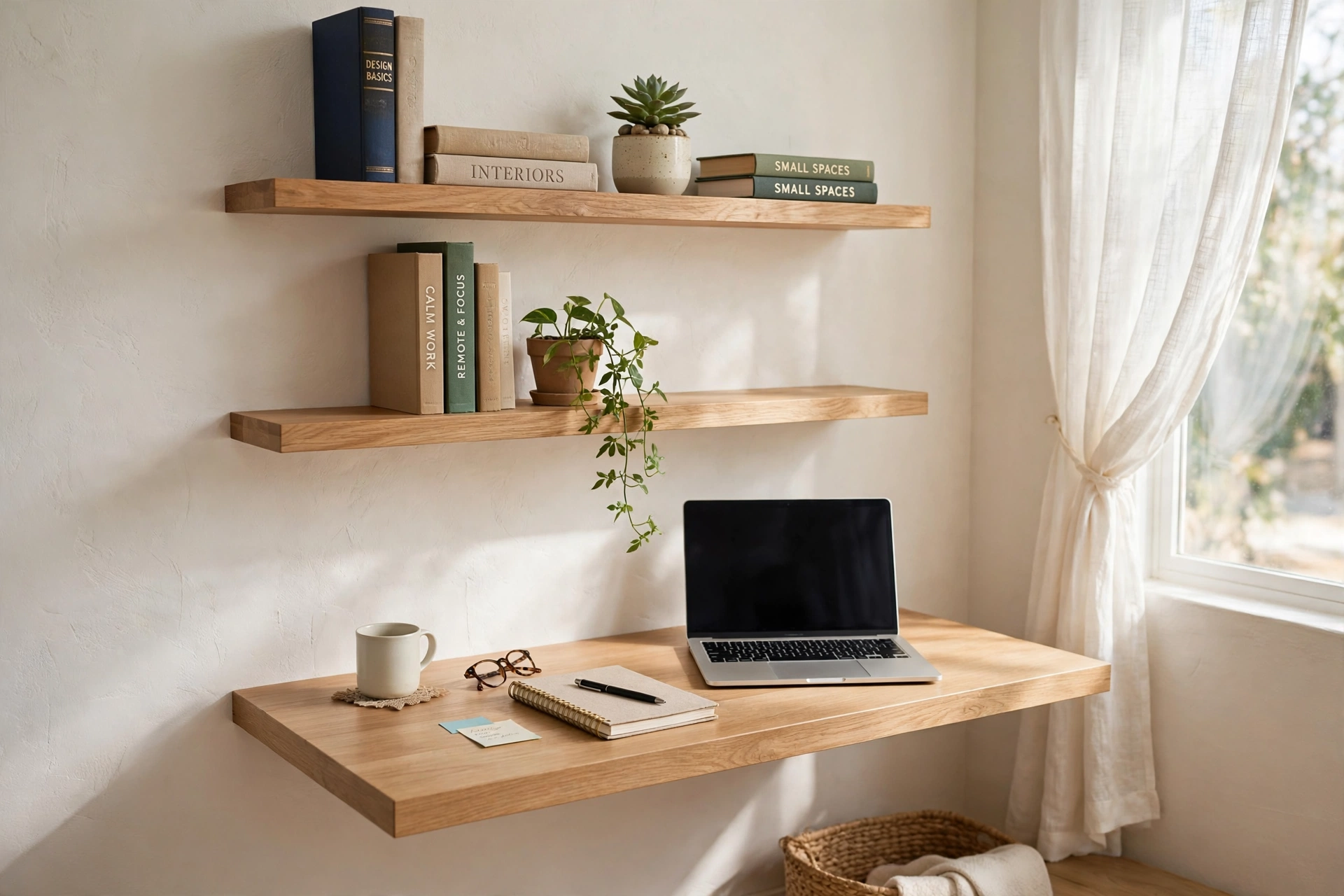
When the desk itself is small, the wall above it is your storage. Two open shelves mounted above a floating desk hold books, a printer on the lower shelf, and the things you reach for daily — without touching the desk surface at all.
Keep the lowest shelf at least 45 cm above the desk so a monitor fits underneath, and keep heavy items on the lower shelf where they are easier to reach. This is the setup to pick if your desk keeps disappearing under piles.
5. The fold-down floating desk
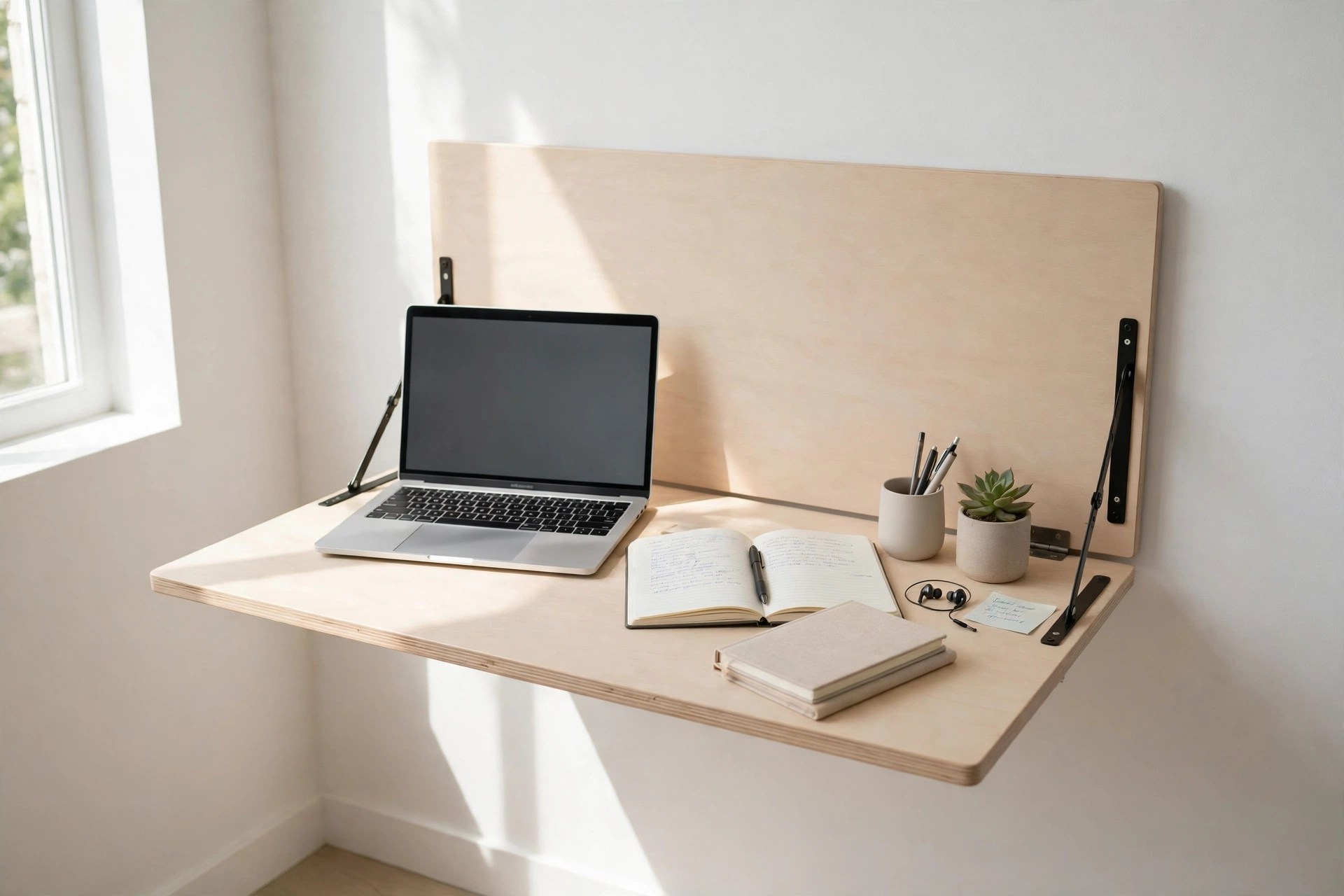
A fold-down desk is a floating desk that disappears. The surface hinges down for work and folds flat against the wall when you are done, which makes it the right pick for rooms that are an office only part of the day — a hallway, a living-room wall, or a guest room.
Buy on the hinge, not the looks: good folding brackets rated well above the weight you will put on it, closing flat without a gap. If you want the full version of this idea, our guide to fold-down wall desks covers nine offices that disappear completely. As one of 11 ideas here, the fold-down is the one to pick when floor space matters more than desk space.
6. The double-width desk for two
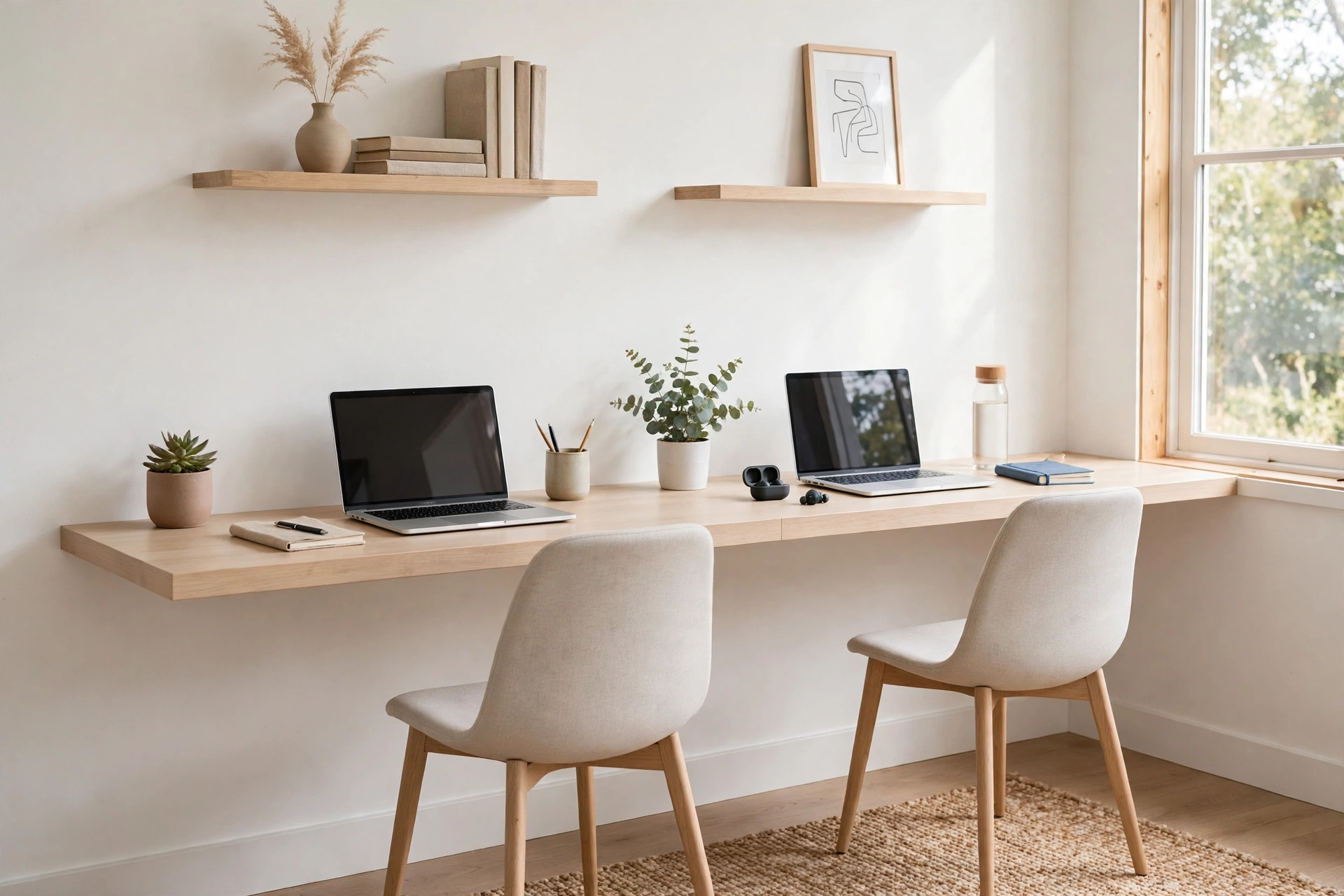
Two people sharing one small room do not need two desks — they need one long floating desk. A single slab 180–200 cm wide, fixed to the wall with three brackets, gives each person a full laptop zone and a shared middle strip for a lamp or a printer.
Give each side its own light and its own cable route, or the shared desk becomes a daily argument about whose charger is whose. A small divider in the middle keeps the two zones honest. This is the cheapest two-person office there is, because one slab and three brackets cost far less than two desks.
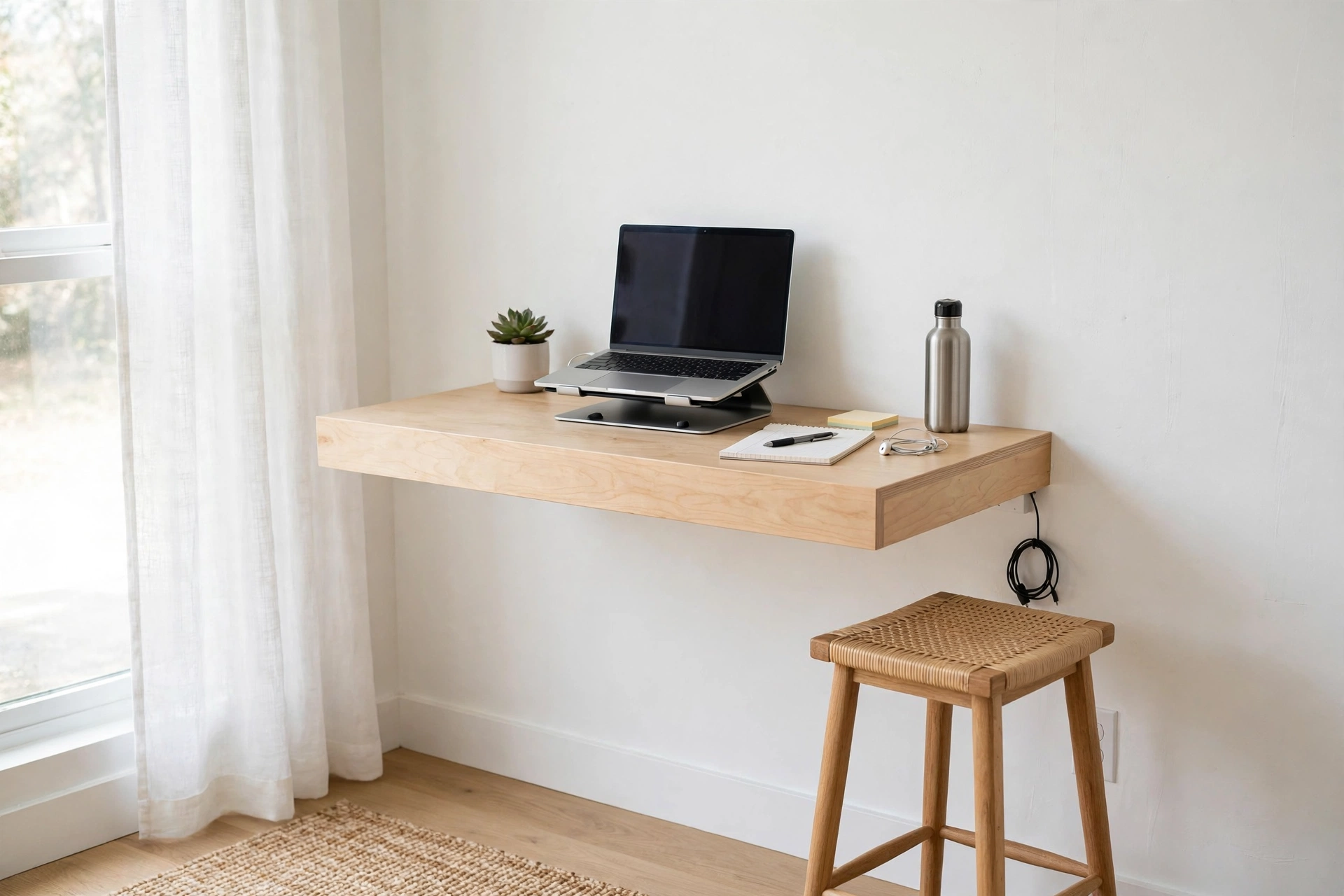
7. The standing-height floating desk
Fixed at elbow height — roughly 105–110 cm for most adults — a wall-mounted standing desk costs a fraction of an electric sit-stand desk and never wobbles, because the wall does the holding.
Pair it with a tall stool so you can sit for the long calls and stand for the short tasks. The trade-off is real: a fixed standing desk cannot drop to sitting height, so only pick this one if you already know you like standing to work. If you are unsure, try a laptop stand on a kitchen counter for a week first.
8. The bedroom alcove desk
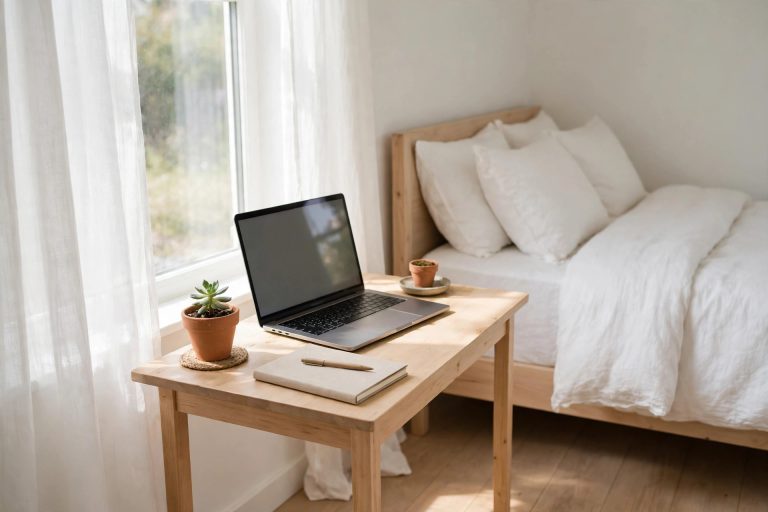
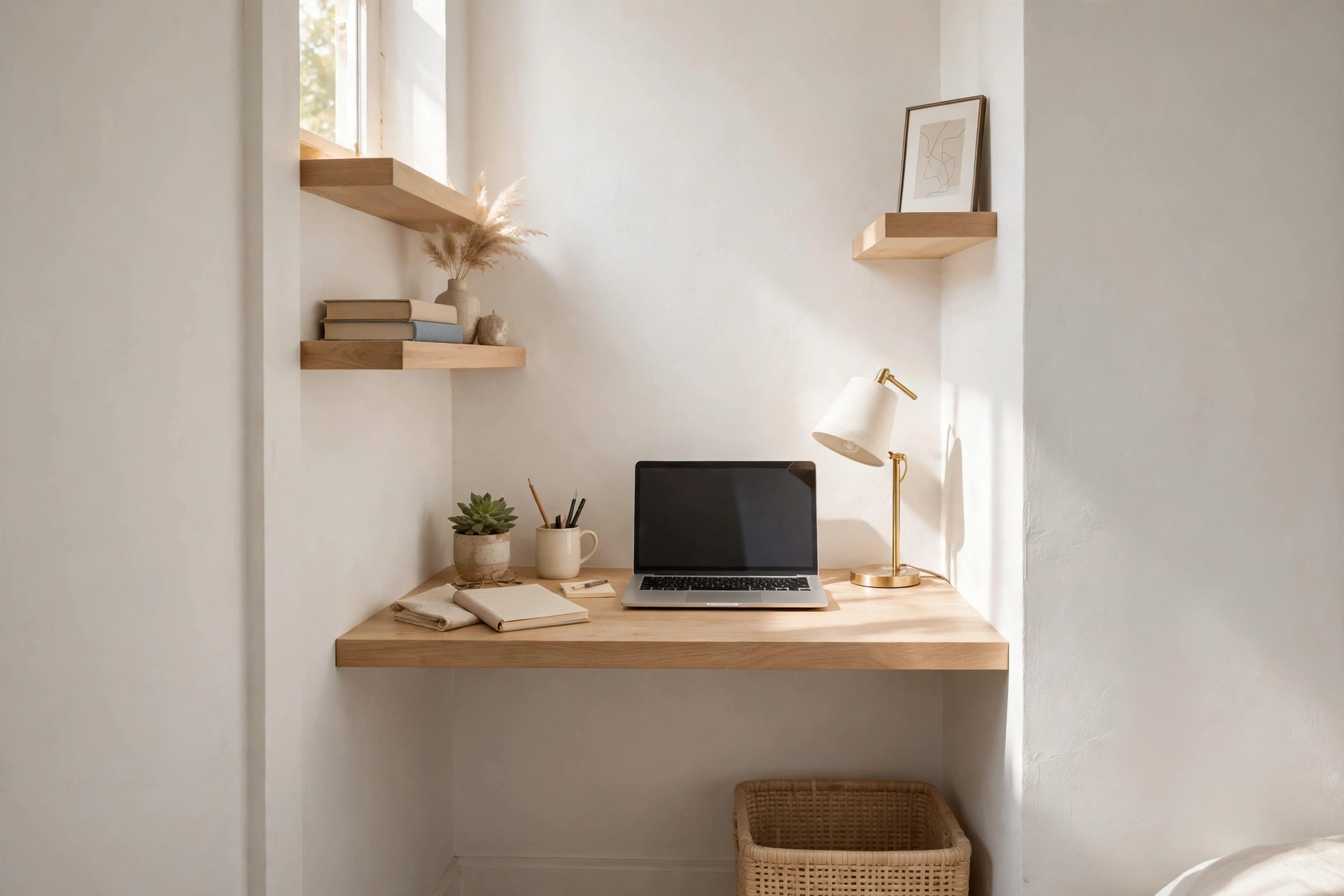
An alcove, a recess beside a wardrobe, or the dead wall at the foot of a bed is often the only spare wall in a bedroom — and a short floating desk fits it exactly. A slab 80–100 cm wide turns that dead strip into a proper workspace without moving any furniture.
Keep it shallow, 45–50 cm deep, so it does not crowd the bed, and add a small wall light instead of a desk lamp to save the surface. This is the idea to pick when the bedroom has to stay a bedroom first: the desk reads as a shelf when the laptop is closed.
9. The cable-smart floating desk
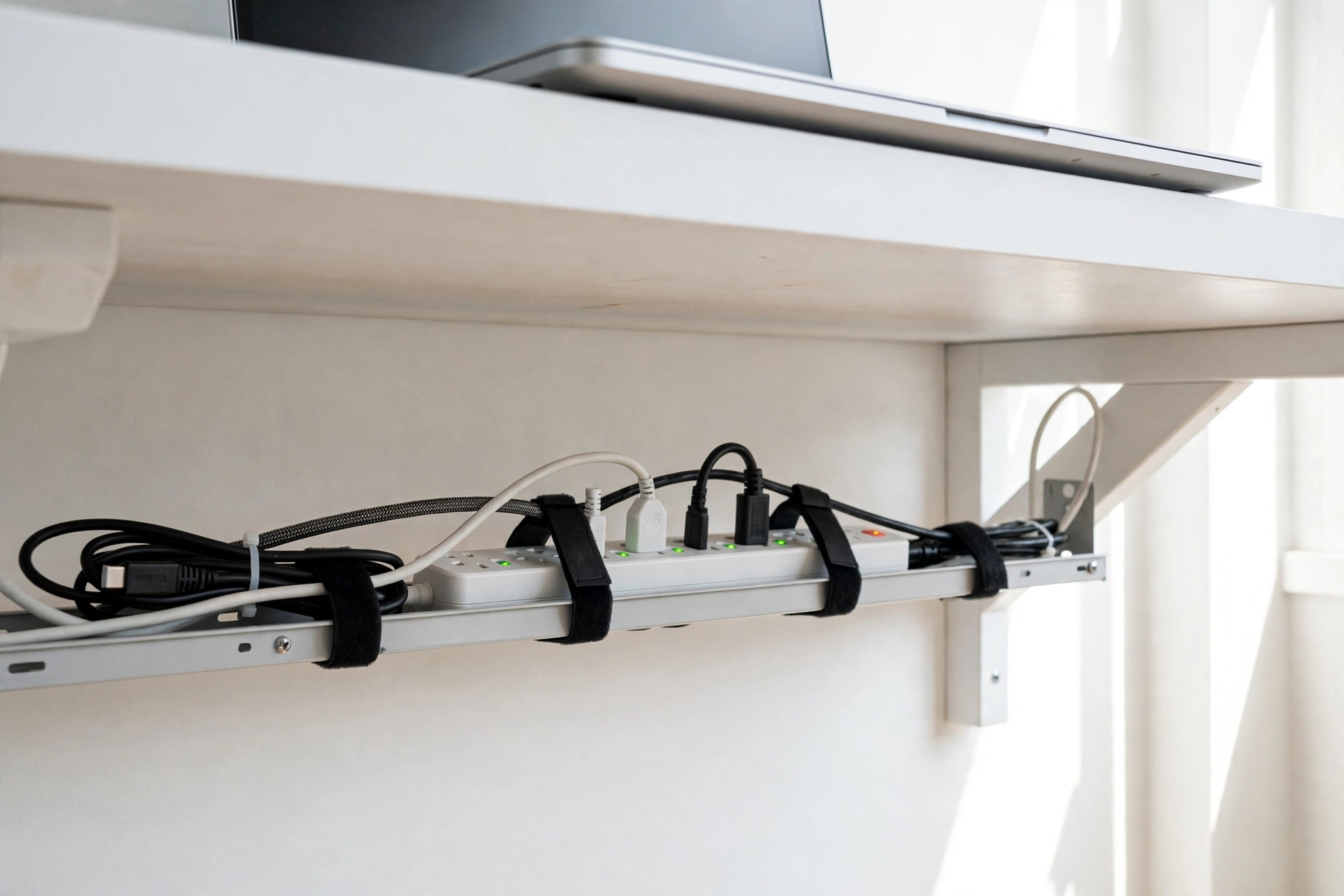
A floating desk with cables hanging underneath it looks unfinished, because there are no legs to hide behind. The fix is a cable tray screwed to the underside: power strip inside, cables routed along it, one cable dropping to the wall socket.
Fit the tray before you mount the desk, while the underside is easy to reach, and leave a little slack in every cable. A desk with its cables handled looks twice as expensive as the same desk with them dangling.
10. Floating desk with a pegboard wall
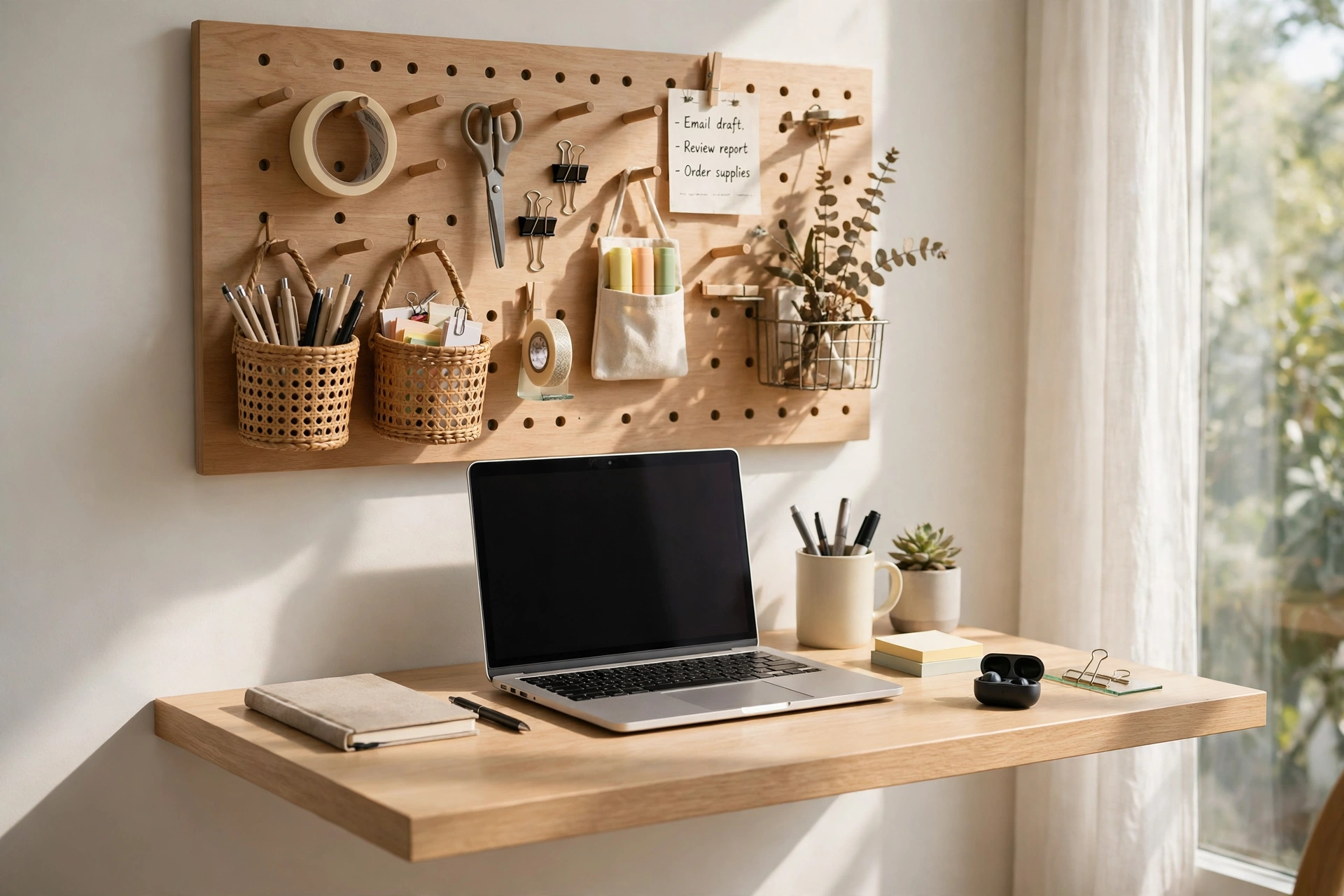
A pegboard above a floating desk turns the wall into storage that changes with you. Hooks, small baskets and shelves hang off the board, so pens, headphones, cables and notebooks all live within reach and nothing lives on the desk surface.
Keep the pegboard the same width as the desk or slightly narrower, and hang the heaviest basket low. Wood pegboards suit this look best and take paint well if the room needs a colour accent. This is the pick for people whose desk keeps filling up: the wall absorbs the overflow.
11. The renter-friendly floating desk
Renters can have a floating desk too — it just needs to leave the wall intact. Heavy-duty removable hanging strips hold a light slab and a laptop, and a French cleat fixed with a handful of small screws leaves only tiny holes that a dab of filler hides at move-out.
Check your tenancy agreement first, keep the load light, and test the fixings with books before trusting them with a laptop. It will not hold a dual-monitor setup, but for laptop-only work it beats working from the sofa.
Which one fits your room?
Start with the wall, not the catalogue. If you have one good stud wall and a laptop, the single plank is enough. If the room is shared, go double-width. If the room is only an office sometimes, go fold-down. If the desk keeps vanishing under clutter, add shelves or a pegboard above it. Anchor into studs, set the height before you drill, and sort the cables while the underside is still easy to reach. A floating desk is a small job done once — get the order right and it holds for years.