Living Room Office: 11 Ways to Zone It
A living room that also has to be an office is two rooms pretending to be one — and the pretending is what makes it tiring. Without any boundary, work spreads: the laptop lives on the sofa arm, and by 9 pm you are still “at work” because you never left it.
Zoning fixes that without building a single wall. A zone is just a signal — to your eyes and to everyone else in the house — that this corner is for work and the rest of the room is for living. The order matters, and it is the same order this guide follows: floor first, then furniture, then light, then habit. A rug and a lamp will do more than a room divider bought before you have decided where the desk goes.
If the whole room is tight, not just the desk corner, start with our small home office ideas — the space-saving moves there pair with everything below. Here are 11 ways to zone a living room office, in the order to do them.
1. Start With a Rug Under the Desk
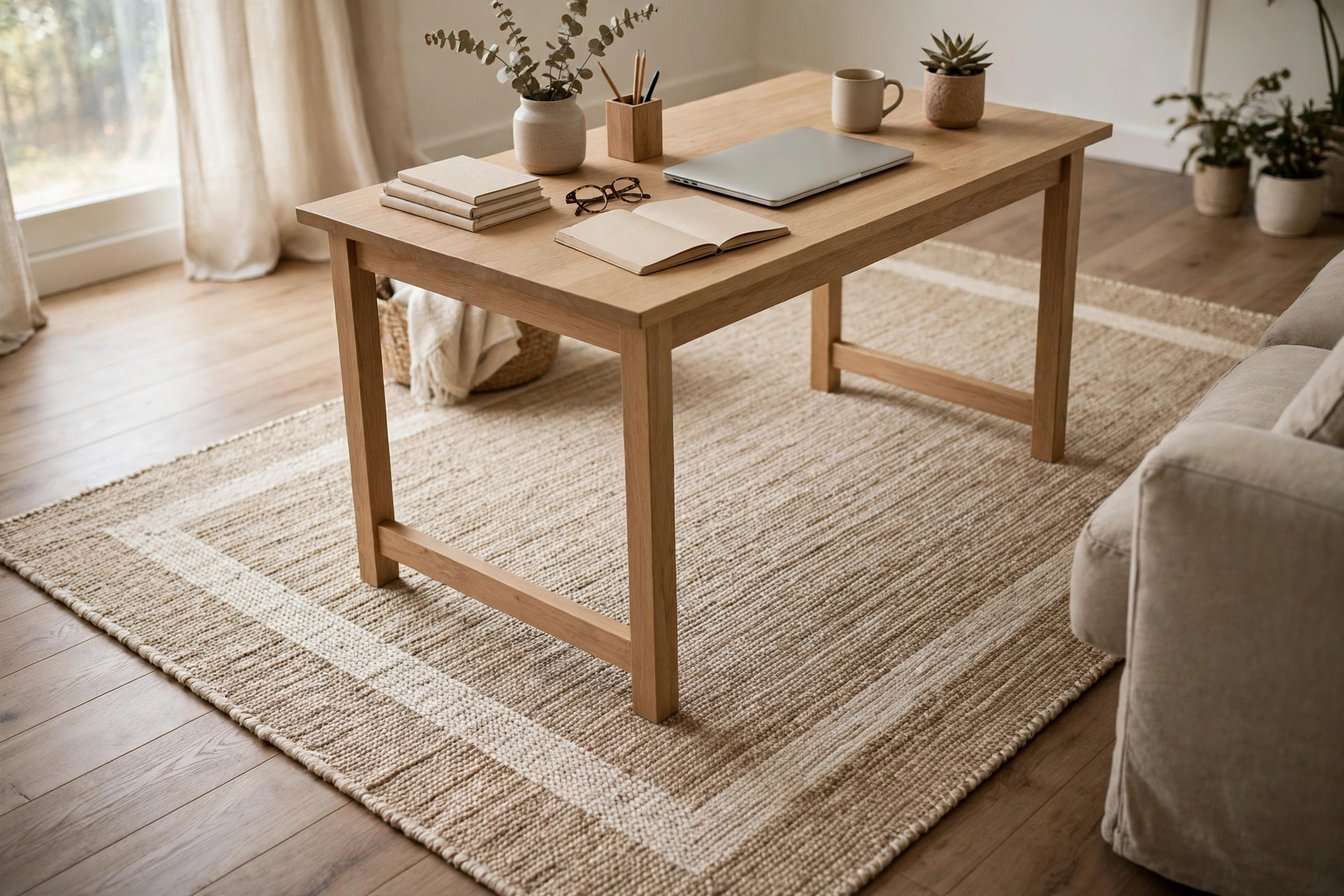
A rug is the cheapest wall you will ever buy. Put one under the desk and chair — big enough that the chair stays on it when you roll back — and the work zone gets a floor. Your brain reads the edge of the rug as the edge of the office, which is why this works even in a room where nothing else changes. Flat-weave or low-pile works best; thick pile catches chair wheels. Expect roughly $40–$120 for a rug big enough for a desk and chair. Measure first: the rug should run at least 20 cm past the desk on each side.
2. Put the Sofa Back to Work as a Divider
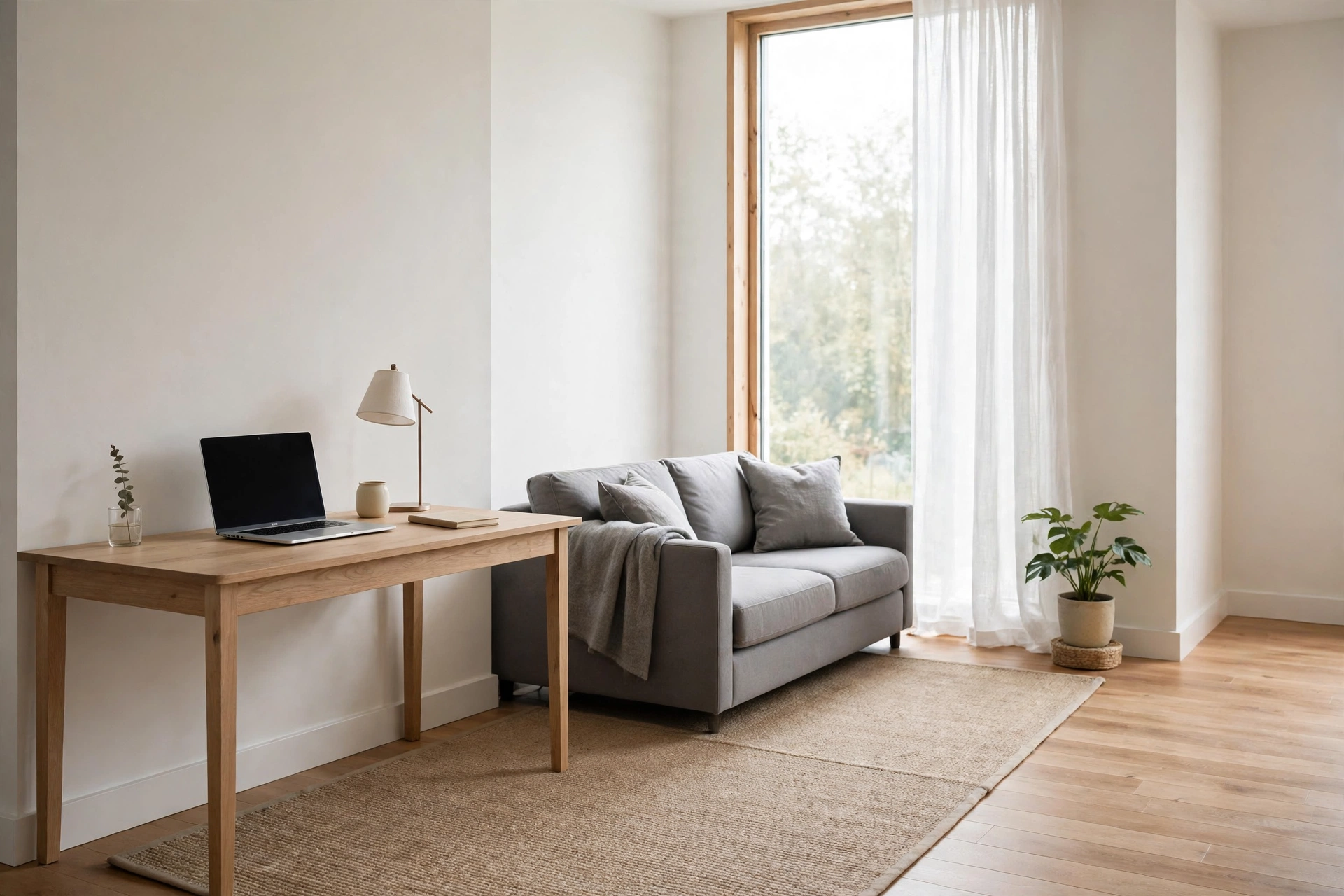
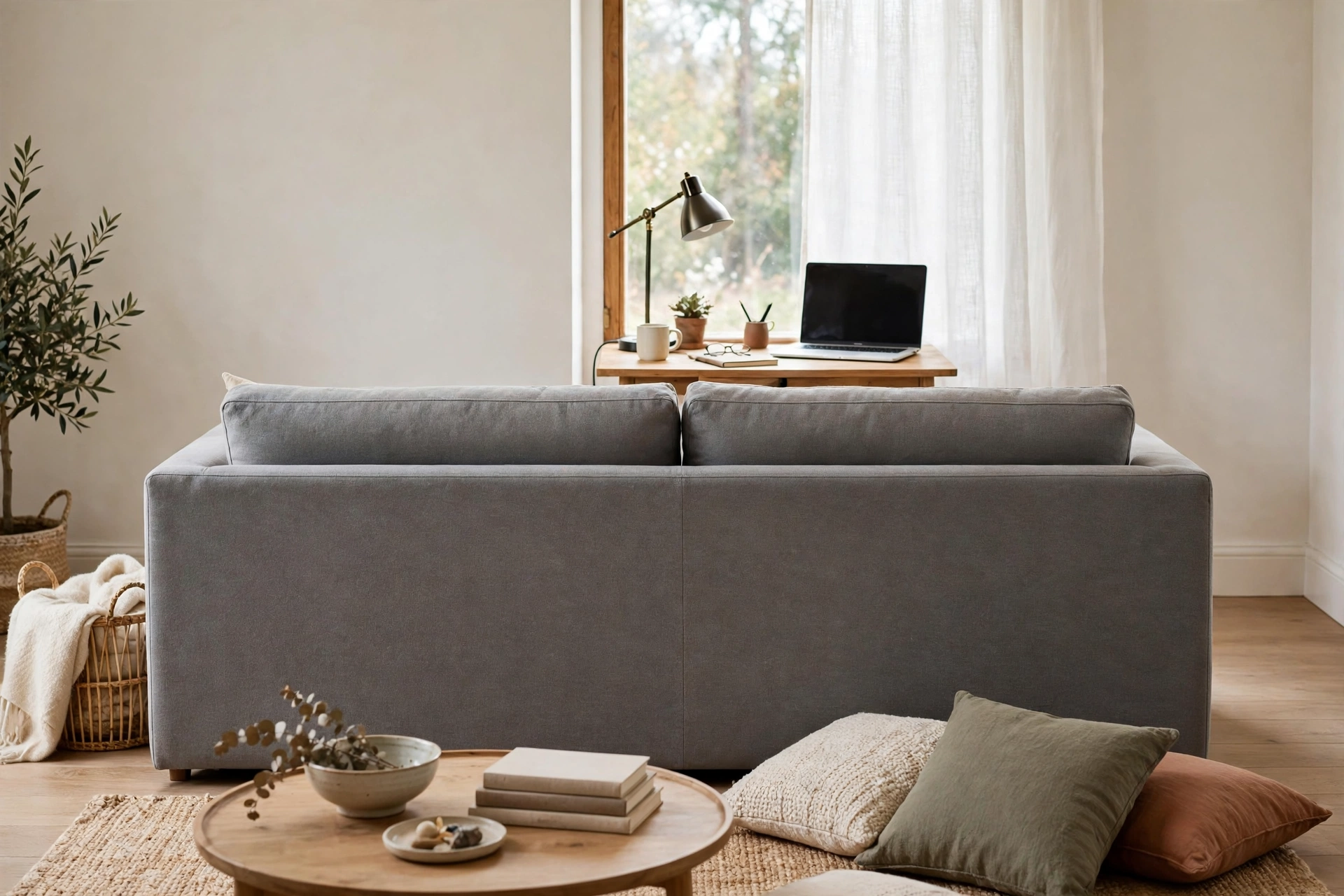
The sofa is already the biggest piece of furniture in the room, so turn its back into the office wall. Push the desk up behind the sofa, facing the same way you sit to watch TV, and the sofa back hides the work mess from the lounge side while your screen stays out of sight when the TV is on. The cost is zero — it is just moving furniture you already own.
3. Use a Bookcase as a Room Divider
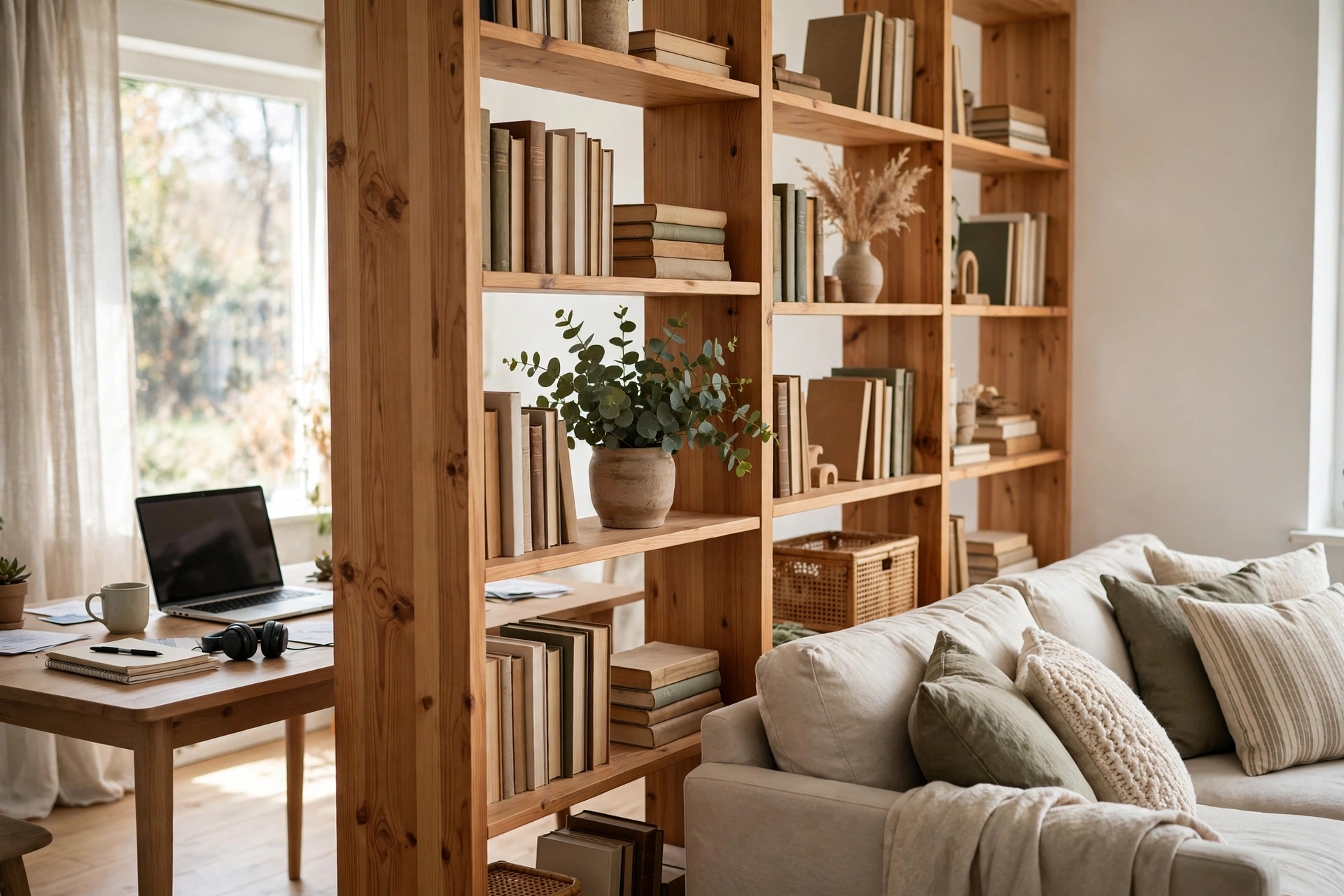
An open-backed bookcase makes a divider that does not block light. Turn it sideways so it stands between the desk and the sofa, fill the shelves with books and a plant or two, and the office gains a wall with storage built in. Open shelves matter here: a solid bookcase turns the desk corner into a dark cupboard, while open shelves keep daylight moving across the room. A freestanding bookcase in the $80–$200 range is usually tall enough to read as a boundary; anchor it to the wall if you have small children.
4. Add a Folding Screen for Instant Privacy
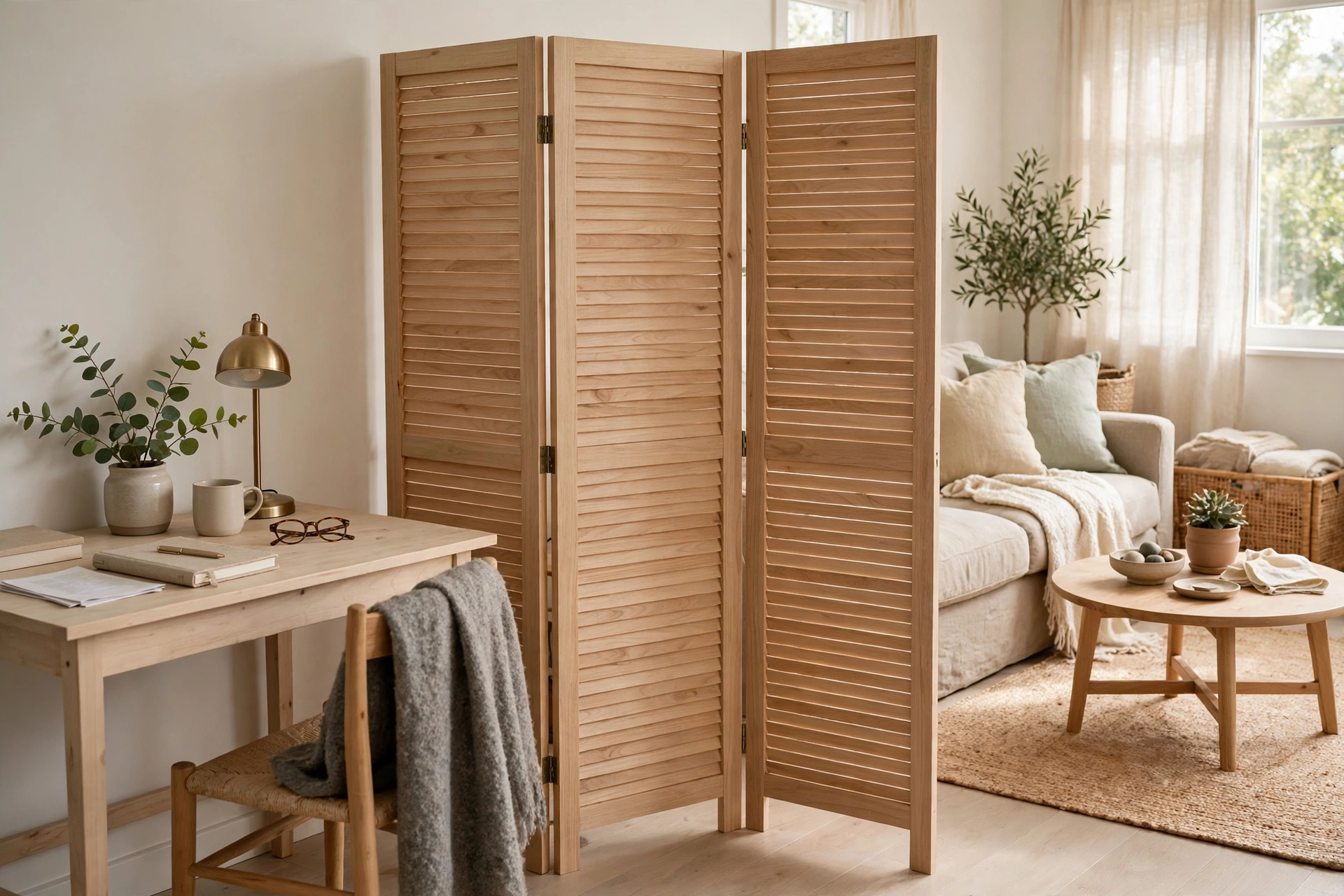
When the desk has to disappear for the evening, a folding screen does in ten seconds what furniture cannot do at all. Open it while you work, fold it flat against the wall when you stop, and the living room gets its evening back. Three-panel screens in the $60–$150 range suit most living rooms; pick one that is taller than your seated head height or it will not feel like privacy, just decoration. Light wood or fabric panels keep the room bright. This is the best option if you rent and cannot paint or drill.
5. Zone With Light, Not Walls
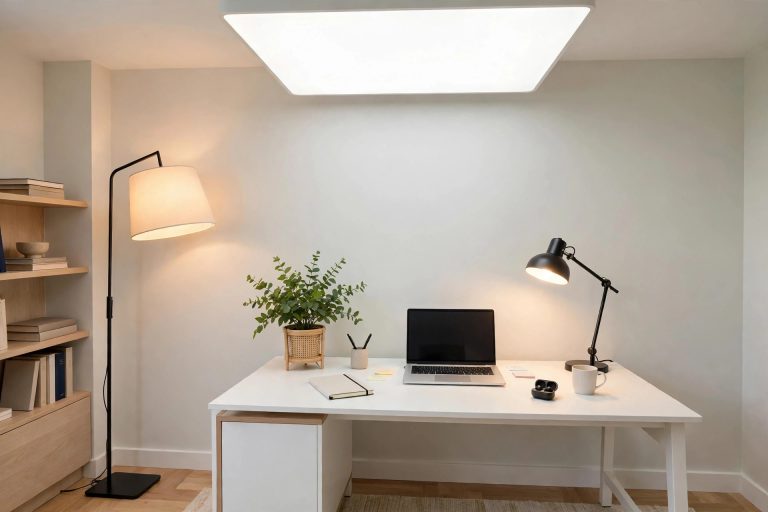
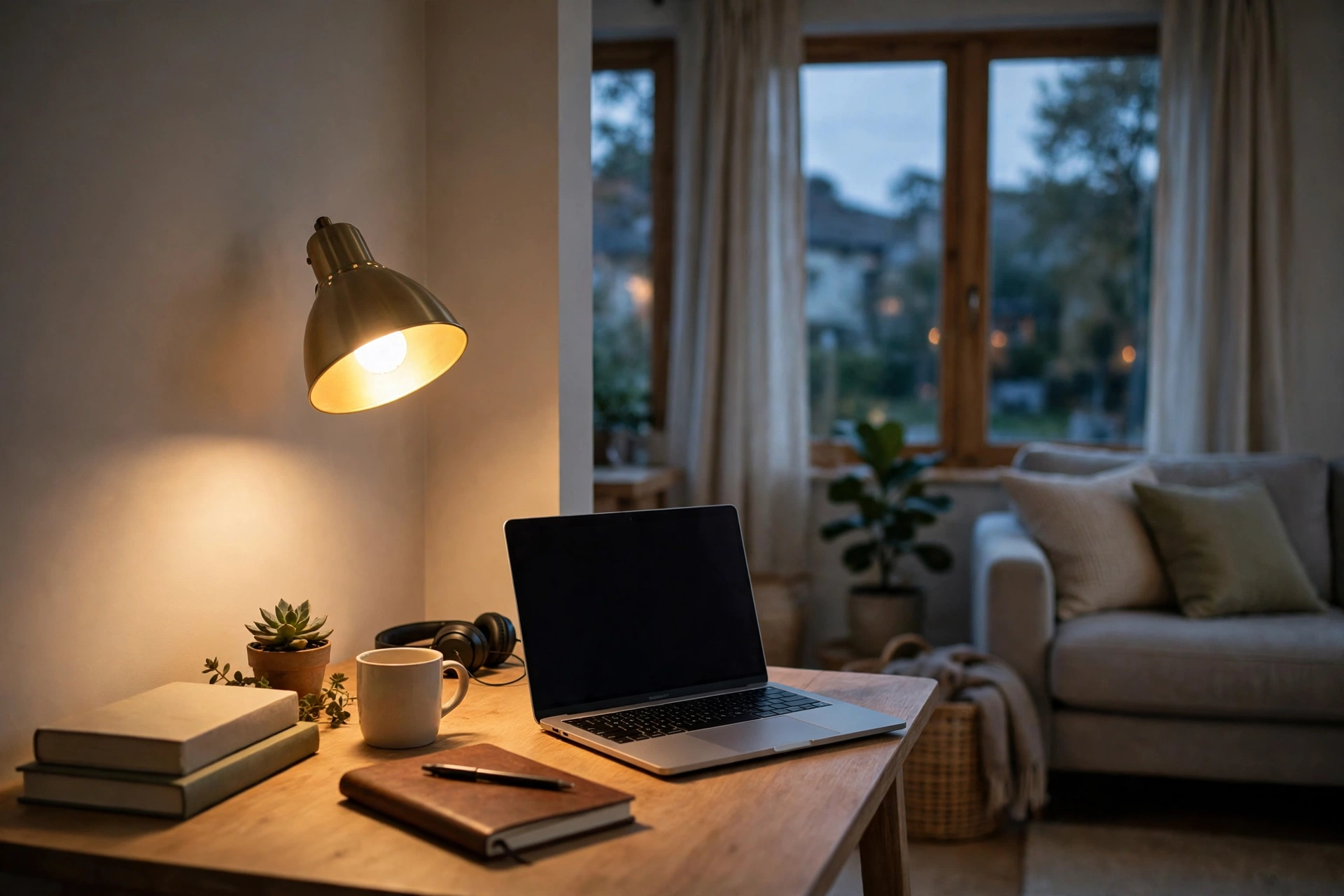
Light draws a boundary your eyes respect even when no furniture does. Give the desk its own warm task lamp — roughly $25–$60 for an adjustable one — and keep the living room’s main light softer and dimmer in the evening. When the desk lamp is on, the corner reads as “office”; when it goes off, the room reads as “home” again. A lamp with a warm bulb (around 2700K) keeps the zone feeling like part of the living room, not a cubicle dropped into it.
6. Paint One Zone a Different Colour
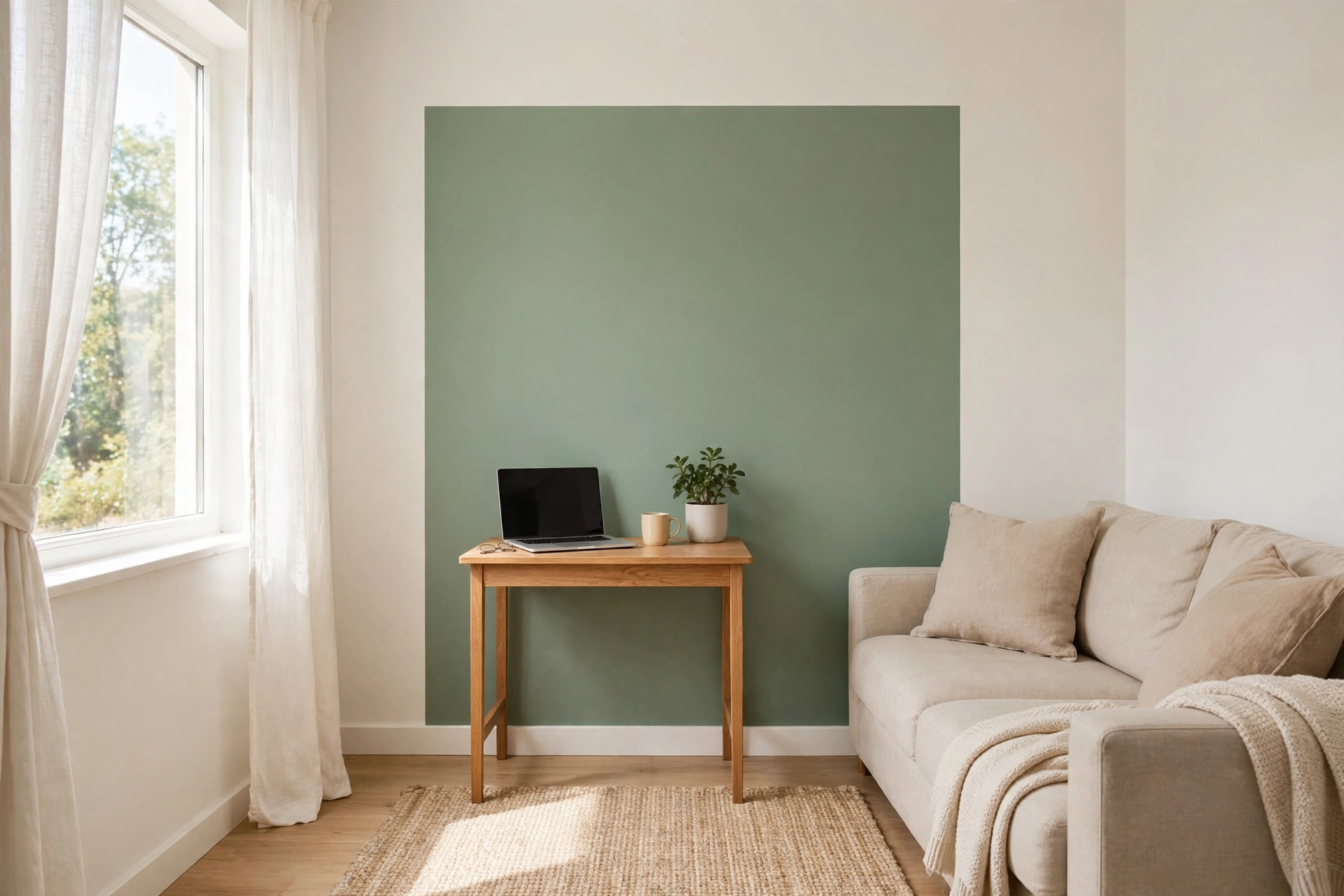
If the rug marks the floor, paint marks the wall. Paint just the wall behind the desk — one wall, not the room — in a calm, slightly deeper tone than the rest of the living room, and the desk gains a backdrop that says “this is a place”. Sage green, warm grey and dusty blue all work; what matters is that the colour is a step deeper than the surrounding walls, not a shout. Renters can get the same effect with a large framed print, a fabric wall hanging, or removable peel-and-stick panels behind the desk. A tin of paint runs roughly $25–$50, making this one of the cheapest permanent zones on this list — but only paint after the desk position is settled, or you will repaint twice.
7. Give Work Its Own Closed Storage
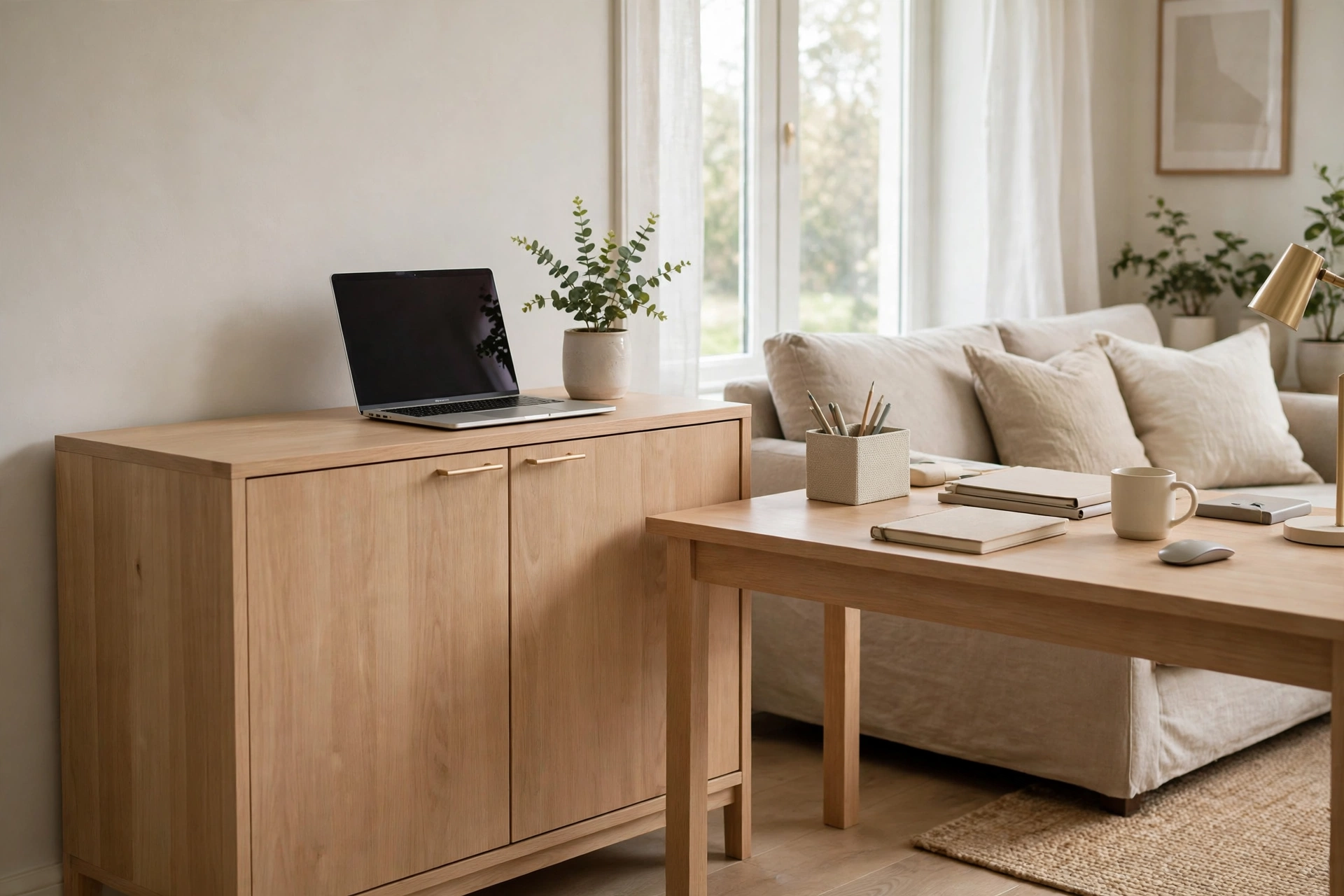
A zone fails the moment work gear escapes it. Give everything a home with doors: a sideboard, a closed cabinet, or a storage ottoman next to the desk, and make it a rule that the laptop, charger, notebooks and papers live inside it, not on the coffee table. Closed storage matters — open shelves display your work, closed doors end it. The test is simple: at the end of the day, can you clear the desk in under a minute? If yes, the storage is in the right place and big enough. If not, the storage is decoration and the zone will leak again by Friday.
8. Let Plants Draw the Line
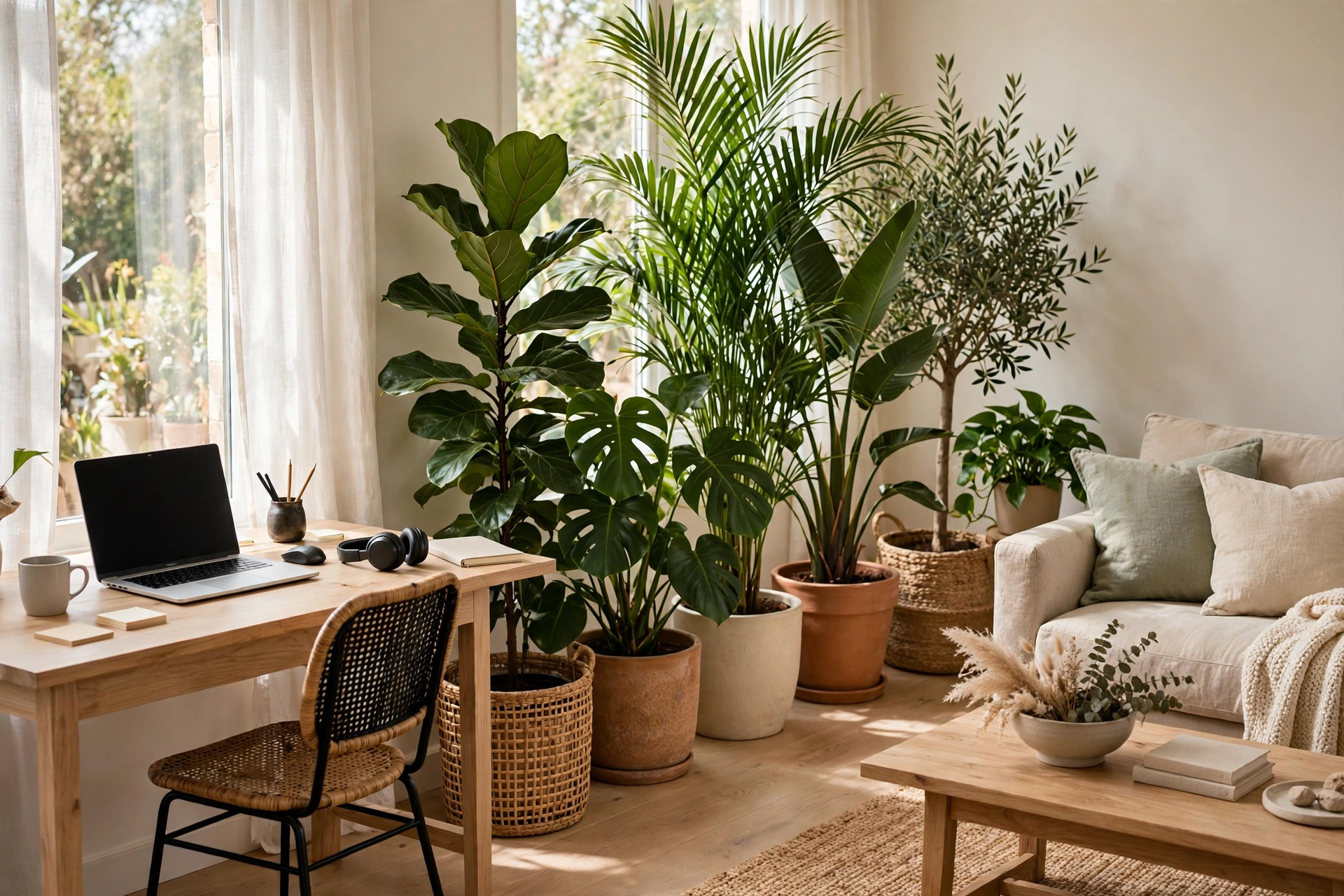
A row of plants is the softest divider on this list and the most forgiving to get wrong. Two or three large potted plants — a monstera, a fiddle-leaf fig, a snake plant in a tall pot — standing between the desk and the sofa mark the boundary without blocking conversation or light. Expect roughly $15–$40 per plant in a decent-sized pot, and buy the pot as tall as you can: height is what makes a plant read as a divider rather than decoration. If you kill plants, one large faux olive tree in the same spot does the same visual job.
9. Park Work on a Rolling Cart
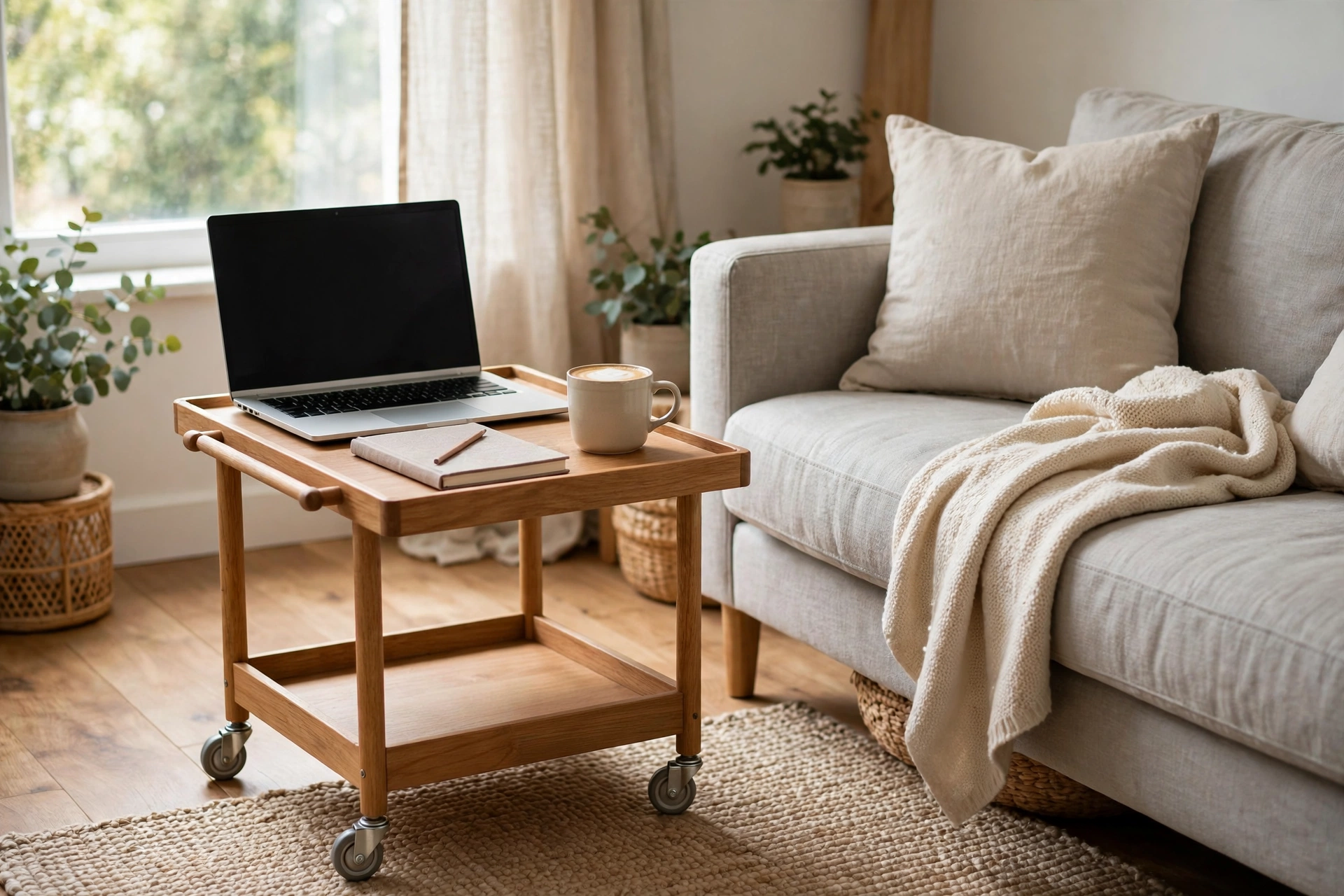
Some living rooms cannot spare a permanent desk at all, and that is fine — a rolling cart is a desk that clocks out. Keep your laptop, notebook and charger on a small cart ($30–$80) that rolls to the sofa for work and rolls into a corner, or behind a door, when the day ends. The rule that makes it work: the cart holds only work things, and it parks in the same spot every night, so the room has a visible “office closed” state. This is the best zone for small living rooms, because the zone exists only while you are using it.
10. Face the Desk the Right Way
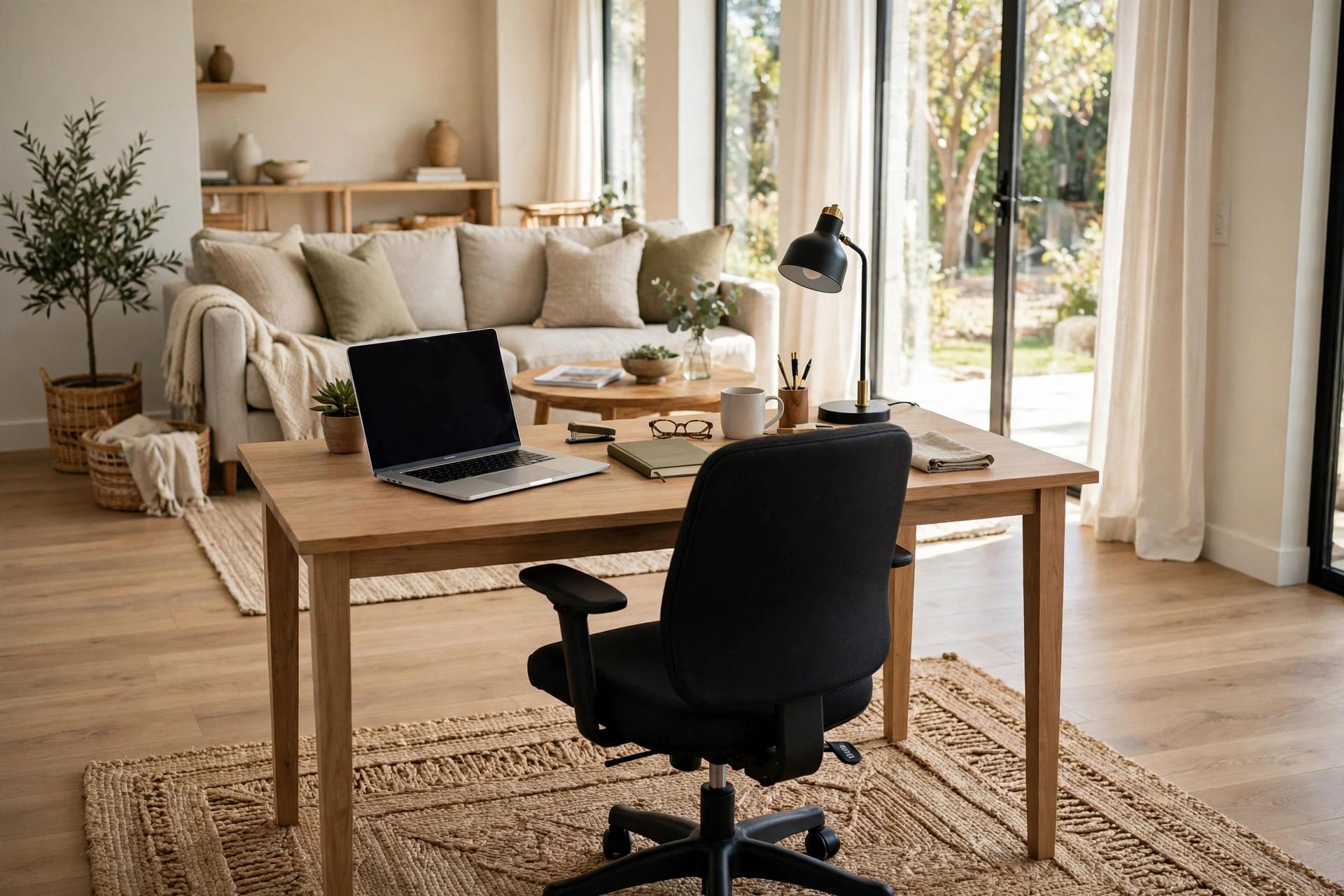
Direction is a zone too. A desk facing the wall makes the smallest possible office — you see nothing but paint, which helps focus but can feel like a corner you were sent to. A desk facing into the room, with your back to the wall, feels bigger and lets you see the window and the door, which most people prefer for long sessions. Try both for a full working day each before you commit; the difference between them is larger than it looks on paper. Whichever you choose, keep the chair’s back to the room’s main traffic path, so nobody has to walk behind you mid-call.
11. Close the Office Every Night
The last zone is not furniture at all — it is a habit. Every evening, take two minutes to close the office: laptop shut and put away, papers in the cabinet, desk lamp off, chair pushed in. A closed desk tells your brain the working day is over in a way no rug or screen can, and it is the only zone on this list that costs nothing and works in every living room. The furniture zones give work a place; the closing ritual gives it an ending. Without the ending, even the best-zoned living room office slowly takes over the room it was supposed to share.
The Order, Once More
Start on the floor with a rug, then let the furniture draw the boundary — sofa back, bookcase or screen — then give the zone its own light and, if you can, its own wall colour. Storage keeps the zone from leaking, plants soften it, and a cart is the answer when there is no room for a desk at all. Do the first three this weekend and the living room will already feel like two rooms that get along.