12 Attic Home Office Ideas That Actually Work
An attic is the most underused room in most houses — and the most honest one. It will not pretend to be a normal office. The ceiling slopes, the floor space shrinks where the roof comes down, it bakes in summer and chills in winter, and the Wi-Fi signal treats the trip upstairs as a personal insult. But it has one thing no spare bedroom or kitchen corner can offer: a door you can close, in the quietest part of the house.
These 12 ideas are ordered the way you should actually do them — structure and comfort first, furniture second, decoration last. Skip the order and you will buy a desk for a room that is too hot to sit in.
Before anything: the 10-minute reality check
Measure the ridge height (the tallest point) and mark where the ceiling drops below about 6.5 feet (2 m). That line decides everything: you work on the tall side, you store on the short side. Then check three things — can you get power and light up there, how hot or cold does it get at midday, and does your video-call background pass the “would I take a client call here” test. If the room fails on temperature, fix that before furniture (idea 5).
1. Put the desk on the tall side, facing into the room
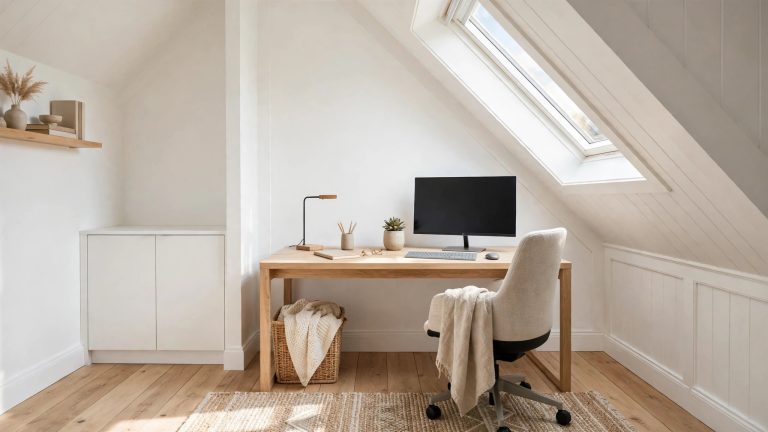
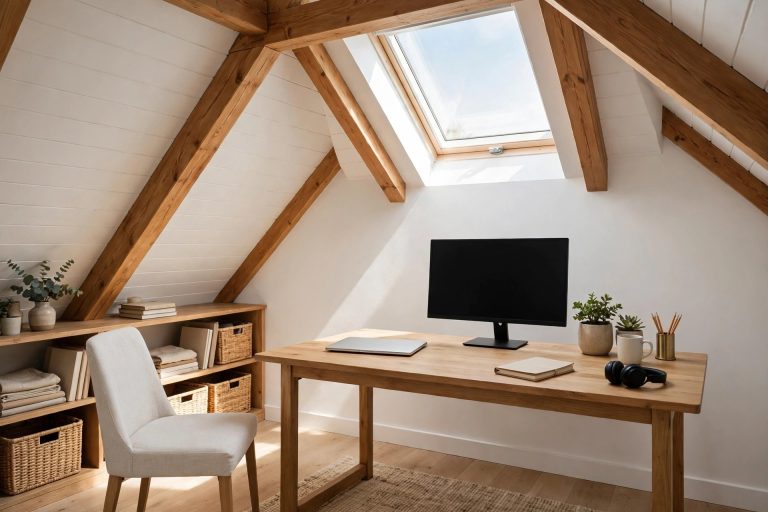
The classic mistake is pushing the desk against the low eaves wall, so you sit facing a slope six inches from your forehead. Instead, place the desk where headroom is highest — usually along the gable end or facing out from the tall wall — and let the low side become storage. You get full standing headroom where you actually move.
2. Use a low-profile desk under the eaves if space is tight
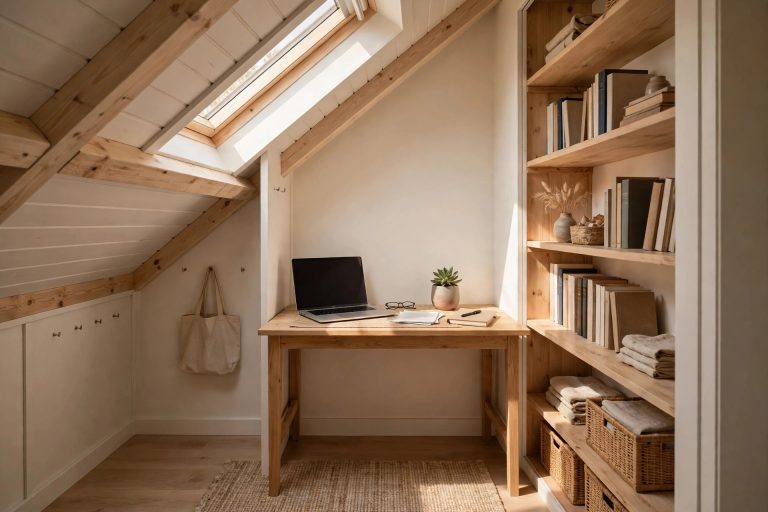
If the tall side is narrow, a shallow desk (20–24 inches deep) tucked under the slope works — as long as the monitor sits toward the taller edge and your chair rolls back into full headroom. Writing desks and console tables often fit better than full office desks here.
3. Turn the knee walls into storage, not dead space
The short walls where roof meets floor hide the best storage in the house. Low bookcases, cube shelves and rolling drawers fit exactly where nothing else can. If you are handy, knee-wall cabinets with simple doors hide the clutter completely and keep the working side of the room clean.
4. Light it in layers — attics punish single bulbs
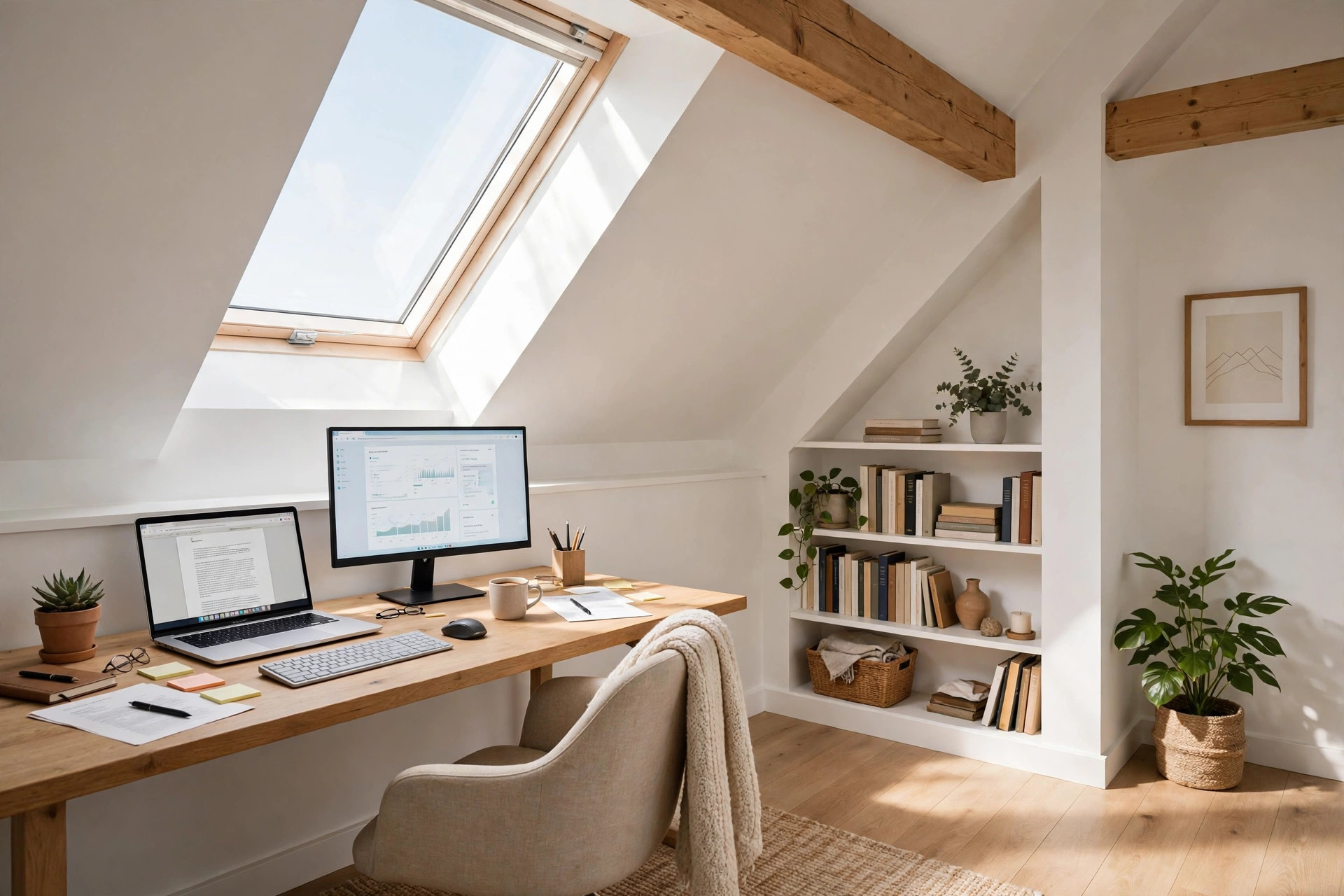
One ceiling light in a sloped room creates glare and caves. Layer instead: a warm desk lamp for task light, a floor or wall light at the tall end for general light, and — if there is a skylight — a blind you can actually reach for video calls. No window at all? Bright, daylight-balanced bulbs plus light wall colors make a bigger difference than any single expensive fixture.
5. Solve temperature before you solve anything else
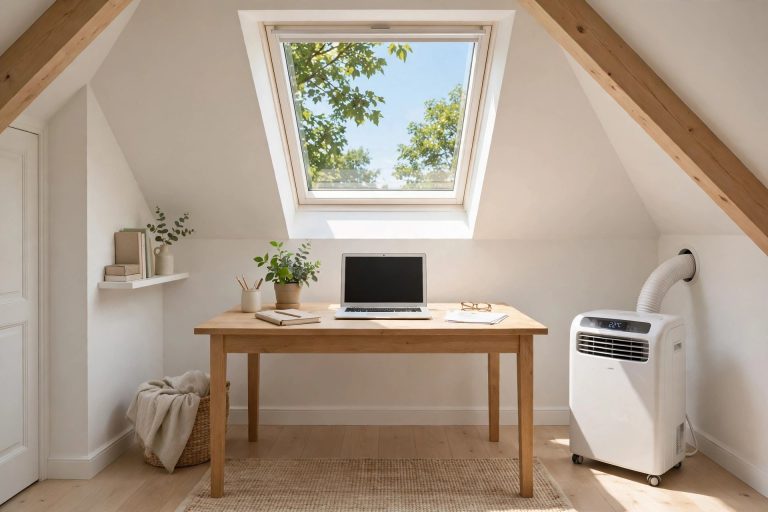
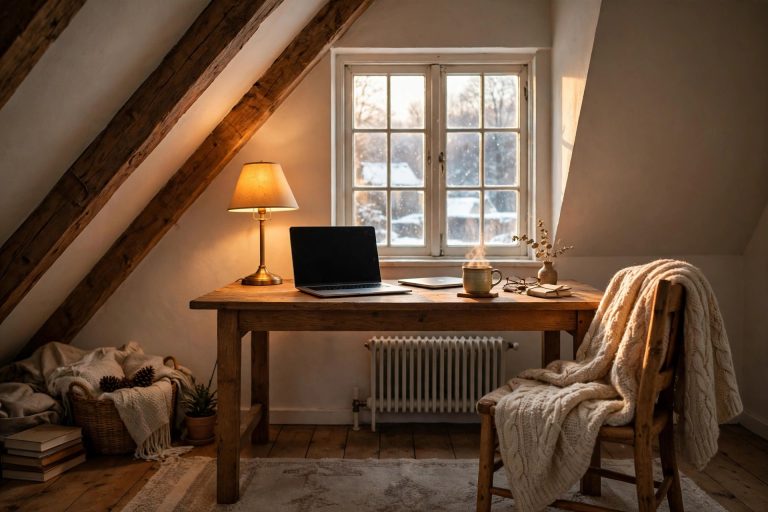
Attics swing harder than any other room. Insulation is the real fix, but renters and small budgets have options: a fan that moves air across the desk (not just around the room), blackout blinds on sun-facing skylights, a small heater with a tip-over switch for winter mornings, and door sealing to keep conditioned air in. If the room is unusable at 2 p.m. in summer, no chair will save it.
6. Run power and cables like you mean it
One overloaded extension cord is how most attic offices start — and how they should not stay. Plan a surge-protected strip at the desk, route cables along the tall wall (never loose across the walking line), and test the Wi-Fi before moving in. A mesh node or a powerline adapter fixes most attic dead zones; a wired connection, if you can run one, fixes all of them.
7. Choose a chair that fits the slope
High-back chairs collide with sloped ceilings and make small attics feel smaller. A mid-back chair, an armless task chair, or a saddle stool often fits the geometry better. Whatever you pick, check the total height against your lowest working point — and if you use a standing desk, confirm you can stand at full height where it sits.
8. Keep colors light, and let the beams be the feature
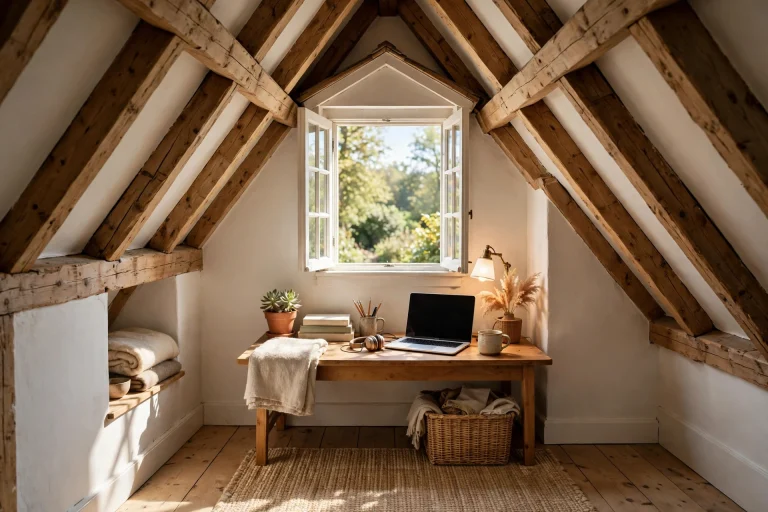
White or pale walls are not a style choice in an attic; they are how you borrow light. Keep the palette simple, then let the structural stuff — beams, brick chimney breasts, the slope itself — provide the character. Dark colors work only in large, bright attics.
9. Use the floor properly: rugs define the office
A rug under the desk zone does three jobs: it protects the floor from chair wheels, softens the echo that sloped hard surfaces create, and draws a visible boundary between “office” and “storage” in a room with no walls to do it. Low pile, so the chair still rolls.
10. Sound: soften the rain drum
Attic offices are quiet — until it rains on the roof directly above your microphone. The rug helps; so do soft furnishings, a bookshelf along the noisiest slope, and a decent USB microphone placed close to your mouth instead of relying on the laptop mic. For calls, close-fitting headphones beat speakers in a small hard room.
11. Make it a flex room without ruining the office
If the attic must double as a guest room, keep the guest part on the low side: a daybed or folding bed under the eaves, the desk protected on the tall side. The rule is that the office must survive a guest weekend without being dismantled — if setup takes more than ten minutes to restore, it will not be restored.
12. Decorate last — plants and one personal wall
Only now: a plant that tolerates the temperature swings (pothos and snake plants are forgiving), one picture ledge instead of scattered frames, and a small pinboard or whiteboard on the tall wall. Attics look best slightly under-decorated; the shape of the room is the decoration.
The order that saves money
Measure and zone the room (free). Fix temperature and light (small money, biggest comfort). Then desk and chair. Storage and cables next. Decor last, with whatever budget survives. An attic office built in that order works from week one — and it is why the ideas above are numbered the way they are.