Cooling an Attic Office: 7 Summer Fixes
An attic office is the first room in the house to get hot and the last to cool down. The roof takes the sun all day and warm air rises straight into your workspace — so by 2 p.m. a room that felt fine at 9 a.m. can be five degrees warmer than the floor below. Most of the heat is fixable without a renovation, but the order matters: block the sun first, then move air, then cool actively.
Work in this order: block the sun at the glass, ventilate in the morning, move the air with a fan, size a portable AC to the room, measure before you spend, cool yourself, not the whole room, cut the heat your gear makes, and fix the hot shell.
1. Block the sun at the glass first
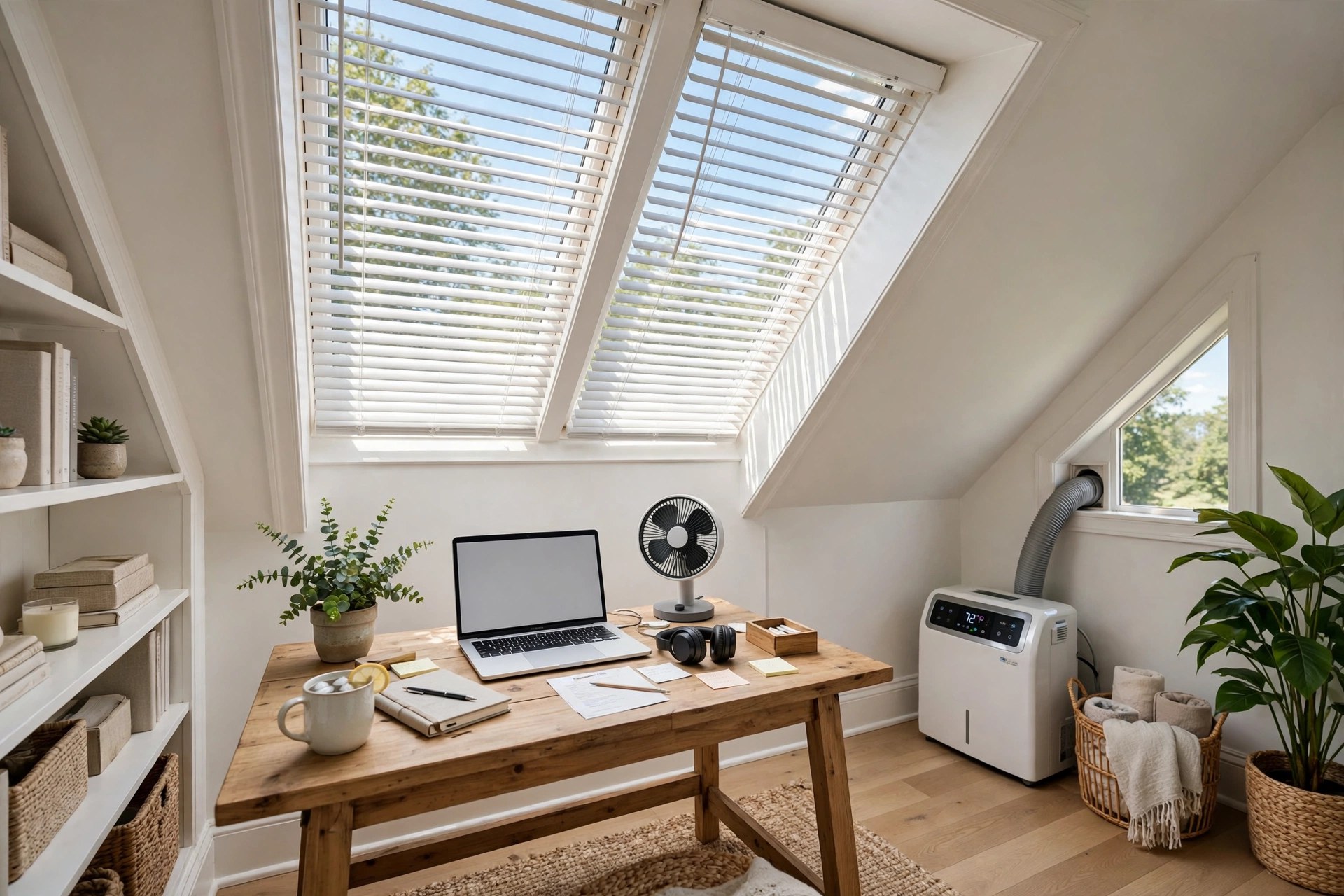
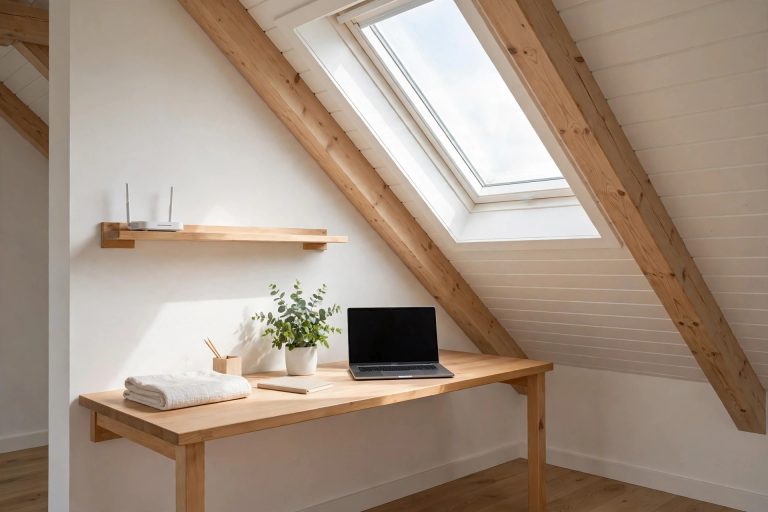
Most of an attic office’s summer heat comes through the skylight, not the walls. A bare skylight in July can pour in as much heat as a small radiator running all afternoon, and no fan or air conditioner can keep up with a heat source that never stops. So the first fix is always at the glass: a skylight blind, closed before the sun hits it — usually by 10 or 11 a.m. on a south-facing slope.
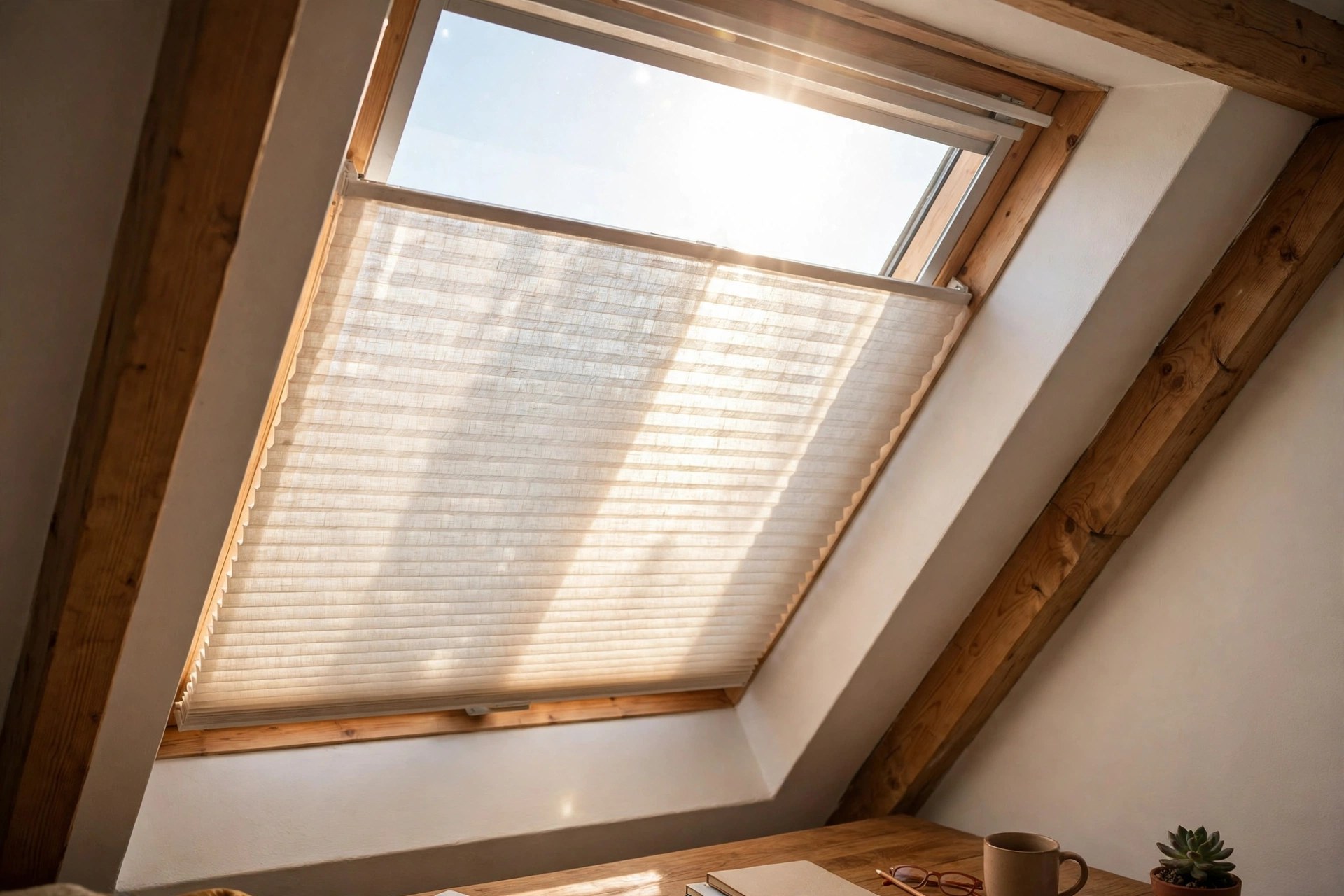
Blinds made for skylights typically cost $30–$150 per window, and they stop heat instead of fighting it. A reflective film on the outside of the glass is the cheaper alternative, usually $15–$40 per window — but fit it on the outside if you can, since film on the inside still lets the heat in before it reflects it back. Whichever you choose, close it in the morning, before the room heats up; closing blinds at 3 p.m. traps the heat that is already in.
2. Ventilate in the morning, seal by midday
Attics cool overnight, and the cheapest cooling is the cool morning air. Open the skylight and any gable window first thing, ideally before 9 a.m., and let the room flush through for an hour or two. Cross-ventilation works best: one opening low on the shaded side pulling air in, one high on the sunny side letting warm air out.
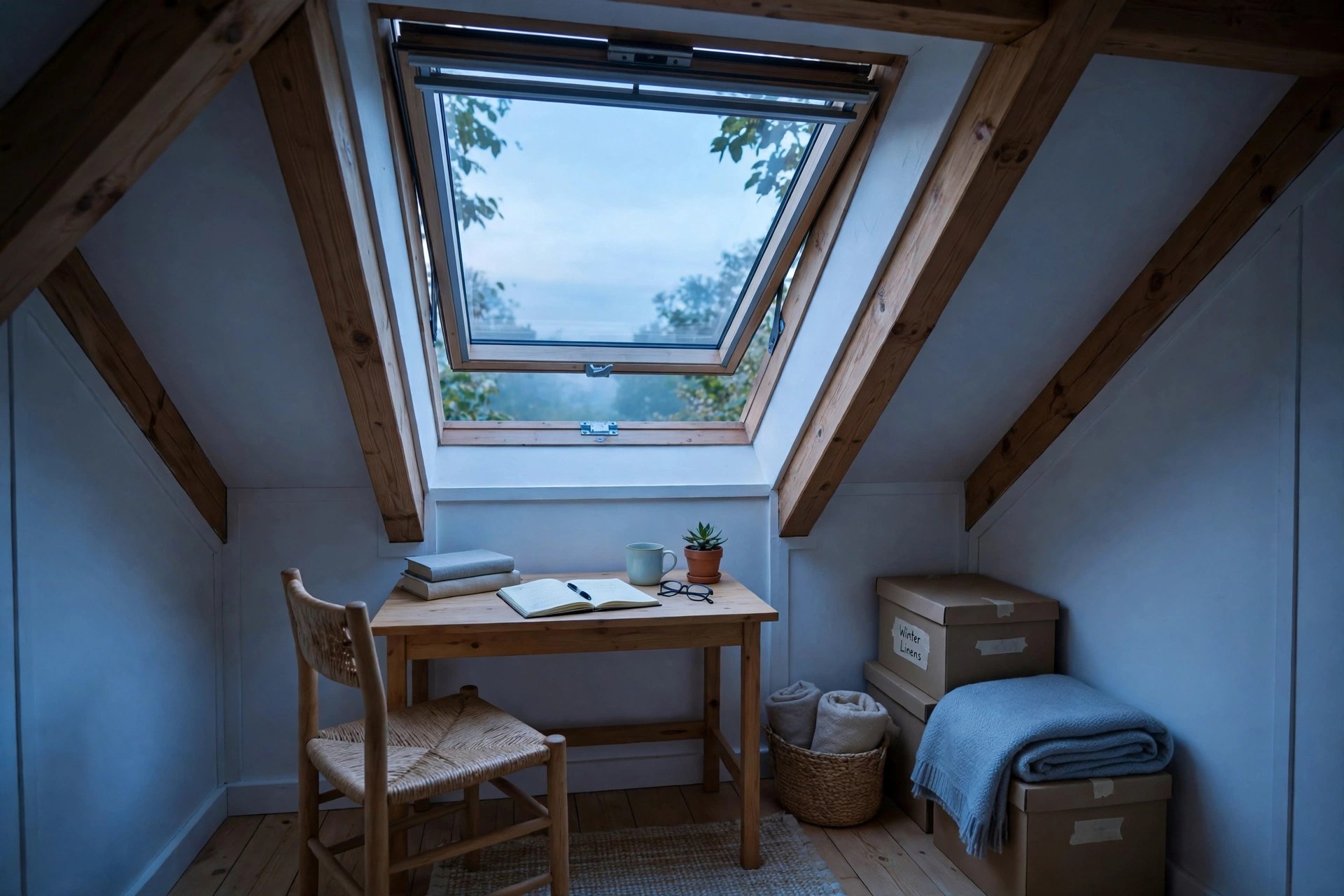
Then close everything by late morning, blinds down, and keep the room sealed through the hot afternoon. Leaving the skylight open all day pulls in the hottest air of the day and undoes the morning flush. If your attic has no second window, a single open skylight still helps in the morning — warm air escapes through it while cooler air is drawn up the stairs.
3. Put a fan where the air actually moves
A fan does not cool a room — it cools you, by moving air across your skin. That is why placement matters more than power. A small desk fan ($15–$40) aimed at your face and hands from about an arm’s length away does more for comfort than a big fan spinning in the corner.
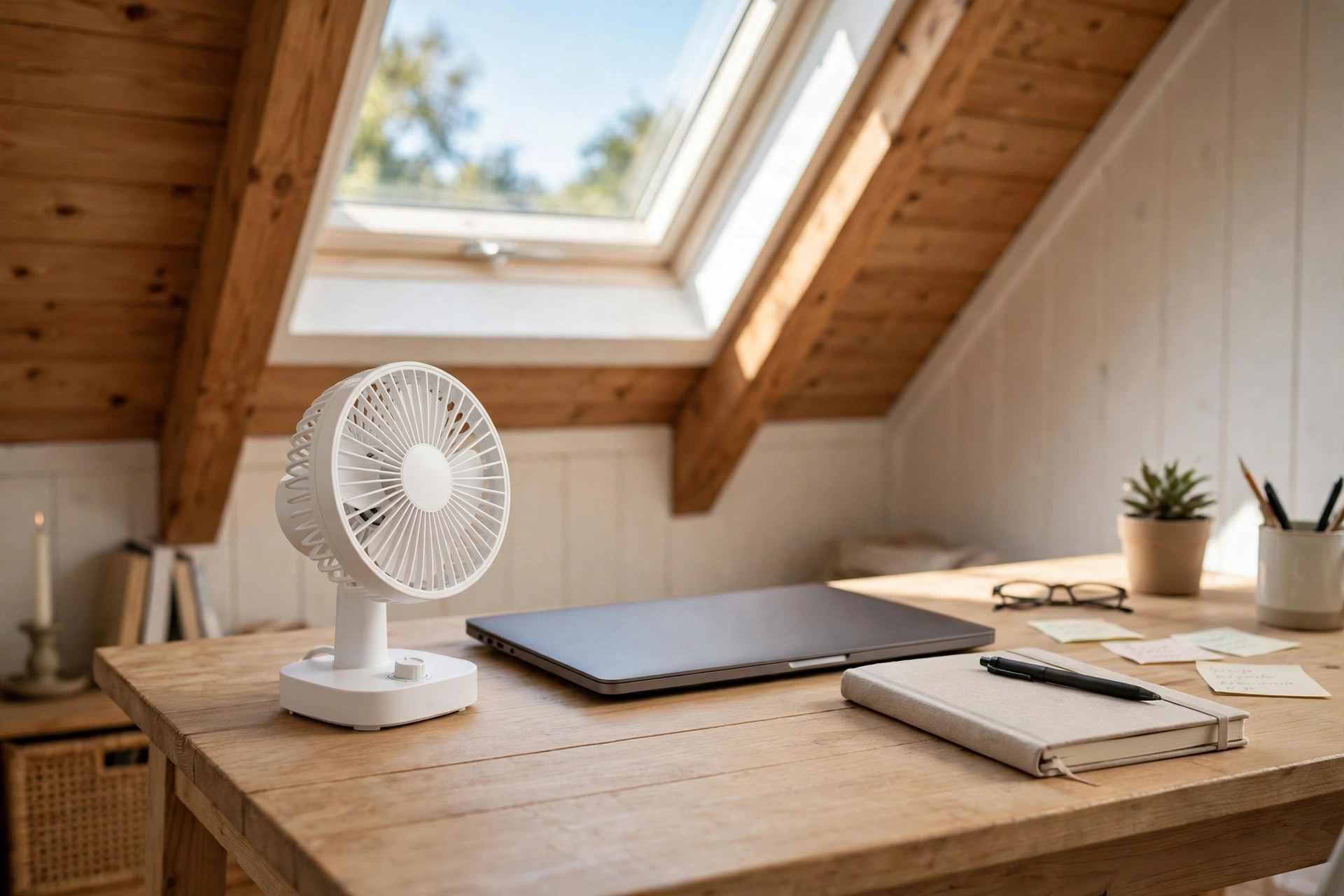
A window fan ($25–$60) earns its place in the morning routine: set it to exhaust through the skylight or gable window, and it pulls cooler air in from the rest of the house. In the afternoon, turn it off and close up — the same fan pulling in 35-degree air is working against you. One caution for attics: a fan blowing across a laptop’s vents can push hot exhaust air back toward you, so aim the fan at yourself and let the laptop breathe from the side.
4. Size the portable AC to the room, and vent it properly
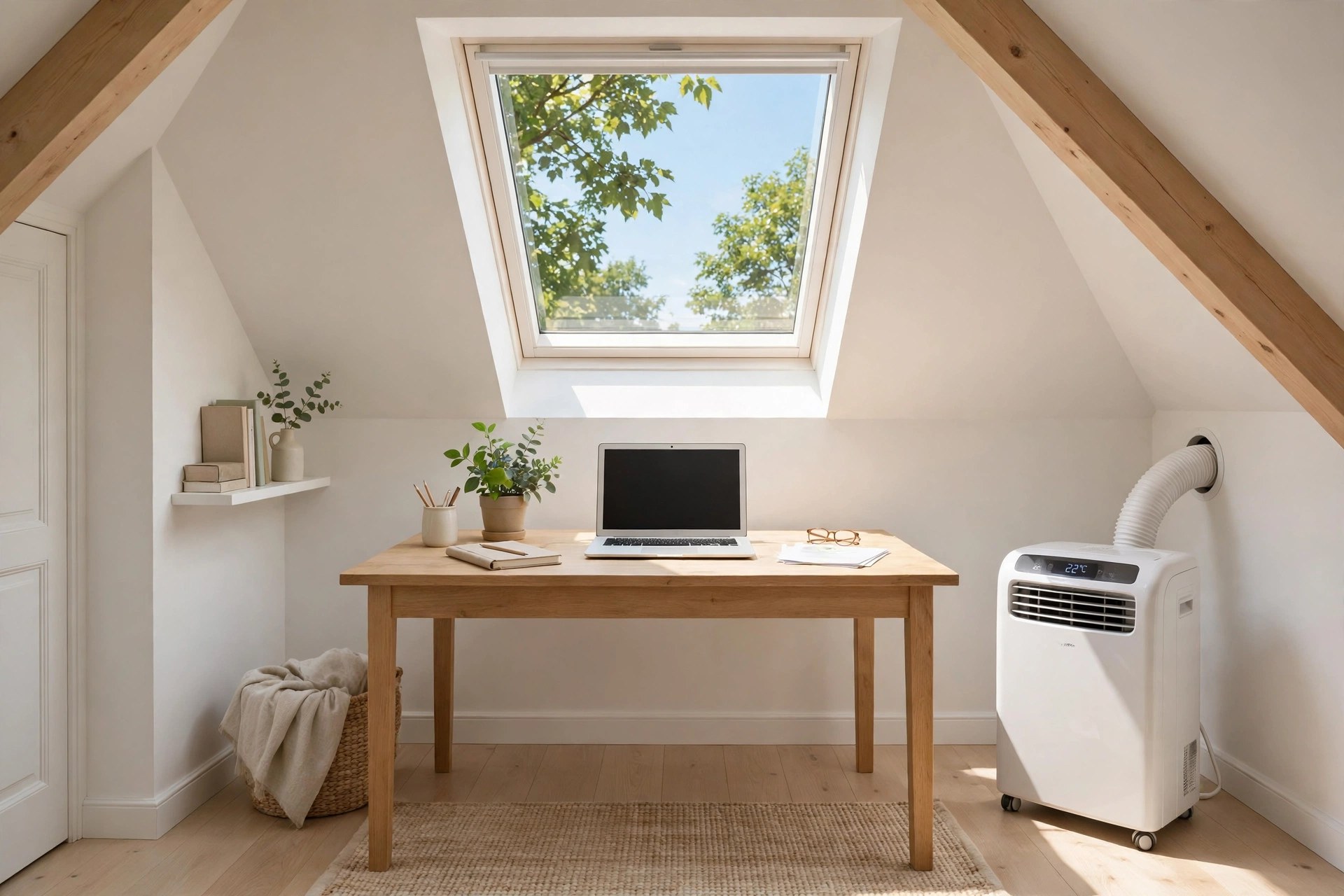
If blinds, ventilation and a fan are not enough, a portable air conditioner is the right tool — but only if it is sized and vented correctly. A small attic room of roughly 100–150 sq ft (9–14 m²) usually needs about 8,000 BTU; a larger or very sunny room needs 10,000–12,000 BTU. Undersize it and it will run all day without ever catching up; oversize it and it will short-cycle, cooling fast but leaving the air damp and clammy.
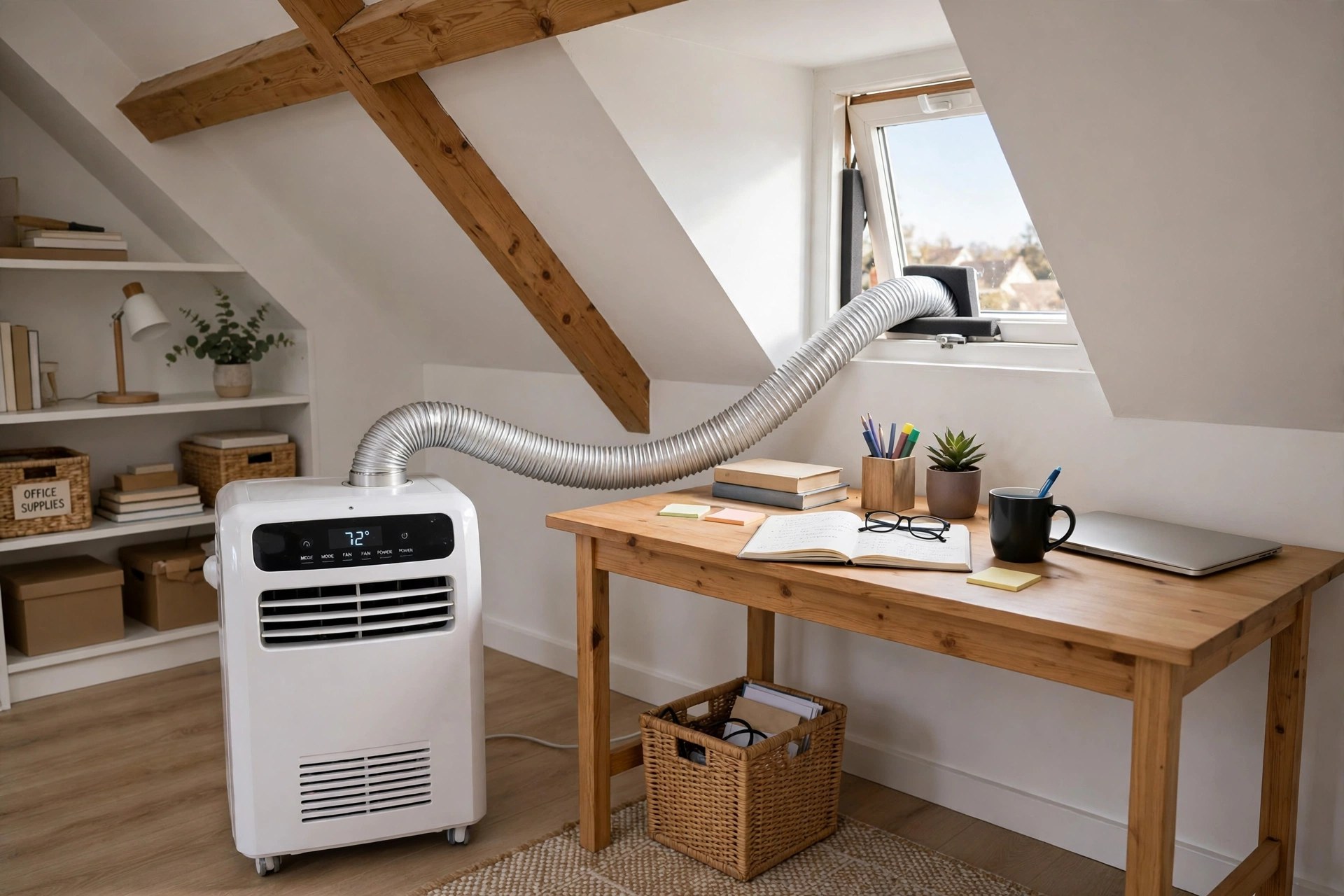
The vent hose is the part people get wrong. The hose must go outside — through a window kit or a skylight adapter — and it must be as short and straight as possible, because every extra metre of hot hose radiates heat back into the room it is supposed to cool. A portable unit also makes condensation, so check whether yours drains itself through the exhaust (most modern ones do) or needs a tray emptied. Expect to pay roughly $250–$600 for a decent unit, and run it only with the blinds closed and the room sealed. If a window unit or a mini-split is ever on the table, our attic heating and cooling guide covers the year-round options and the order to do them in.
5. Measure before you spend anything else
Guessing where the heat comes from wastes money. A $10–$25 digital thermometer on the desk tells you the truth in a day: check the temperature at 9 a.m., at noon and at 3 p.m. If the desk is hot to the touch by midday, the skylight is the problem. If the air is fine but you are sweating, the problem is airflow, not temperature. If the room is 5 degrees hotter than the landing below, the shell — insulation and air leaks — is the problem.
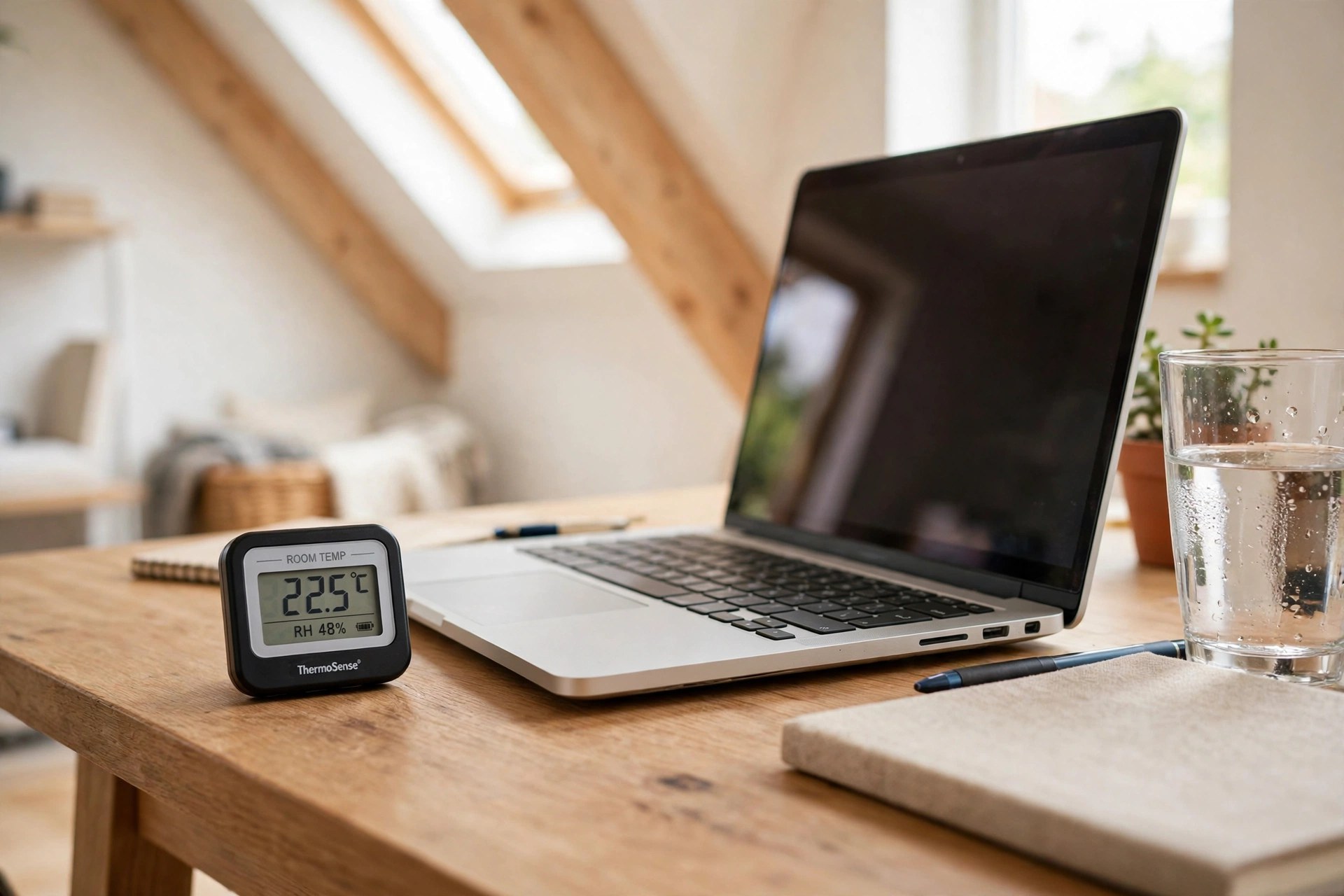
The readings tell you which fix to buy next. A room that roasts by noon needs blinds, not a bigger air conditioner. A room that never cools down even at night needs ventilation or insulation work. Measure for three days, then spend.
6. Cool the person, not the whole room
Cooling a whole attic room to 22°C all afternoon is expensive; cooling the one person sitting in it is cheap. A desk fan aimed at your hands and face, a cold drink on the desk, and light clothing will keep you comfortable in a room a degree or two warmer than ideal — and that degree or two is the difference between an air conditioner running flat out and one cycling gently.
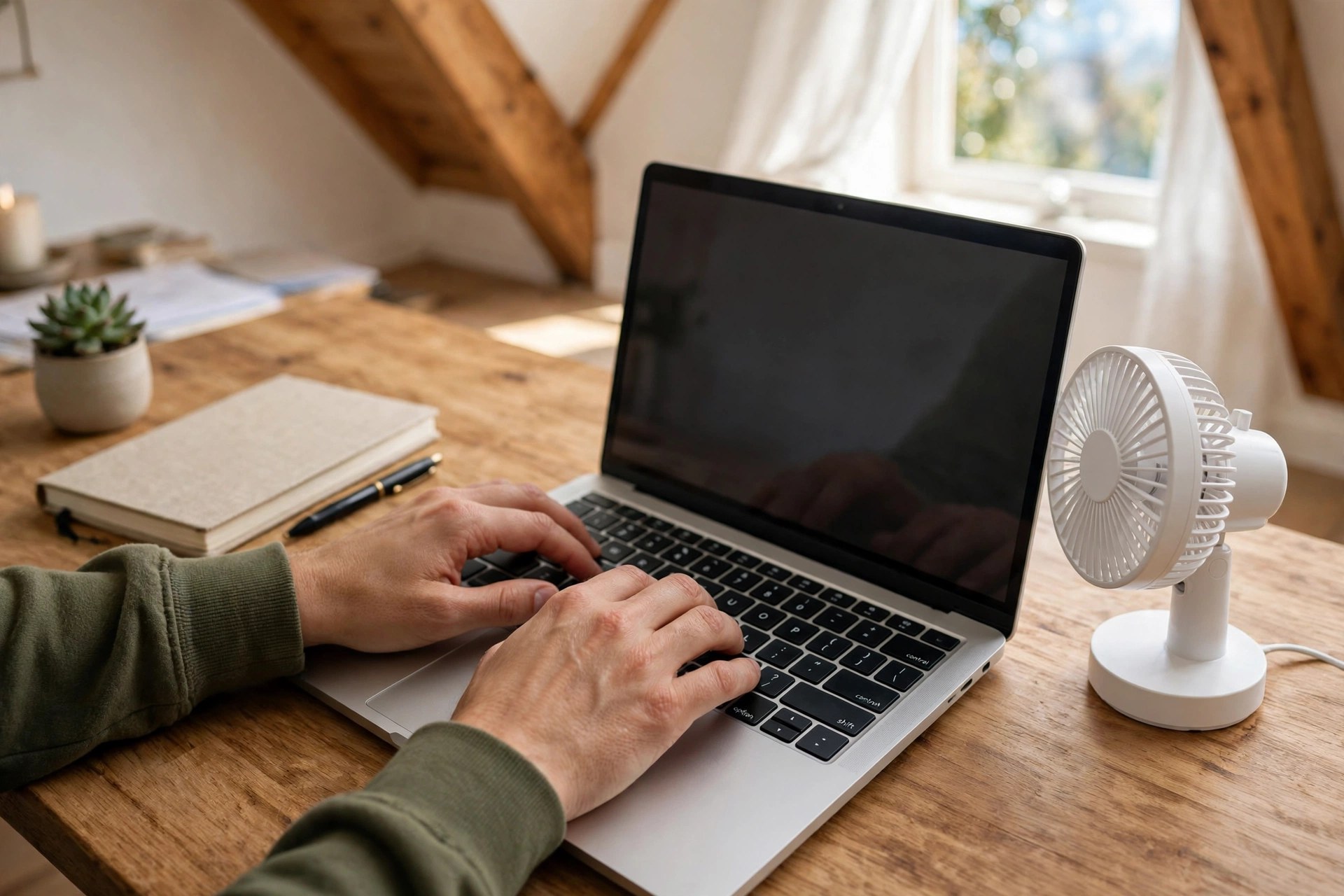
Skip the internet’s favourite tricks: a bowl of ice in front of a fan cools the air for about ten minutes, then adds humidity that makes an attic feel worse. An evaporative (swamp) cooler only works in dry air; in a humid summer it just makes the room muggy. What does work, every time: cold water on your wrists for a minute, a damp cloth on the back of your neck, and a fan moving air over you.
7. Cut the heat your gear makes
Your own equipment is a heater you forgot about. A laptop under load, a second monitor, a desktop PC and an old halogen desk lamp can easily add 200–300 watts of heat to a small attic room — roughly the same as a small space heater running all day.
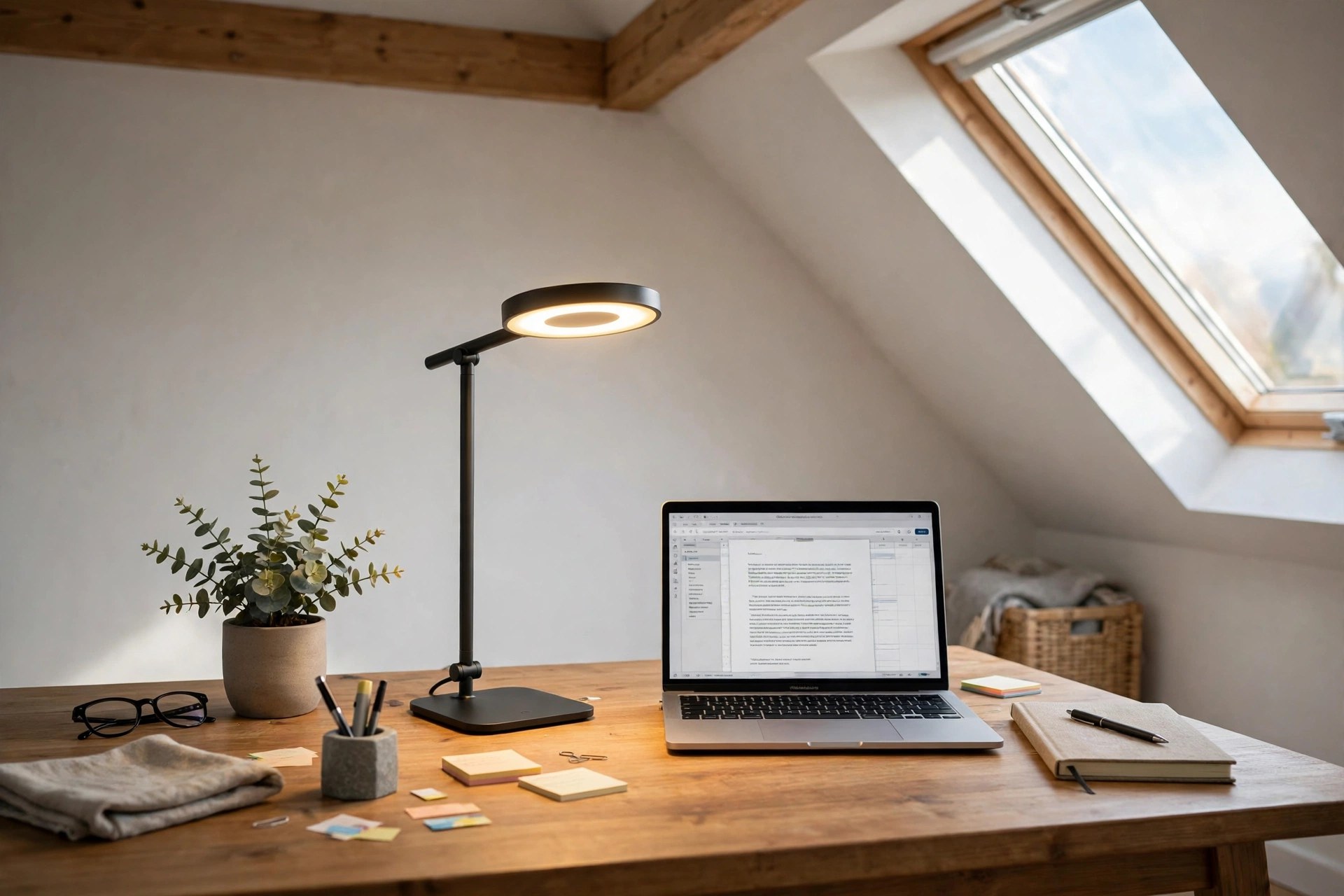
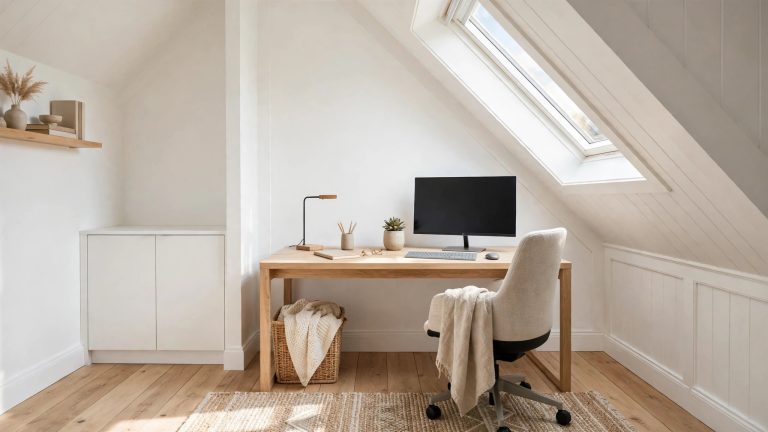
Swap any old bulb for an LED desk lamp first; it is the cheapest watt you will ever remove, and LED lamps typically cost $20–$60. Then give the laptop air: a simple stand that lifts it off the desk lets heat escape from underneath. If you run a desktop, move the tower out from under the desk so its exhaust goes toward the room’s exit, not back at your legs. And switch the monitor off at lunch — a sleeping screen still radiates heat, and an off one does not.
8. Fix the hot shell last — it is the permanent fix
If you have done everything above and the room still hits the high twenties every afternoon, the building itself is the problem: thin insulation, gaps in the knee walls, or a dark roof soaking up heat. This is the most expensive fix and the only permanent one, so it comes last — but it is also the one that makes every other fix work half as hard.
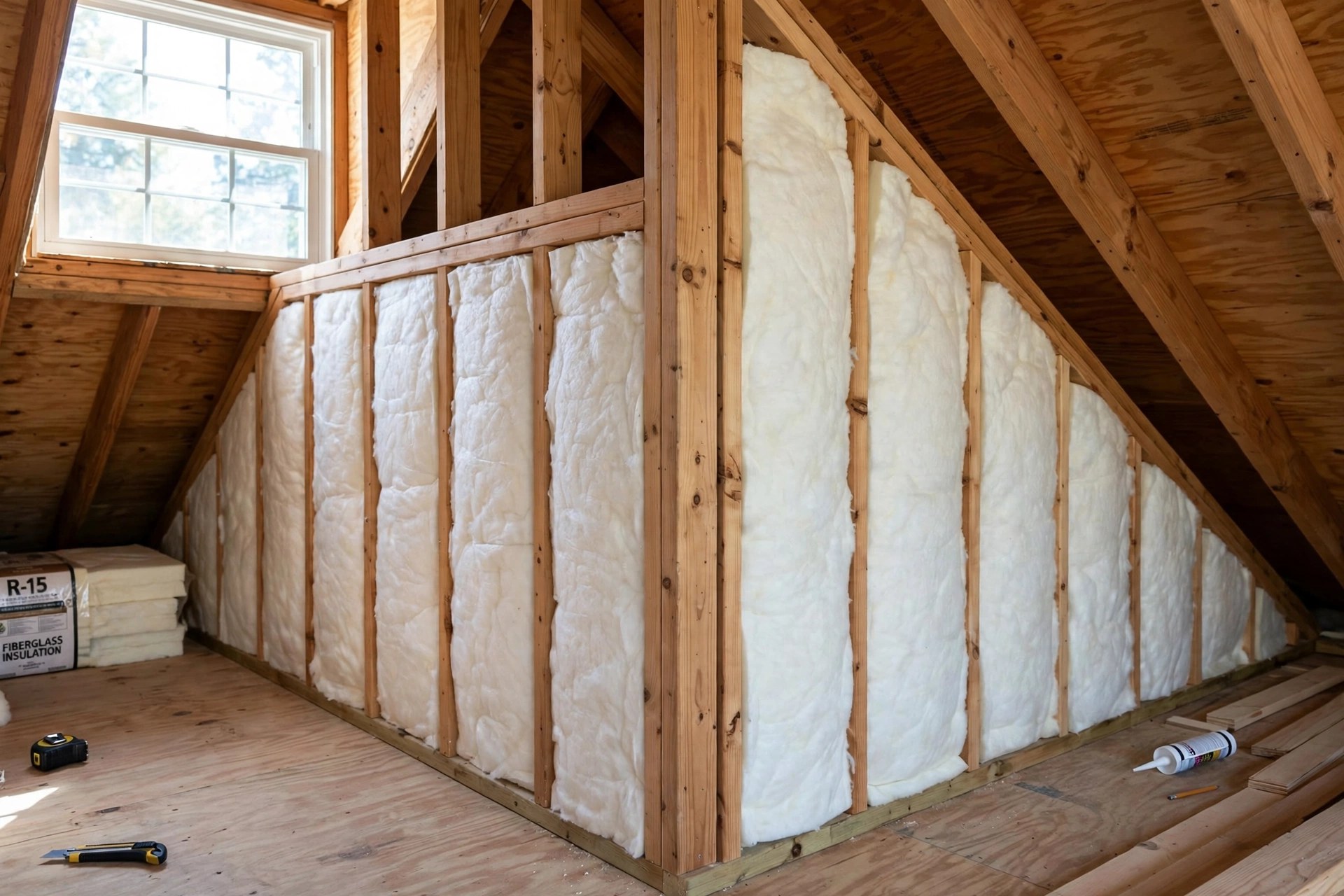
Start with the cheap checks: feel for warm air leaking around the knee-wall access doors and the hatch, and seal the gaps with foam tape. Then check the insulation in the knee walls and the roof slope — in older attics it is often thin, compressed or missing in patches. Topping it up is a weekend job in most small attics, and it pays back in winter too.
The order that works
Start with the blinds and the morning routine — both are cheap, and together they solve most attic offices. Add a desk fan aimed at you, then measure for three days before buying anything bigger. If you do need a portable AC, size it to the room and vent it short and straight.

Do the fixes in this order and each one makes the next one cheaper: less sun in means less cooling needed, and less cooling needed means a smaller, quieter air conditioner — or none at all. An attic office just needs the heat dealt with in the right order, before it builds up.