9 Ways to Combine a Bedroom and Attic Office
An attic bedroom that also has to be your office is two rooms fighting over one small, sloped space. The bed wants the quiet corner, the desk wants the light and the headroom, and neither fits comfortably under a roof that slopes down to knee height. Most people solve this by squeezing a desk against whatever wall is free — then wonder why they never want to sit there, or why they cannot sleep in a room that still feels like work.
The fix is not more furniture. It is deciding where each job lives, then letting the furniture follow. These nine ways work in this order: zone the room, place the desk, store the overflow, divide it lightly, light it for two jobs, protect your sleep, hide the mess, double up the furniture, and deal with sound and air. If you are starting from an empty attic, our 12 attic home office ideas cover the overall layout first.
1. Zone first: bed on one side, desk on the other
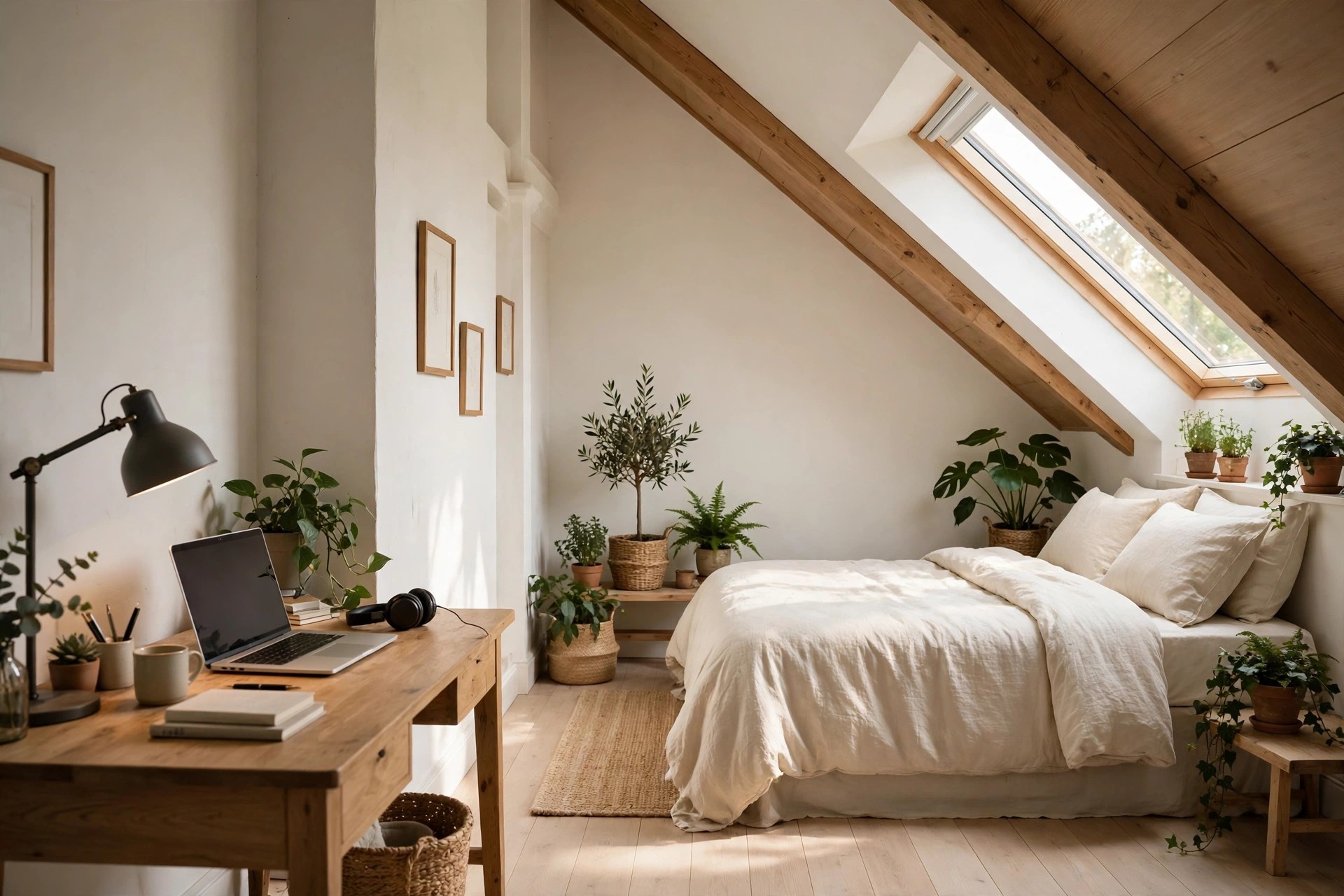
Before you move a single piece of furniture, draw an invisible line down the middle of the room. One side sleeps, the other side works. This sounds obvious, but it is the step most attic combos skip — the desk ends up next to the pillow because that was the only free wall, and then every workday ends with you staring at your inbox from bed.
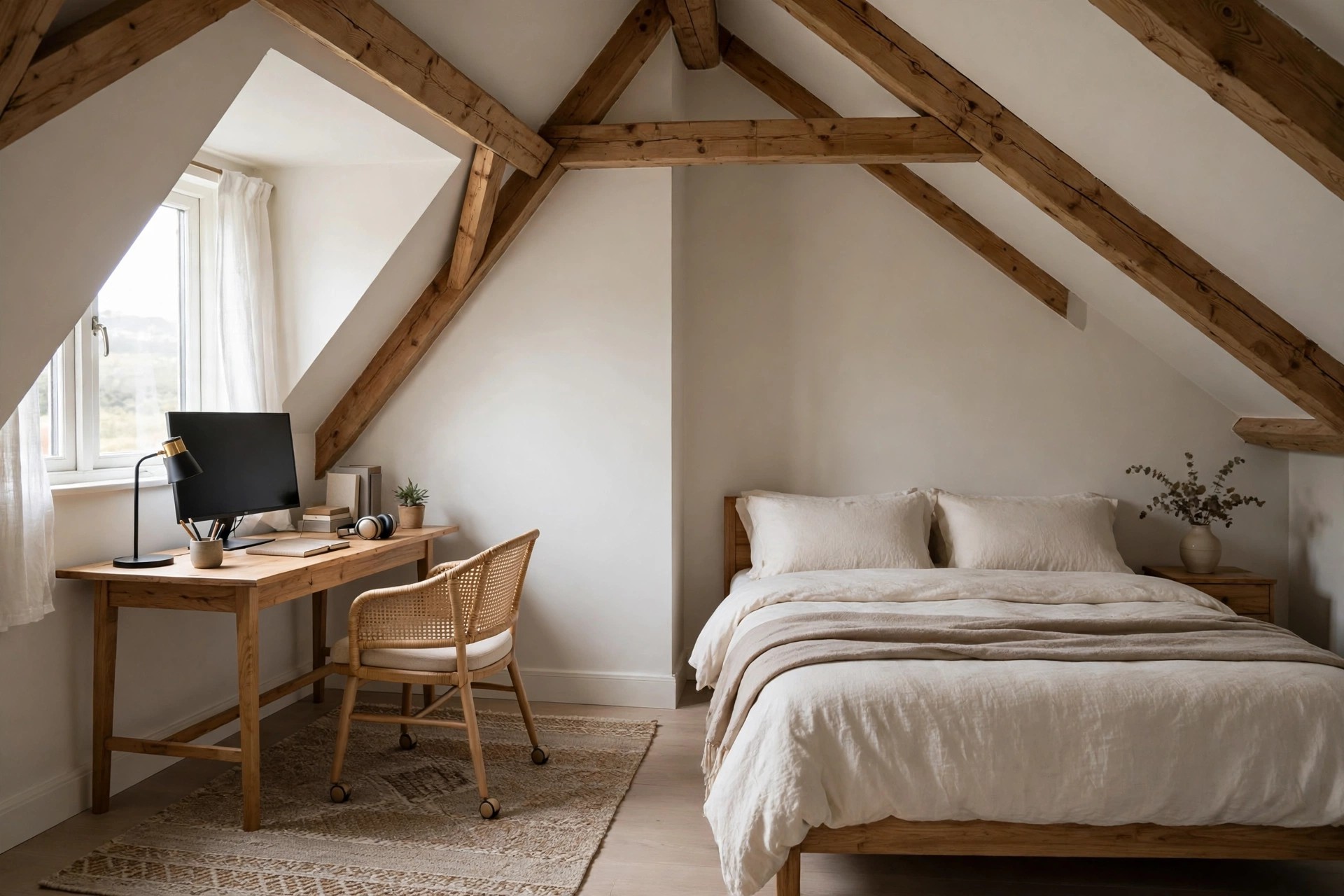
Zoning does not need a wall. A rug under the desk chair, a different paint colour on the work side, or simply turning the bed to face away from the desk is enough for your brain to register two rooms.
2. Put the desk on the tall wall, the bed under the slope
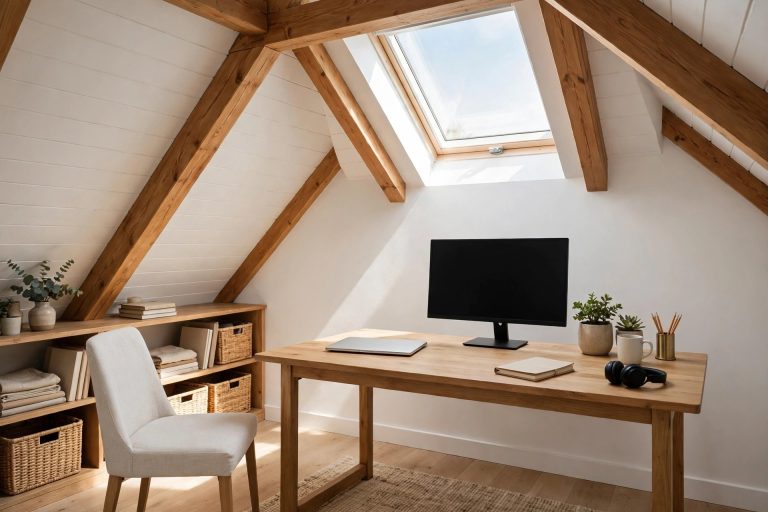
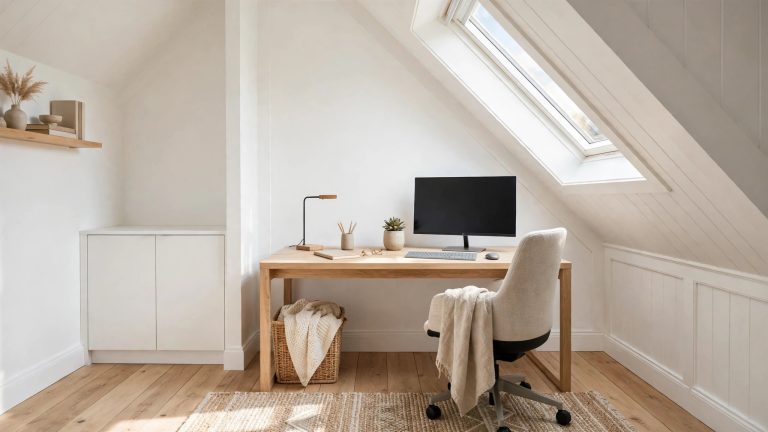
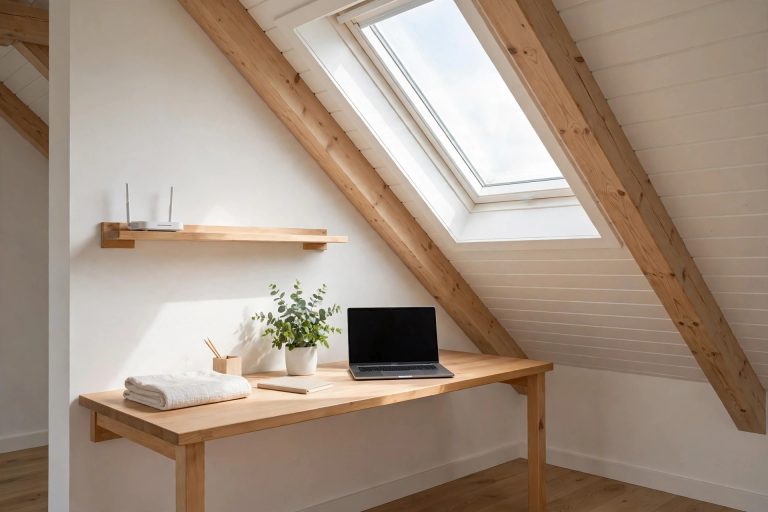
This is the single most useful placement rule in any attic office. You sit at a desk for hours, so the desk goes where you can sit up straight and stand up without ducking. The bed only needs you lying down, so it is perfectly happy under the slope. Get this the wrong way round and you will bump your head every morning and hunch at your desk every afternoon.
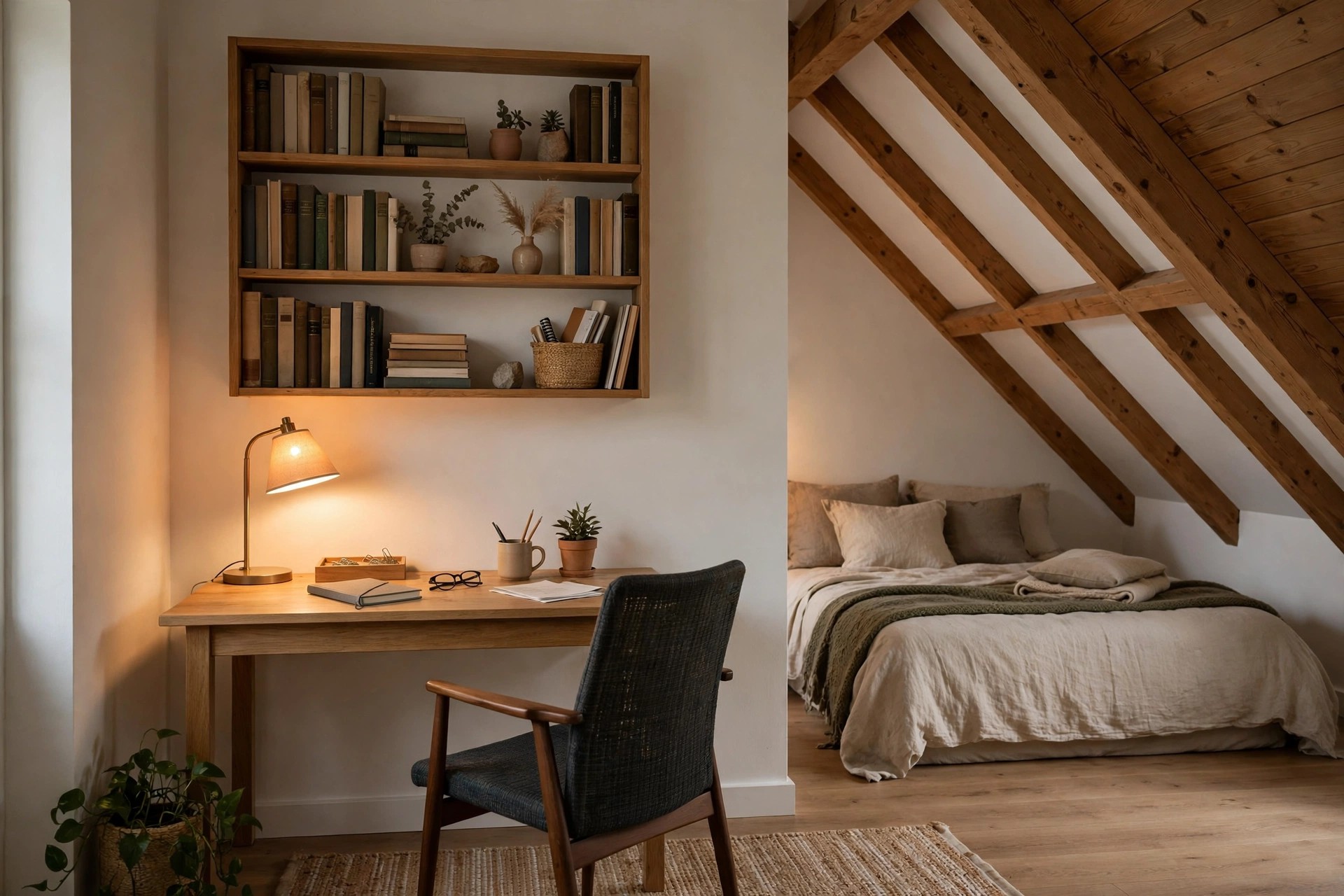
Measure before you move anything: you need roughly 7 feet of clear height above the desk chair, and about 3 feet of depth in front of the desk for the chair to roll back. Our sloped-ceiling desk placement guide walks through the measurements and the common mistakes in detail.
3. Let the knee walls do the storage work
Every attic has knee walls — those short walls where the roof slope meets the floor — and the space behind them is the best storage in the room, because it is space you cannot stand in anyway. In a bedroom-office combo it is the difference between a tidy room and one where office supplies and spare bedding fight for the same closet.
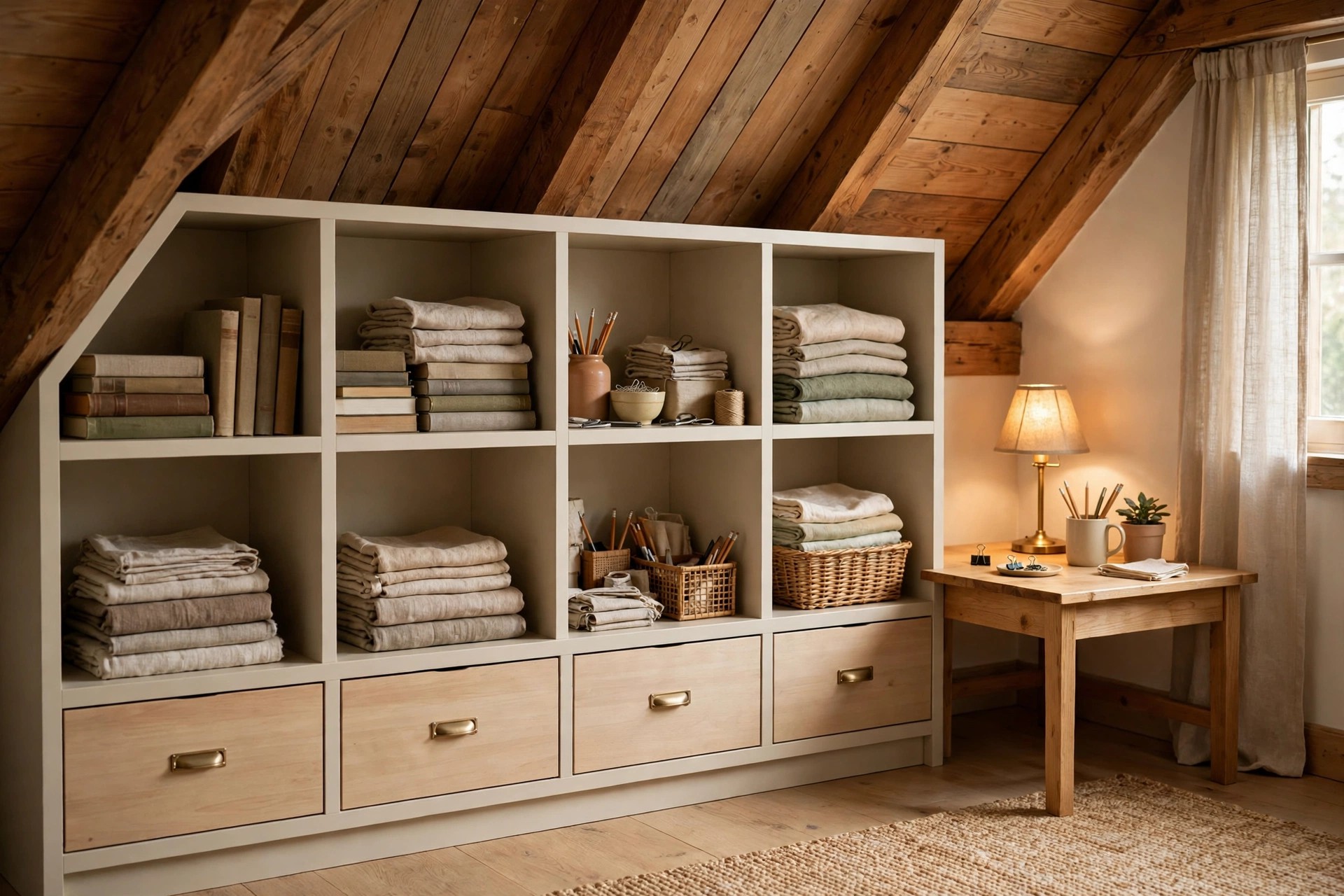
Fit low drawers or open cubbies into the knee walls on the desk side for paper, cables, and files; use the bed side for spare bedding and off-season clothes. Anything you use daily stays within arm’s reach of the desk, and everything else lives behind the knee wall.
4. Divide the room without building a wall
A real wall in a small attic makes both halves feel cramped and steals the light. But some kind of divider helps enormously, because it is what tells your brain that work is over when you cross it. The trick is a divider that separates without blocking: it should break the sightline, not the room.
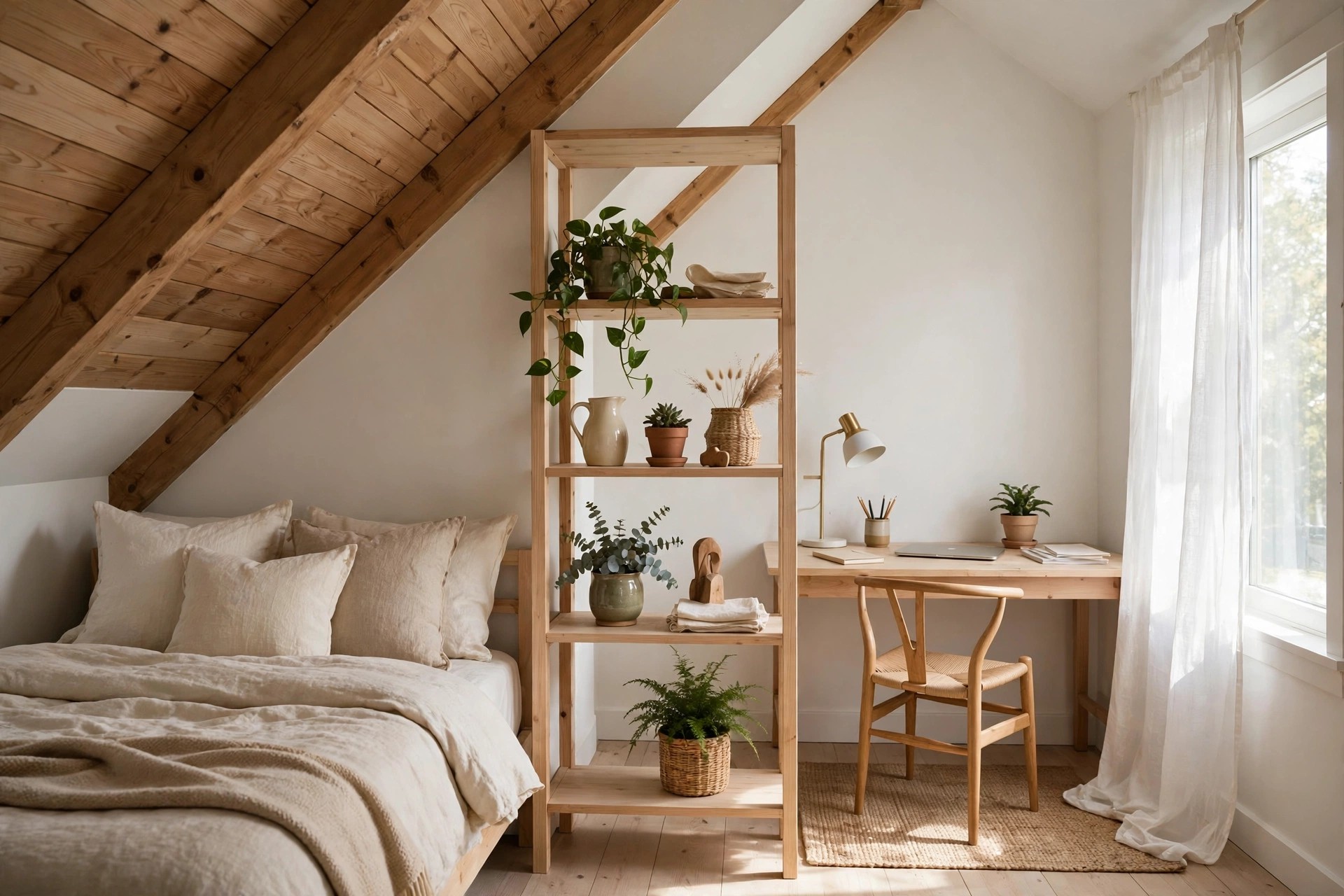
An open bookshelf is the best option for most rooms — it holds office supplies on the work side and books or plants on the bed side, and light still passes through the gaps. A ceiling-mounted curtain track with a light fabric curtain costs very little, folds away when you want the room open, and is the easiest option in a rented home.
5. One light plan for two jobs
A bedroom wants warm, dim light. An office wants bright, focused light. One ceiling bulb cannot do both, so a bedroom-office needs layers — and the layers should be switched separately, so you can light one zone without lighting the other.
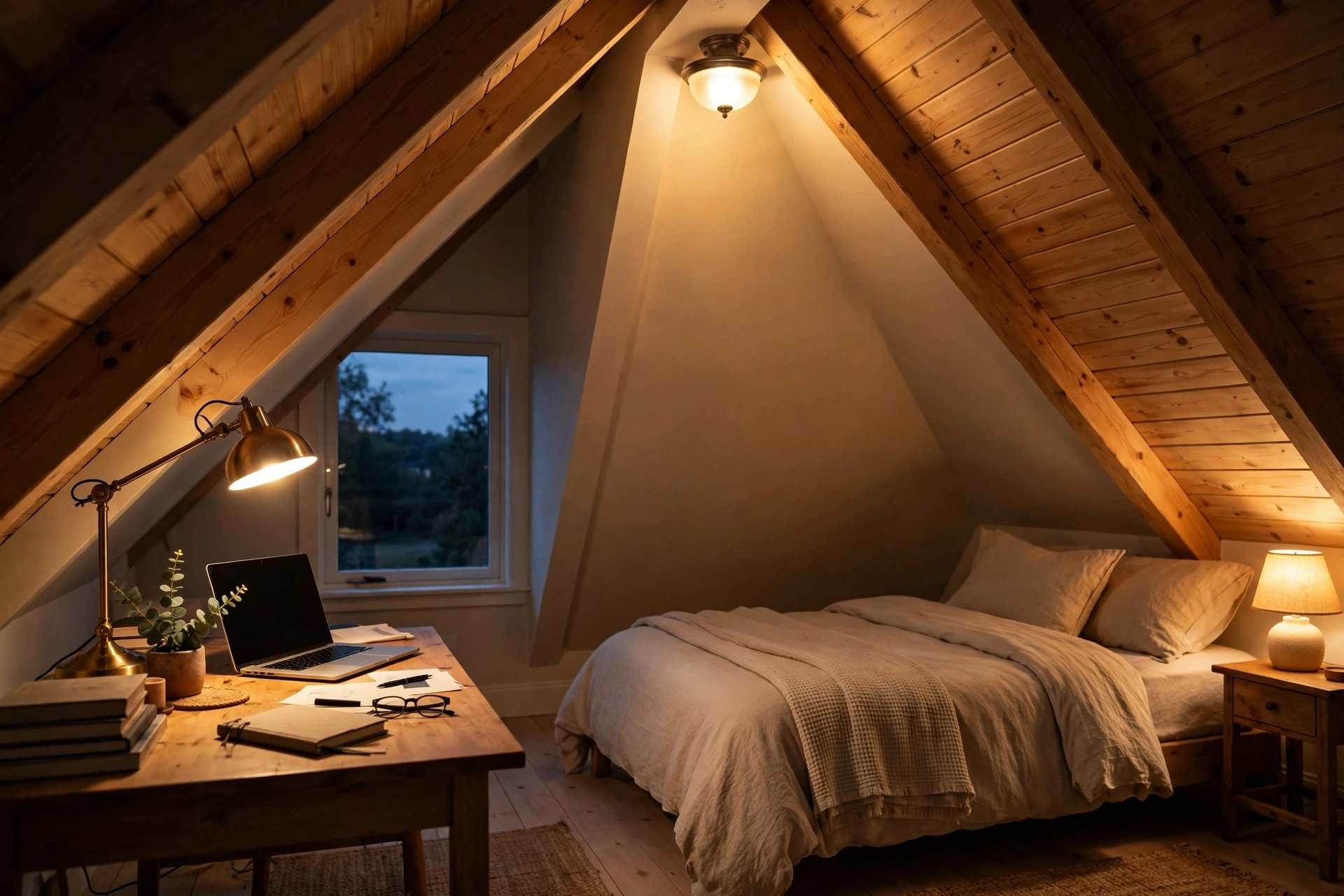
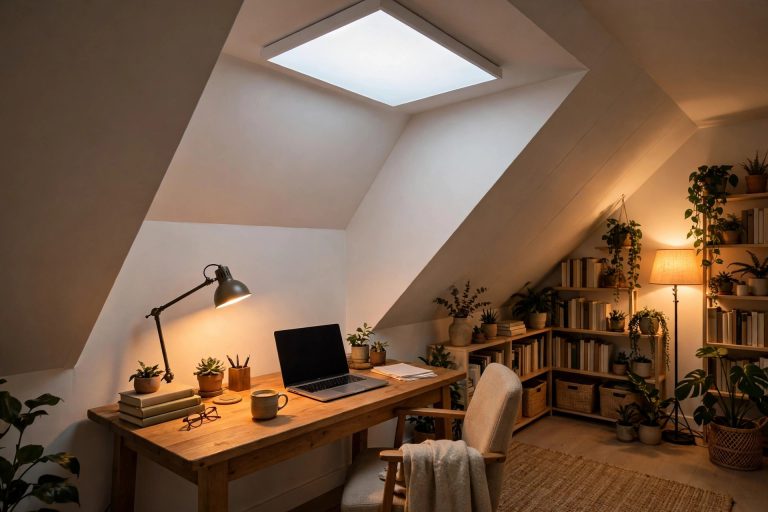
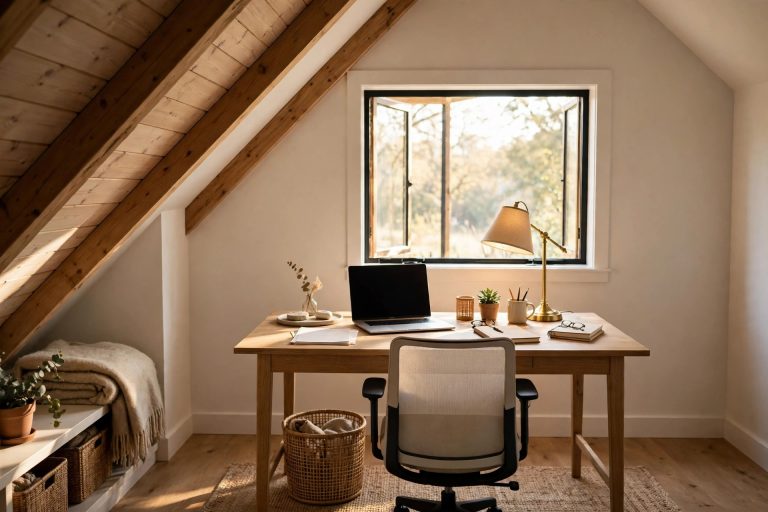
Start with the desk: an adjustable desk lamp with a warm-white bulb (around 2700–3000K) aimed at your work, not at your eyes. Then the bed: a small bedside lamp or a wall-mounted reading light with its own switch. Then the room itself: a dimmable ceiling light for general light when you are tidying up or getting dressed.
6. Keep the bed for sleep — no laptop in bed
This is the hardest rule to keep and the one that matters most. The moment the laptop moves onto the bed, the room stops being two zones and becomes one long workday that never ends. Sleep gets worse, work gets worse, and the bed starts feeling like another chair.
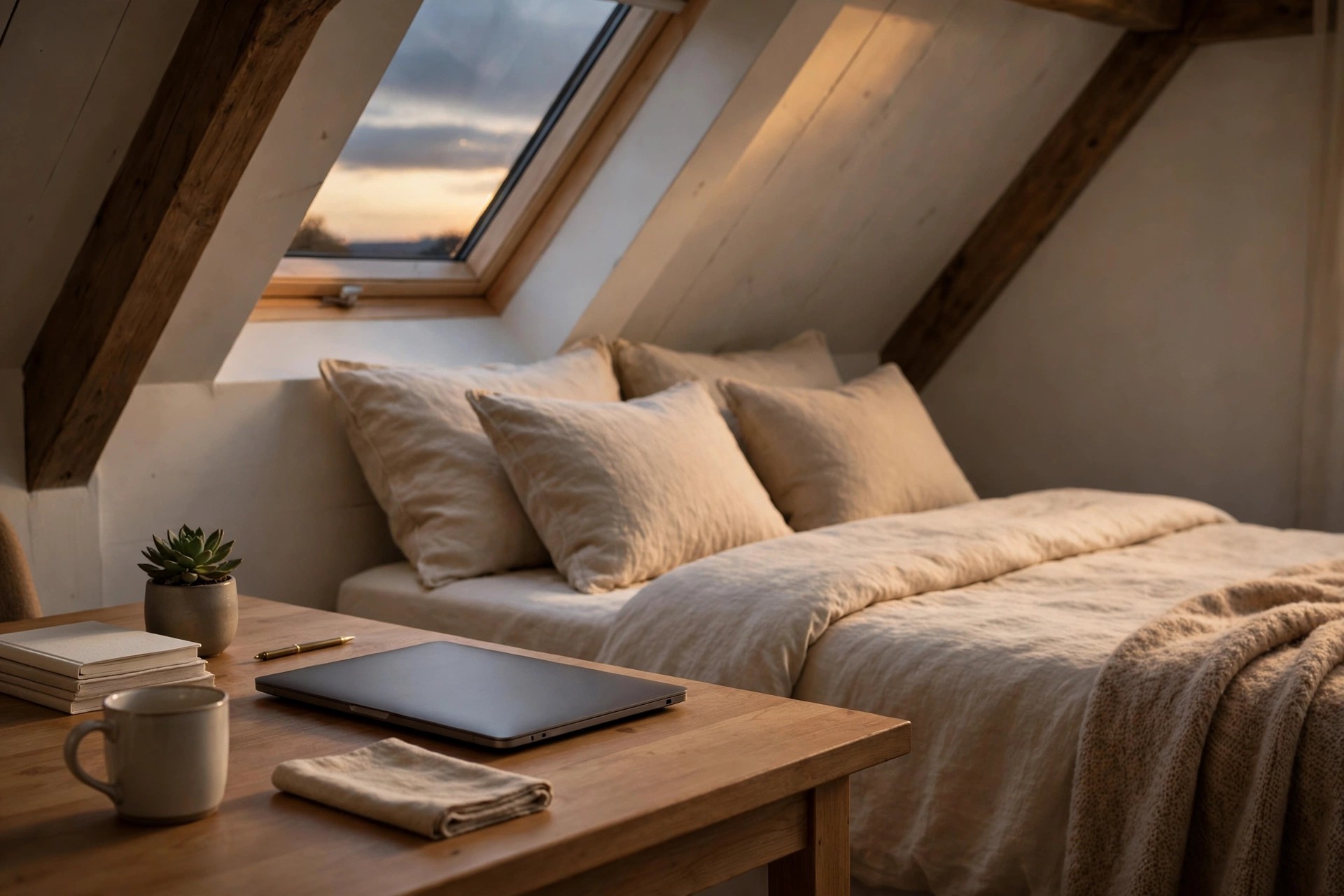
Make the rule physical, not just a promise. Close the laptop at the end of the day and leave it on the desk — a closed laptop is a clear signal that work is done. It takes about a week for this to feel normal, and after that the bed starts feeling like a bedroom again.
7. Hide the cables and the clutter
A bedroom-office has twice the stuff of a normal room, and in a small attic every cable and every pile is visible from the bed. Clutter is not just ugly here — it is the thing that makes the room feel like an office at midnight and a bedroom at 9 in the morning, which is exactly backwards.
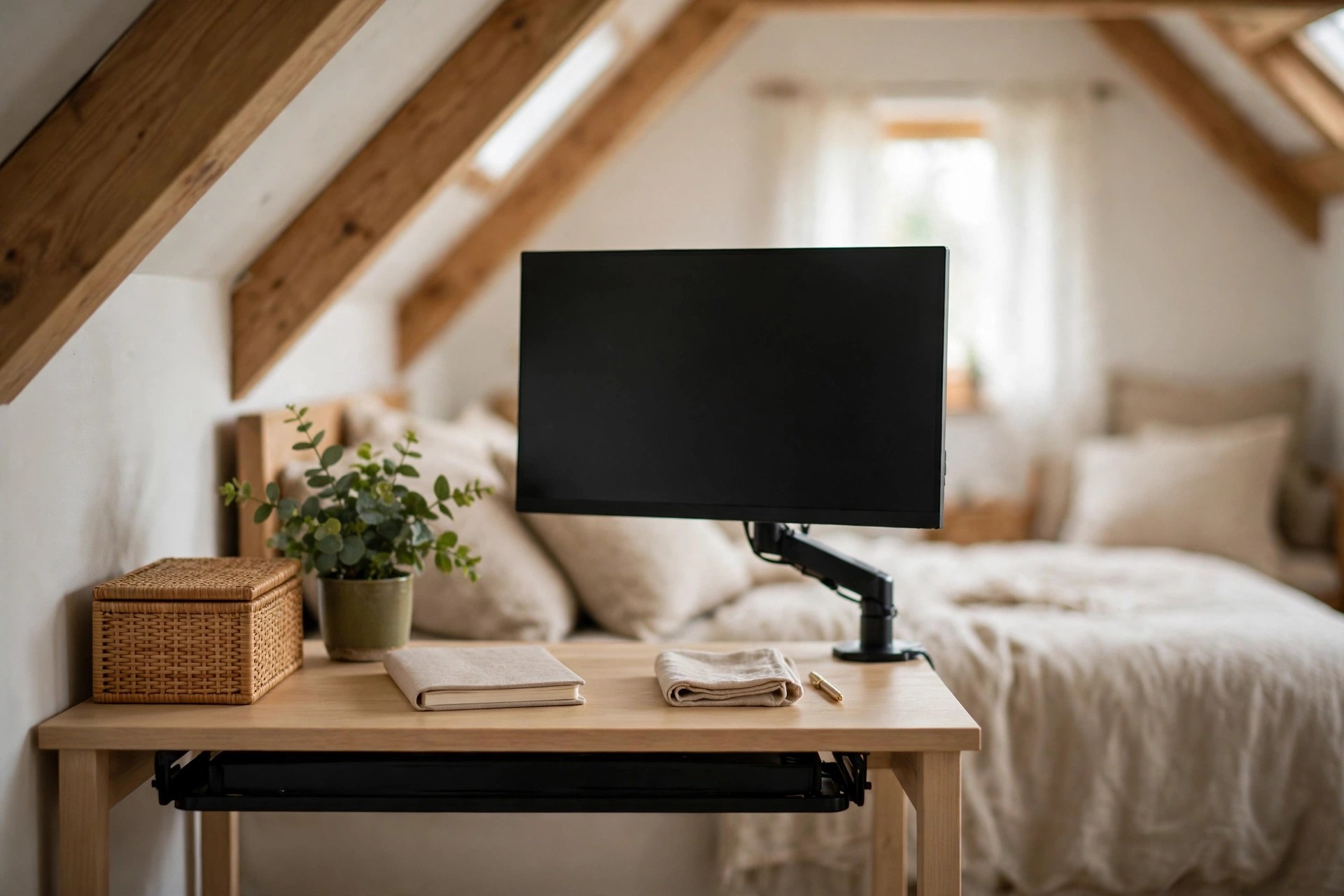
Start with the cables, because they are the cheapest win. A cable tray screwed under the desk (typically $15–$30) holds the power strip and all the chargers off the floor, and a single cable sleeve carries the rest to the wall. At the end of each workday, spend two minutes clearing the desk — two minutes a day beats a full tidy-up every weekend.
8. Pick furniture that does two jobs
When one room does two jobs, every piece of furniture should earn its floor space twice. A desk that is only a desk and a bed that is only a bed will fill a small attic fast; furniture that doubles up is what keeps the room liveable.
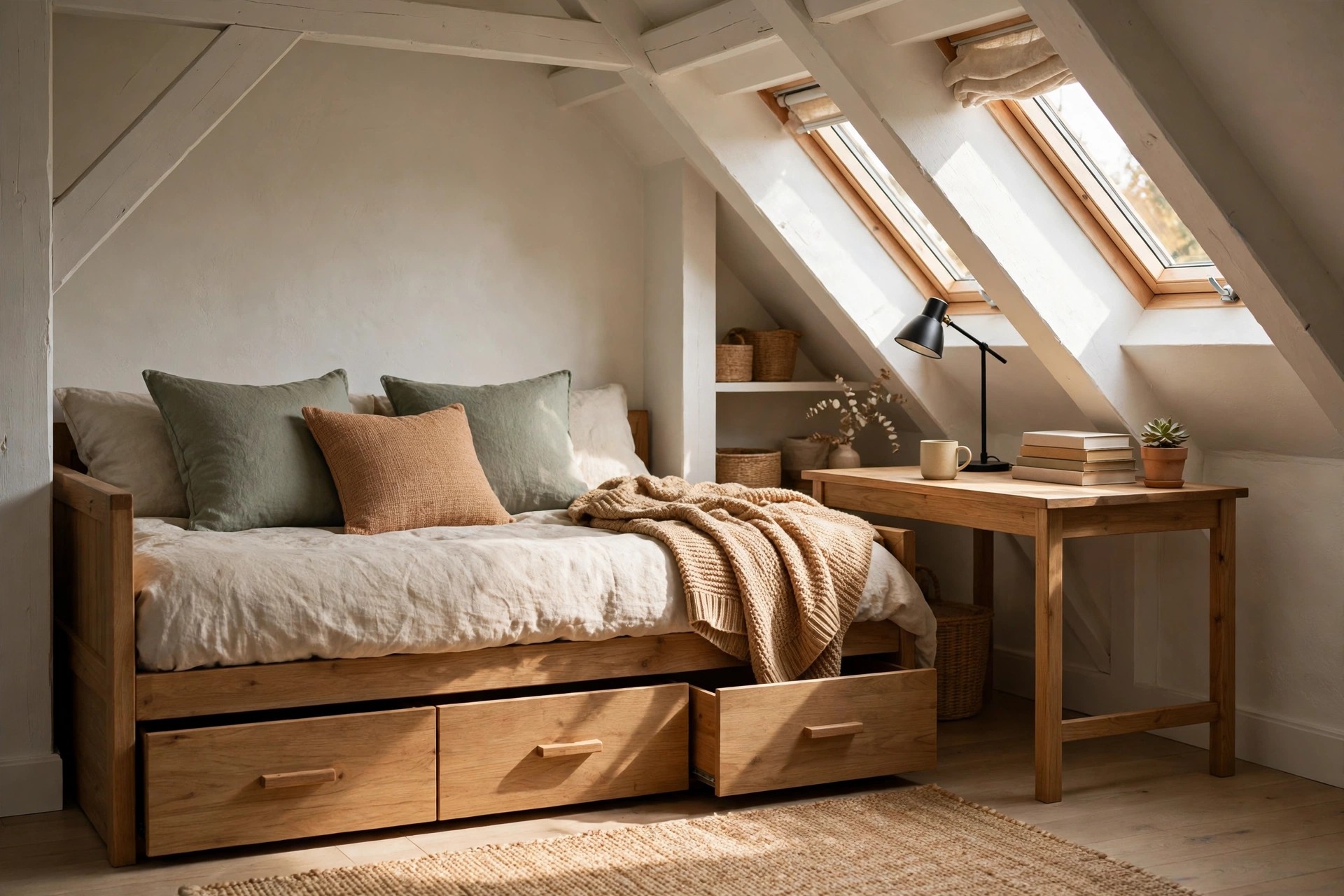
A daybed with storage drawers underneath is the classic answer: a sofa for reading or calls during the day, a bed at night, and drawers for bedding or office supplies. A fold-down wall desk works well if the room is very small — it closes up flat when the workday ends and the wall becomes bedroom wall again. Buy the double-duty pieces first, and only add single-purpose furniture when there is clearly room for it.
9. Sound, air and the door
Attics are noisy in ways normal rooms are not: rain on the roof, wind in the eaves, the heating kicking in above you. And a bedroom-office needs to be quiet twice over — quiet enough to concentrate, and quiet enough to sleep.
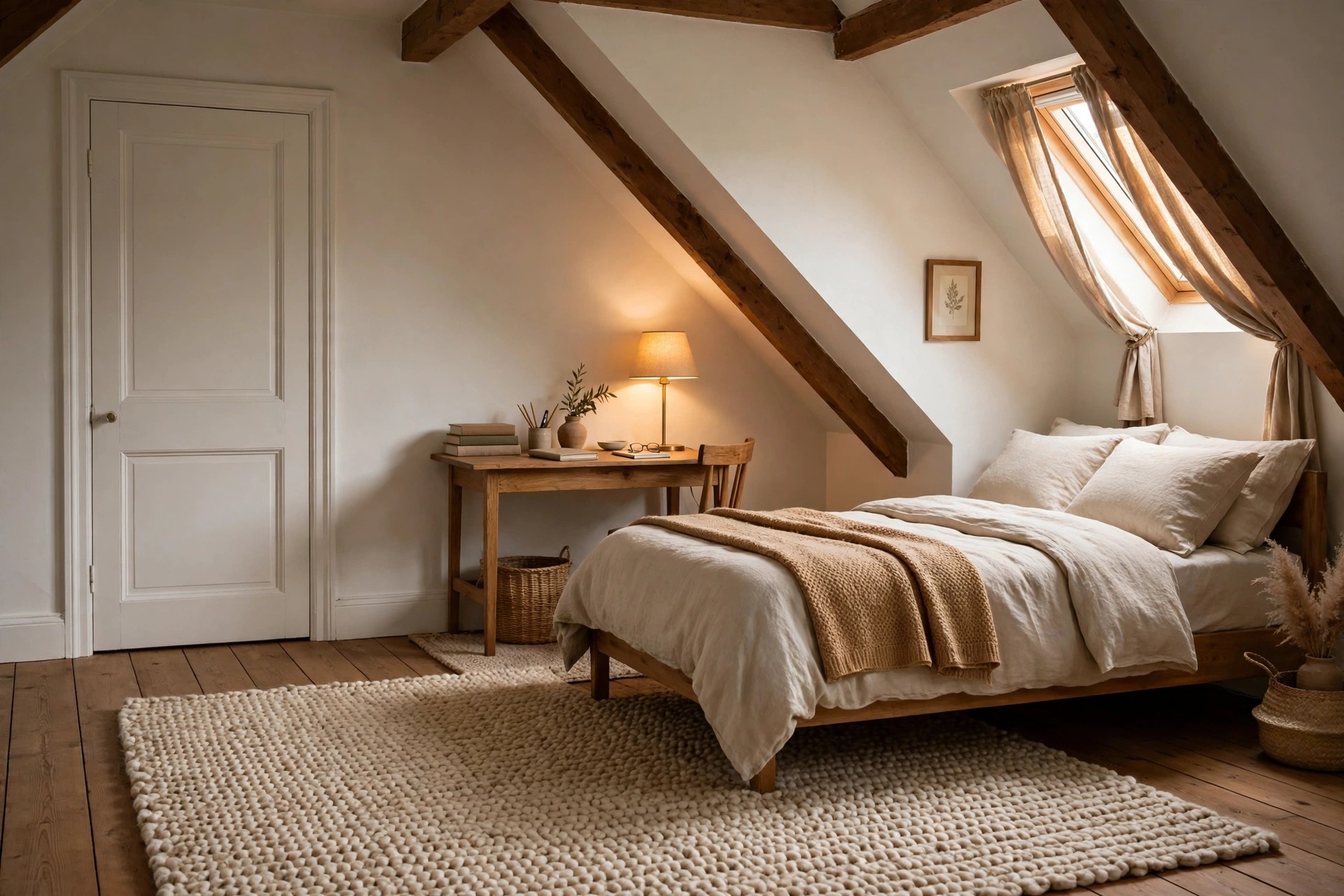
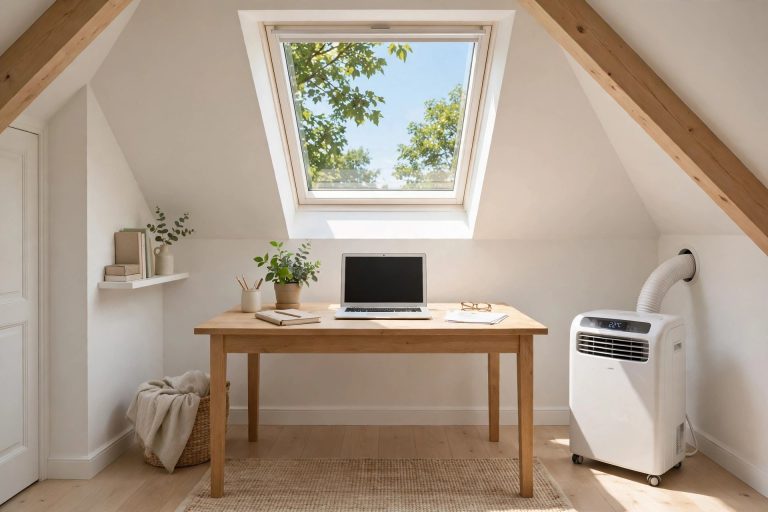
A thick rug on the wood floor cuts echo and footstep noise more than any other single change, and it makes the room feel warmer underfoot. A door sweep on the attic door keeps hallway noise and cooking smells out, and keeps your heated or cooled air in.
The order to do it in
Do the nine ways in this order: zone the room and place the desk first, because everything else hangs off those two decisions. Then sort the knee-wall storage, so you know what fits where. Then the divider, the lighting, and the cable tidy-up — the three things that make the room feel finished. Furniture that does two jobs comes next, and the sleep rule and the sound fixes are habits you start on day one and keep.
What it typically costs
A bedroom-attic office combo does not need a big budget if the room is already a bedroom. The zoning, the desk move, and the sleep rule cost nothing. A cable tray, a curtain track, and a door sweep together usually run under $100. A decent rug, a daybed with storage, or a fold-down desk are the bigger items — typically $150–$500 each — so buy those one at a time, starting with whichever solves your biggest daily annoyance.
One attic room can genuinely be both a good bedroom and a good office — but only if each job has its own place, its own light, and its own end to the day. Give the desk the tall wall, give the bed the slope, divide them lightly, and keep the laptop off the mattress.