25+ Small Home Office Ideas That Actually Fit
A small home office does not fail because the room is small. It fails because the desk went in first. The rooms that work follow a different order: measure the space you actually have, pick the desk that fits that space, then add light, a chair you can sit in all day, and storage that hides the mess. The 25 ideas below follow that order. None of them needs a spare room or a renovation — most cost under $100, and several cost nothing. Pick three, do them in order, and the room will feel bigger than it is.
1. Start with the corner, not the room
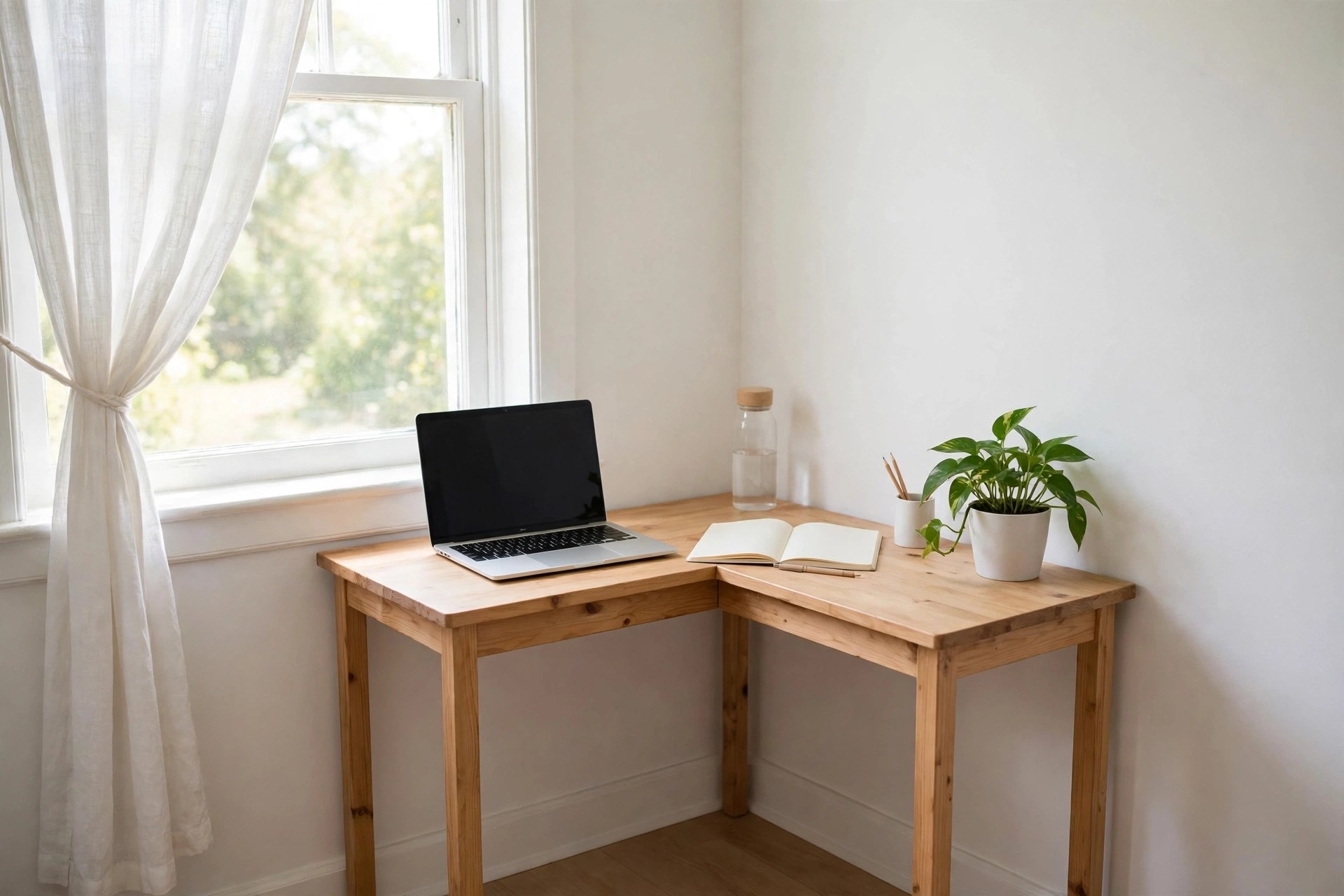
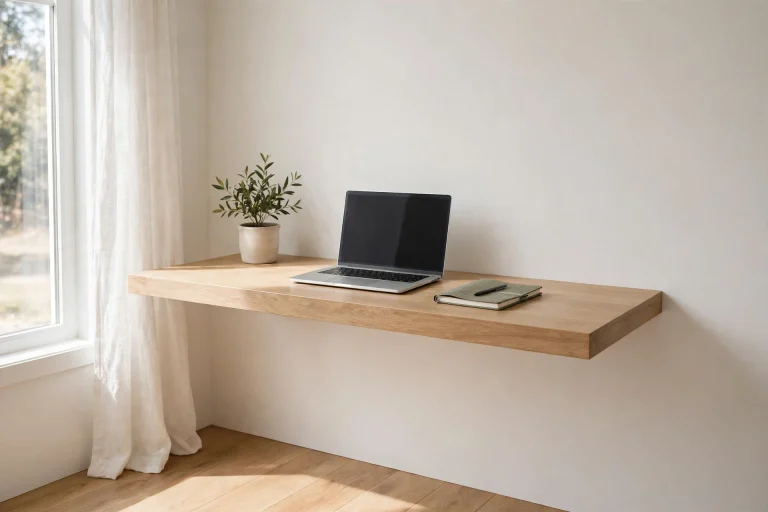
1. Put the desk in the corner. A corner is the one spot in a small room where a desk does not block a walkway. A compact 42-inch desk fits most corners, and the two walls give you somewhere to hang shelves. 2. Try an L-shaped desk if the corner is wide. It wraps the work around you — laptop on one arm, notebook and coffee on the other — and uses wall space that would otherwise hold nothing but a plant. 3. Or float a corner shelf. A deep wall-mounted shelf at desk height, with a bracket each side, is a desk that takes zero floor space. It works best for laptop-only work, and it costs less than most desks. Measure the corner first: you need about 30 inches of clear width for the chair to pull out.
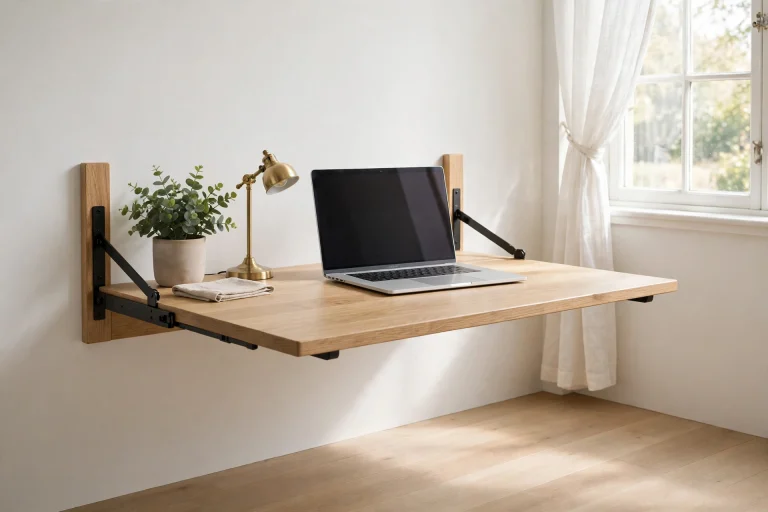
2. A desk that disappears when you do
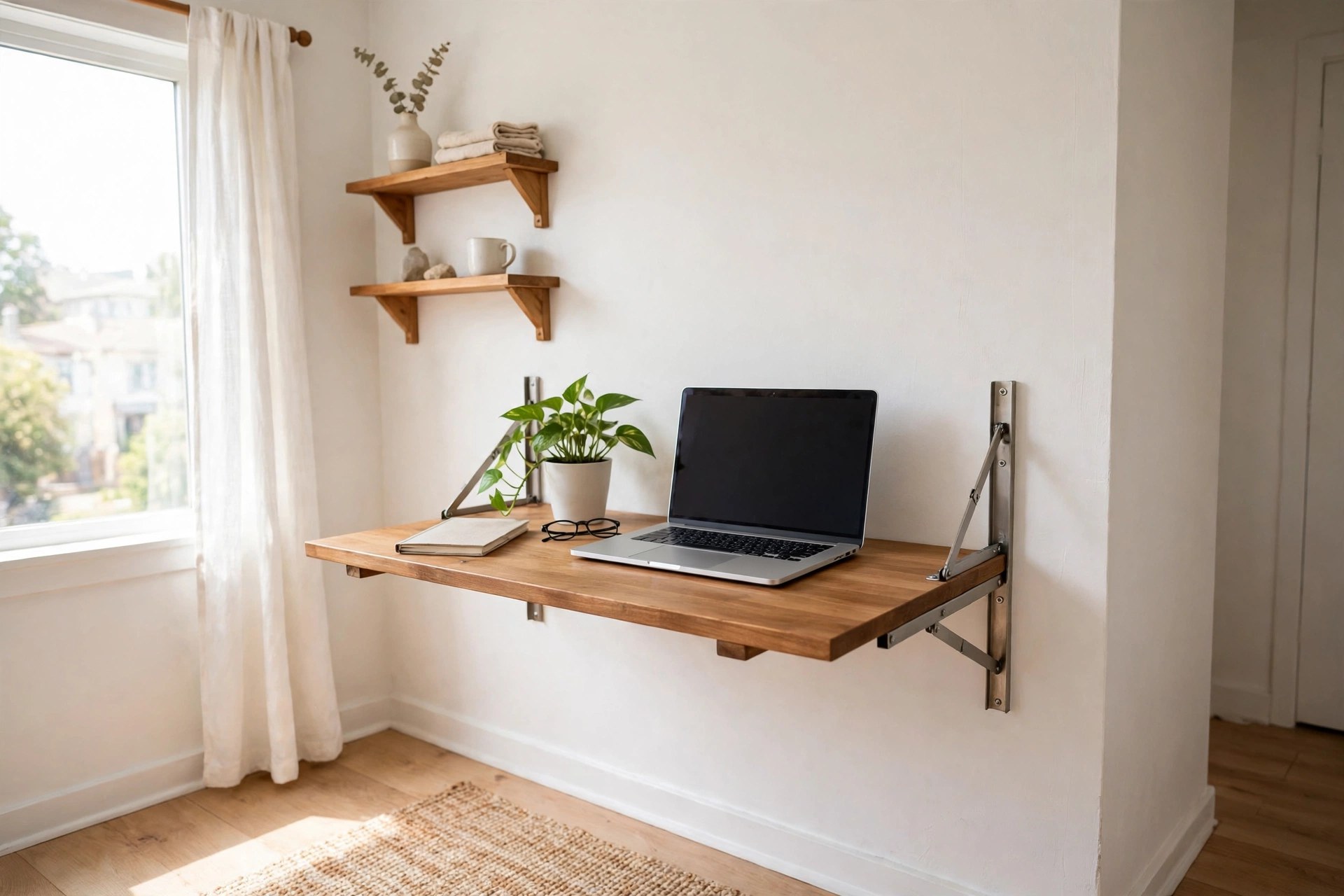
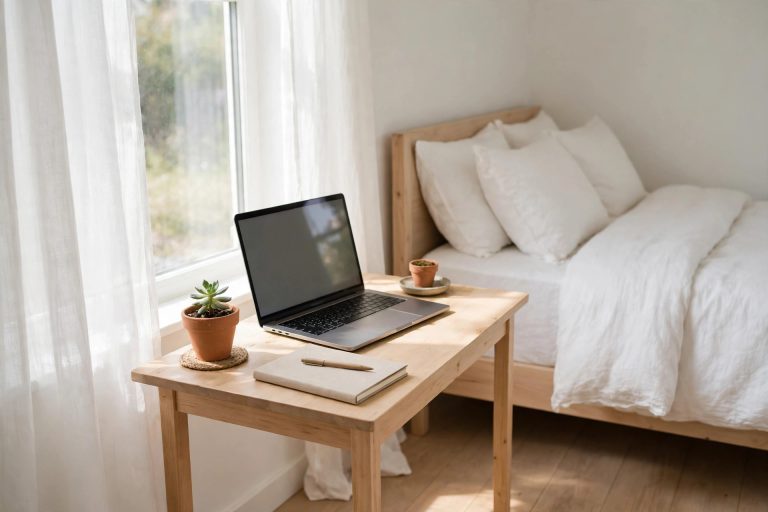
4. Mount a fold-down wall desk. It folds flat against the wall when the working day ends, and the room goes back to being a bedroom or a living room. Look for one with a lip at the front so the laptop cannot slide off, and fix it into studs, not just drywall. 5. Use a drop-leaf table as a desk. One leaf up is a workspace; both leaves down and it is a console table against the wall. It is the cheapest disappearing desk there is, often under $80 secondhand. 6. Keep a rolling laptop cart for the in-between days. It slides beside the sofa or the bed, holds a laptop at a workable height, and tucks into a gap when you are done. For two-hour sessions it beats working from the sofa.
3. Claim the closet
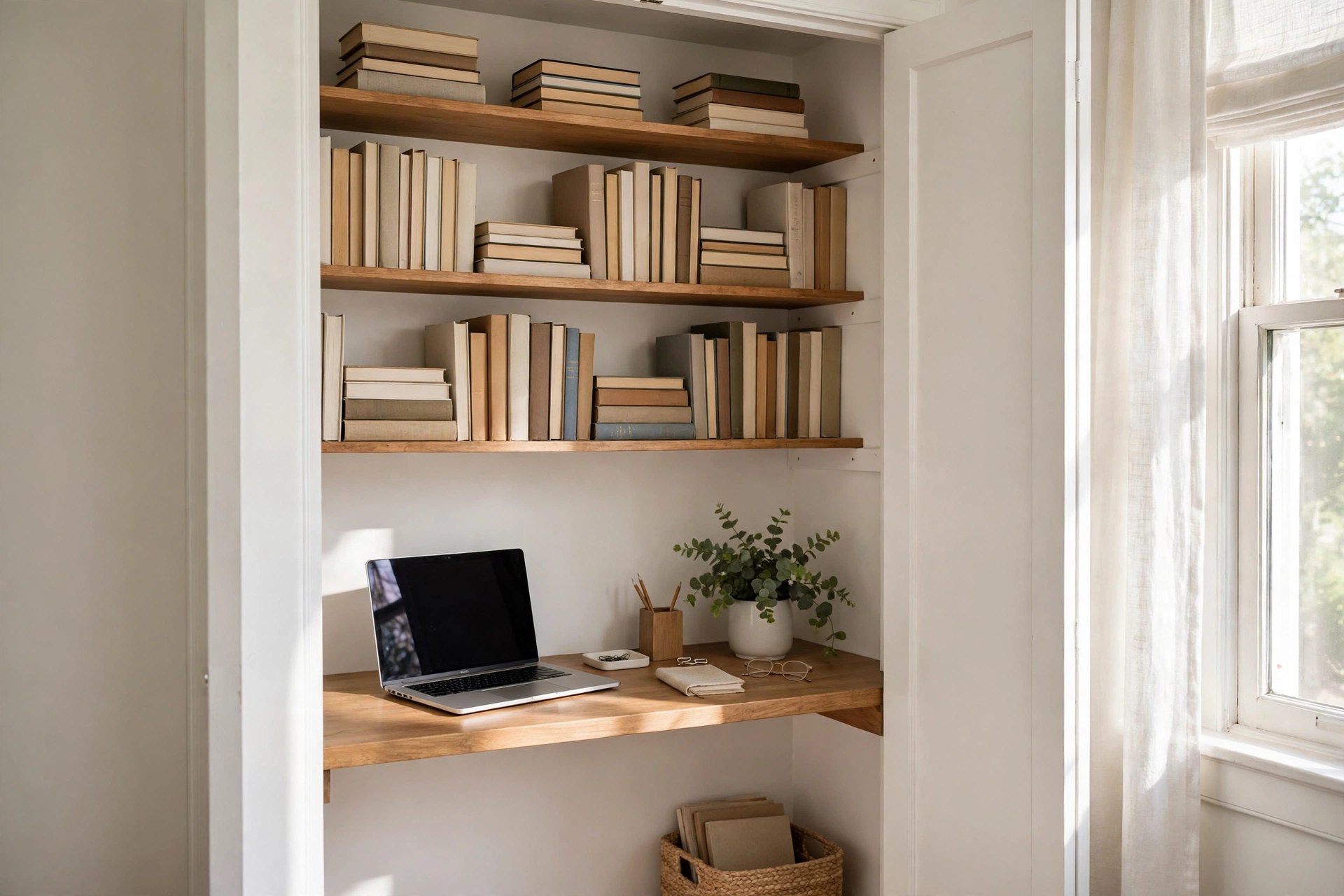
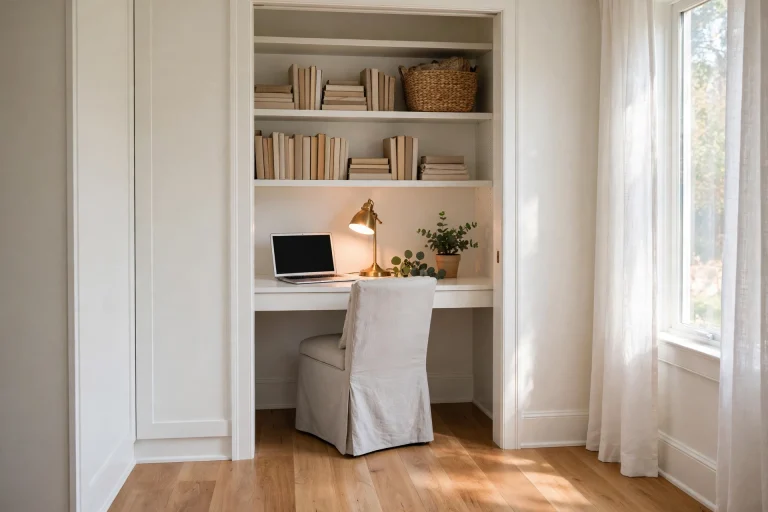
7. Turn a spare closet into a cloffice. A reach-in closet is usually about 24 inches deep and 4–5 feet wide — exactly a desk’s footprint. Fit a shelf at desk height, add a small light, and the closet becomes an office with a door that closes on the mess. 8. Take the doors off and hang a curtain instead. Doors that swing out eat floor space; a curtain on a tension rod hides the office in seconds and costs less than $20. Keep the top shelf for storage boxes. If the closet has no outlet, a flat extension lead run neatly along the skirting solves it — never run a cable across the floor.
4. Share the room without the mess
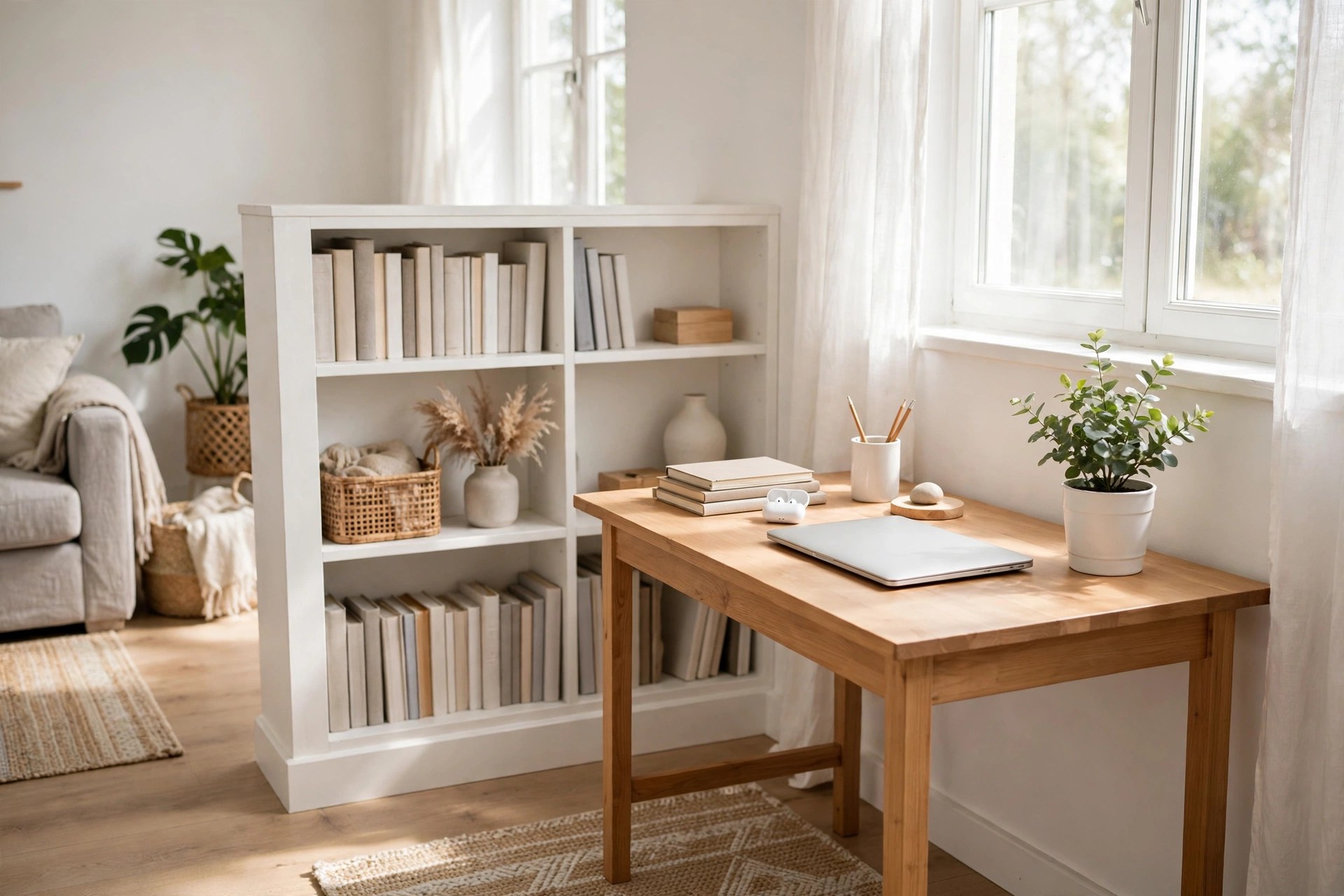
9. Zone the office with a rug. A rug under the desk and chair tells the eye where work starts and the living room stops, even in a studio flat. It also stops the chair rolling across the floor. 10. Use a low bookshelf as a divider. A shelf at waist height separates the desk from the rest of the room without blocking the light, and its shelves hold the books and boxes the desk cannot. 11. Face the desk to the wall, not the room. It sounds backwards, but in a shared room a wall-facing desk keeps the work — and the mess — out of the sightline from the sofa or the bed. The wall behind the screen becomes your backdrop for video calls too.
5. Go vertical
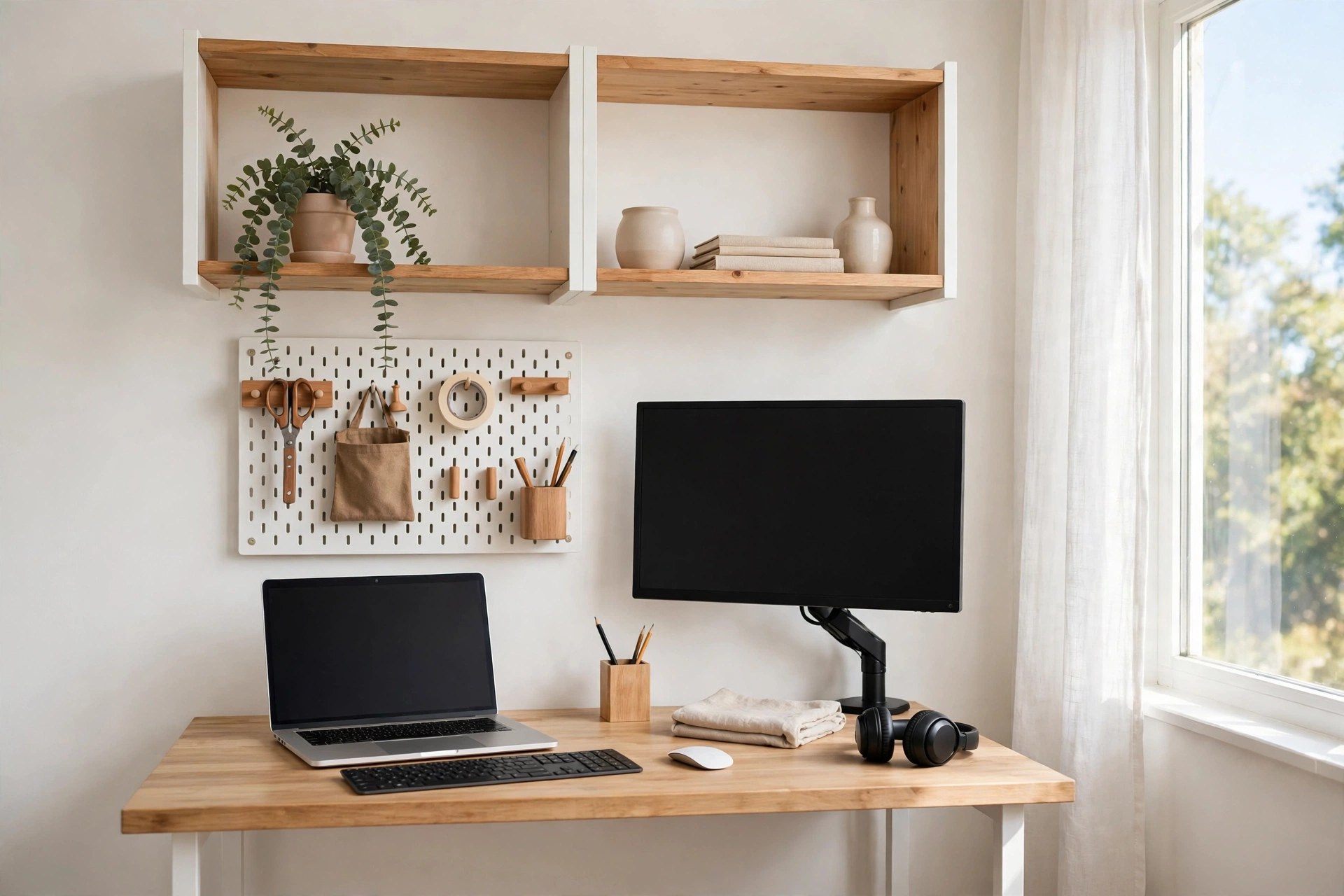
12. Put shelves above the desk, not beside it. Two shelves at eye level hold everything a drawer unit would, and they use wall space the room was wasting. Keep the bottom shelf for daily things and the top one for the twice-a-month stuff. 13. Hang a pegboard for the small things. Headphones, cables, scissors, chargers — the bits that spread across a desk all hang on a pegboard in a square foot of wall. 14. Lift the monitor onto an arm. A monitor arm clamps to the back edge of the desk and gives back the whole footprint a factory stand would eat — about a third of a small desk. It also puts the screen at eye level, which is the single best ergonomic fix for the price.
6. Light it like a workspace
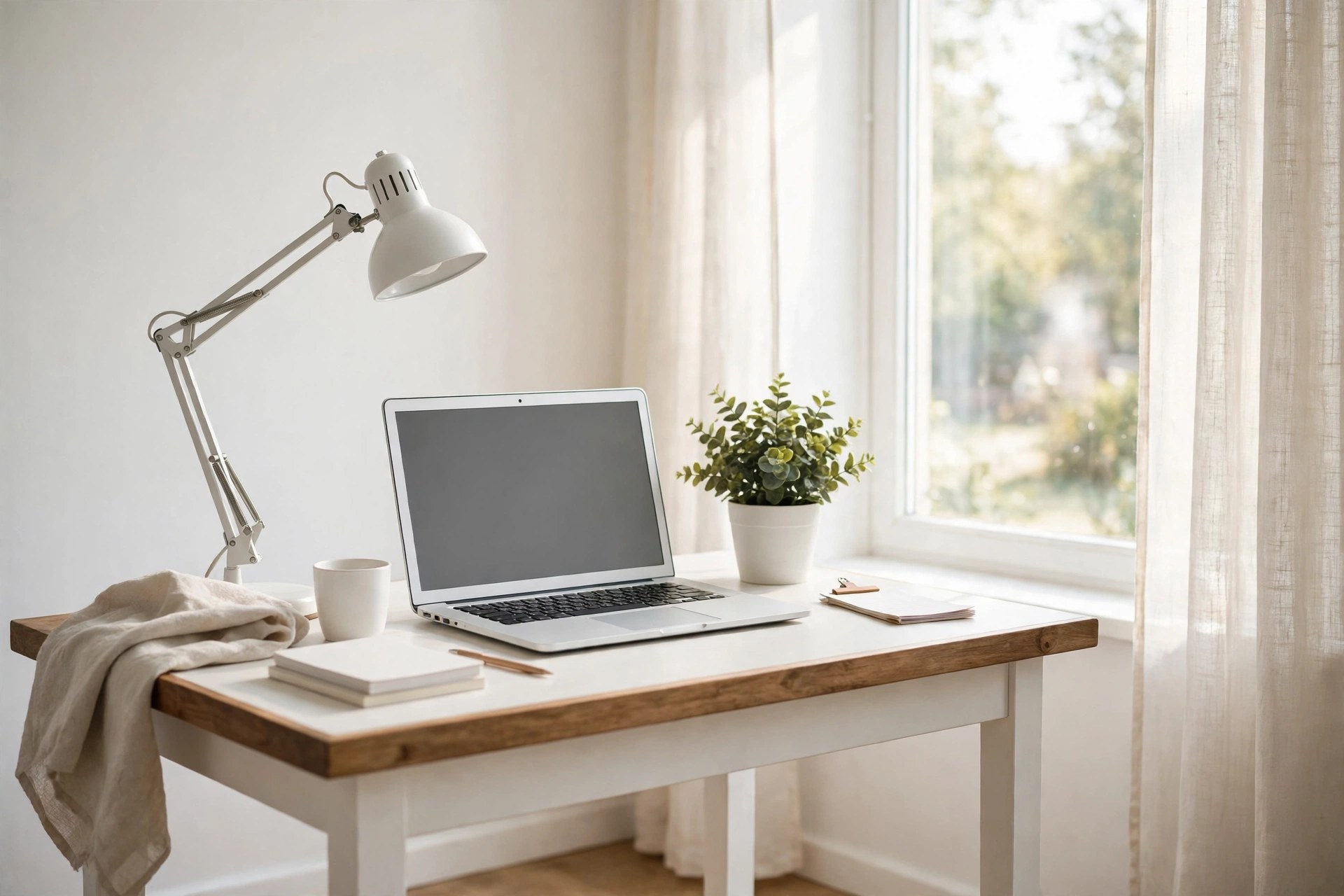
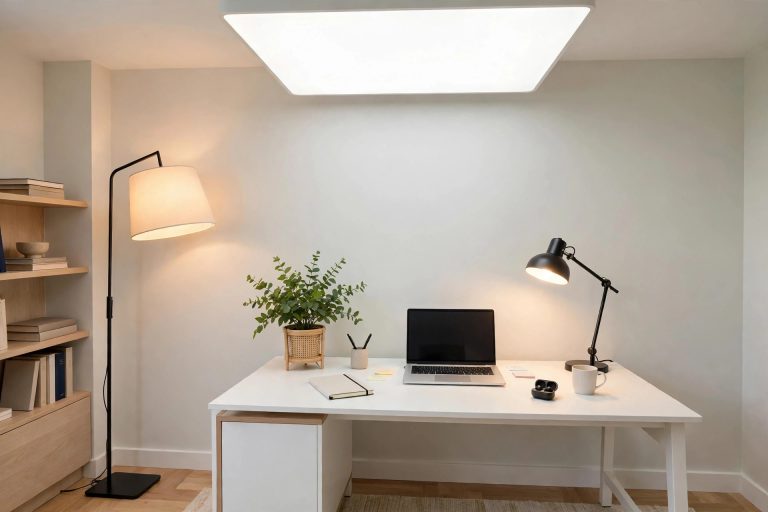
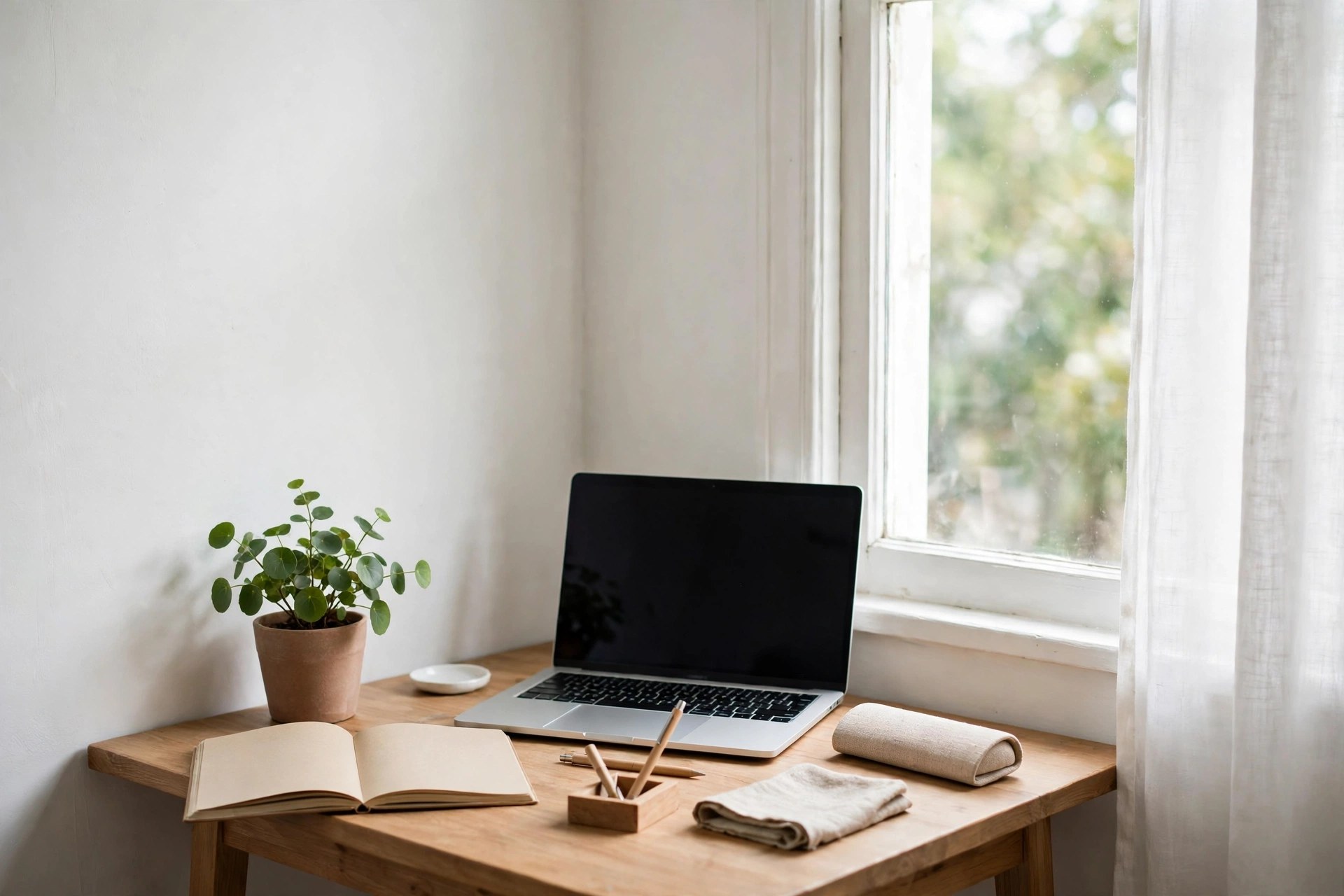
15. Put the desk beside the window, not in front of it. Side light is the kindest light for a screen: no glare, no silhouette on video calls, and daylight does the heavy lifting for free. 16. Add one adjustable lamp, then stop. A lamp with a movable arm aimed at the desk surface beats a bright ceiling bulb, because it lights the work and not the whole room. A monitor light bar is the alternative if desk space is tight — it clips to the top of the screen and lights the desk without taking a square inch of it.
7. Sit right, even in a small chair

17. Buy the chair before the decor. In a small office the chair is the biggest object and the one your body notices most. A secondhand adjustable office chair — seat height, back tilt, armrests — typically costs $50–$100 and matters more than any desk accessory. Sit in it first, and check your feet rest flat. 18. Raise the laptop and add a separate keyboard. A laptop flat on a desk puts the screen six to eight inches below your eyes, and your neck pays for it by mid-afternoon. A simple stand lifts the screen to eye level for around $30 — our laptop stand guide covers what to look for — and a compact keyboard in front of it keeps your shoulders down and your elbows in.
8. Hide the cables and the clutter
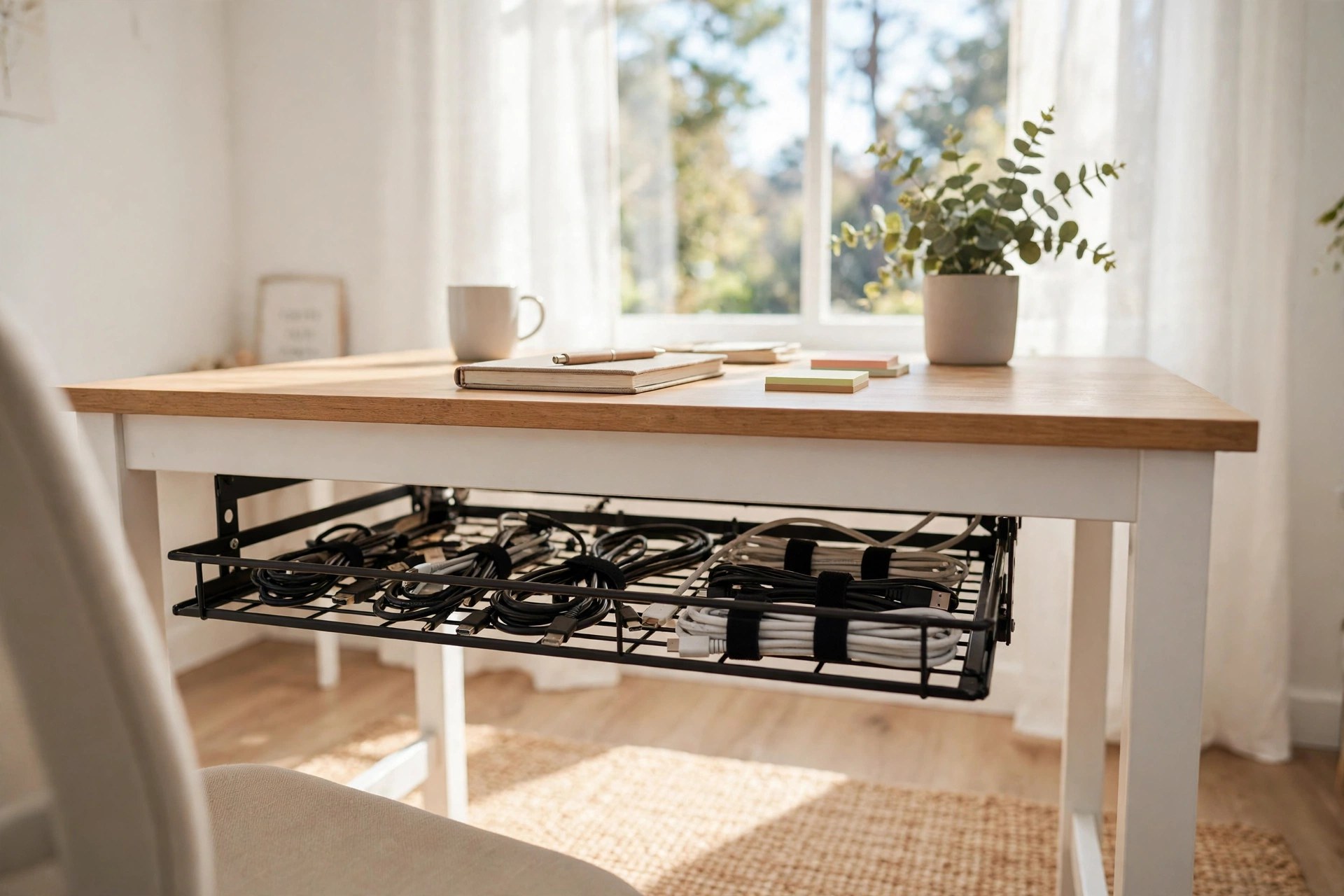
19. Screw a cable tray under the desk. A tray holds the power strip, the charger bricks and the slack, so nothing hangs down the back of the desk and nothing lies on the floor. It is a $15–$25 fix and it changes how the whole desk looks. 20. Keep one closed box for the ugly stuff. Chargers, spare cables, the printer, the stack of paper — one lidded box on a shelf hides all of it, and closed storage always looks tidier than open shelves in a small room. 21. Give everything a tray. An inbox tray for today’s paper, a small tray for pens, a drawer organiser for the rest. If it has no home, it lives on the desk — and a desk with no homes is a desk you cannot work at.
9. Make it yours for under $100
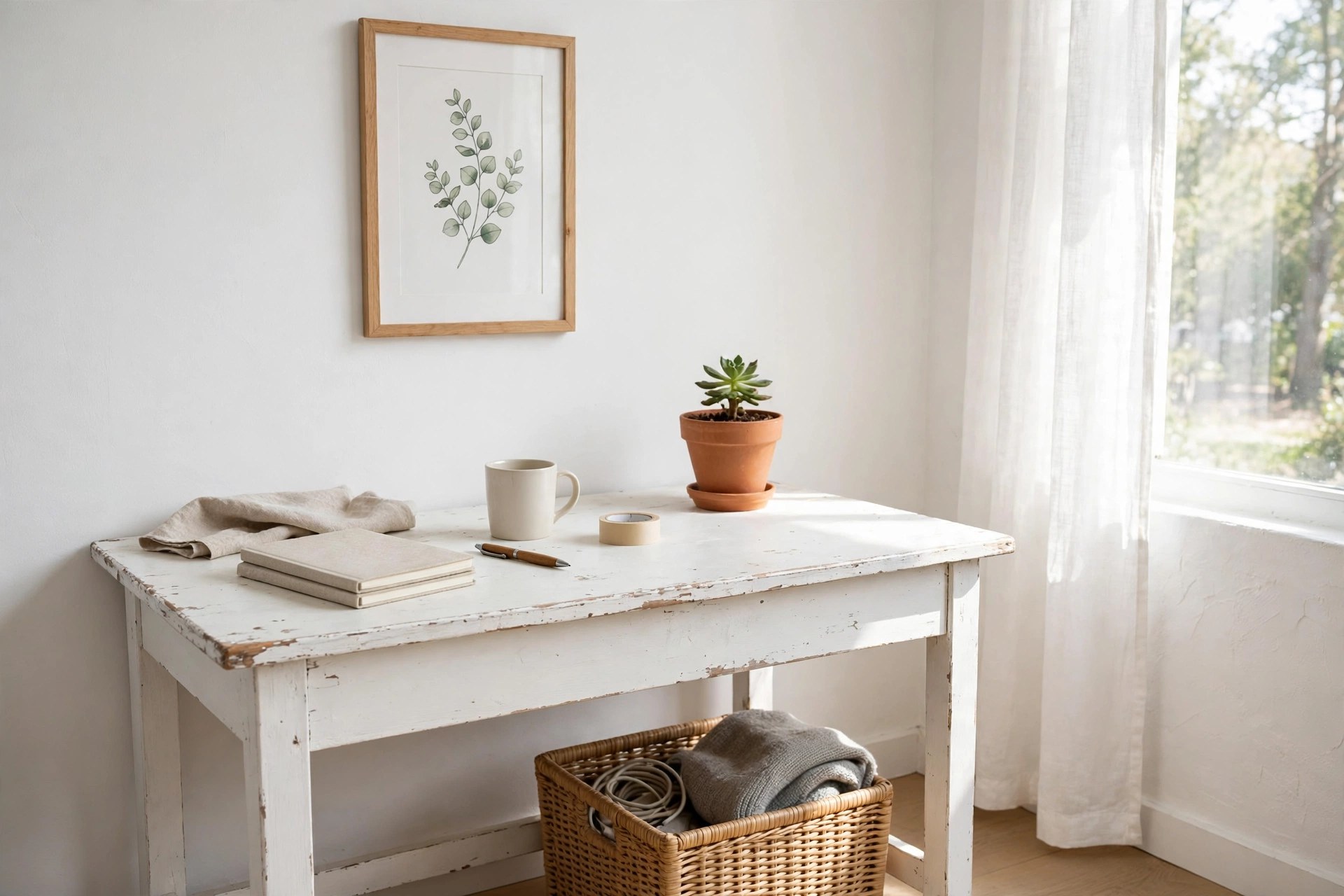
22. Buy the desk secondhand and paint it. A solid wood desk from a secondhand marketplace often costs $20–$40, and a tin of paint and an afternoon turns it into the desk you actually wanted. Check the legs are solid and the top is flat before you pay — paint hides scratches, not wobble. 23. Add one plant and one framed print. A small plant on the desk and one print on the wall behind it is the whole decoration budget. It is also your video-call backdrop: a plant and a frame read as intentional, where a bare wall reads as temporary. Skip the desk toys and the neon signs — in a small room every object is in the frame.
10. The five-minute reset
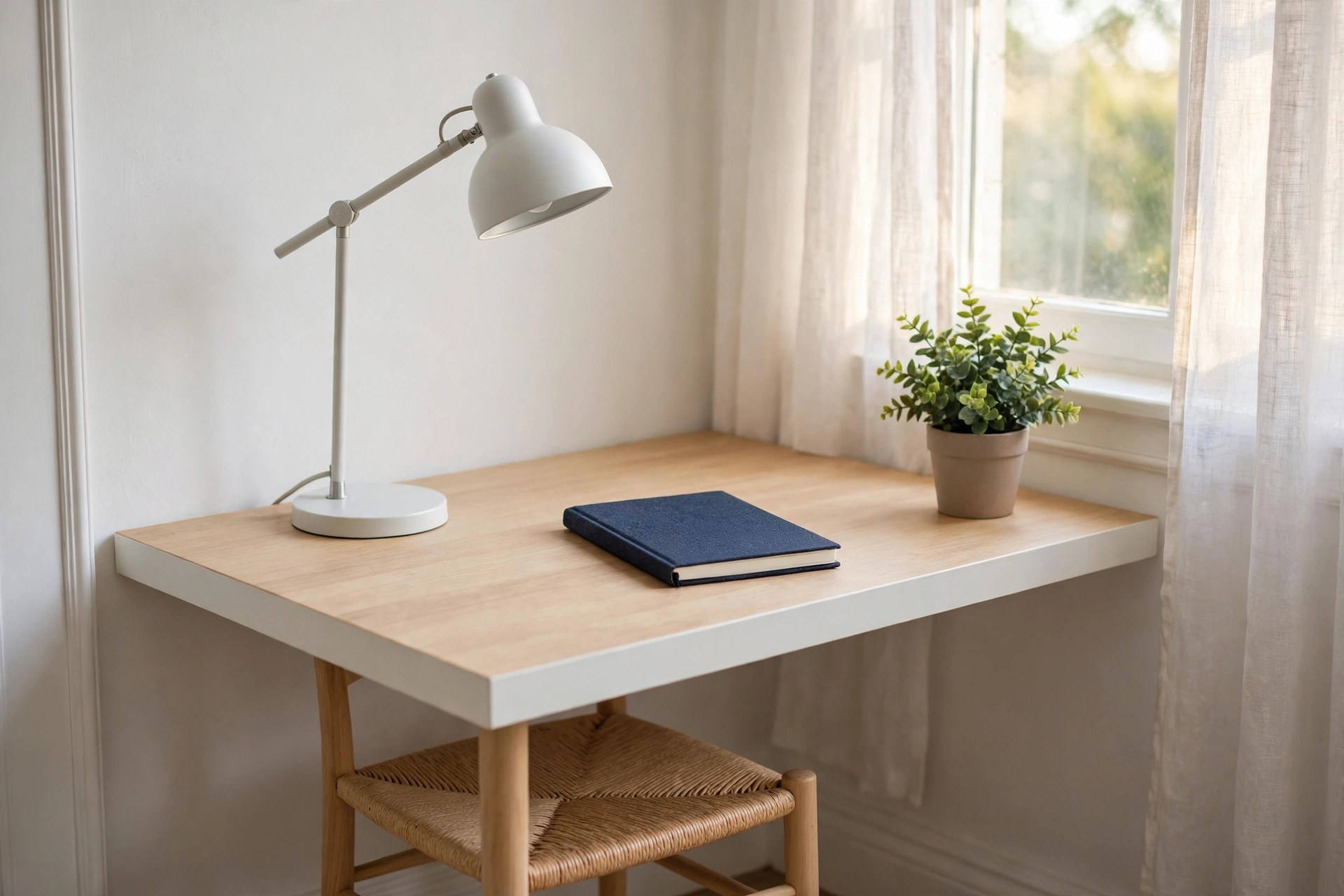
24. Clear the desk every evening, in five minutes. Papers into the tray, mug to the kitchen, cables back in the tray, chair pushed in. A desk that starts clean stays clean, and tomorrow starts with work instead of tidying. 25. Do a weekly cable check on Friday. One loose cable becomes three by the end of the week. Five minutes on Friday — unplug what you are not using, coil the spare, check the tray — keeps the setup from sliding back into a tangle. Small offices stay tidy because the reset is a habit, not a project.
That is the whole list, and it works in this order for a reason: measure the space, pick the desk that fits it, add light, sit right, then hide the mess. If you do only three things, make them the corner or the fold-down desk, the lamp beside the window, and the cable tray under the desk. Start with the one your room needs most, and add the next one when the first feels normal. For more on the desk itself, our 21 desk setup ideas cover screen height, chair position and cable runs in the same order.