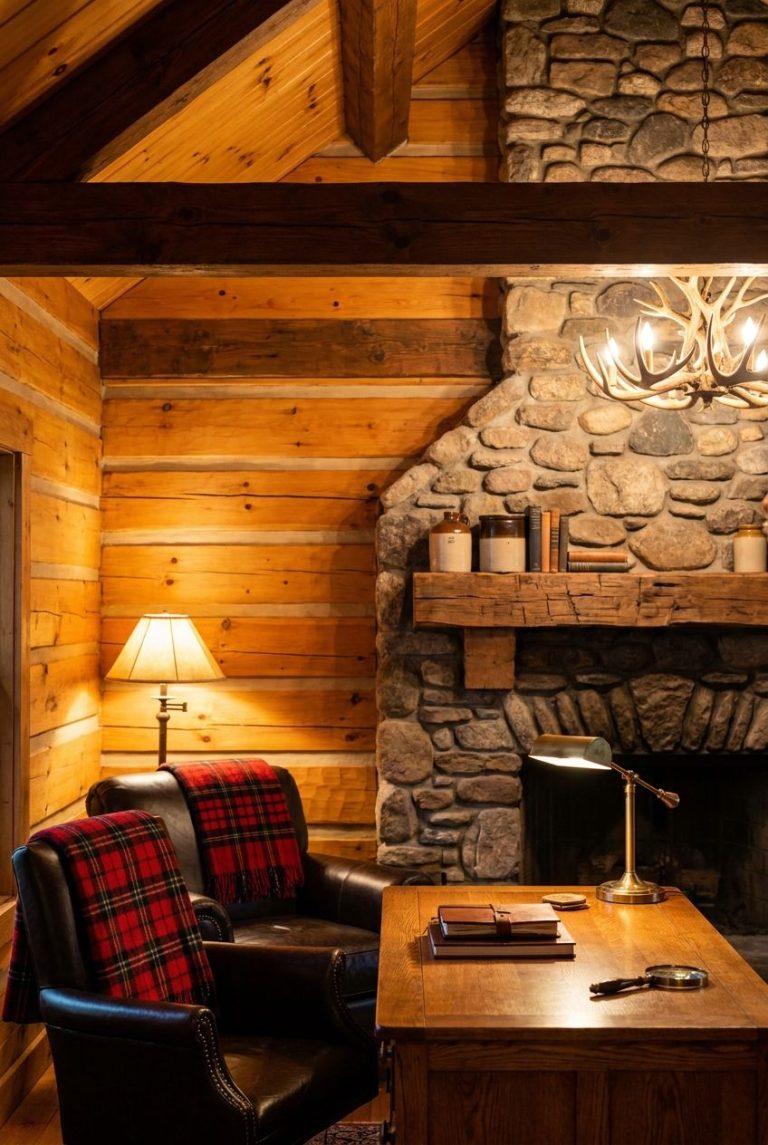
Mountain Cabin Decor Ideas: 11 Ways to Build a Cozy, Productive Cabin Workspace
Most people who set up a desk in a mountain cabin make the same expensive mistake: they buy a rustic desk first and think about light, power, and heat last. Six weeks later they are working from the couch with a cold laptop and a sore neck. The best mountain cabin decor ideas for a workspace start with how you will actually work, then dress that setup in logs, wool, and iron until it looks like it belongs in the woods.
This guide walks through eleven specific decisions, with prices, dimensions, and product names, so you can build a cabin office that looks like a magazine spread and still survives a Tuesday full of video calls.
1. Choose a Desk That Fits Cabin Architecture (and Your Elbows)
Cabin rooms are often small, with sloped ceilings, log walls, and awkward corners. A desk that works in a drywall suburb can swallow a 9-by-10-foot loft. Measure first, then buy.
The dimensions that matter
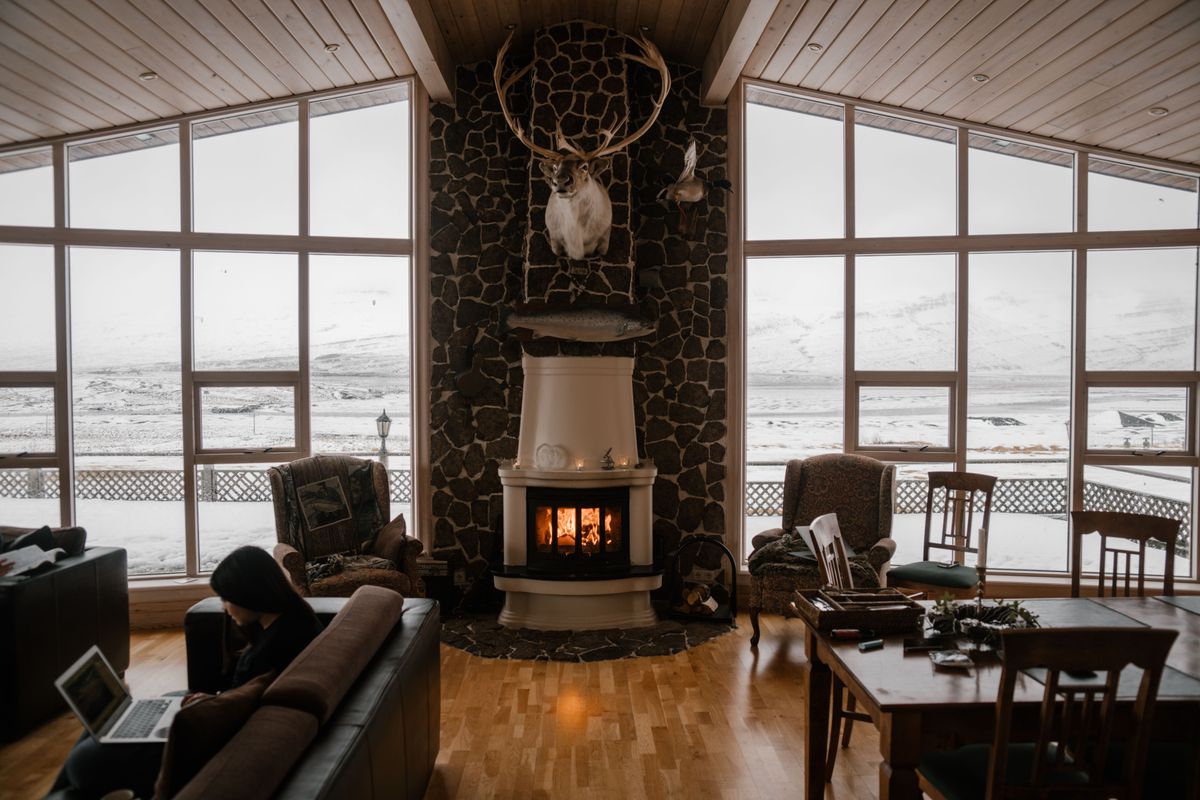
A comfortable single-monitor desk is 48 to 55 inches wide and 24 to 30 inches deep, with a standard height of 29 to 30 inches. In a tight cabin nook, a 40-inch wide by 22-inch deep desk still fits a laptop, a lamp, and a mug. Leave at least 36 inches of clearance behind the chair so you can stand without banging the wall.
Materials worth the money
Reclaimed barn wood desks from makers on Etsy run $350 to $900 and bring real character, including nail holes and saw marks. A live-edge pine or walnut slab top on black steel legs costs $250 to $600 and photographs beautifully. For budgets under $200, buy an unfinished 1.5-inch pine butcher block countertop from IKEA (the NUMERÄR line) or Home Depot and set it on two filing cabinets or trestle legs.
But what if your cabin has a sloped ceiling? Put the desk where the ceiling is highest, or float it perpendicular to the slope. Never tuck a desk under a low rafter, because you will hit your head within a week.
2. Layer Lighting So Dark Wood Doesn’t Swallow Your Workday
Log walls and dark timber absorb light. A single overhead fixture leaves you squinting by 3 p.m., especially in winter when sunlight in mountain valleys can drop below 9 hours a day.
Build light in three layers:
- Ambient light: Swap one overhead fixture for a wrought-iron or antler-style chandelier fitted with 2700K warm-white LED bulbs (800 lumens each). Expect $90 to $250 for the fixture.
- Task light: Add a 5W to 9W LED desk lamp with an adjustable arm. The BenQ e-Reading lamp (about $110) and the Anglepoise Type 75 (about $200) both suit cabin aesthetics with matte black or brass finishes.
- Accent light: Place a small table lamp with a linen shade on a shelf, or run a 10-foot strip of warm LED behind a floating shelf for $15 to $25.
Aim for 300 to 500 lux at your desk surface, roughly the brightness of a well-lit office. A free phone app like Lux Light Meter will confirm it.
But what if you work near a big window? Position the desk so the window sits to your side, not behind your monitor or directly in front of your face. This prevents glare and screen washout.
3. Pick a Mountain Cabin Color Palette That Calms Without Going Gloomy
Cabin palettes come from the landscape: bark, moss, granite, snow, and dusk. The trick is balancing dark and light so the room feels sheltered rather than cave-like.
Use the 60-30-10 rule. Sixty percent of the room is a neutral base, such as warm white, oatmeal, or natural pine. Thirty percent is a secondary tone like forest green, charcoal, or slate blue. Ten percent is the accent: rust, burnt orange, or mustard.
Specific paint colors that work on drywall or painted-wood sections:
- Benjamin Moore Hale Navy (HC-154): deep, moody, great behind a desk for video calls.
- Sherwin-Williams Evergreen Fog (SW 9130): a soft gray-green that reads calm on camera.
- Farrow & Ball Setting Plaster: a warm blush-beige that lifts dark timber.
Skip pure white. Under cabin lighting it turns cold and clinical. Choose whites with a yellow or cream undertone, like Benjamin Moore Swiss Coffee (OC-45).
But what if your walls are all exposed log? Don’t paint them. Instead, add color through a large rug, curtains, and one painted piece of furniture, such as a deep green bookcase.
4. Pick Textiles That Keep You Warm at a Desk for Eight Hours
Sitting still is the fastest way to feel cold, even in a heated cabin. Textiles do double duty: they add the layered, lived-in look and they raise your comfort by several degrees.

Rugs
A 5-by-8-foot wool or jute-wool blend rug under the desk insulates a cold plank floor. Look at Ruggable’s washable options (about $250) if you track in mud, or a flatweave kilim from Rugs USA for $120 to $300. Make sure your chair rolls over the rug, or add a clear polycarbonate chair mat.
Throws, pillows, and window treatments
Keep a Pendleton wool blanket ($120 to $250) draped over the chair back. Add one or two buffalo plaid or Fair Isle pillows. Hang lined linen or wool curtains on iron rods; thermal lining can cut window heat loss by up to 25 percent.
But what if you have allergies? Choose low-pile cotton or wool-blend rugs, wash throws monthly, and avoid faux fur, which traps dust.
5. Add Natural Wood, Stone, and Iron Without Making the Room Feel Like a Theme Park
The line between rustic and kitschy is thin. A moose-shaped lamp, a faux-bear rug, and a “Lake Life” sign in the same room tips it over. Pick two or three natural materials and repeat them.
Good pairings include reclaimed wood with black iron, stone with leather, and pine with wool. Choose a few anchor pieces: a stone-top side table ($80 to $200), black iron wall hooks ($15 for a set of three), and a wooden floating shelf made from a single 2-by-10 pine board ($25 in lumber plus brackets).
Follow a simple restraint rule: no more than one “statement” rustic object per 50 square feet. An antler chandelier or a carved bear figurine is a statement. A plain wooden bowl is not.
If you want genuine cabin character cheaply, visit a local sawmill or farm auction. A weathered ax-head, a vintage enamel pot, or a rusted lantern costs $5 to $40 and carries real history that mass-produced decor can’t imitate.
But what if you rent? Use command hooks for lightweight items, freestanding shelving instead of wall mounts, and removable peel-and-stick wood plank panels ($40 to $90 per 20 sq ft) for an accent wall.
6. Solve Cabin Power, Wi-Fi, and Cable Chaos Before You Decorate
Older cabins often have 15-amp circuits shared across half the building, two-prong outlets, and Wi-Fi that dies at the bedroom door. A beautiful desk is useless if your router drops every ten minutes.

Run through this checklist before buying anything decorative:
- Test outlets: A $10 outlet tester from Klein Tools reveals wiring faults. If you see two-prong or reversed polarity, call an electrician (typically $150 to $400 per outlet fix).
- Add a surge protector: Buy a 12-outlet strip rated at 3,000+ joules, such as the Tripp Lite Isobar, around $40.
- Fix Wi-Fi: A mesh system like the TP-Link Deco X20 (about $130 for a 2-pack) covers up to 5,800 square feet. If your cabin has no cable, a Starlink Residential dish costs $499 plus about $120 per month and delivers 50 to 200 Mbps.
- Hide cables: Use a $20 cable management tray under the desk and paintable cord covers along log walls.
Test your connection by running a speed test at your actual desk. You want at least 25 Mbps down and 5 Mbps up for smooth video calls.
But what if your cell service is spotty? Enable Wi-Fi calling on your phone and buy a signal booster such as the weBoost Home MultiRoom (about $500) if you rely on cellular for work.
7. Warm the Room Without Setting Off Your Breaker or Wrecking Your Focus
A wood stove is gorgeous, but it is a poor primary heat source for a workspace. It runs hot, demands attention every 45 to 90 minutes, and creates ash and smoke you do not want near a laptop.

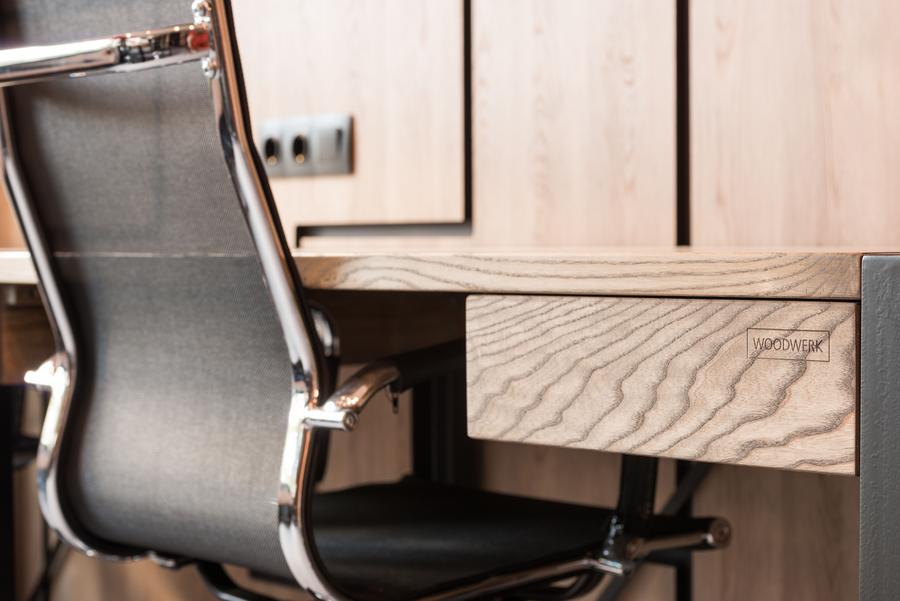
Use a layered heat plan instead. Keep the stove or fireplace as the visual centerpiece you light on weekends. Rely on a thermostat-controlled baseboard heater or a mini-split heat pump for weekday work. Mini-splits from Mitsubishi or Pioneer cost $1,200 to $3,500 installed and cut energy use by 30 to 60 percent compared to electric resistance heaters.
For a budget fix, an oil-filled radiator such as the DeLonghi Safe Heat (about $90) runs silently and heats 150 square feet. Avoid fan heaters near your desk, because the noise ruins calls.
Target a working temperature of 68 to 72 degrees Fahrenheit. Studies on office productivity consistently show performance drops once the room falls below 65 degrees.
But what if you love the wood stove? Place the desk at least 3 feet from the stove, set a hearth rug in fire-resistant wool, and install a carbon monoxide detector ($25) within 10 feet.
8. Make Storage Feel Like Decor, Not Clutter
Cabins rarely have closets, and clutter makes small log rooms feel claustrophobic fast. The solution is storage that doubles as display.
Good storage ideas under $150
- Wall-mounted pegboard in pine: Hangs keys, headphones, and notebooks for $30 to $60.
- Vintage wooden crates: Stack three for a $45 shelf that holds paper and supplies.
- Galvanized metal buckets: Corral cables, pens, or kindling for $12 each.
- Leather-bound document boxes: Hide receipts and files for $25 to $40.
One in, one out
Limit your desk surface to five items: laptop, lamp, one plant, a notebook, and a mug. Everything else lives in a drawer or on a shelf above. This keeps the rustic look intentional rather than messy.
A 6-foot open bookshelf in solid pine runs $180 to $400. Fill it two-thirds full and leave breathing room, because a packed shelf looks cluttered while a half-empty shelf looks curated.
But what if you have a lot of paper? Scan documents with Adobe Scan (free) or a $200 Fujitsu ScanSnap, then store only the originals the law requires you to keep.
9. Bring the Outdoors In With Plants and Views That Survive Cold Winters
The whole reason you have a mountain cabin is the scenery. Arrange your workspace to use it, and add living green for the months when everything outside is white.

Face your desk toward the best window if you can, with your monitor perpendicular to the glass to avoid glare. A view of trees reduces eye strain and, according to environmental psychology research, can restore attention after 40 minutes of focused work.
Choose plants that tolerate cooler, drier cabin air. Strong options include snake plant ($15), ZZ plant ($20), pothos ($10), and cast iron plant ($25), which tolerates temperatures down to 45 degrees. Pot them in terracotta or galvanized planters, and place a saucer under each to protect wood floors.
For decor from outside, fill a ceramic crock with dried pine branches, pinecones, or birch logs. Replace them every few months, and never cut living branches from national forests without a permit.
Add a bird feeder outside your window ($20 to $40). Watching chickadees and nuthatches between meetings is better than any wall art.
But what if your office window faces a wall or has no view? Hang a large landscape photograph or a framed topographic map of your local range (about $60 printed on canvas) at eye level.
10. Compare Cabin Workspace Styles to Pick the One That Fits Your Life
Not every cabin workspace needs to look the same. Here is how the four most popular directions compare, so you can match style to budget and how you work.
| Style | Typical Cost (Desk Area) | Comfort Level | Maintenance | Best For |
|---|---|---|---|---|
| Classic Rustic (reclaimed wood, iron, plaid) | $800 to $2,000 | Medium | Medium (wood needs oiling yearly) | Weekend retreats and Instagram appeal |
| Modern Mountain (black steel, glass, clean lines) | $1,200 to $3,500 | High | Low | Full-time remote workers who take video calls |
| Scandinavian Cabin (light birch, wool, minimal) | $600 to $1,800 | High | Low | Small cabins and dark interiors that need brightness |
| Lodge Luxe (leather, stone, antler) | $2,000 to $6,000 | Medium-High | High (leather and stone need care) | Large cabins and entertaining clients |
Our recommendation: If you work from the cabin more than three days a week, choose Modern Mountain or Scandinavian Cabin for the best balance of comfort and low upkeep. If the cabin is a weekend retreat, Classic Rustic gives the most charm per dollar.
11. Avoid These 5 Cabin Workspace Mistakes That Cost Real Money
Cabin projects fail in predictable ways. Learn from the people who already paid for these lessons.
- Buying furniture before measuring. A 60-inch desk in a 9-foot room blocks the door. Tape the footprint on the floor with painter’s tape and live with it for two days before you buy.
- Ignoring ergonomics for aesthetics. A gorgeous bench seat with no back support will wreck your spine. Invest $250 to $500 in a real chair, such as a Steelcase Series 1 or a Branch Ergonomic Chair, then hide it with a sheepskin throw.
- Skimping on lighting. One lamp is never enough. Budget at least $150 for three light sources.
- Overusing dark wood. All-brown rooms feel heavy. Break them up with white linen, pale stone, or a cream rug.
- Forgetting humidity and temperature swings. Mountain air dries wood and cracks cheap veneer. Run a $35 humidifier and keep indoor humidity between 30 and 50 percent.
Another common question: is all this worth it for a cabin I only use part-time? Yes, if you rent it out or work remotely even one week per month. A functional workspace lifts nightly rental rates by an estimated 10 to 20 percent on platforms like Airbnb, since “dedicated workspace” is a top-filtered amenity.
Your First Step This Weekend
Don’t buy anything yet. Tonight, use painter’s tape to mark a 48-by-24-inch rectangle on the floor where you imagine your desk, then sit in the spot with your laptop for one full workday. Notice where the light hits, where the cold seeps in, and where you reach for an outlet that isn’t there. Write down the three biggest annoyances, then fix those first, starting with lighting and power, before you spend a dollar on rustic decor.