Renter-Friendly Home Office: 12 No-Drill Ideas
If you rent, your home office has one hard rule: the walls go back the way you found them. No drilled holes, no rawl plugs, no patching and repainting on move-out day — and no losing part of your deposit over a monitor arm. The good news is that almost everything a home office needs now comes in a version that clamps, leans, sticks, or simply stands on its own.
These 12 no-drill ideas are all removable, in this order: walls, desk, storage, light, cables, screen, backdrop, sound. Follow it and you will not buy a lamp for a desk in the wrong place, or an arm for a desk edge too thin to clamp. Price ranges below are broad planning numbers, not quotes.
1. Start with the walls: adhesive hooks that actually hold
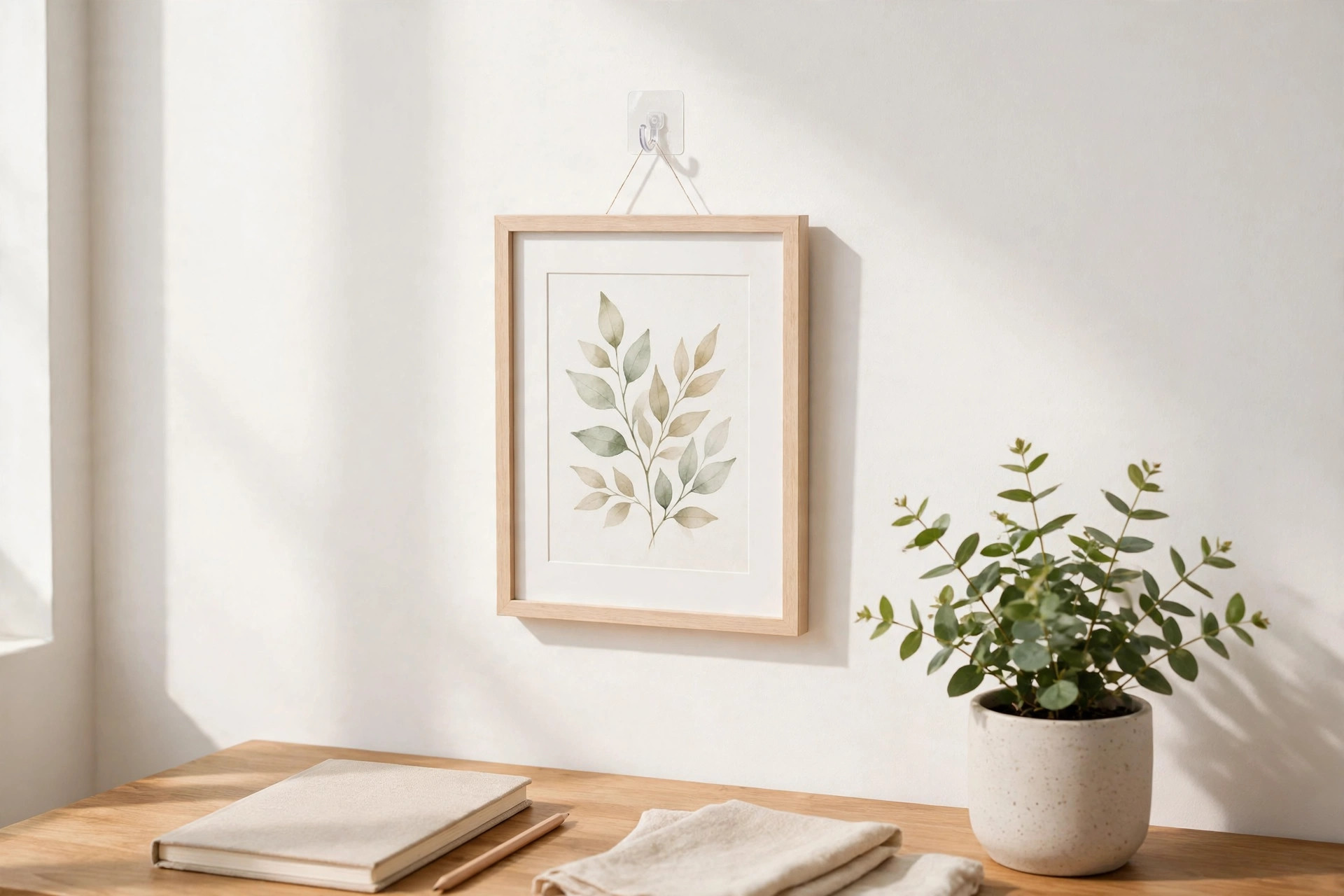
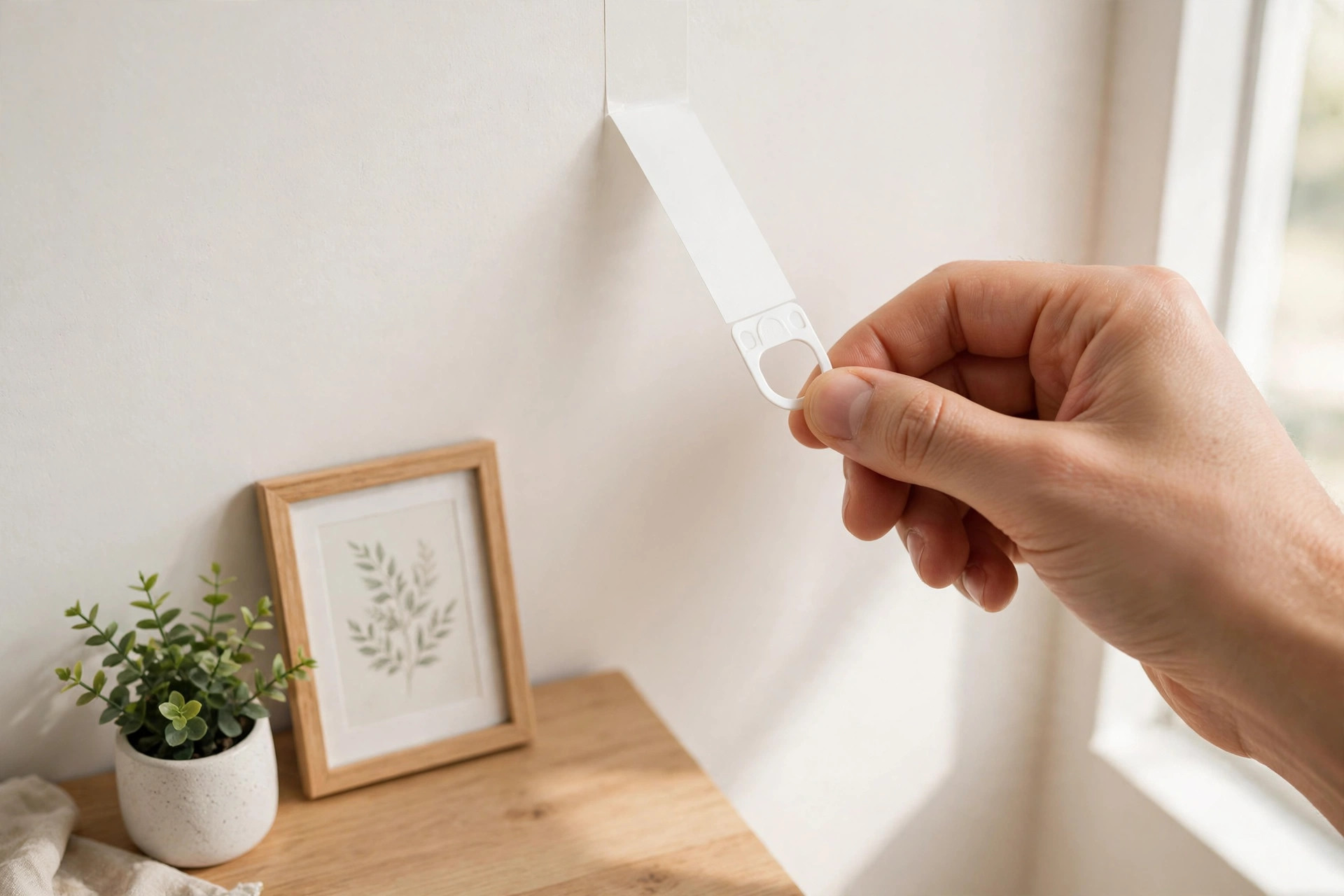
The workhorse of a renter’s office is the adhesive hook. The trick is respecting the weight rating printed on the pack: a hook rated for 1 kg will hold a small frame, not a shelf of books. Use one hook per item, press it firmly for 30 seconds, and wait the hour the instructions ask for before hanging anything. Removal is the part people get wrong — pull the tab straight down, slowly, along the wall, never outwards, and the strip comes off clean.
Adhesive strips fail in predictable places: paint less than a month old, textured or dusty walls, and damp rooms. Test one strip on a hidden patch first. For anything heavier than a frame, skip adhesive altogether and use the second idea: a leaning picture ledge. It rests on the floor, leans on the wall, and holds frames, small plants and books with zero fixings at all. A 60–90 cm ledge typically costs $20–$50, and it moves with you.
2. Pick a desk that never touches the wall
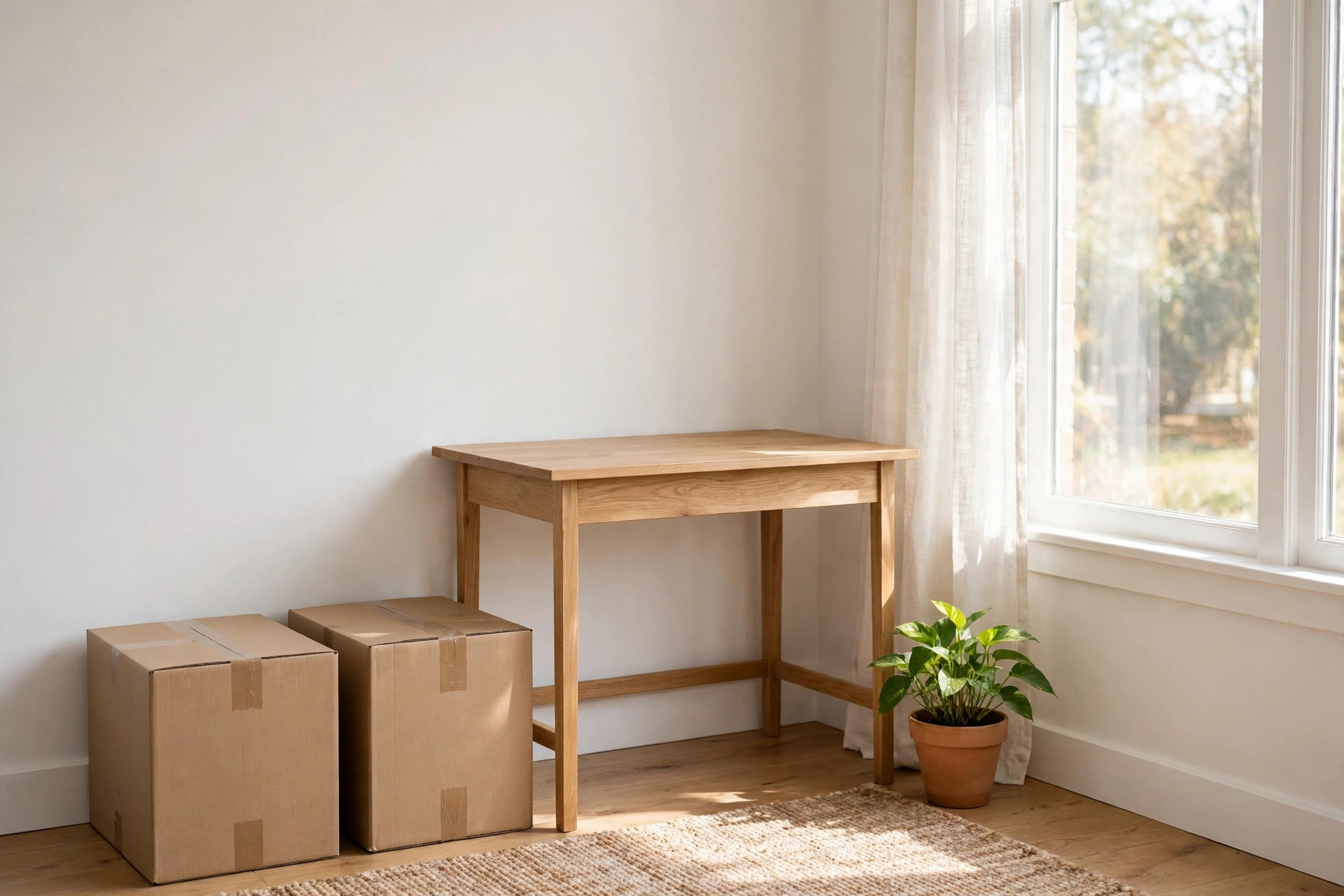
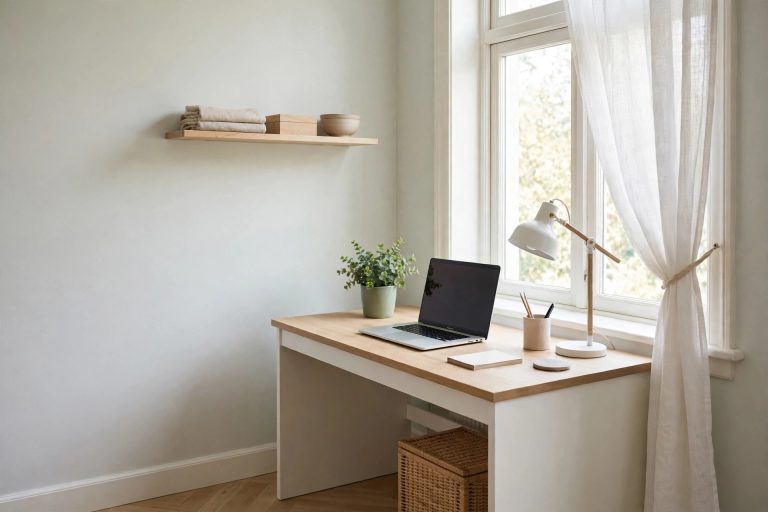
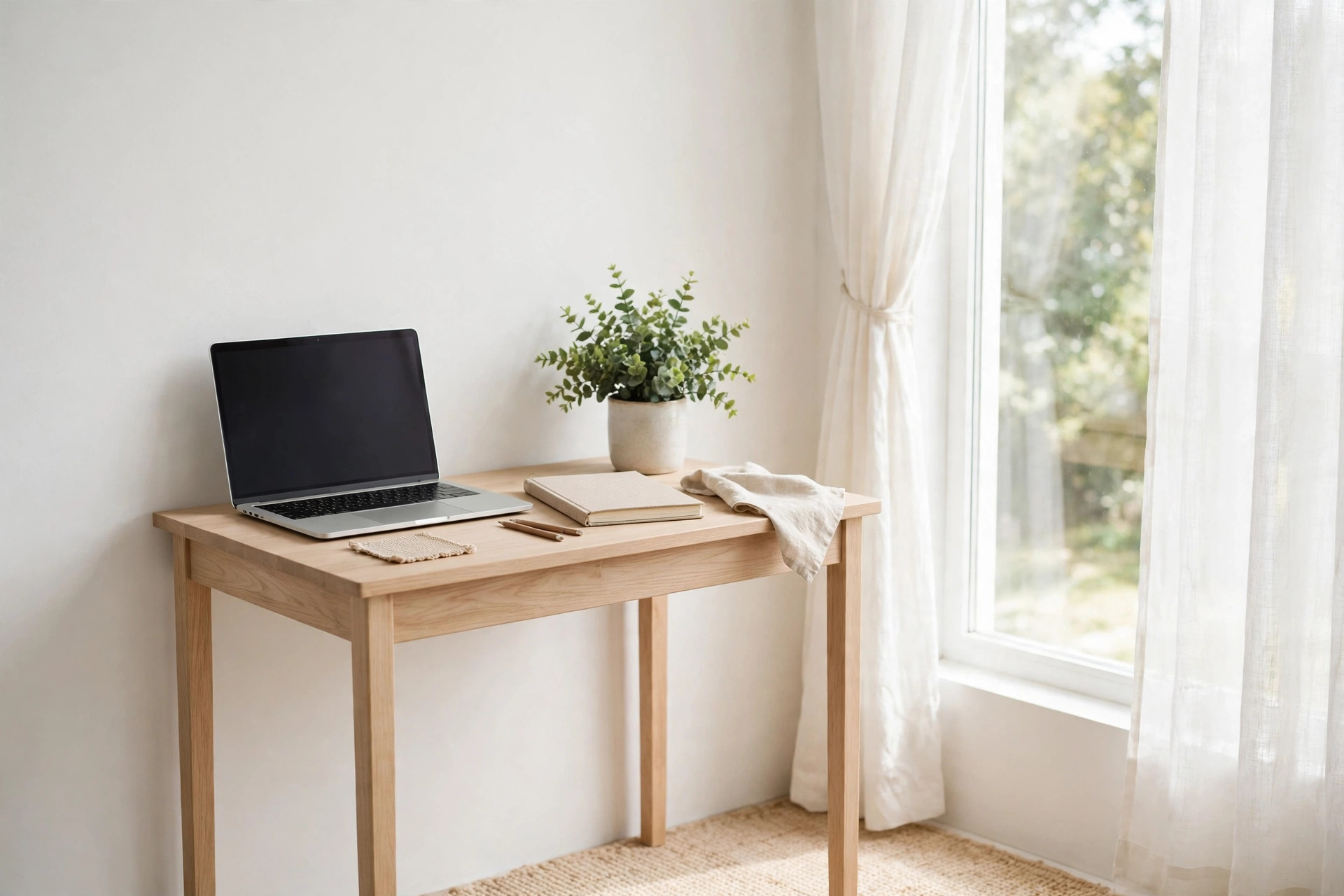
A renter’s desk has to be stable on its own four legs, because you cannot screw it to the wall for rigidity. A simple freestanding writing desk — roughly 100–120 cm wide for a laptop plus a monitor — is the safest pick: it stands anywhere, moves in minutes, and leaves no mark. If your room is truly tiny, a C-shaped side table that slides over a chair or sofa arm works as a second desk for short sessions.
Before you buy, check the desk edge thickness if you plan to clamp anything to it later (most monitor arms need 20–50 mm of solid edge). For layout ideas that work with a freestanding desk, see our 21 desk setup ideas for a productive home office — the screen-height and lighting rules there apply exactly the same in a rental.
3. Storage that stands on its own
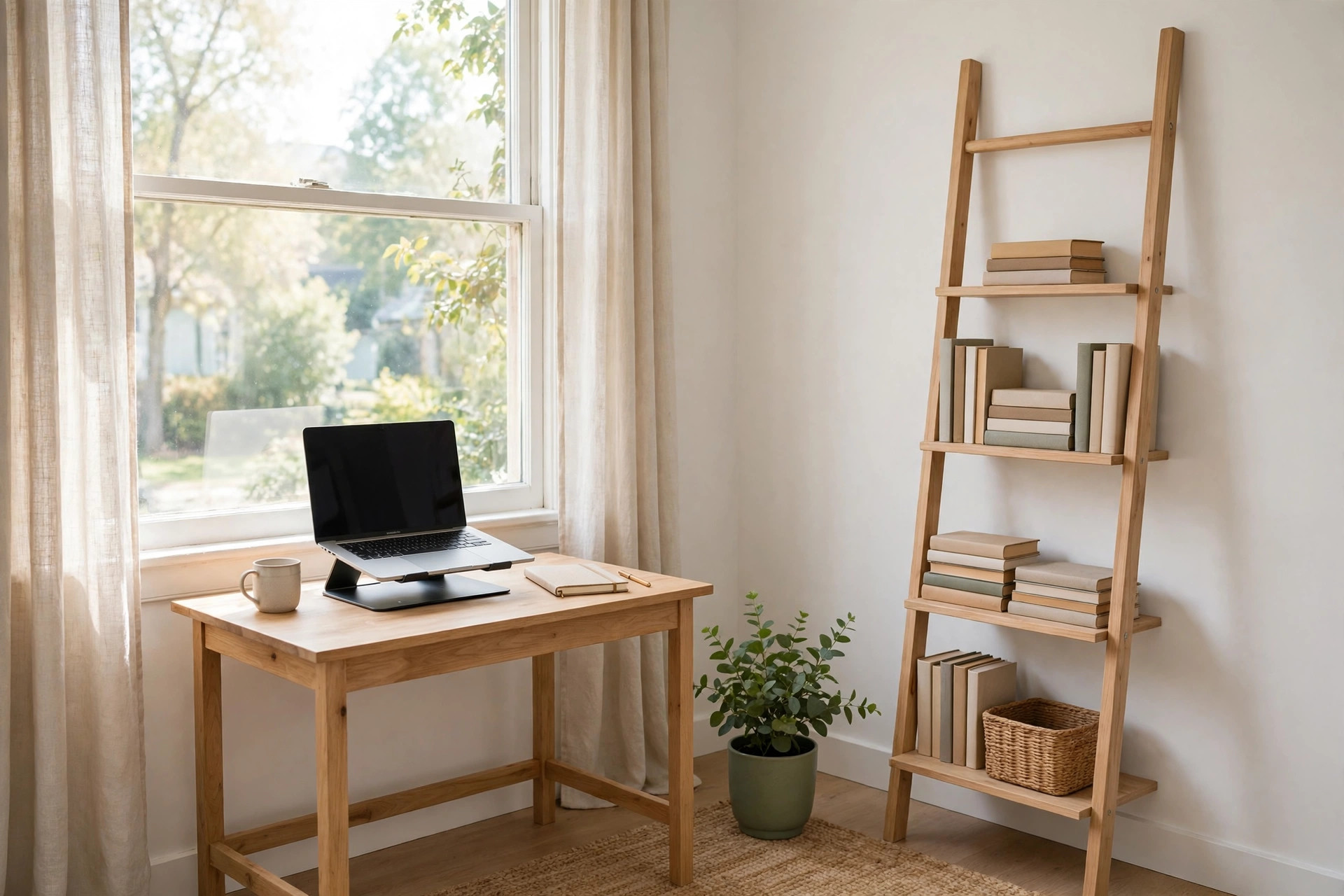
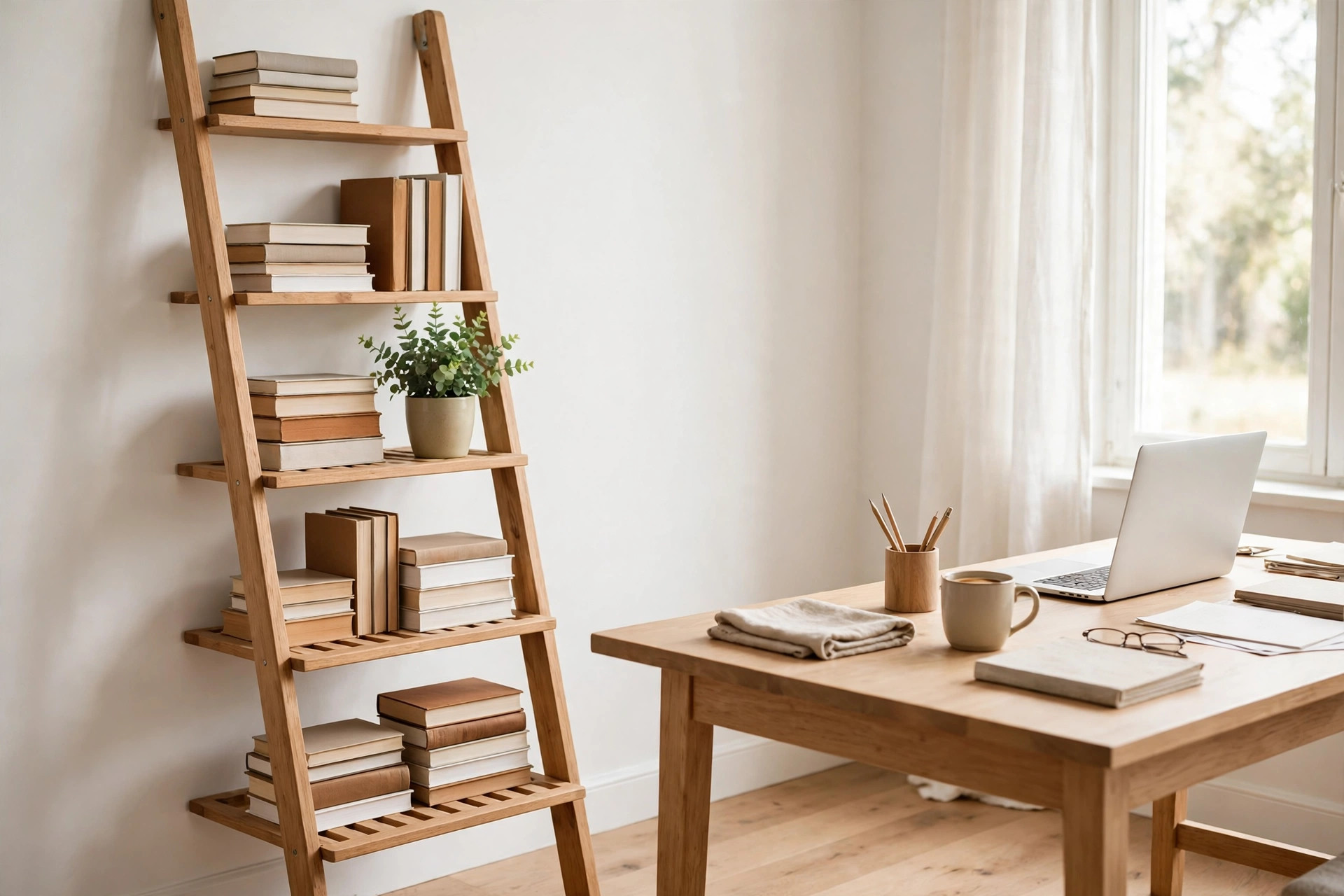
Wall-mounted shelves are out, so let the furniture do the work. A leaning ladder shelf is the closest no-drill replacement: it leans against the wall, holds books and boxes on deepening shelves, and typically costs $60–$150. Put the heavy books low so it stays stable, and never lean it on a wall you have just painted.
Pair it with a rolling cart — the three-tier metal kind, usually $25–$60. It holds the printer, notebooks and chargers, rolls under the desk when you need floor space, and rolls into a cupboard on move-out day. Together they replace a whole wall of fitted shelving, and neither leaves a trace.
4. Light it without hardwiring anything
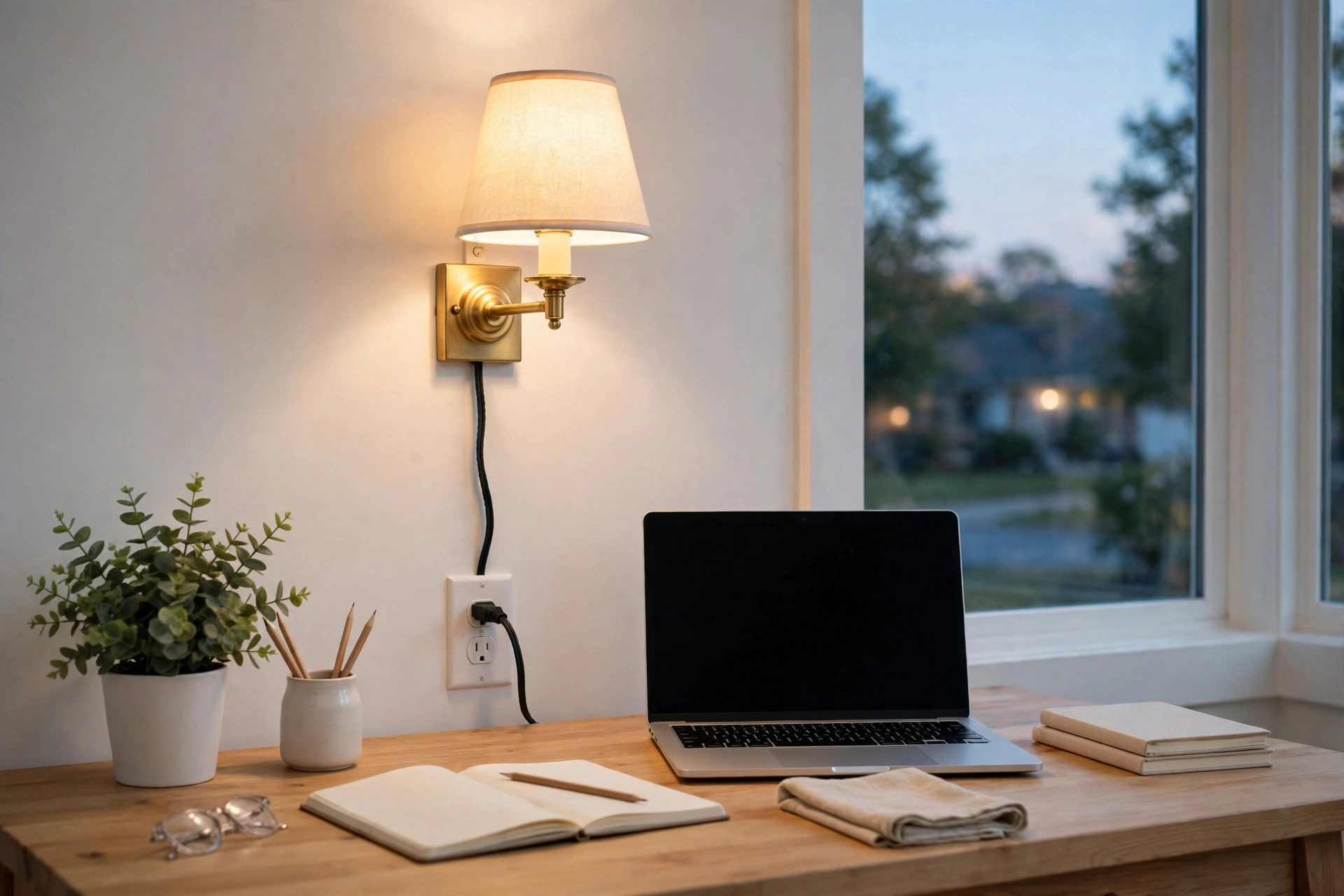
Rentals rarely have light where you need it, but nothing here needs an electrician. A plug-in wall sconce hangs from an adhesive hook, plugs into the nearest socket, and gives you warm, directional light over the desk for roughly $30–$80. Run the cord down the wall in a paintable adhesive channel and it looks intentional rather than improvised.
For task light, add an adhesive LED strip under the leaning shelf or a picture ledge — usually $10–$25 for a strip with a plug-in driver. It washes the desk in even light, peels off cleanly, and does the job a hardwired under-cabinet light would do in an owned home. Keep the colour temperature warm-white (around 2700–3000K) so the room still feels like home after dark.
5. Hide the cables without a single hole
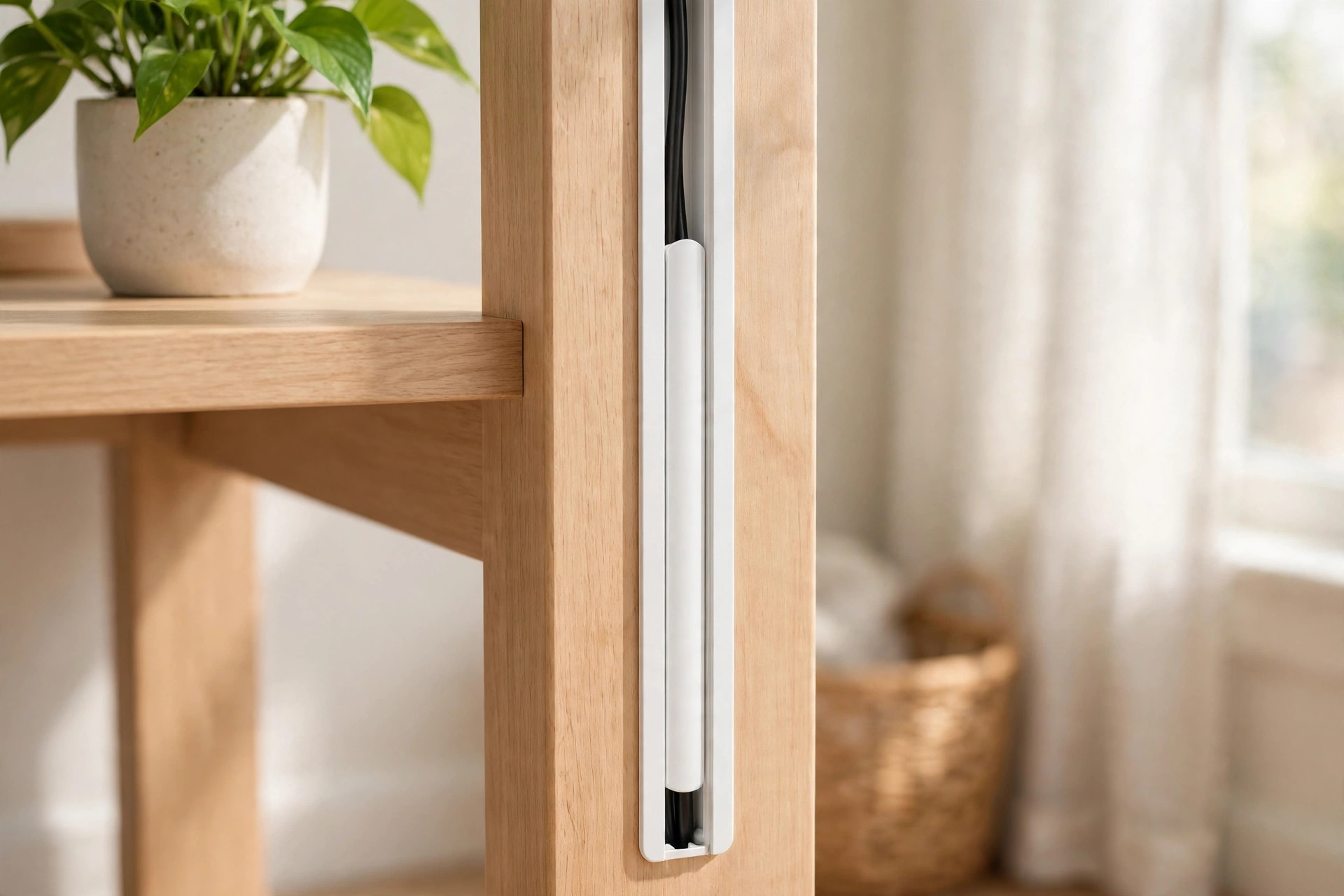
Loose cables are the fastest way to make a rental office look temporary. Two no-drill fixes solve it. First, an adhesive cable raceway — a slim plastic channel that sticks to the wall or desk leg and carries the charger and monitor cables down to the floor, about $8–$20 for a pack. Second, a clamp-on under-desk tray that grips the desk edge and holds the power strip and spare cable length out of sight, typically $15–$35.
Keep the power strip inside the tray, not on the floor, so the vacuum never catches it and you never trip on it. Leave slack in every cable — a tight cable will eventually drag its raceway off the wall.
6. Raise the screen with a clamp, not a drill
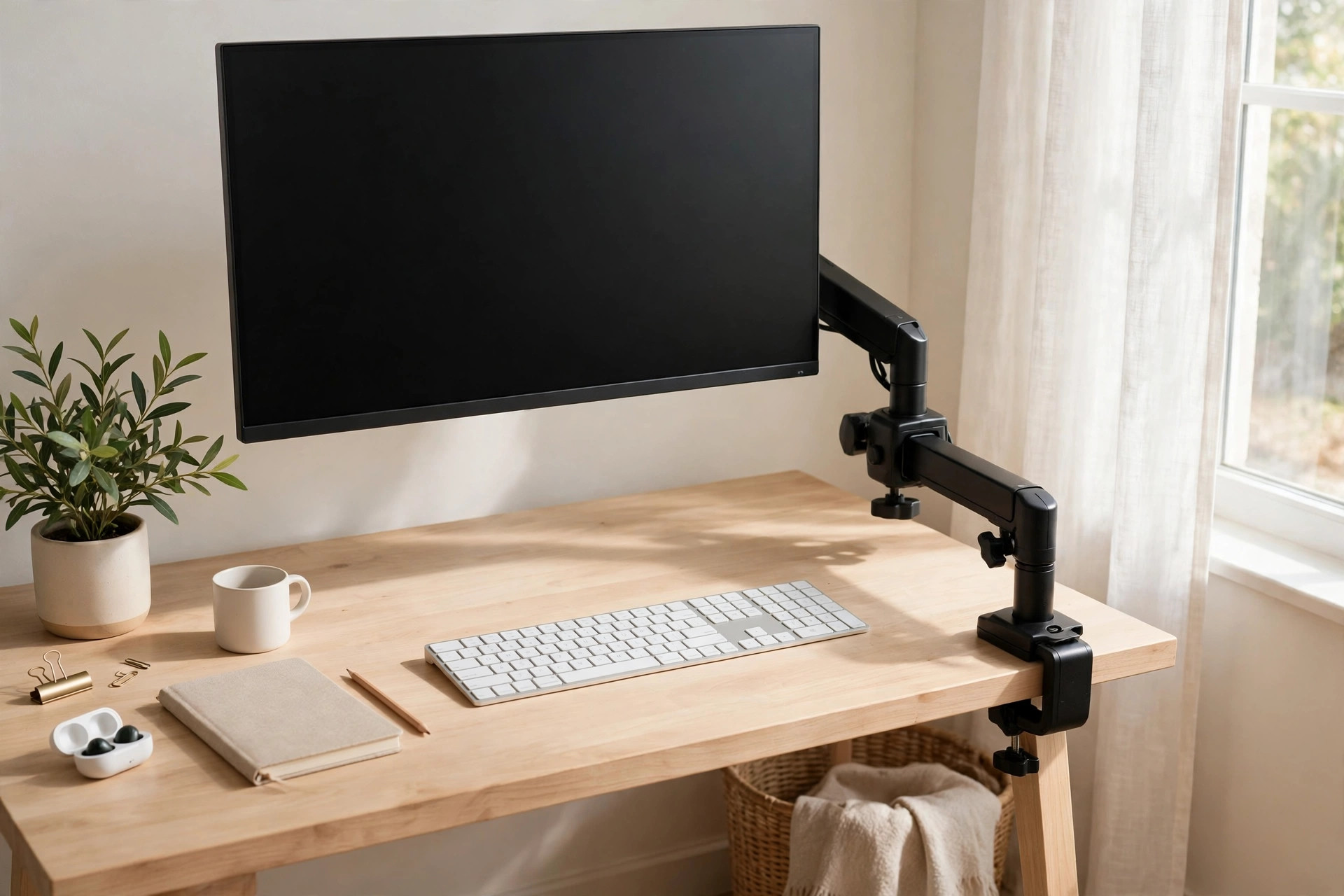
Neck pain in a rental office usually means the screen is too low, and the fix does not need a wall mount. A clamp-on monitor arm grips the back edge of the desk, lifts the screen to eye level, and frees the desk underneath — typically $30–$80 for a single-arm version. Check the clamp range against your desk thickness, and that the edge is solid, not hollow, where it bites.
If you work from a laptop, a simple laptop stand or riser does the same job for $20–$50: screen at eye level, keyboard at elbow height with an external keyboard, and nothing attached to anything. Either way, the rule is the same — the top of the screen at or just below eye level, about an arm’s length away.
7. A video-call backdrop that needs no nails
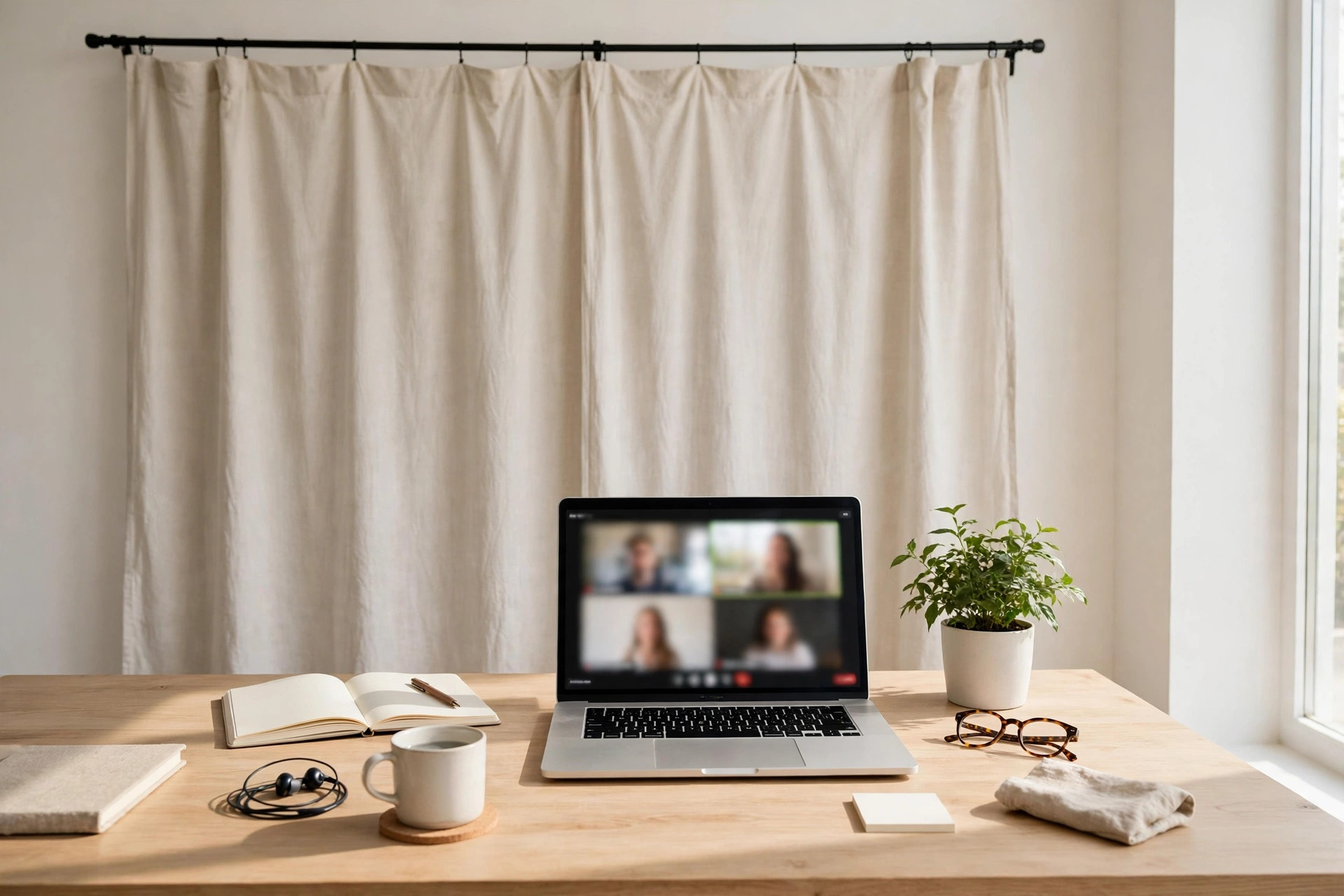
On calls, what sits behind you matters more than what sits on your desk. A tension rod — the spring-loaded kind, $10–$20 — wedges between two walls, the sides of a bookcase, or a door frame, and holds a curtain or a length of fabric as a backdrop. Pick a plain, mid-tone fabric: it hides the messy room behind you and keeps the camera’s auto-exposure steady, which a bright window behind you will not.
Hang the rod so the fabric falls just behind your chair, not stretched across the whole wall — a metre of coverage is enough for a webcam frame. When the call ends, the curtain slides to one side and the room is a room again. Nothing is screwed in, and the rod comes down in seconds.
8. Soften the sound and mark the zone
Hard floors and bare walls make a rental office echo on calls, and the fix is soft furnishings, not acoustic panels screwed to the wall. A rug under the desk area cuts echo and marks the office zone in a shared room — a 120 × 180 cm rug typically costs $40–$120. Layer a fabric curtain or a bookshelf on the hard wall behind you and the echo drops further.
For the zone itself, use a low open bookshelf as a divider rather than a screen screwed anywhere: it separates the office corner from the living area, stores the office clutter on its far side, and moves in one lift. Keep it low — waist to chest height — so the room still shares its light.

9. What to avoid: the deposit killers
No-drill does not mean no-damage, and landlords charge for the same few mistakes. Do not use adhesive strips on fresh paint (under 30 days), on textured wallpaper, or on dusty brick — they will take the surface with them. Do not overload a strip and hope; when it fails at 2 a.m., the frame takes the desk lamp with it. Push pins and tiny nails are still holes — twenty of them is a repair bill.
Suction-cup hooks belong on glass and tile, not painted walls. And anything borderline — a heavy leaning shelf on a thin partition wall, a tension rod in a tiled bathroom doorway — is worth one message to the landlord first. Written permission for a grey area costs nothing and settles the deposit argument before it starts.
10. The move-out check: leave it like you found it
Build the move-out into the setup from day one. Photograph every wall before you hang anything, keep the strip packaging so you remember the removal direction, and when the day comes, work in reverse: take the items down, warm each strip tab with a hairdryer for a few seconds if it resists, then pull straight down and slow.
Walk the room with the move-in photos in hand: a leaning shelf leaves no mark, a clamp at most a faint pressure line that fades, a raceway peels away clean. That is the whole point of the 12 ideas above — an office that works every day for a year and disappears in an afternoon, deposit intact.