How Much Does It Cost to Convert an Attic Into an Office?
An attic conversion sounds expensive until you price it in parts. Most of the cost is not the desk or the chair — it is the room itself: the floor, the light, the temperature, and the power. Get those four right and the furniture is the cheap part.
The honest range for a working attic office is wide, because attics vary so much. A small, already-floored attic that just needs light, power, and furniture can come in around $800–$1,500. A typical conversion — new flooring, insulation work, a skylight, heating, and a proper desk setup — usually lands around $3,000–$8,000. A full structural job with a dormer, a staircase, and permits can pass $15,000–$25,000 or more.
1. The short answer: what most people pay
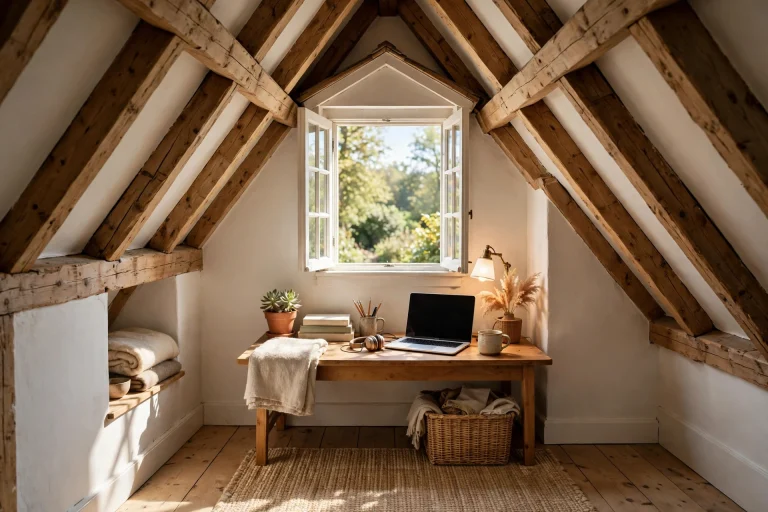
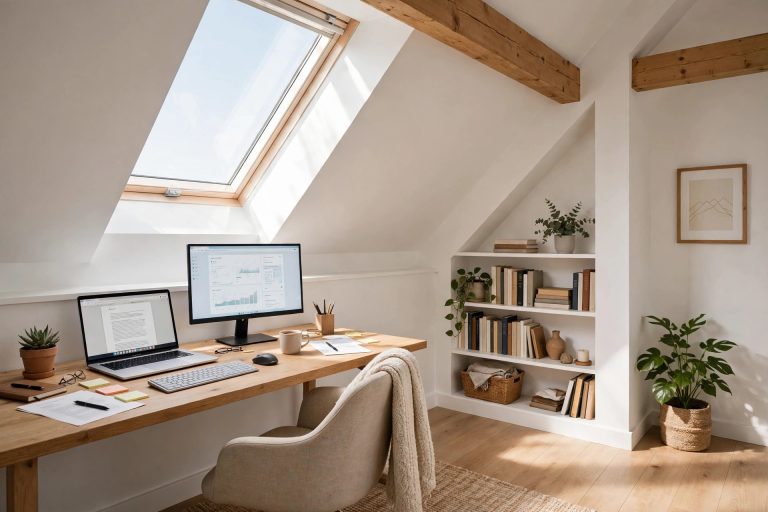
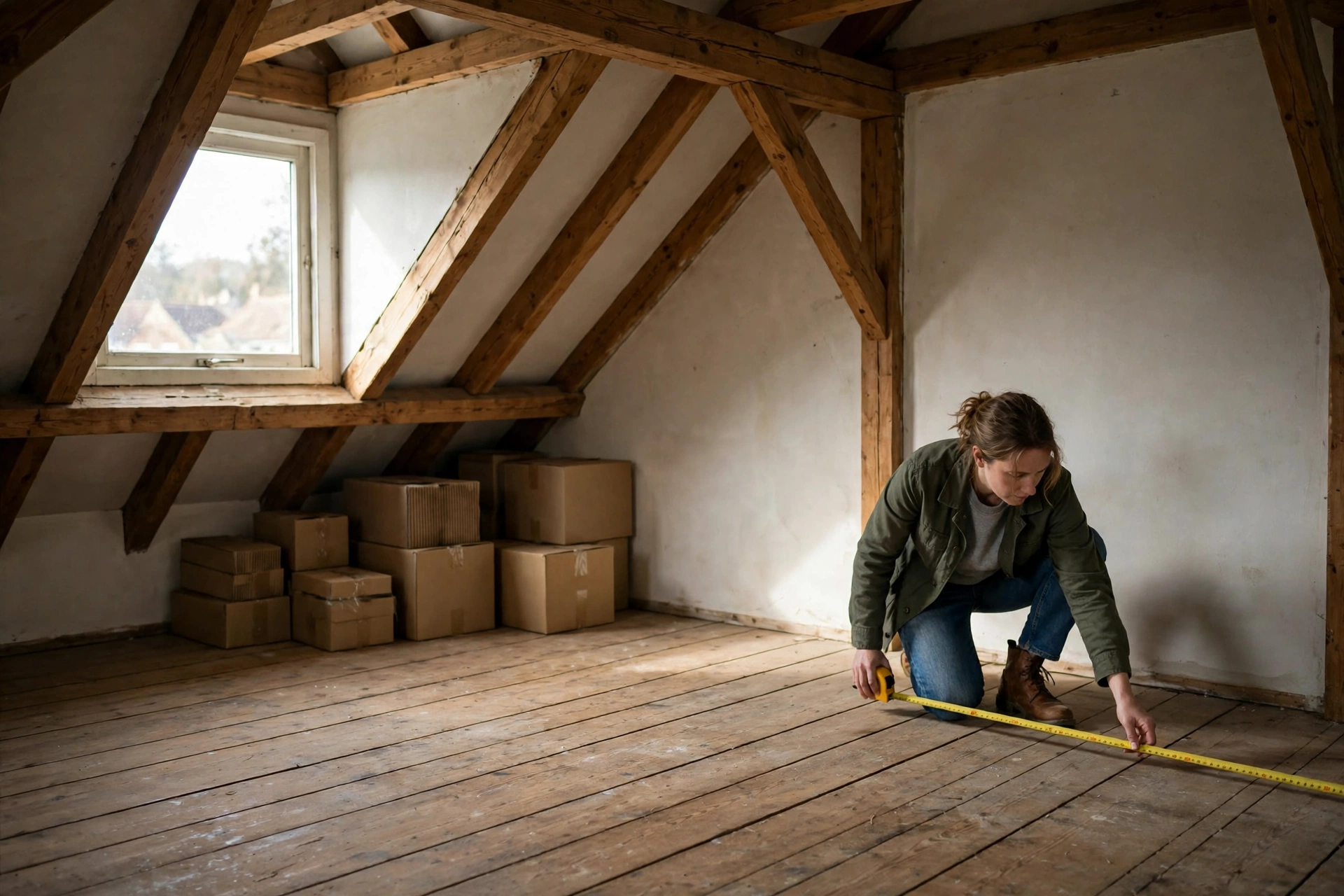
For a straightforward attic office — a room you already walk into, with a floor you can stand on — most people spend $2,000–$5,000 all in. That covers flooring, light, heating and cooling, electrics, and furniture, done in the right order. The $800 end of the range is real too: our $800 attic office makeover shows exactly what that buys when the room is already sound — seal the leaks, fix the light, desk on the tall wall, storage in the knee walls. Knowing which bracket you are in comes from measuring, not from shopping.
2. What drives the price: size, condition, and access
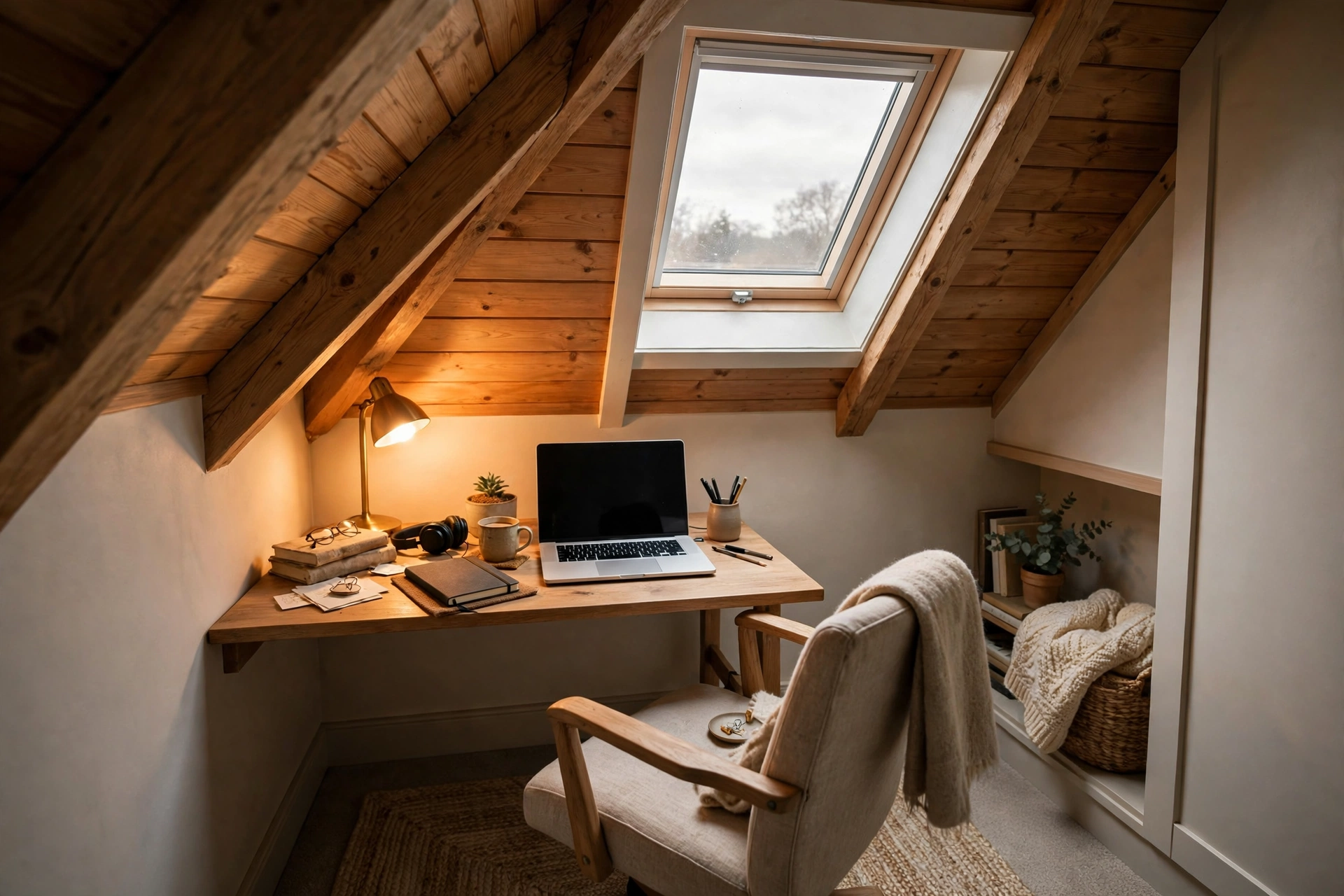
Three things set the bill before you buy a single item. First, size: flooring and insulation are priced by area, so a 100-square-foot attic costs roughly half what a 200-square-foot one does. Second, condition: a sound, dry attic is a decorating job; a sagging floor, damp insulation, or a roof leak makes it a repair job first, priced by the problem, not the room. Third, access: if the only way in is a pull-down ladder, every board, desk, and heater has to come up through a small hatch. A proper fixed staircase typically costs $1,000–$3,000, and it is the one change that turns a storage loft into a real office.
3. The floor: make it solid before anything else
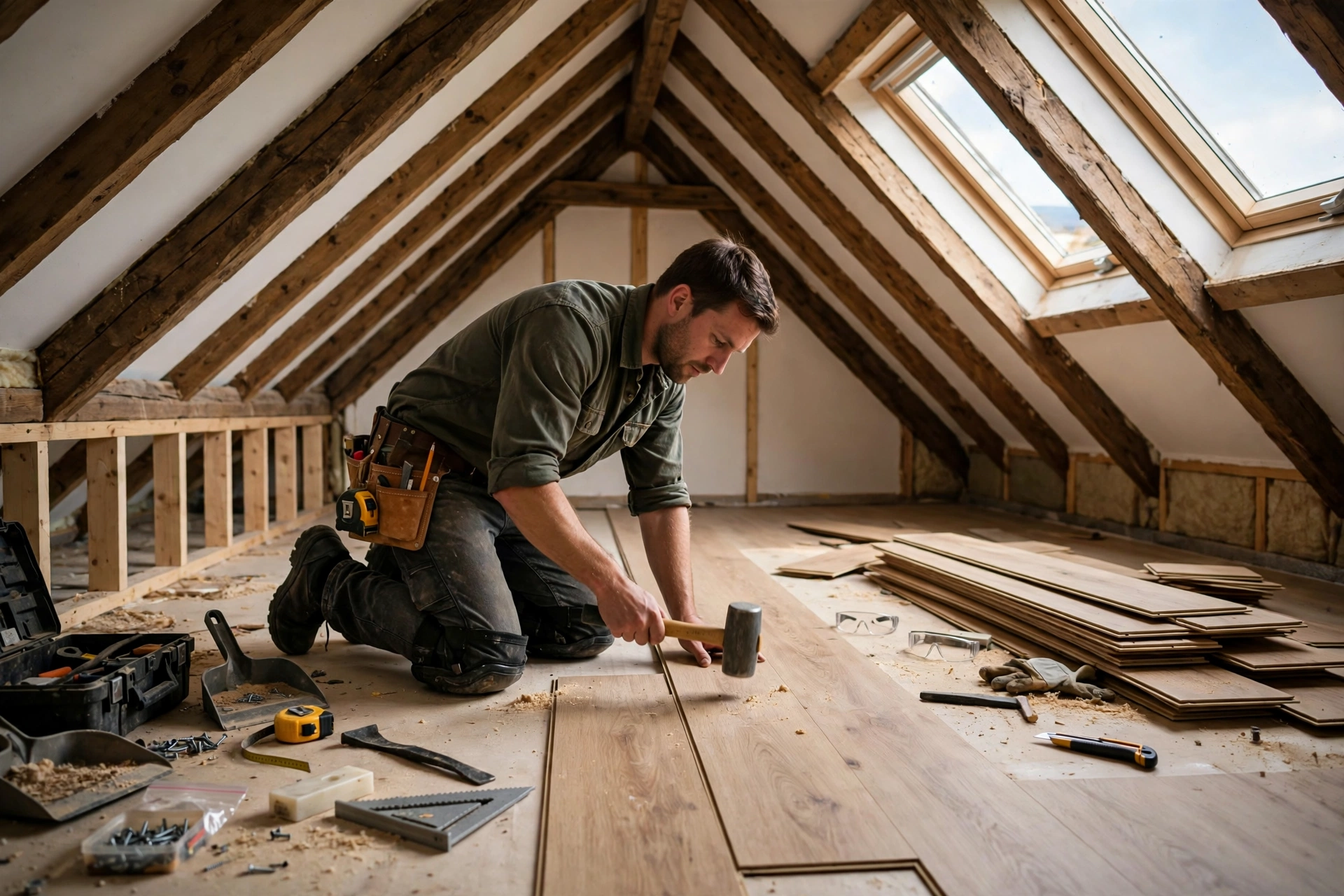
Nothing else matters until the floor is safe to stand and sit on. Many attics have joists and boards meant for storage, not for a desk, a chair, and a person moving around all day. A structural check is worth it — typically $150–$400 — because a floor that flexes under a desk cracks the plaster below and wobbles your monitor forever. If the structure is sound, new flooring on top is the next cost: laminate or vinyl plank typically runs $2–$5 per square foot for materials, plus a similar amount for fitting, so a 120-square-foot attic is roughly $500–$1,200 floored. Add a rug for warmth and sound ($50–$150).
4. Headroom and structure: the deal-breaker
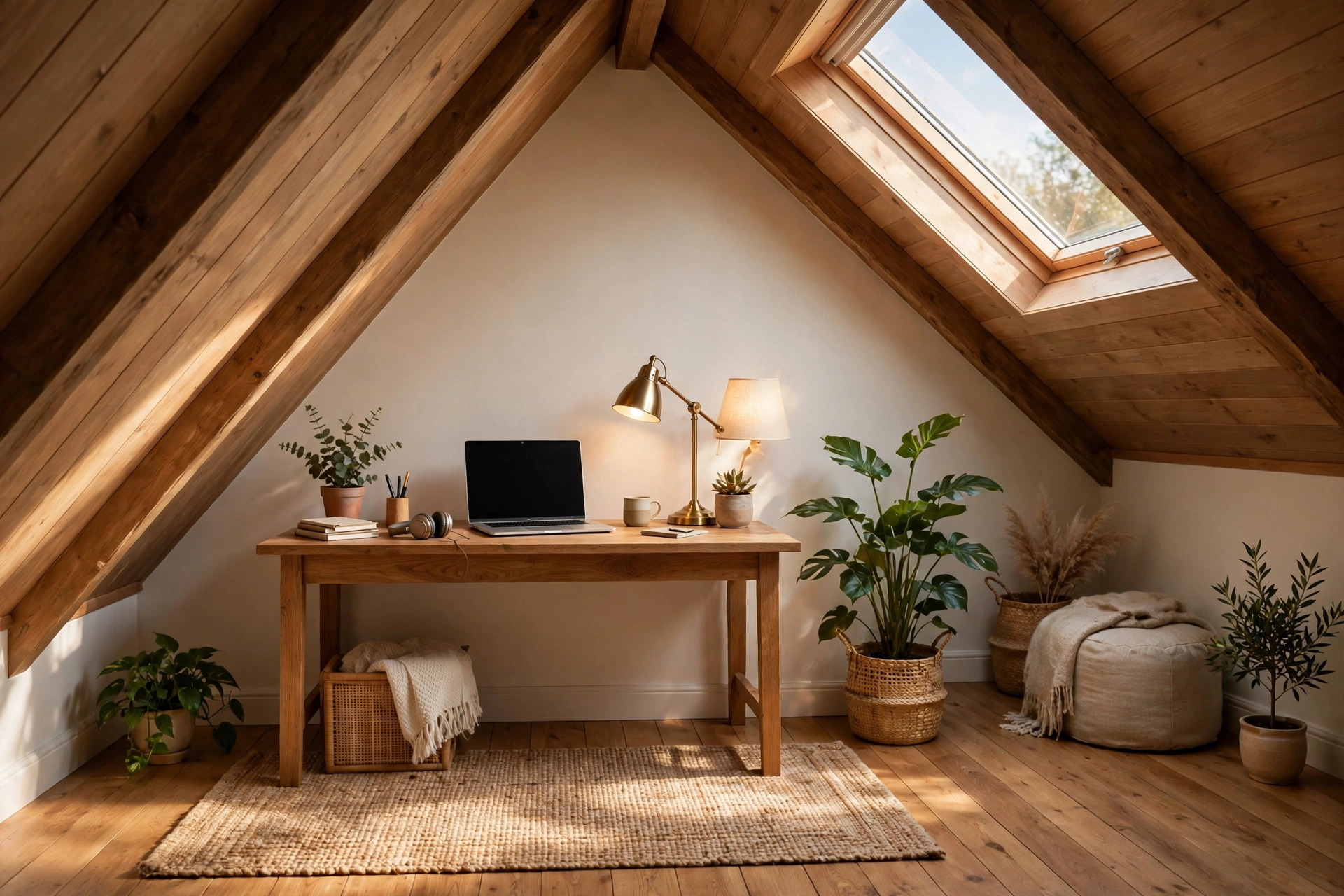
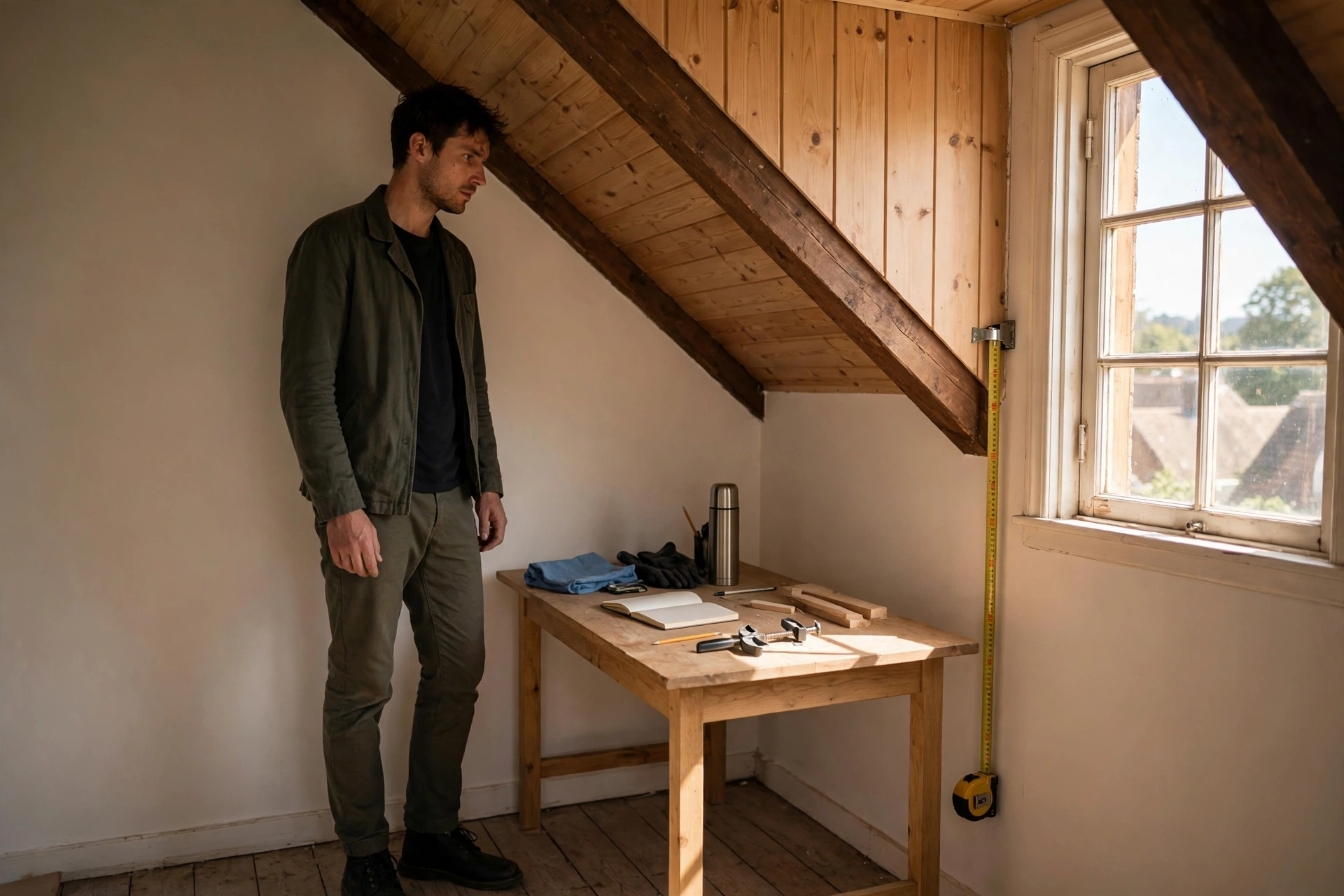
Headroom decides whether an attic can be an office at all. You need enough height to sit upright at the desk and stand in at least one part of the room. If the tallest point is under about 7 feet where the desk would go, no amount of furniture fixes it — the fix is structural, and that is where conversions get expensive. Raising a roof or adding a dormer typically starts around $5,000 and climbs quickly, which is why most attic offices work with the roof they have: desk on the tall wall, storage in the low eaves, and the walking route kept where the ceiling is highest. If it fails even for sitting, price the structural work first — or pick a different room.
5. Light and windows: skylights, dormers, and lamps
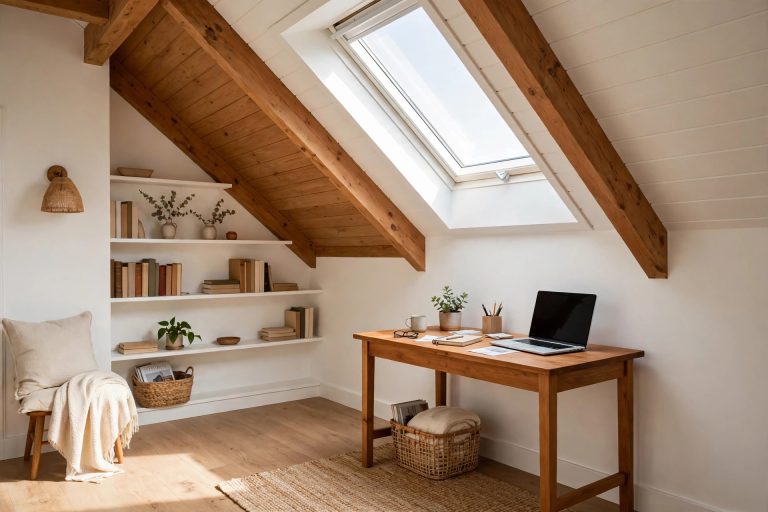
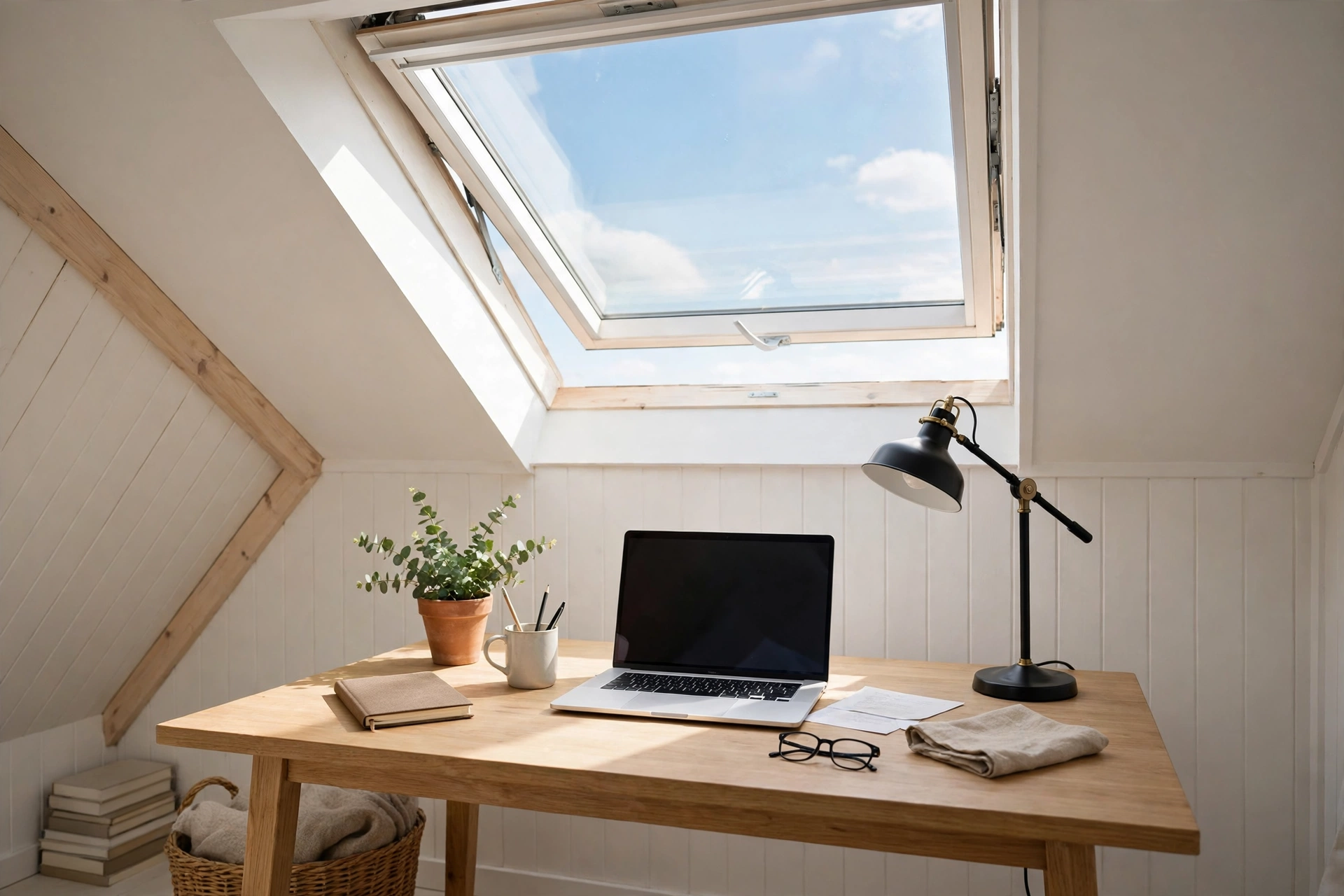
Attics are dark by design, and light is where most conversions spend their second-biggest chunk. A fixed skylight typically costs $500–$1,500 fitted; an opening one with a blind runs $1,000–$2,500. A dormer — a box built out of the roof to give you a vertical window — is a bigger job, usually $5,000–$10,000 or more. Layered electric light does real work while you save for a skylight: a ceiling panel ($40–$120), an adjustable desk lamp ($30–$100), and a wall wash or light bar behind the screen ($30–$80). Our windowless attic lighting guide puts them in the order to buy. Budget $150–$400 for electric light; treat a skylight as a later upgrade, not a day-one essential.
6. Heating and cooling: the comfort bill
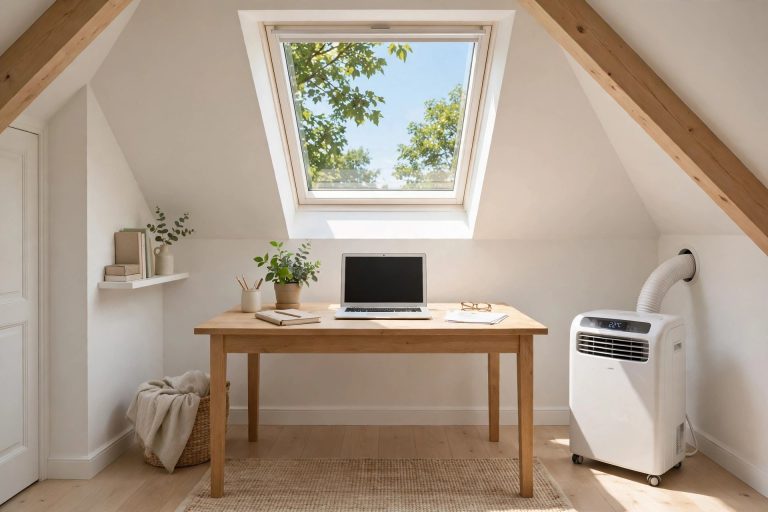
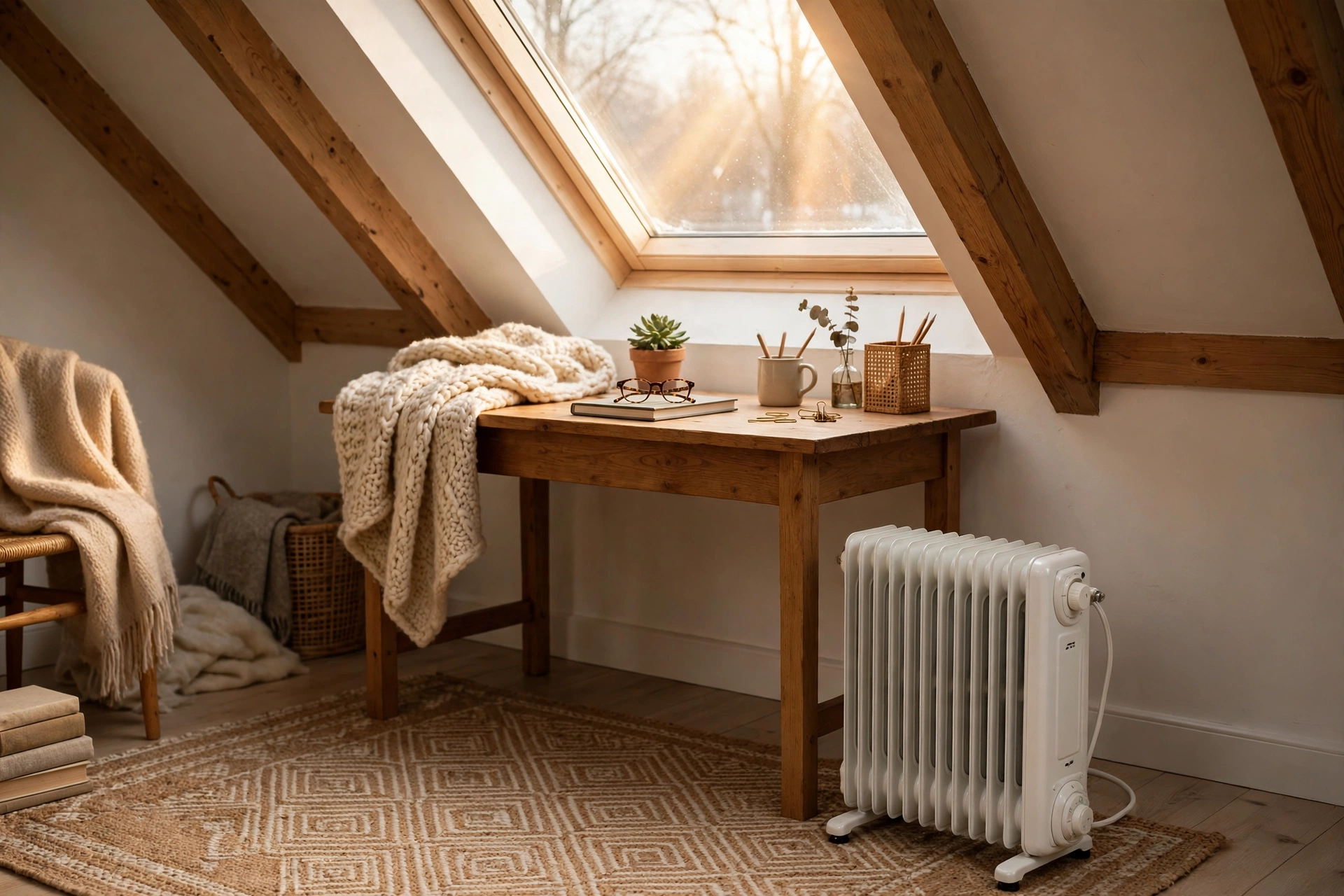
An attic that freezes in January and roasts in July is a room you will stop using — temperature is the most common reason attic offices get abandoned. Start cheap: seal leaks around the hatch and eaves, and check the insulation — our warm-in-winter, cool-in-summer guide walks through both in order. Sealing and draught-proofing typically costs $50–$200 in materials; topping up insulation is usually $300–$1,000 depending on area. Then the heater and cooler: an oil-filled radiator or panel heater runs $50–$150, a portable air conditioner $250–$500, and a mini-split system — the proper year-round answer — typically $1,500–$3,500 installed. Buy the sealing and insulation first; a heater in a leaky attic is money going out through the roof.
7. Electrics and wifi: power where the desk is
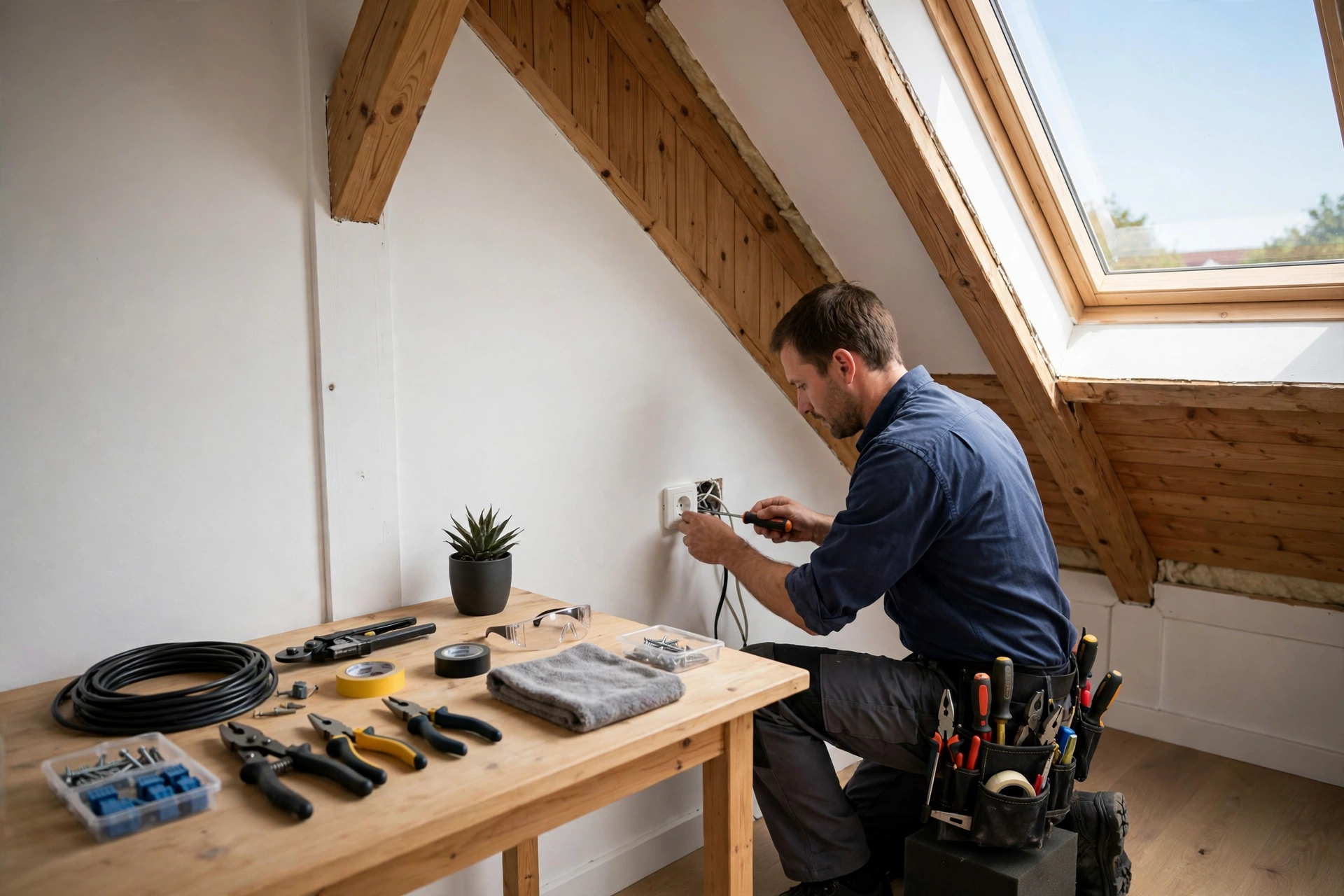
A home office needs more power than a storage attic was ever wired for: a computer, a monitor or two, a lamp, a charger, and a heater add up fast. Adding two or three sockets and a lighting circuit typically costs $300–$800, depending on wiring runs and whether the consumer unit has spare capacity. Never run the office off one extension lead from the landing — a trip and fire risk that fails the moment the heater and the computer run together. Wifi is the other half: attics are often the farthest room from the router, so budget $30–$100 for a mesh node or a powerline adapter if the signal is weak.
8. The desk, chair, and storage
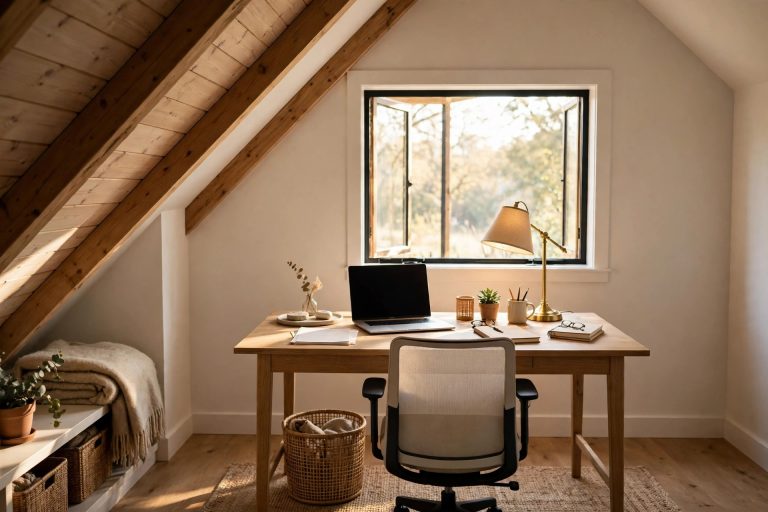
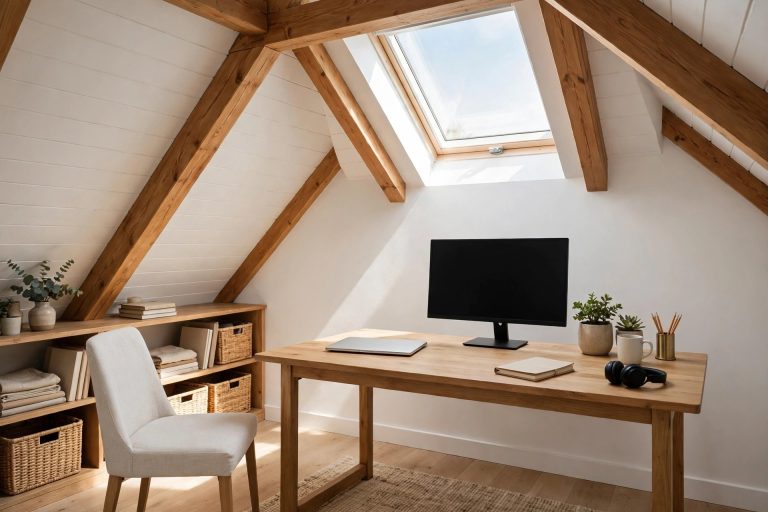
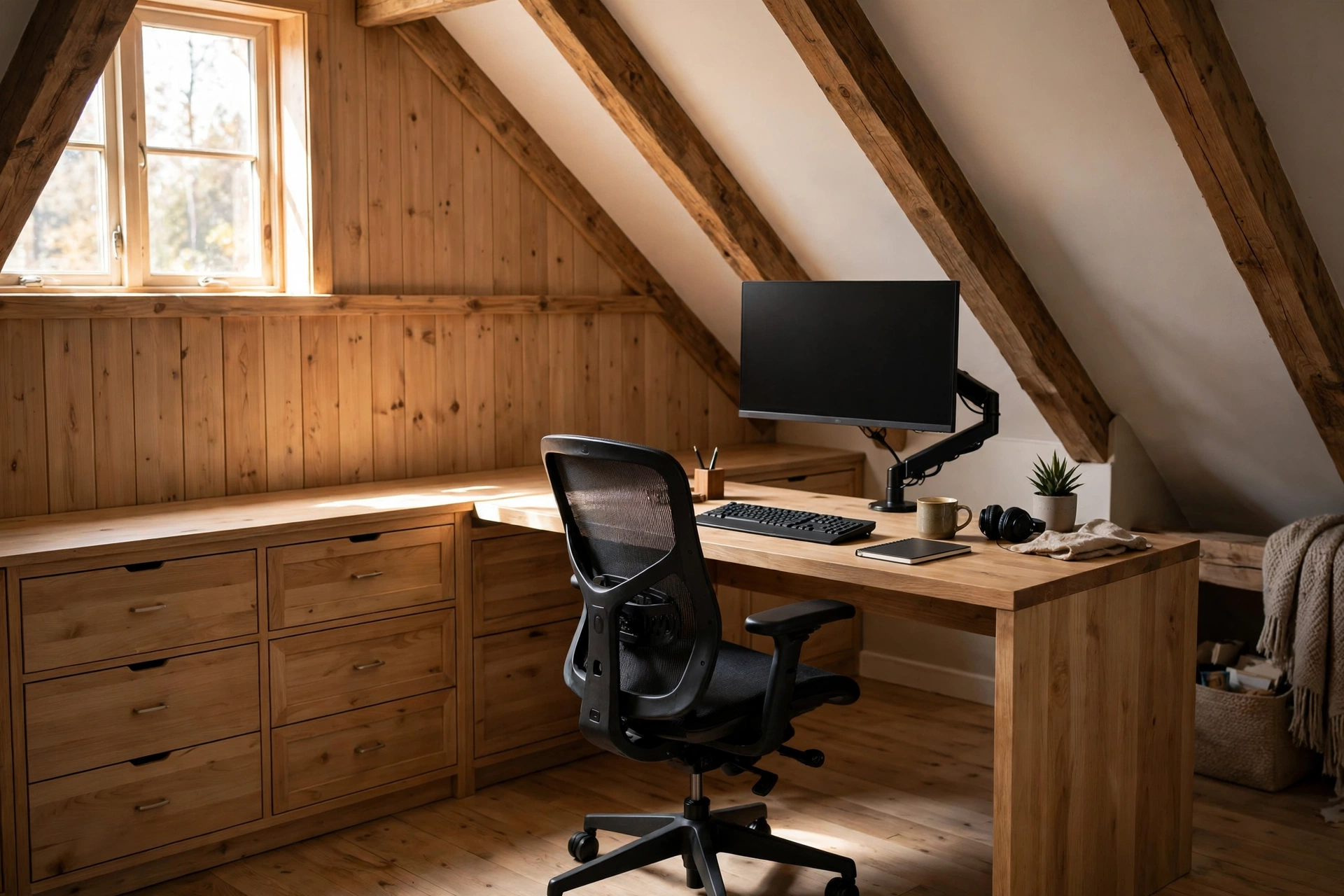
Only now — floor, headroom, light, temperature, power — does the furniture make sense. A desk for an attic is a measuring exercise first: 48 inches wide fits most tall walls, and a depth of 24 inches is standard, but check the knee-wall height before you buy, because a deep desk will not fit behind a low knee wall. A solid desk typically costs $100–$400, a decent office chair $150–$500, and a monitor arm — the best small upgrade for a sloped-ceiling desk — around $30–$80. Storage belongs in the knee walls: shallow drawers or cubbies built into the eaves, typically $150–$400 for ready-made units. All in, furniture for a proper attic office usually runs $400–$1,200 — the smallest part of the conversion.
9. The order of work: spend in this sequence
The order is the budget. Do it in this sequence and you never pay twice: first, measure headroom and check the floor structure; second, fix leaks and draughts and check the insulation; third, sort the light — skylight if you are having one, electric light in any case; fourth, electrics and wifi; fifth, heating and cooling; sixth, flooring; seventh, desk, chair, and storage. Flooring laid before the electrics are run has to come up again; a desk bought before measuring may not fit anywhere.

10. Three budget scenarios: $800, $3,000, and $15,000
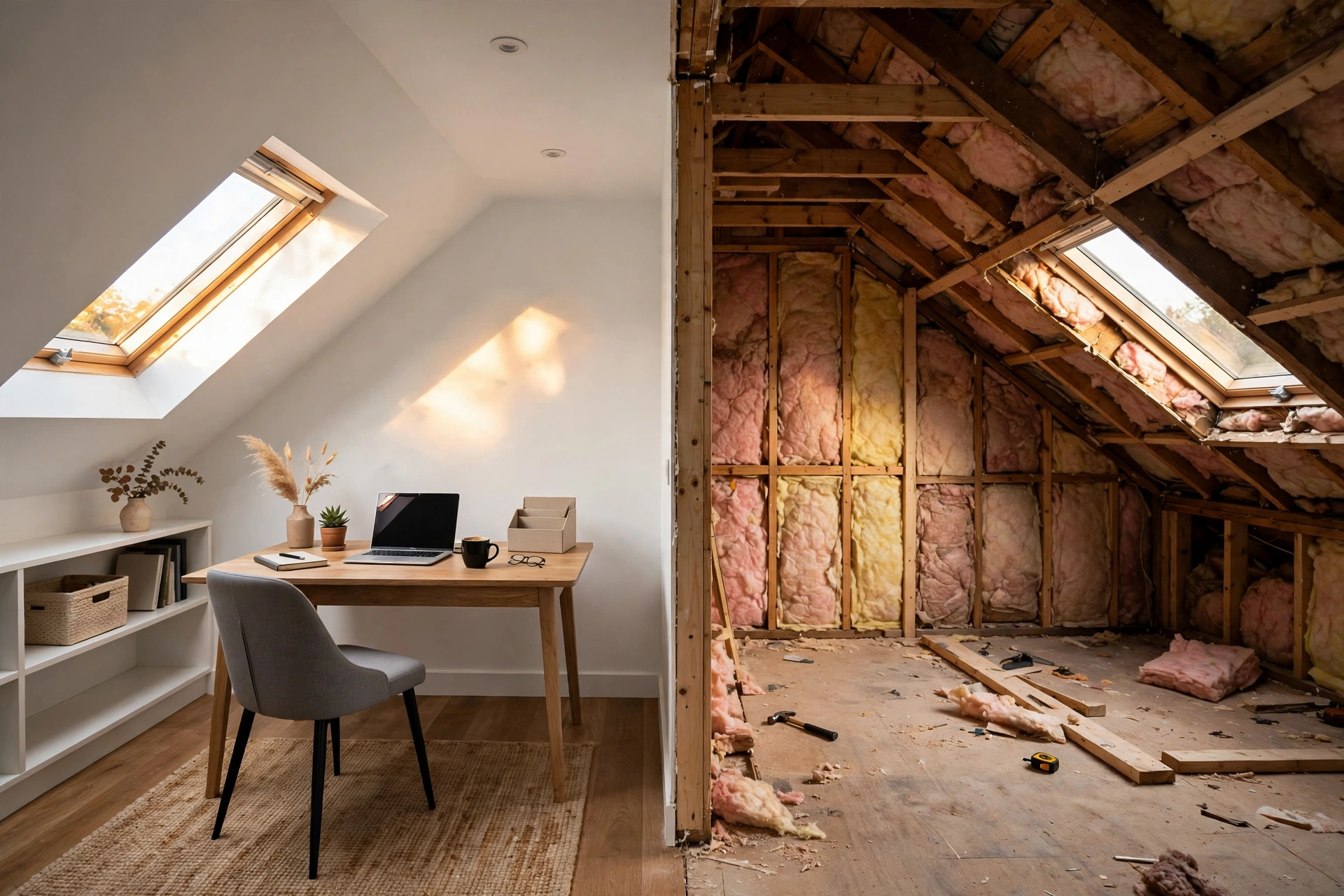
At around $800, the makeover: a sound attic, a sealed hatch, layered light, a second-hand desk and chair, and knee-wall storage — the $800 makeover linked above is the worked example. At around $3,000–$5,000, the typical conversion: new flooring, insulation topped up, a skylight or a proper lighting scheme, two or three new sockets, a heater and a fan, and new desk, chair, and storage. At $15,000 and up, you are paying for structure: a dormer or a staircase, permits, and a builder — the room changes shape, not just finish. Most people land in the middle bracket — the money best spent, because it fixes the room rather than decorating it.
What to buy first
Buy in this order: a tape measure and an hour of measuring, then the sealing and insulation, then the light, then the electrics, then the desk. If the measuring says the headroom or the floor fails, stop there and price the structural fix — or pick a different room — before anything else. Done in the right order, a conversion costs less — nothing gets bought twice, nothing gets ripped out.