Bedroom Corner Office: 12 Setups That Don’t Ruin Sleep
Working from your bedroom is easy to start and hard to sleep in. The desk ends up two feet from the pillow, the laptop glows at midnight, and the room never quite feels like a place to rest. The fix is not a bigger room — it is a setup that keeps work in its corner and sleep in yours. These 12 bedroom corner office setups all do the same job: they give you a real place to work, and a way to make it disappear when the day ends. Pick the one that fits your corner, then work through the order at the end.
1. The Tall-Wall Corner Desk
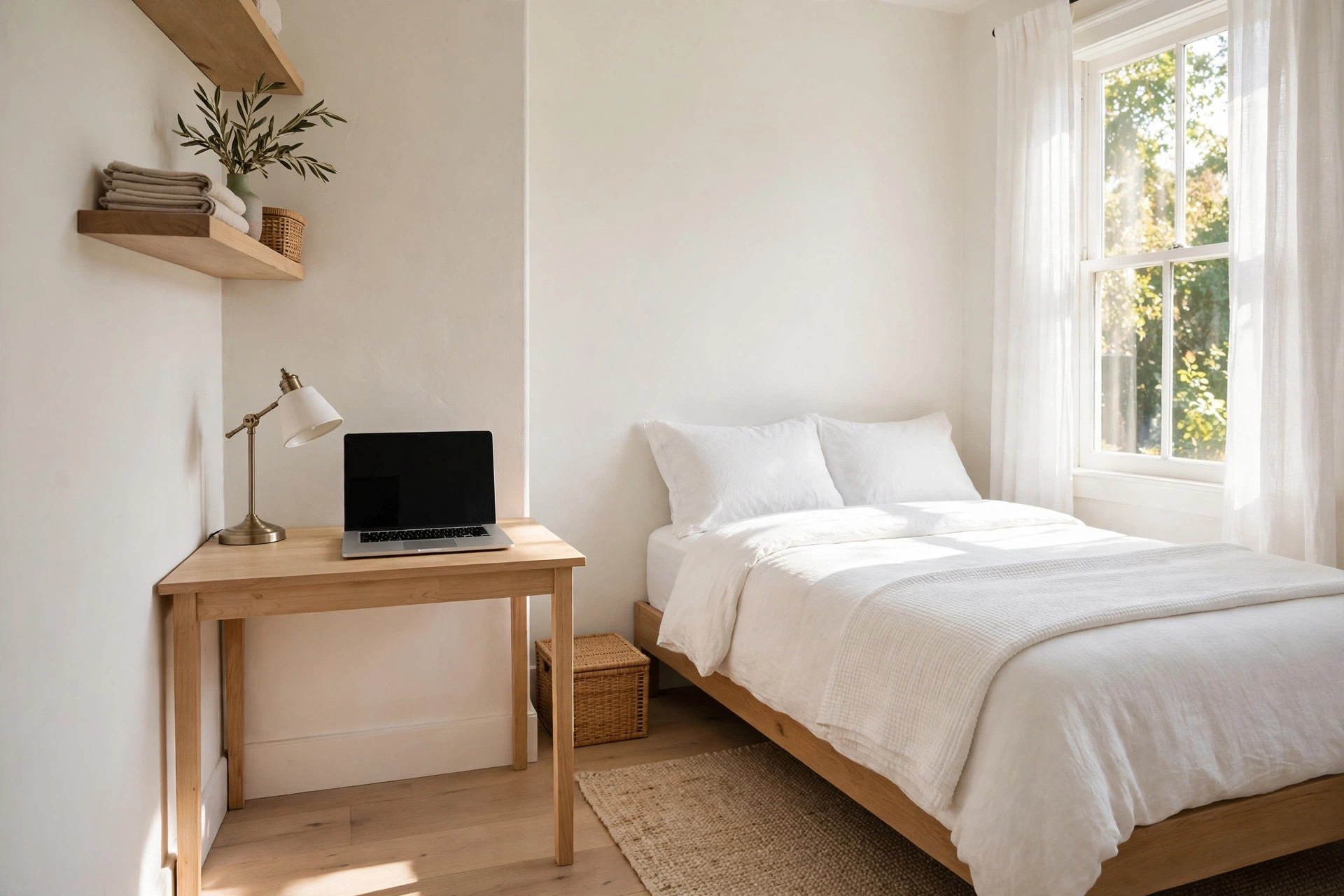
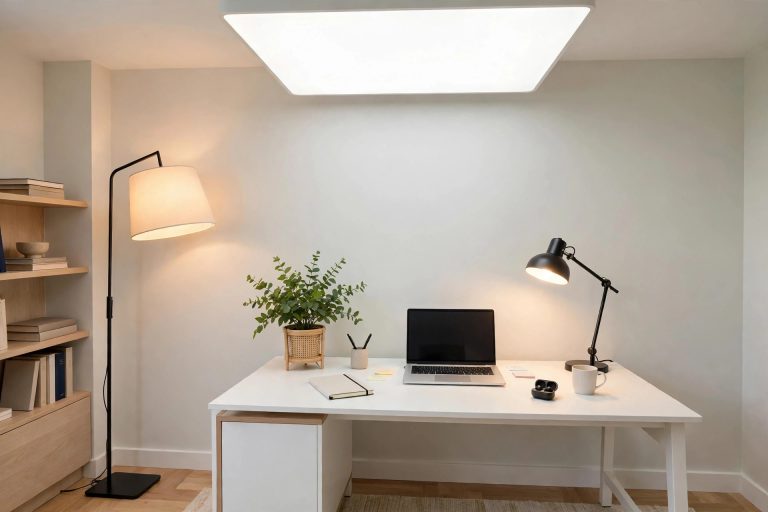
Put the desk on the longest clear wall in the room, and the bed on the opposite wall. This is the default for a reason: you face the room while you work instead of staring at the bed, and from the bed you see a wall, not a monitor. A desk 40–48 inches wide fits most corners; leave at least 30 inches behind the chair so you can stand without hitting the bed. A small desk lamp and a monitor arm keep the surface clear, and the bed stays a bed — no laptop on it, ever.
2. The Fold-Down Wall Desk
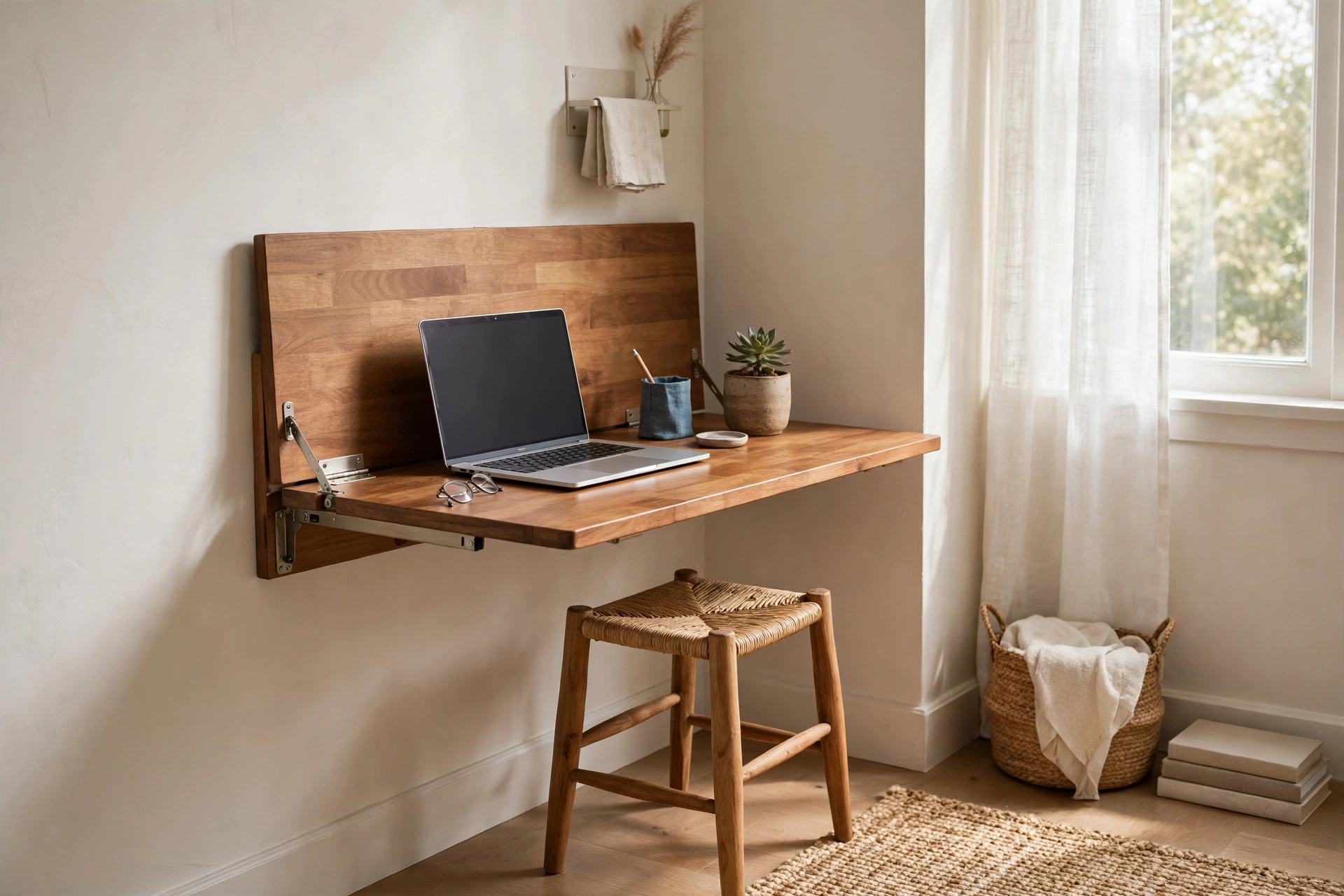
A wall-mounted desk that folds flat is the closest thing to making work vanish. Open, it is a 24–30 inch deep work surface with room for a laptop and a notebook. Closed, it is a slim panel on the wall and the corner is a bedroom again. Mount it at desk height (about 29–30 inches), add a small shelf above for the few things that live there permanently, and use a stool or a chair that slides underneath. A basic fold-down desk typically runs $60–$150; the install is two wall anchors and a level.
3. The Closet Office (Cloffice)
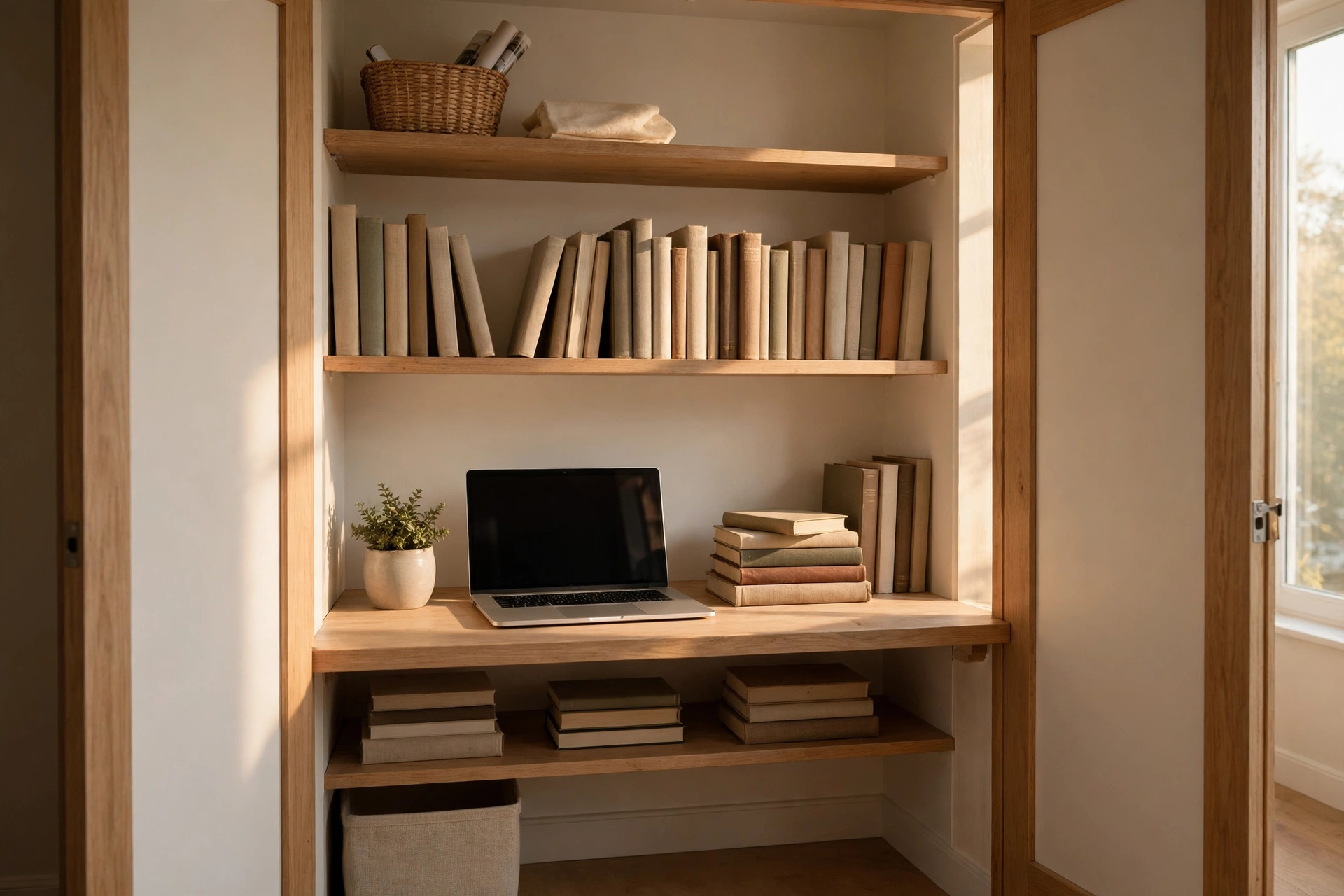
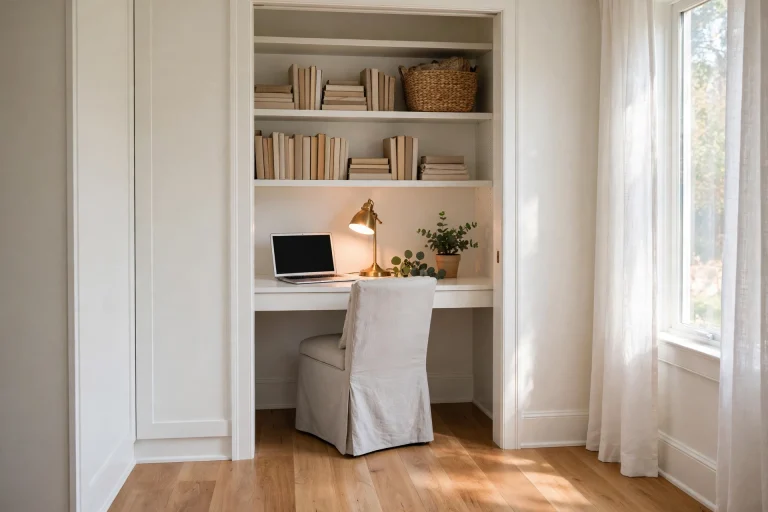
If your bedroom has a closet you barely use, the office goes inside it. A shelf at desk height across the closet, a small lamp, and the doors become the best sleep boundary ever invented: close them and the office is gone. Keep the monitor small (24 inches or under) and the chair a stool that fits inside, or pull a chair in from the room. Ventilation matters — leave the doors open while you work and add a small fan if the closet runs warm.
4. The Behind-the-Door Corner Desk
The corner behind the bedroom door is dead space — nothing else fits there, and you cannot see it from the bed. A compact desk (36 inches or under) tucks in neatly, and the door itself screens the setup when it is open. Measure the door swing first: the desk must clear it by an inch or two. This is the best option when the room has no other free wall, and it costs nothing but the desk itself.
5. The Window Corner
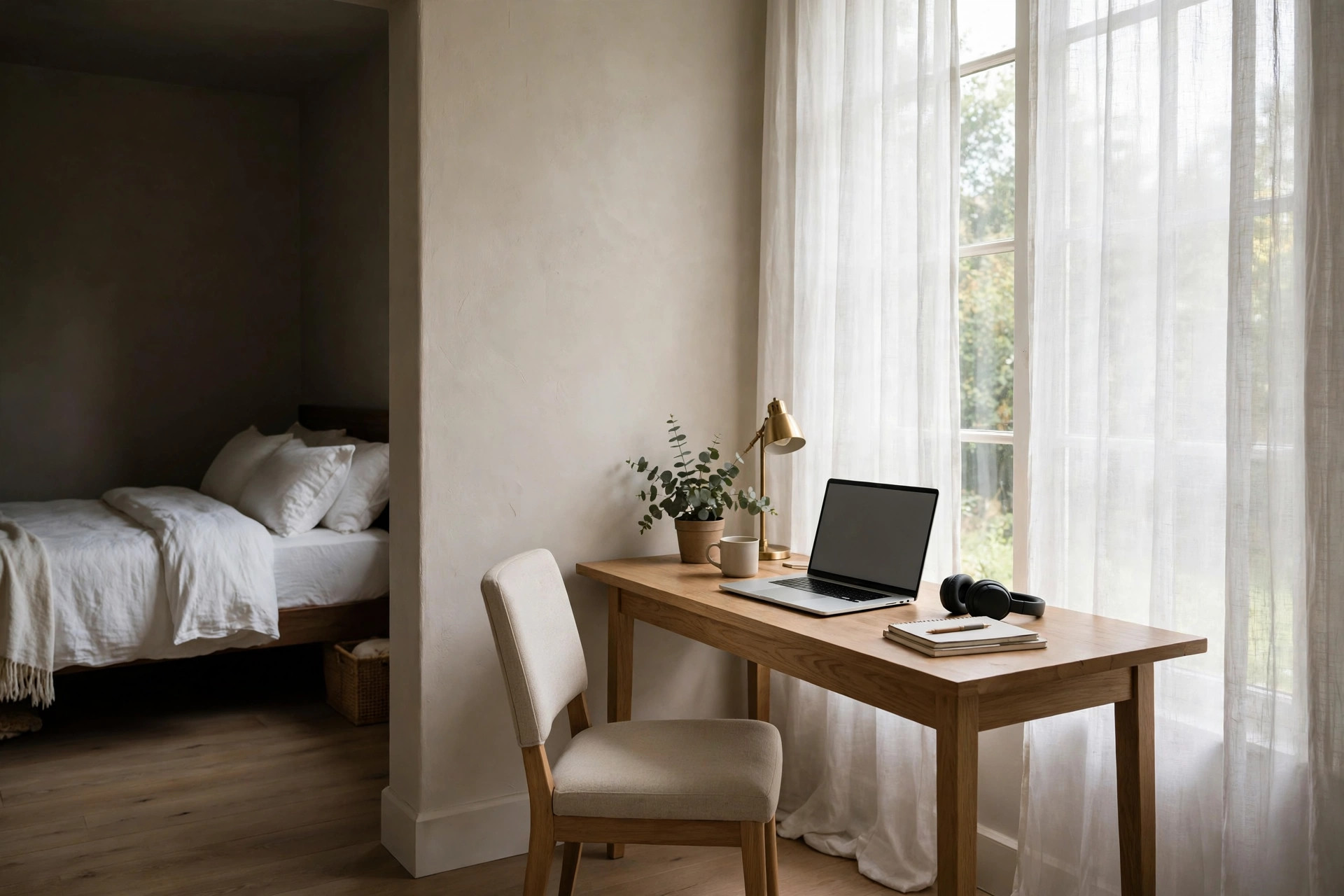
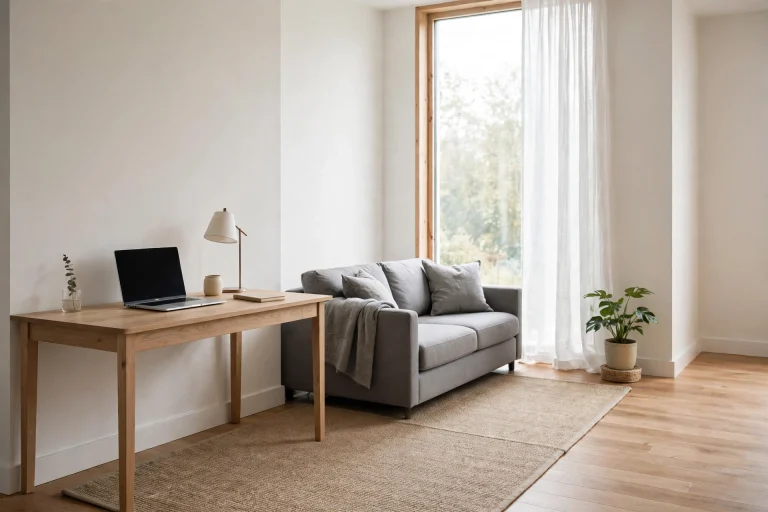
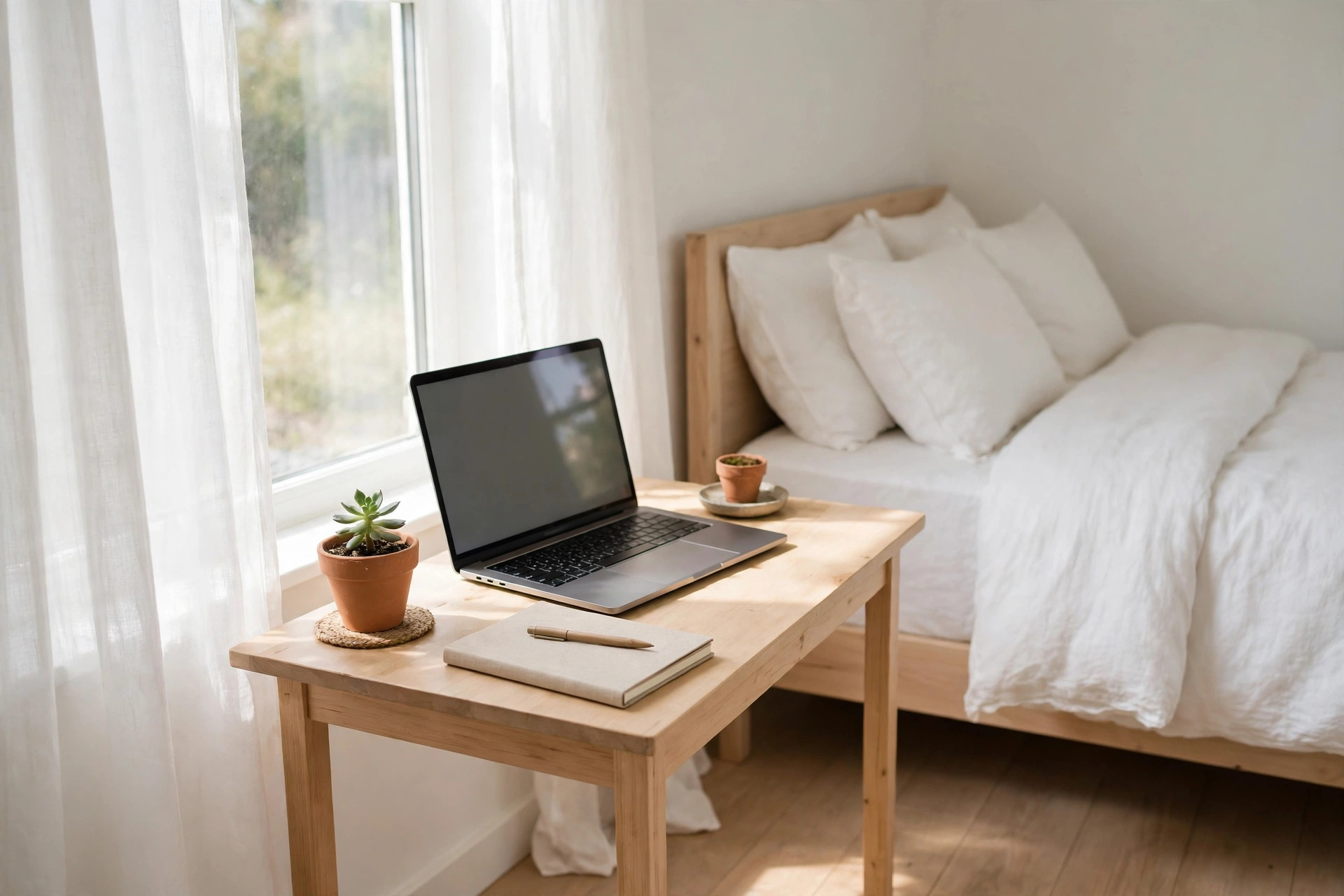
Put the desk in the brightest corner — right by the window — and the bed in the darker one. Daylight is the best desk light you already own: it keeps you alert during work hours and it costs nothing. The trade-off is glare, so angle the desk so the window is to your side, not behind the screen, and add a sheer curtain if the afternoon sun hits the screen directly. At night, blackout curtains over that same window protect your sleep — one window doing both jobs.
6. The Wardrobe-Wall Desk
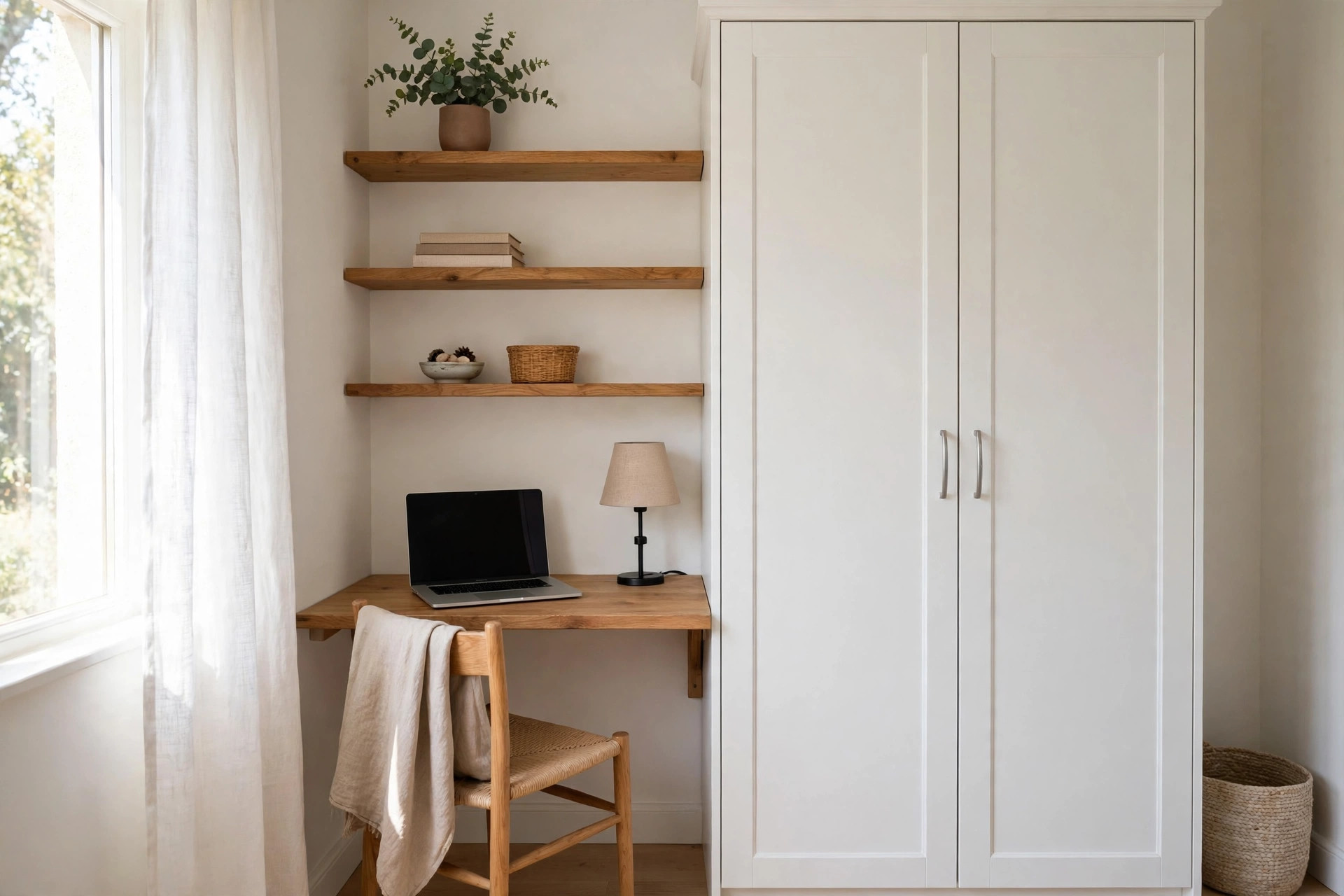
The wall beside the wardrobe is usually empty, and a narrow desk fits it exactly. A desk 16–20 inches deep holds a laptop, a notebook and a lamp without blocking the wardrobe doors — measure the door swing before you buy. Wall shelves above the desk hold the things that would otherwise spread across the surface, and a chair that tucks fully under keeps the walkway clear. This setup works best in rooms where the bed and wardrobe already claim the two long walls.
7. The Rolling Cart Office
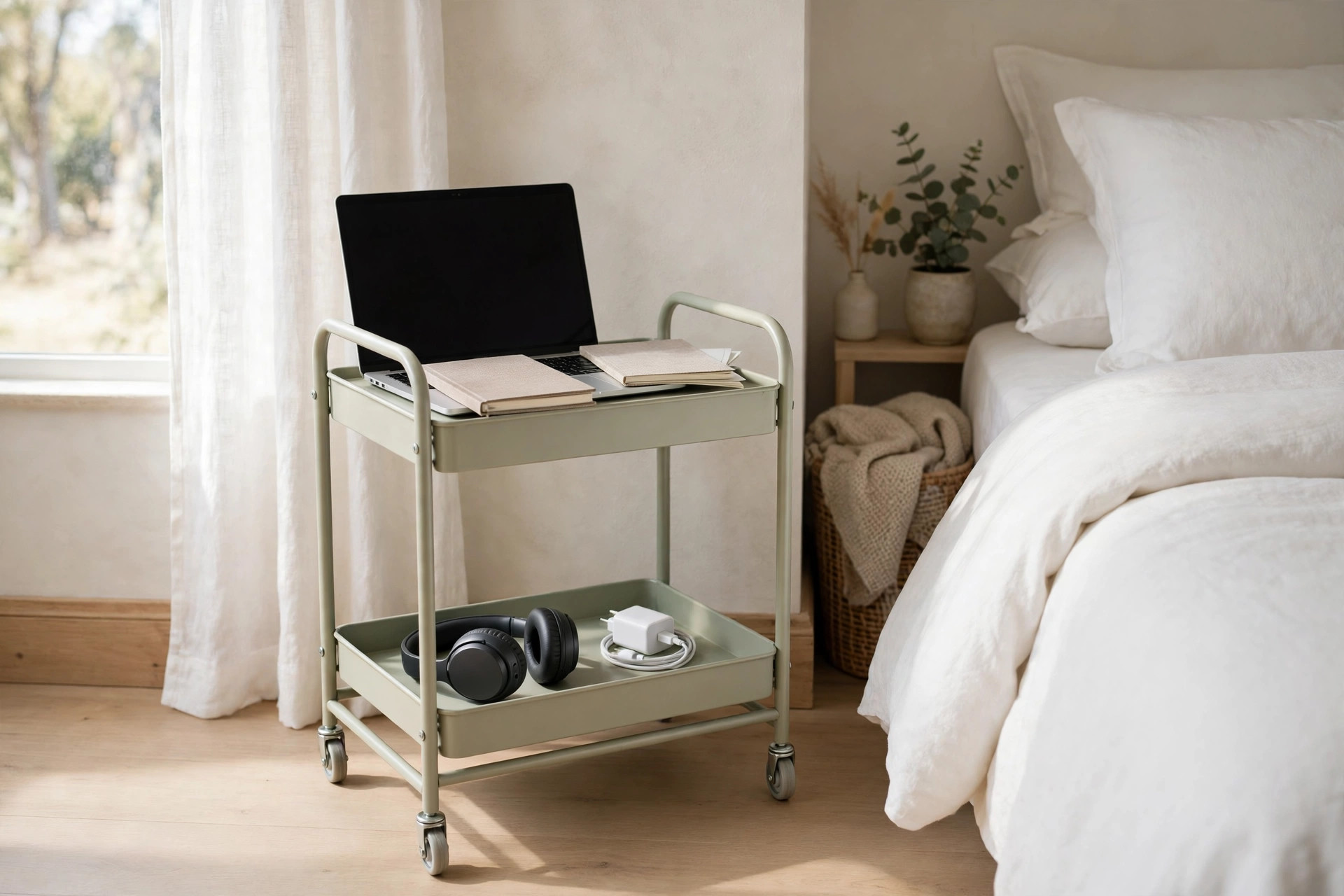
Everything you need for work lives on a wheeled cart: laptop, notebook, charger, headphones. During the day it parks in the corner as your desk; at night you roll it into the closet or behind the door. A cart with a top surface around 24 by 16 inches is enough for a laptop setup, and a second shelf holds the rest. It is the cheapest setup on this list — a sturdy cart typically runs $40–$100 — and the only one you can move without unscrewing anything.
8. The Shelf Desk and Stool
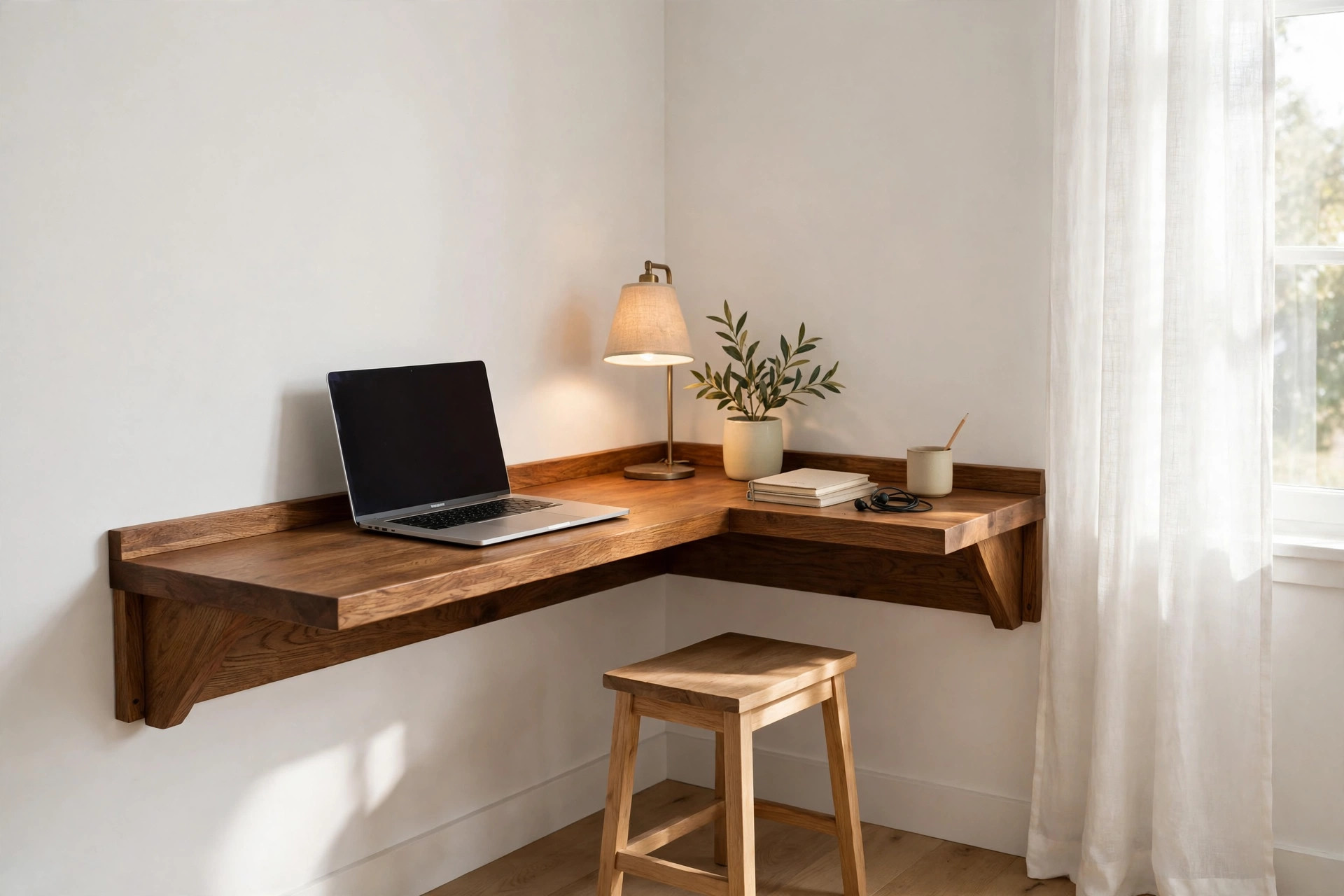
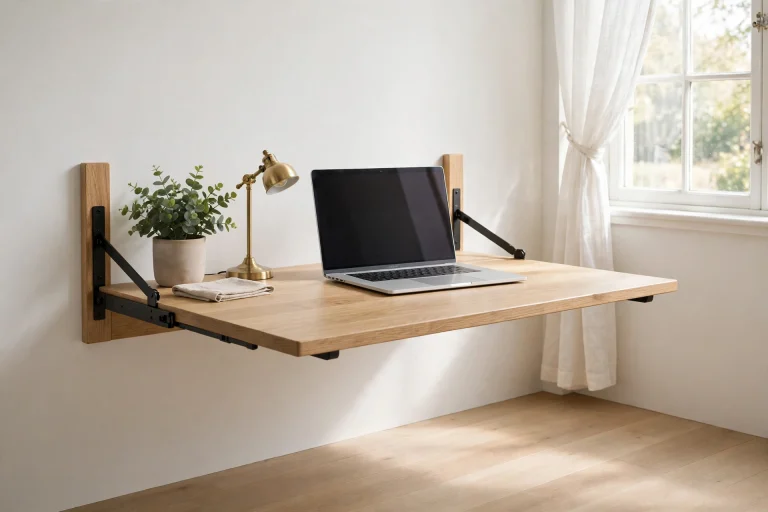
One deep wall shelf, one stool, done. A shelf 24 inches deep and 36–42 inches wide, mounted at desk height with solid brackets, is a full desk that takes zero floor space. The stool slides underneath when you are finished, so the corner reads as empty wall from the bed. Keep only the laptop and one lamp on the shelf; everything else lives in a small box on the shelf above. If the wall is plasterboard, use proper anchors — a shelf desk that sags is worse than no desk at all.
9. The Divider Zone
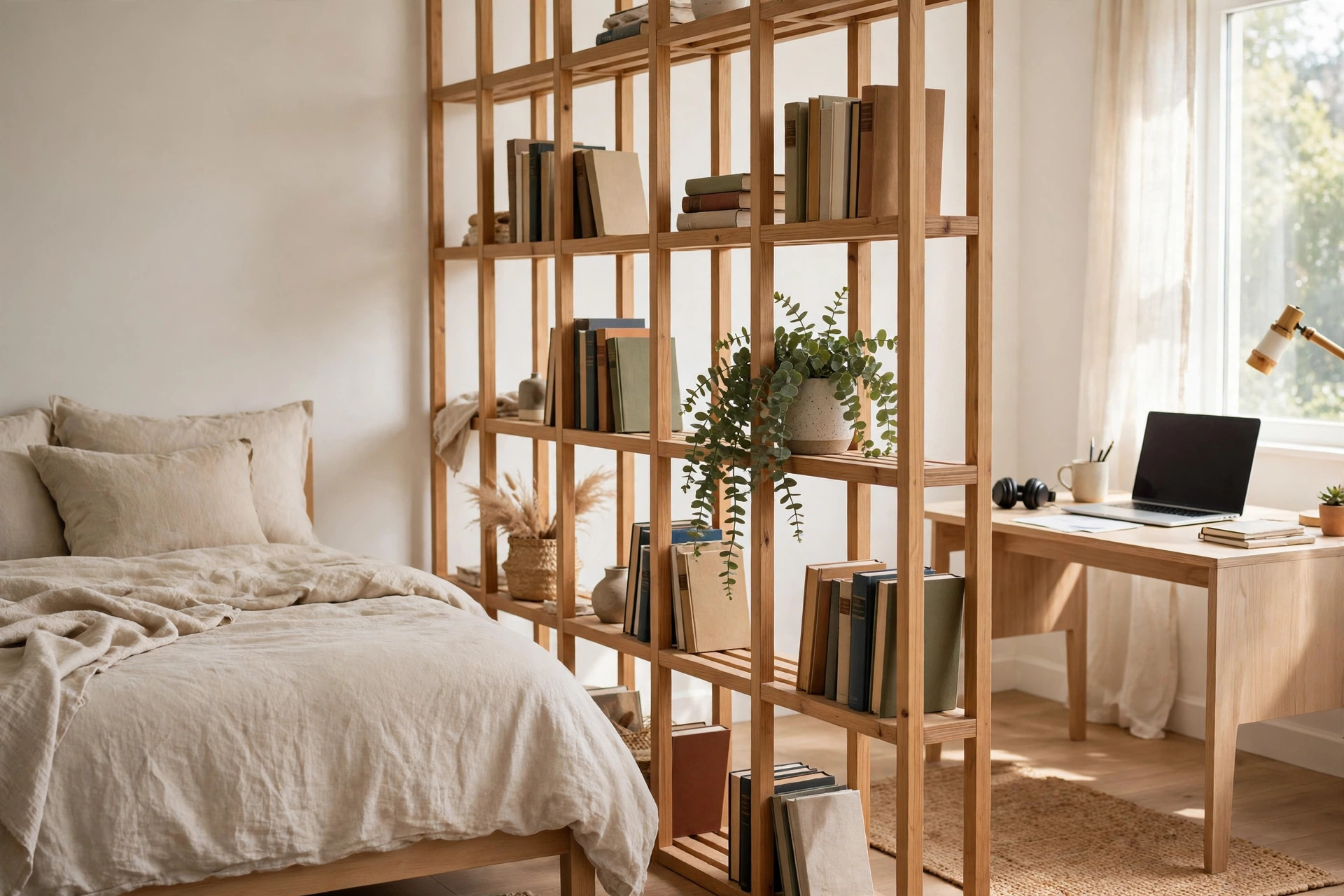
When the desk has to share the room with the bed and there is no wall to hide behind, build the wall. An open bookshelf, a curtain on a ceiling track, or a folding screen between the bed and the desk draws the line your brain needs: work on one side, sleep on the other. The divider does not need to reach the ceiling — waist-to-shoulder height is enough to block the view of the screen from the pillow. Keep the divider open (shelves, not solid panels) so the room still gets light and air.
10. The Under-Window Low Desk
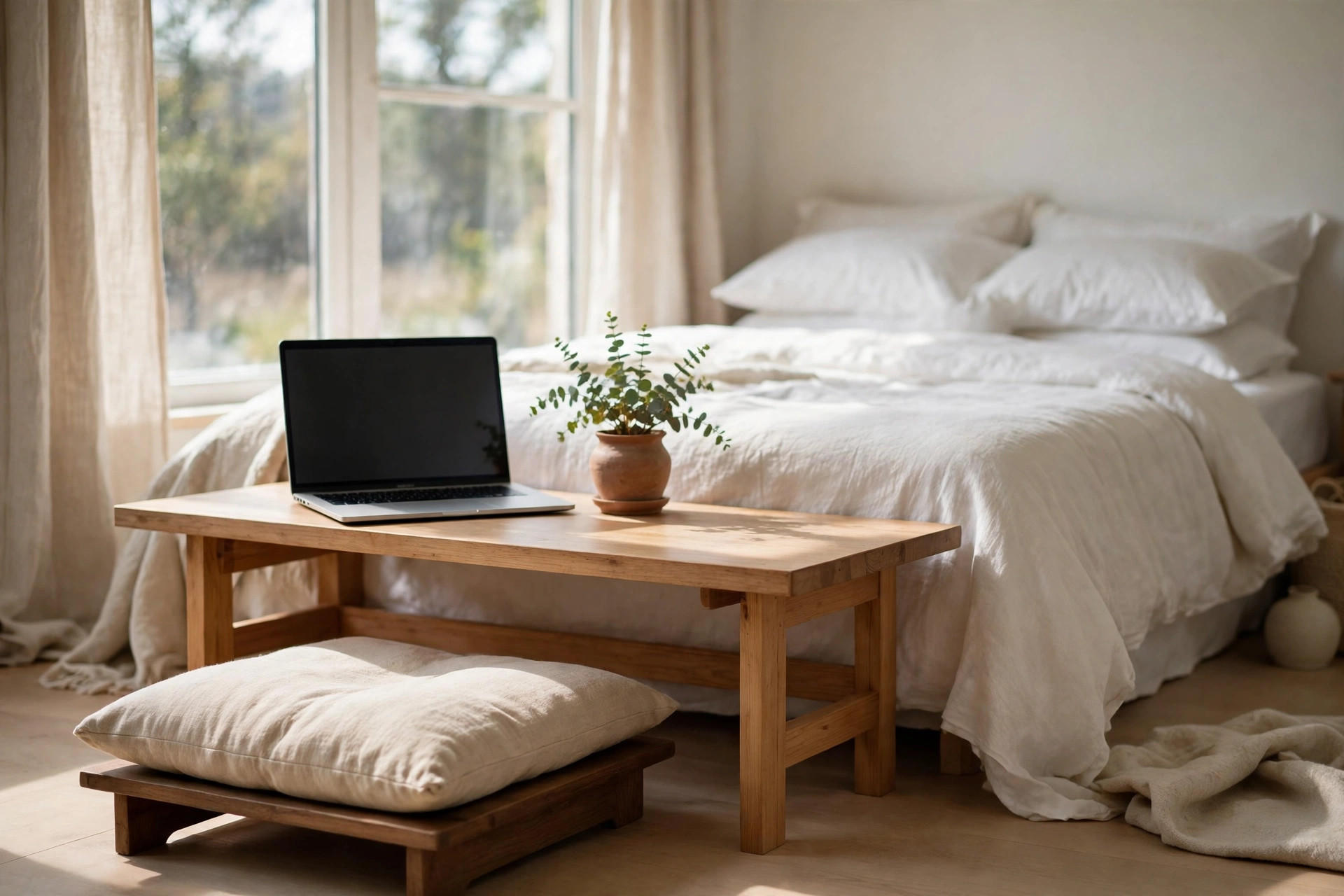
A low desk under the window uses the one wall the bed cannot use. At 26–28 inches high with a low chair or cushion seat, it sits below the sill and leaves the window clear. You work facing into the room with daylight over your shoulder, and the bed keeps the darker corner. This suits laptop-only work best — a monitor on a low desk puts the screen too far below eye level, so add a laptop stand if your neck complains.
11. The Two-Lamp Lighting Setup
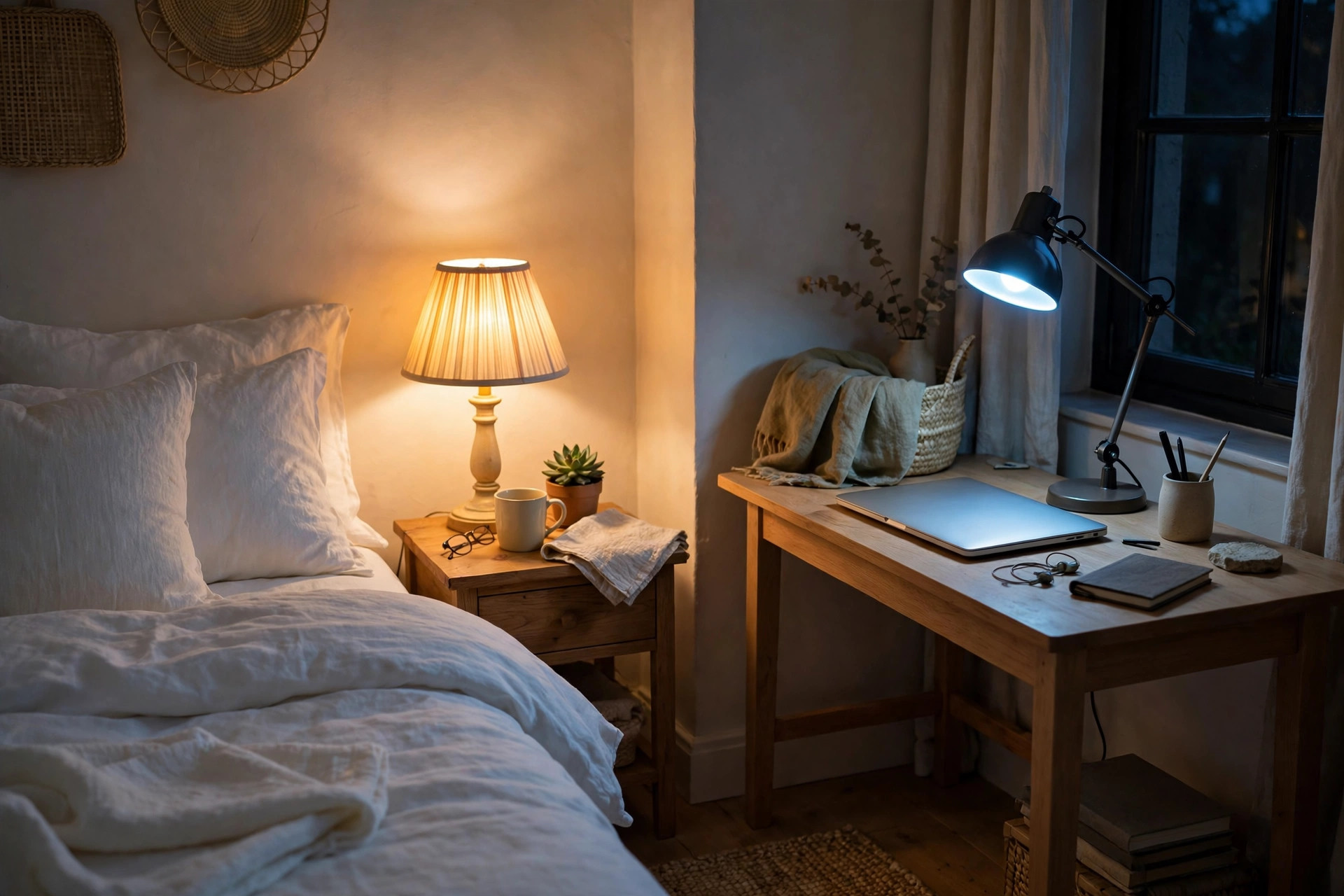
Light is what tells your brain whether the room is an office or a bedroom, so give each mode its own lamp. A warm, dimmable bedside lamp (2700K or warmer) for evenings, and a cool, focused task lamp at the desk (4000K) that only comes on during work hours. When the desk lamp goes off, the room is a bedroom again — no bright white light after dinner, no screen glow from the desk corner. A pair of decent lamps typically runs $30–$80 together.
12. The Pack-Away Nightly Setup
The setup that protects your sleep is not furniture, it is a habit with a place to live. Every night, the same three moves: laptop closed and into a drawer or a box, desk surface cleared to empty, cables dropped into a tray or a box under the desk. Two minutes, and the corner looks like a bedroom again instead of an office waiting for morning. Pair it with a hard rule — no laptop in bed, no work after a set hour — and the room starts to feel like a bedroom again within a week.
The Order to Do It In
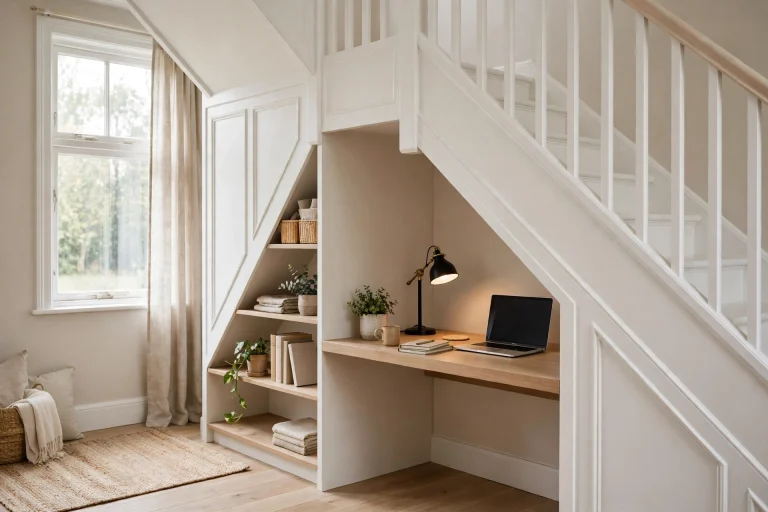
Start with placement, not purchases: pick the corner first (tall wall, window, or behind the door), then measure it, then buy the desk that fits the measurement. Add light second — the two-lamp setup is the cheapest sleep upgrade on this list. Add storage third, only for the things that keep landing on the desk. And keep the bed a bed: no laptop on it, no charger on the nightstand that tempts you to work from under the covers. If your bedroom is in the attic, the same separation rules apply — the bedroom-and-office combos in our 9 Ways to Combine a Bedroom and Attic Office guide use the same tall-wall-first logic.
A bedroom office does not have to ruin your sleep. It just has to know when the working day is over — and the room has to show it. Pick one setup, give it a week, and if you still see the desk from your pillow, move the divider, close the closet, or fold the desk away. The best bedroom office is the one you forget is there when the lights go out. For more small-space ideas, see our 25+ Small Home Office Ideas That Actually Fit.