Cloffice: 14 Closet-to-Office Conversions
A spare closet is the smallest room in the house — and the most honest one. It has no view to sell you, no floor space to waste, and nowhere for clutter to hide. That is why it makes a good office: it forces you to decide what the work needs, then gives you a door to shut on it.
A cloffice is not a desk squeezed into a cupboard as a joke. Done properly it is a real workspace: desk at the right height, light where your eyes work, storage within reach. The order matters: measure first, then the desk, then light and power, then storage, then the habits that keep it working. If the rest of your home is tight too, start with our small home office ideas. Here are 14 closet-to-office conversions, in the order to build them.
1. The Reach-In Starter: Desk Across the Back Wall
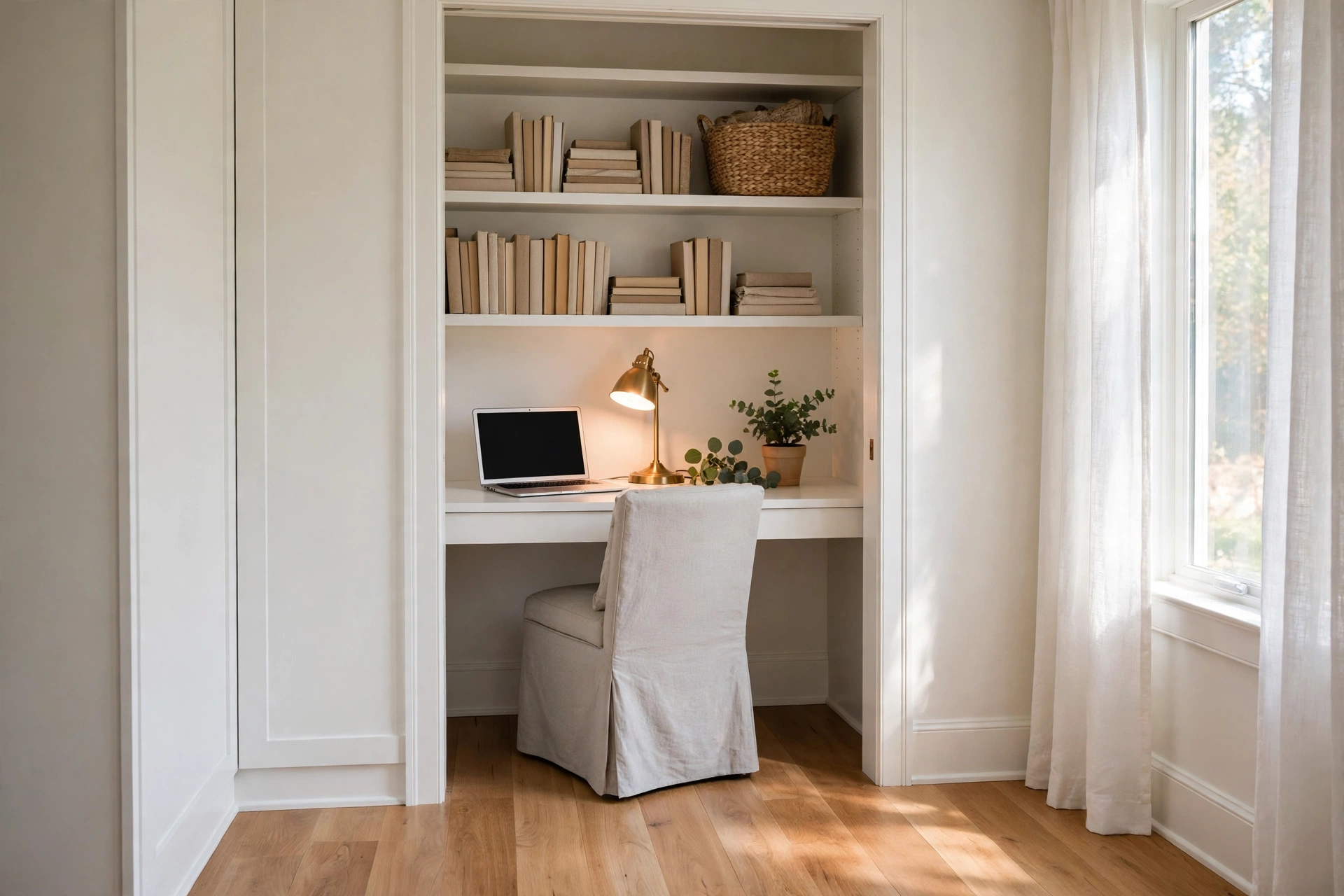
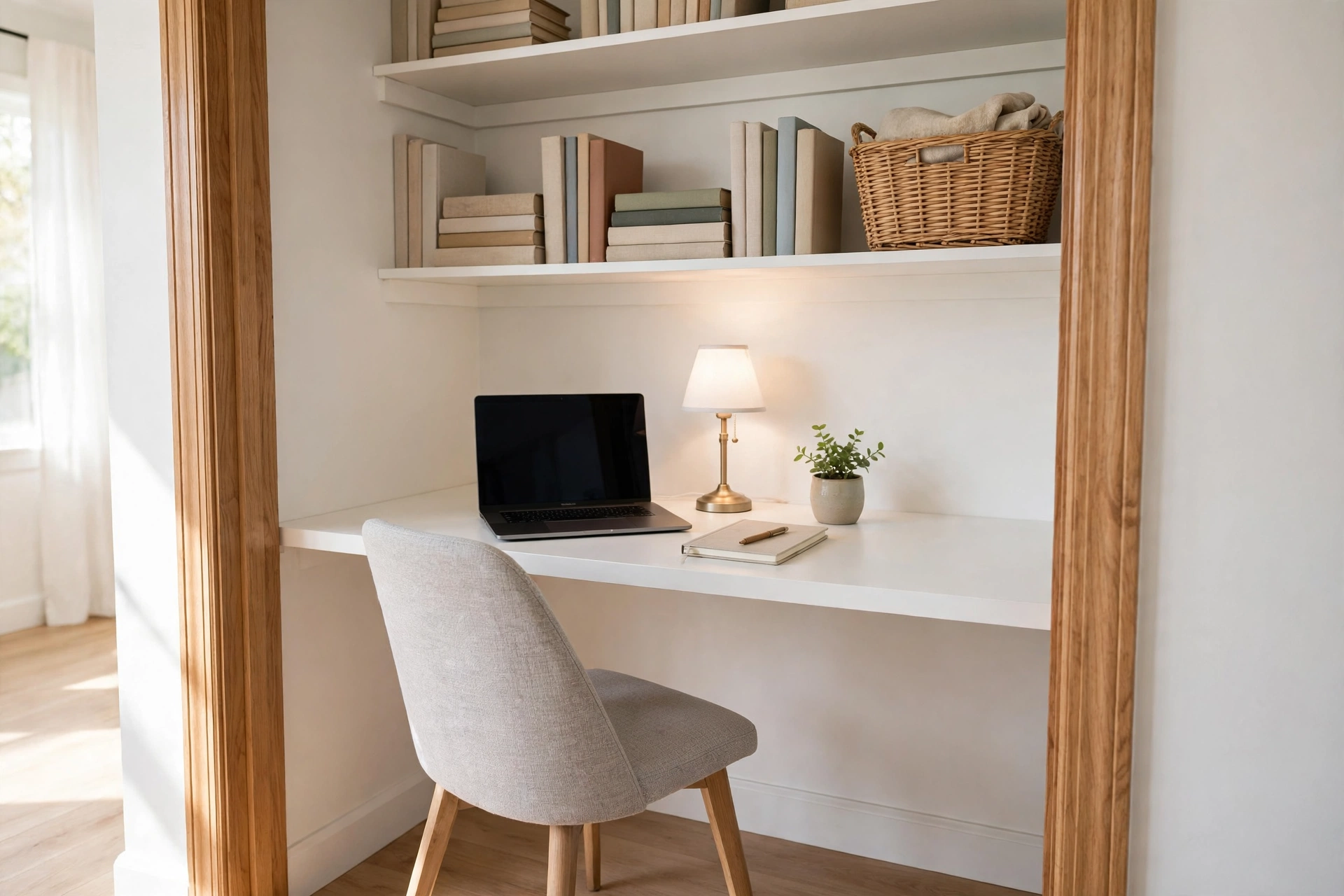
The classic cloffice starts with the most common closet in the house: the reach-in, about 5–6 feet wide and 2 feet deep. Fit a desk board across the back wall at normal desk height (about 29–30 inches), supported by brackets or a simple cleat, and the closet’s side walls do the job of a cubicle — they block the visual noise of the room. A board cut to size costs roughly $30–$80, brackets another $15–$30. Measure twice: closet walls are rarely square.
2. Take the Doors Off — or Swap Them for a Curtain
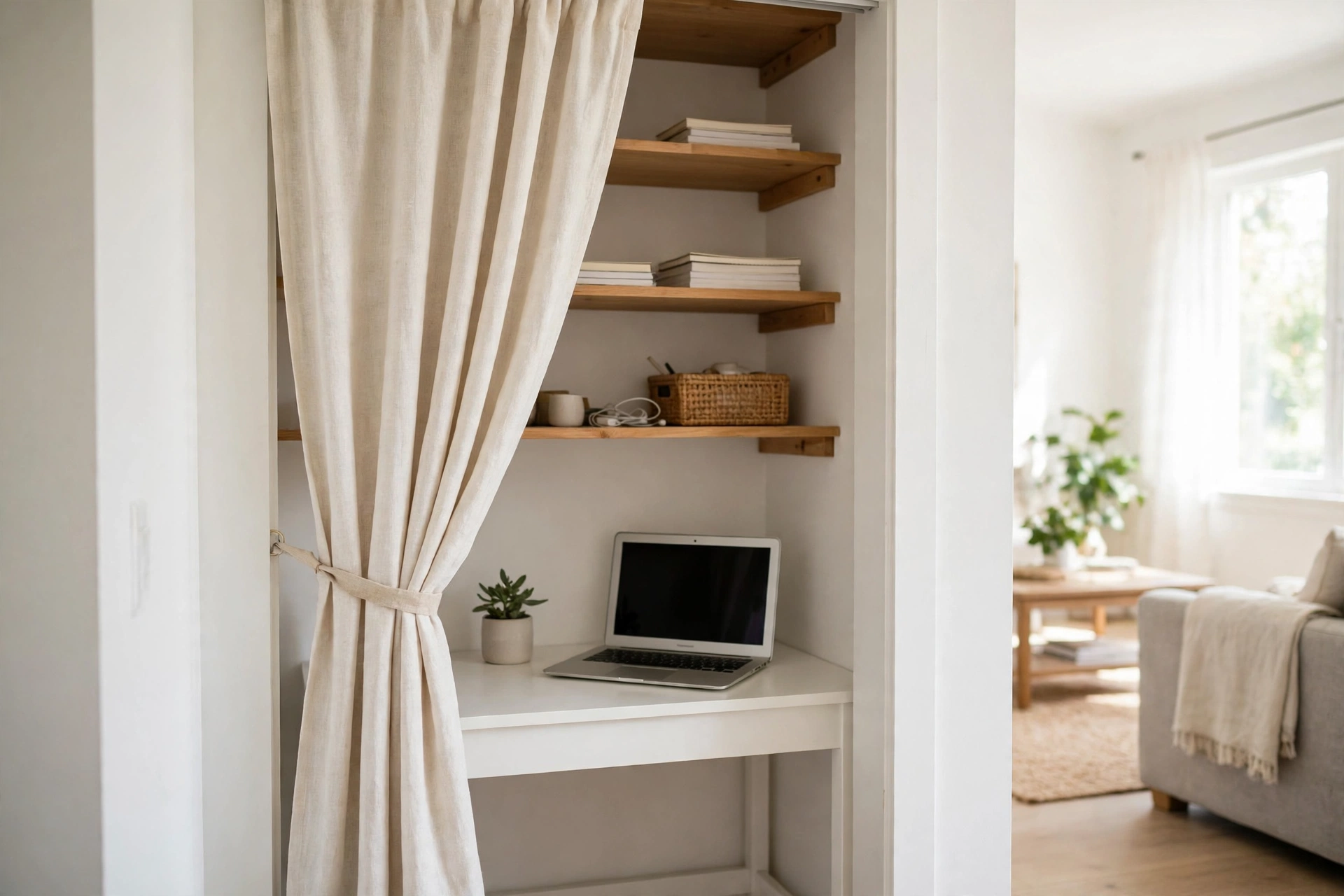
Sliding or bifold closet doors are the enemy of a cloffice: they block half the opening exactly where your elbows need to go. Take them off their tracks — they lift out in minutes and store flat under a bed — and the whole closet opens up. If you still want to hide the office in the evening, hang a simple linen curtain on a tension rod instead: roughly $20–$50 all in, it softens the opening and closes with one pull.
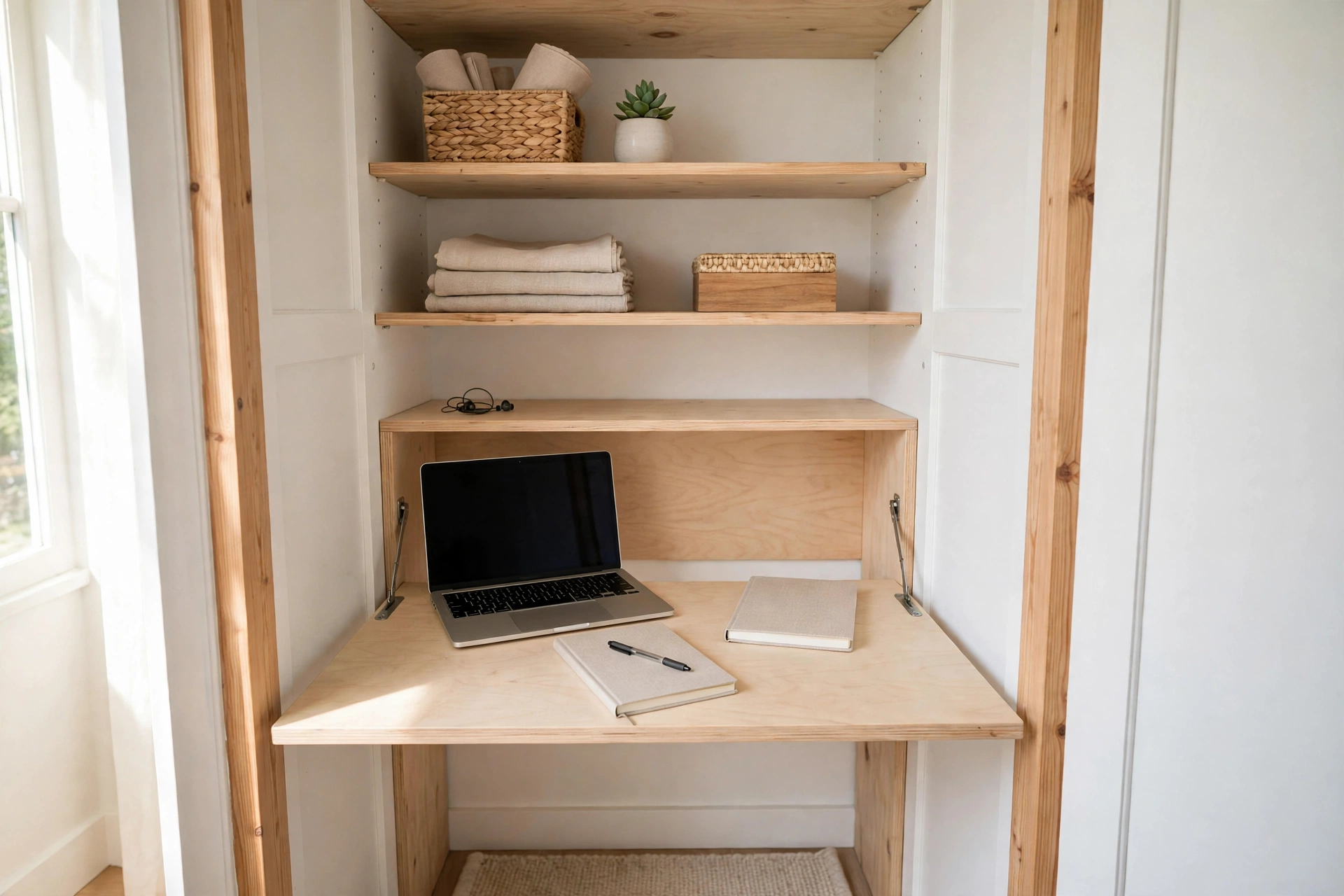
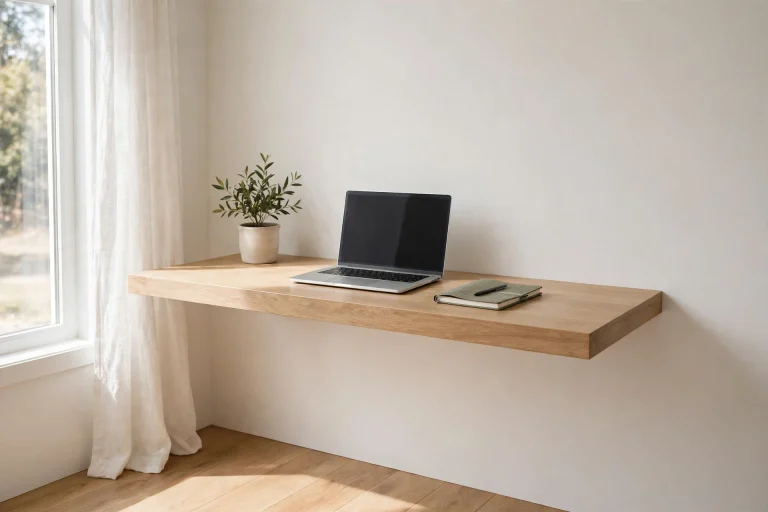
3. The Fold-Down Desk for a Closet You Still Share
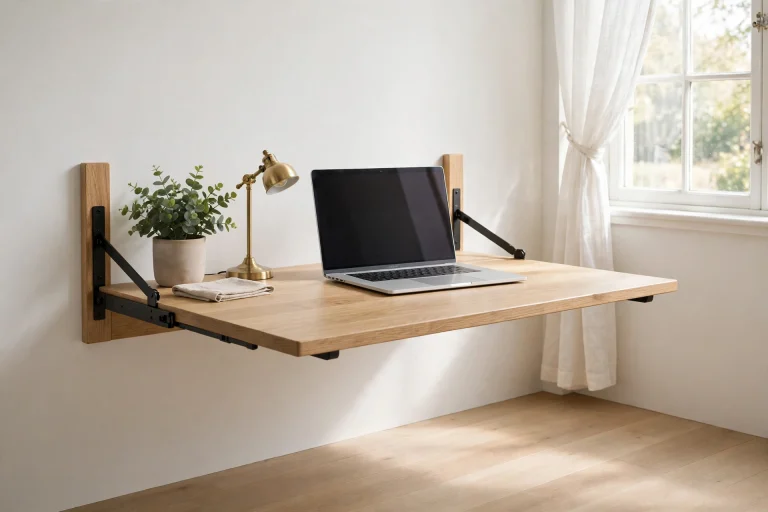
Some closets cannot give up all their storage. A fold-down wall desk — a board on hinges with a chain or bracket holding it level — gives you a work surface that folds flat against the wall when the day ends, leaving the floor free. Expect roughly $60–$150 ready-made, less if you hinge a board yourself. The rule that makes it work: nothing lives on the desk permanently. If everything on it has a shelf to go to, folding takes ten seconds.
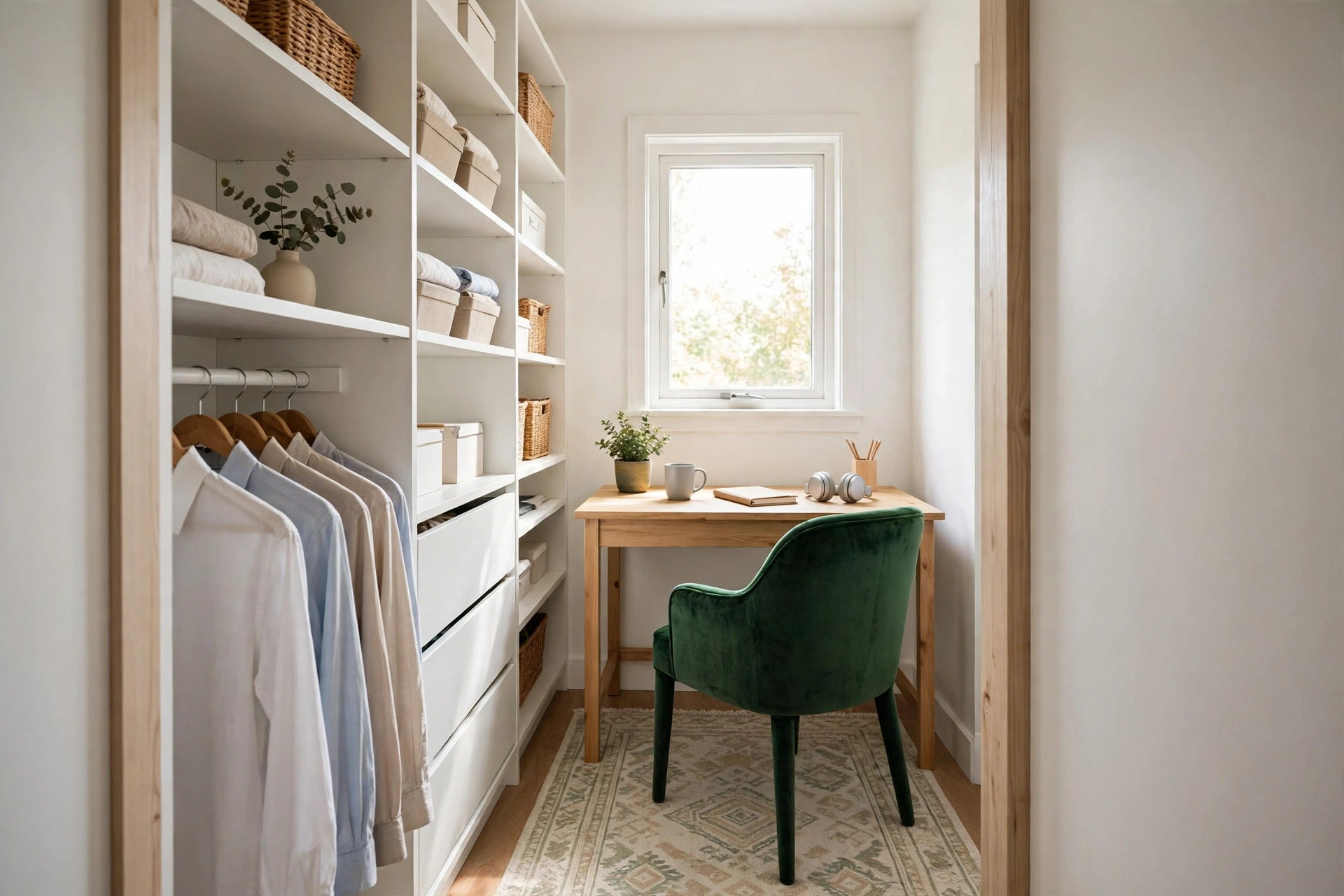
4. The Walk-In: a Whole Room in Disguise
A walk-in closet is not a conversion, it is a small room that happens to have a rail in it. Put the desk at the far end, ideally under or facing the window if there is one, keep one wall of hanging clothes, and the office gains something no reach-in has: room to push the chair back and stand up. It is the only cloffice here that fits a second monitor comfortably. Budget roughly $100–$300 for the desk board, shelves and a curtain or door treatment.
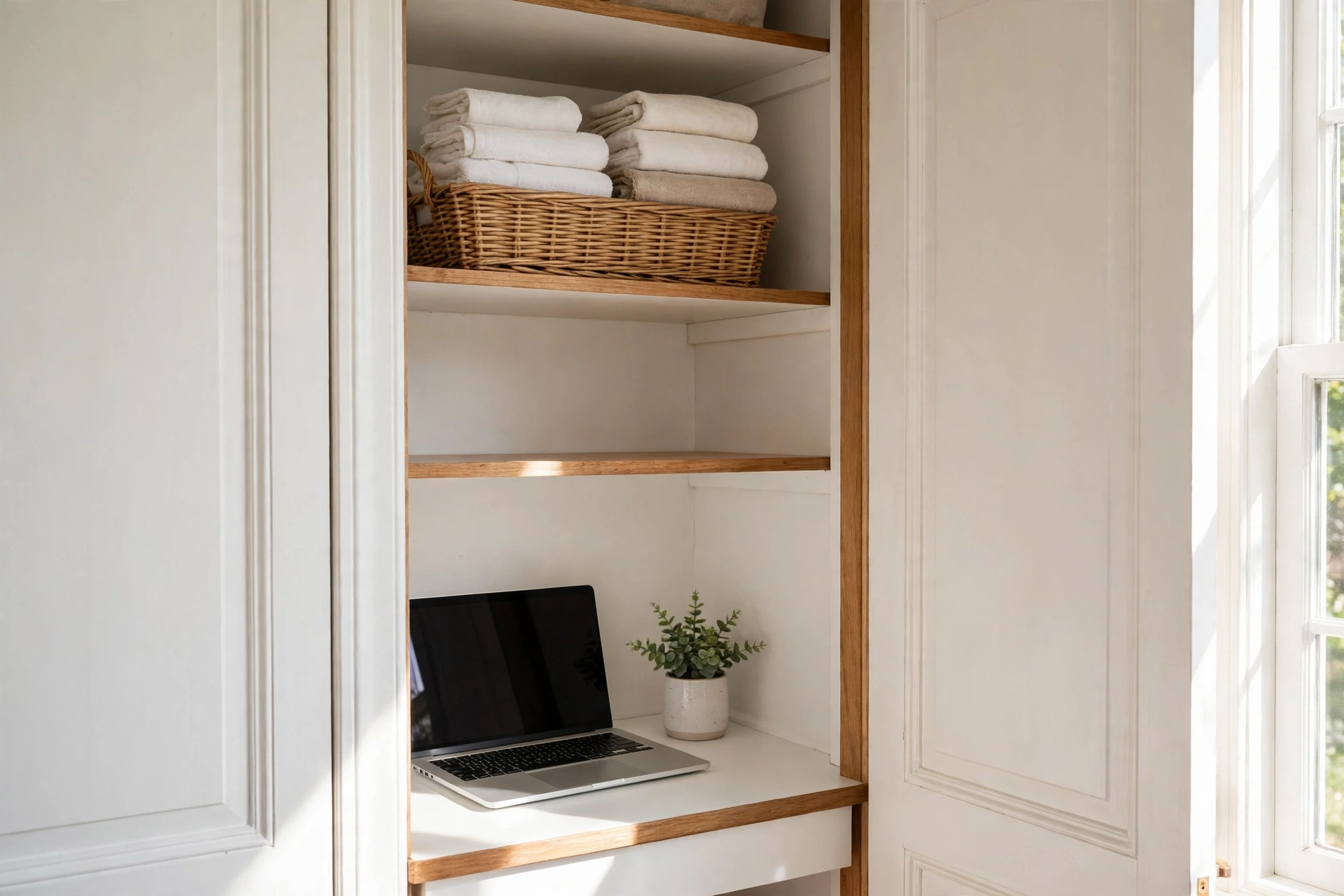
5. The Linen Closet Micro-Office
The narrow linen closet on the landing — often just 3 feet wide and 18 inches deep — is too small for a full desk, but it fits a laptop station: a shallow shelf at desk height, a laptop, and a small stool. It suits short focused sessions — email, admin, an hour of writing — not an eight-hour day. Cost is minimal: a shelf board and brackets, roughly $25–$60. Sit there a full day before committing: if your knees or neck complain by lunch, it is a sometimes-office, not your main one.
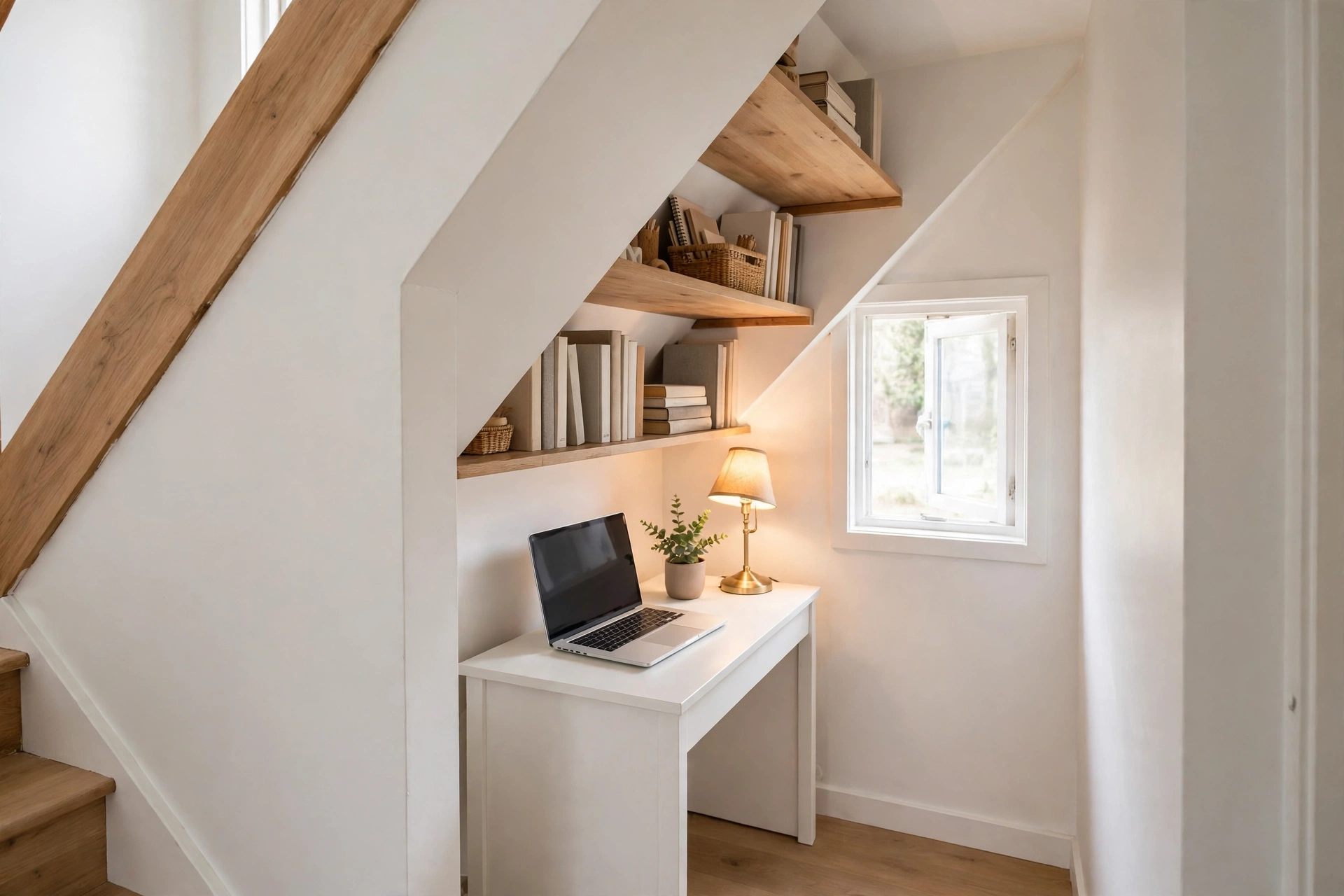
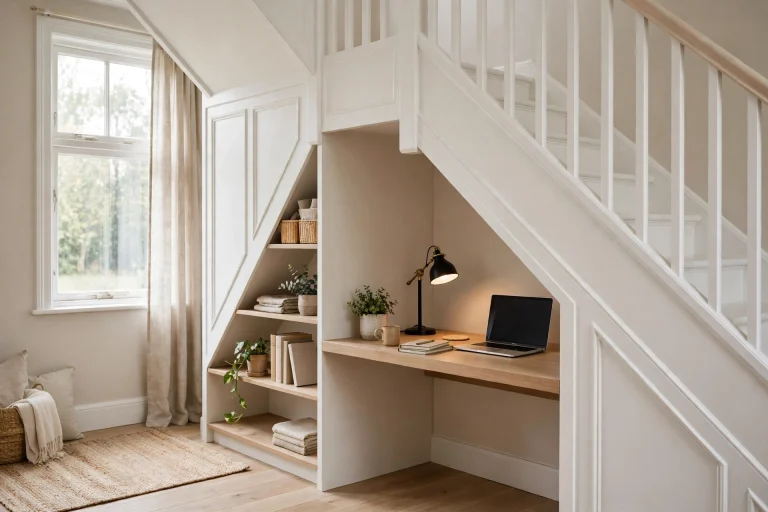
6. The Under-Stairs Office
The cupboard under the stairs is already enclosed, usually near the router, and nobody misses it as storage. The sloped ceiling is the constraint — put the desk where the ceiling is tallest, usually the outer edge, and fit shelves into the low triangle where you would never sit. A small desk and two shelves run roughly $80–$200. If you cannot sit upright without ducking, it is a laptop nook, not a desk.
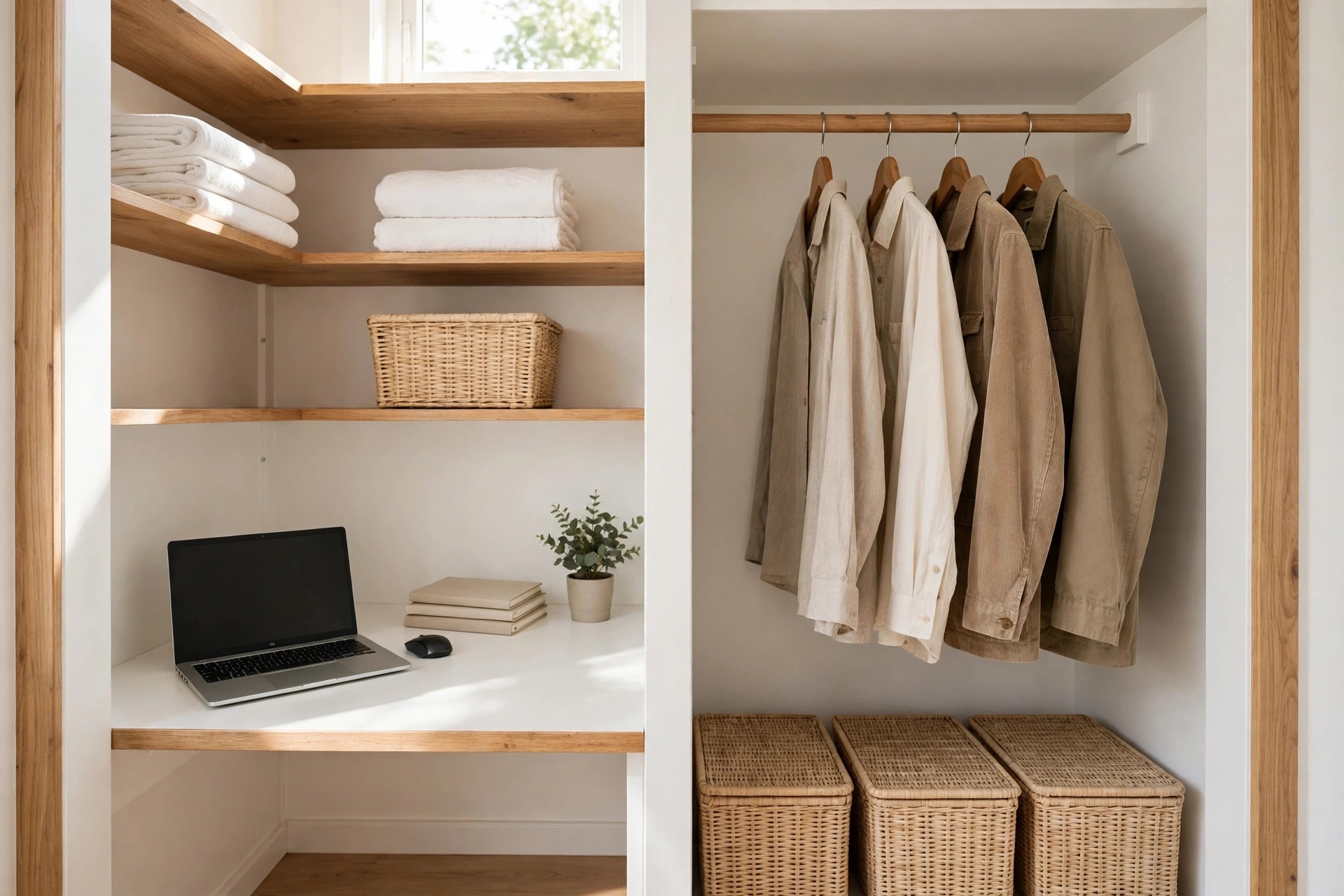
7. Half Office, Half Storage: the Shared Closet
When the closet still has to store clothes, split it down the middle: desk and shelves on one side, hanging rail and boxes on the other. The split needs a visible line — a vertical shelf divider, or simply the desk board ending where the rail begins — or the storage will creep across the desk within a month. It fails most often for one reason: the office half had no closed storage of its own. Give work its own drawer or box on the office side, and the split holds.
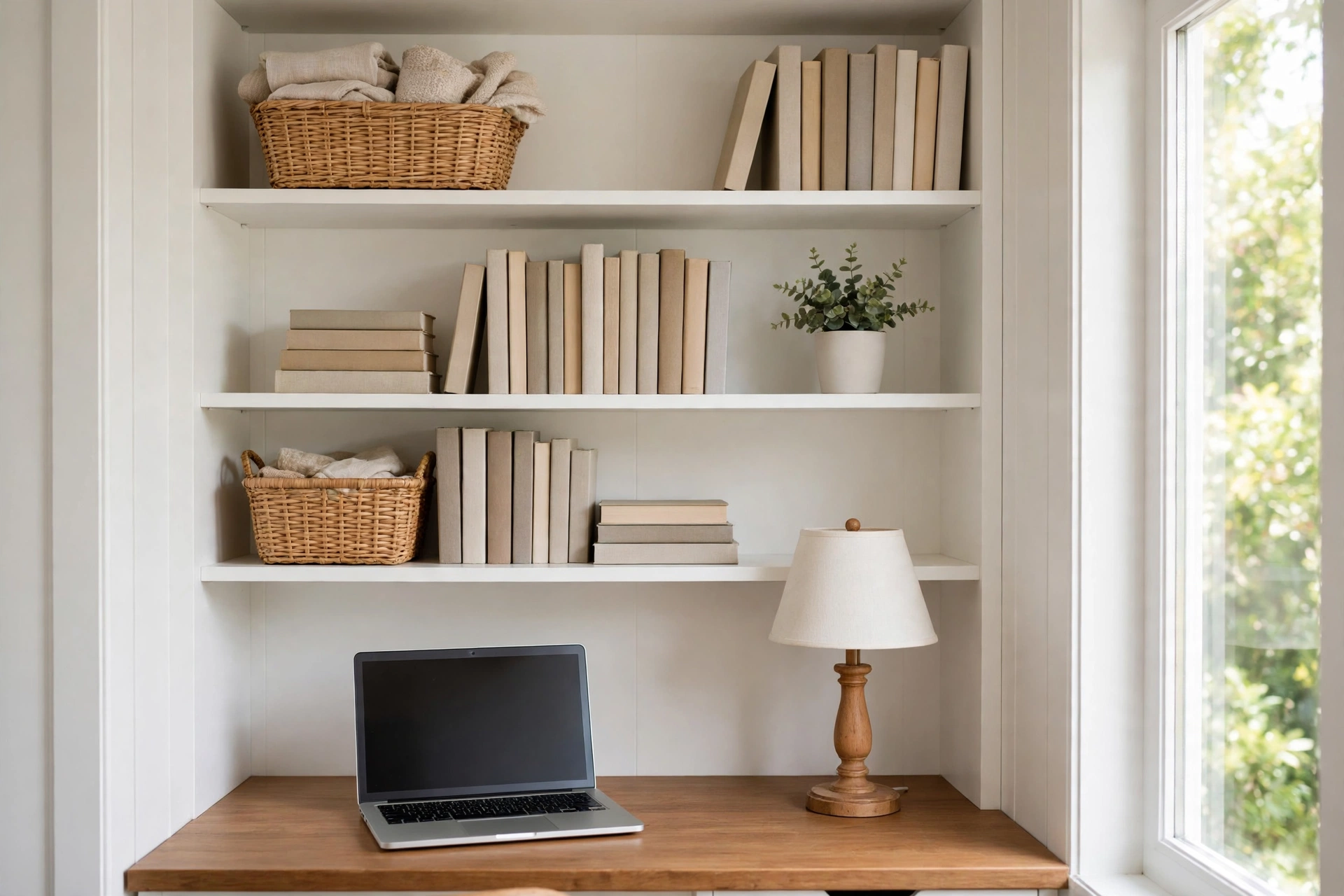
8. Build Up: Shelving Above the Desk
A closet office has almost no floor, so its storage has to go up. Two or three open shelves above the desk hold everything a workday needs — books, notebooks, a basket for chargers, a plant — within arm’s reach and off the desk surface. Closed cabinets would eat the elbow depth you need. Expect roughly $40–$120 for boards and brackets. Leave the bottom shelf high enough that a monitor or laptop screen clears it; measure with the screen in place, not from memory.
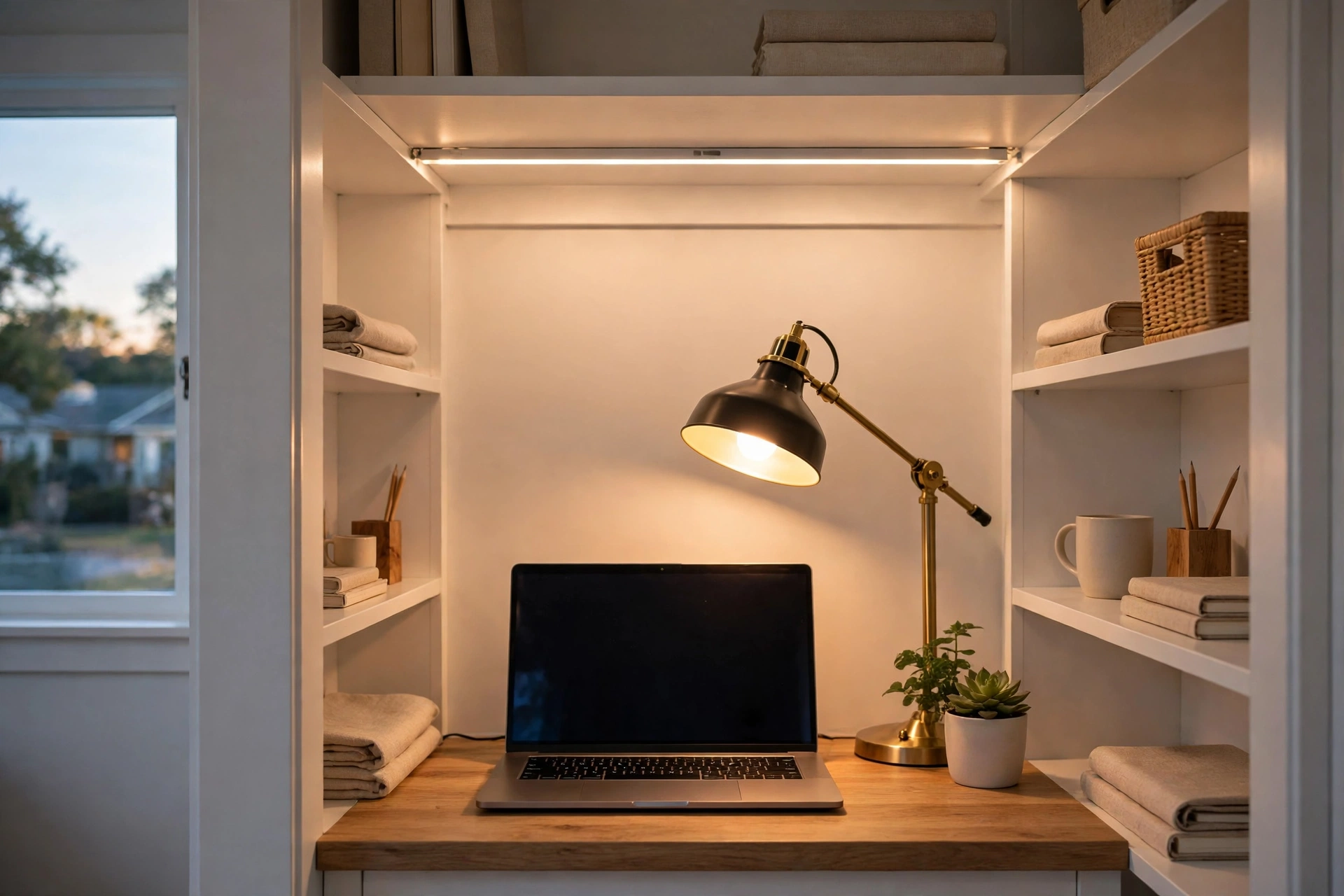
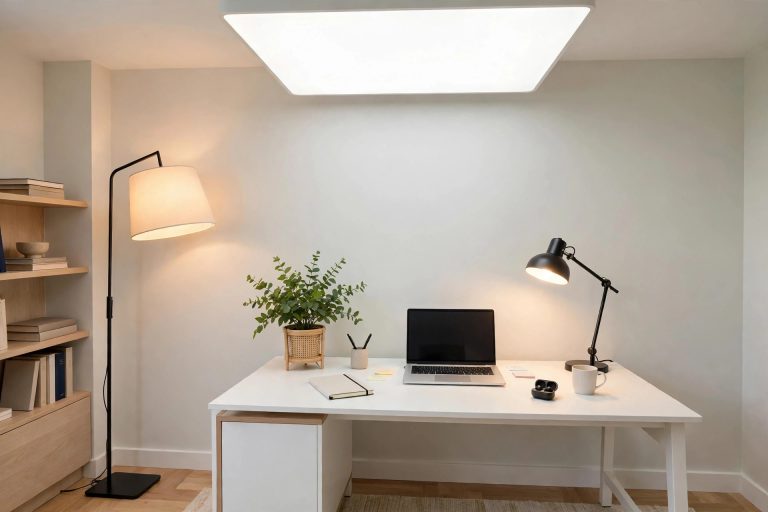
9. Light It Like a Room, Not a Cupboard
Closets are dark by design, and bad light is what turns a cloffice from clever into miserable. Layer it: a slim LED strip under the top shelf for even light across the desk (roughly $15–$35), plus an adjustable desk lamp for the work itself (roughly $25–$60). Warm bulbs, around 2700–3000K, keep the small space feeling like part of the home rather than a storage room with a laptop in it. No ceiling light? Do the strip first: it lights the whole desk.
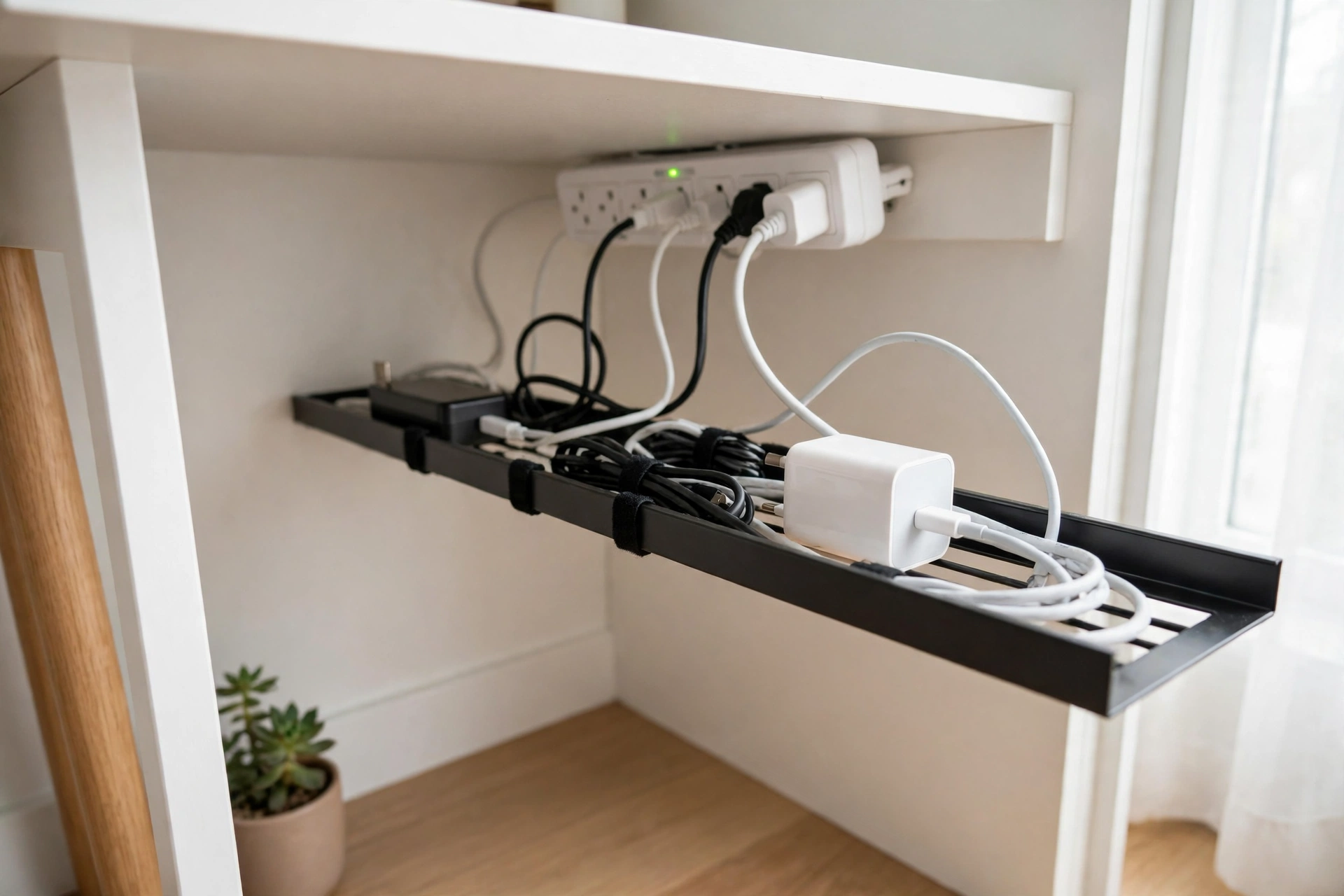
10. Power, Done Tidy
Most closets have no outlet, and a laptop cable trailing across the bedroom floor is how a cloffice becomes a trip hazard. The tidy answer is a power strip mounted under the desk with short cables, fed by one extension lead run neatly along the skirting board to the nearest outlet — roughly $20–$40 for strip and cable management. If no outlet is within sensible reach, call an electrician rather than daisy-chaining extensions; a new outlet in a closet is usually a small job, roughly $100–$250, and the one spend on this list worth paying a professional for.
11. Air: the Thing Everyone Forgets
A closet with the door shut is a small sealed box, and a person plus a laptop heats a small sealed box fast. Work with the door or curtain open whenever you can — it is the simplest ventilation there is. A small quiet USB fan on the shelf (roughly $15–$30) moves enough air for a space this size.
12. A Chair That Fits — and Rolls Away
The wrong chair kills a cloffice faster than the wrong desk. A full office chair with arms rarely fits a 2-foot-deep closet, and when it does, it blocks the opening. What fits: a compact armless task chair, a good stool with a backrest, or — if the closet opens onto a bedroom — the room’s own chair rolled in for the day and out at night. Expect roughly $60–$150 for a compact chair that is actually comfortable for hours. Try it at the desk first: a chair that looks right and feels wrong is paid for in your back, not your wallet.
13. Sound: Taking Calls From a Cupboard
Here is the pleasant surprise: a closet is naturally good for calls. Clothes, shelves and a small enclosed space absorb echo far better than a bare spare room, so your voice sounds closer and clearer on video calls. What it needs is a decent headset with a microphone (roughly $30–$80) and one habit: close the curtain or door during calls, because the same small space that kills echo also carries every sound from the rest of the house straight in.
14. Close It Every Night
The last conversion is not furniture at all — it is the door. Every evening, take two minutes to close the office: laptop shut and put away, papers in the drawer, lamp off, curtain drawn or door shut. A closed closet tells your brain the working day is over in a way no desk in a living room ever can, and it is the one advantage a cloffice has over every other home office on this site. The desk and shelves give work a place; the closing ritual gives it an ending.
The Order, Once More
Measure first, then put the desk across the back wall and take the doors off. Add shelves above the desk, light it in layers, and sort power before you buy anything that plugs in. Check the air and the chair with a full working day, not a five-minute sit. Then close it every night. Do the first three this weekend.