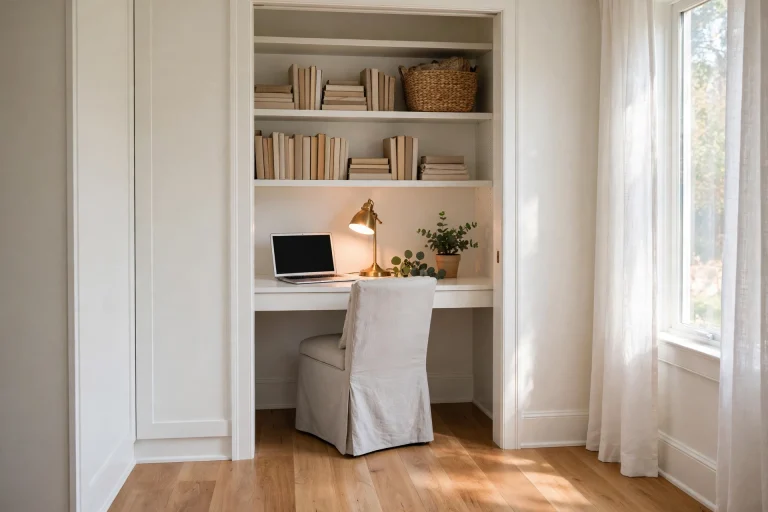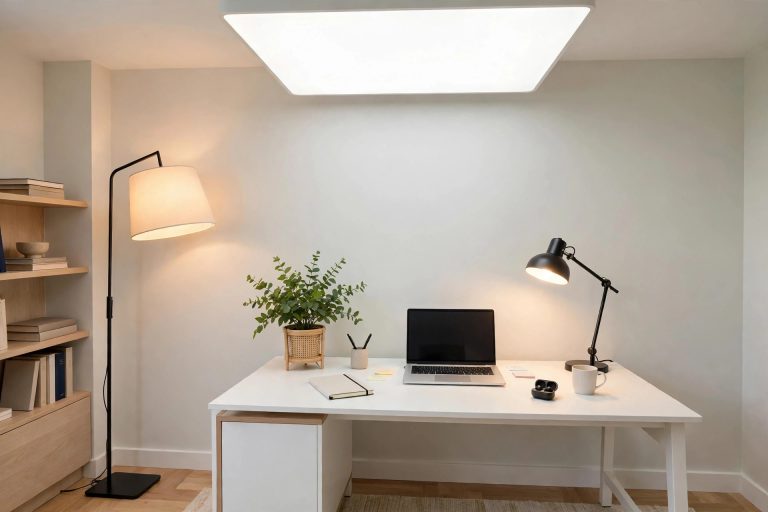
Fold-Down Wall Desks: 9 Offices That Disappear
A spare room is a luxury most homes do not have. The desk still has to go somewhere, and the usual answer — a full desk squeezed into a bedroom corner — takes the room hostage all day, even when nobody is working. A fold-down wall desk solves that: a real work surface when it is down, and a flat panel on the wall when it is up.
It only works if you treat it like a desk, not a shelf with a laptop on it. The wall has to be right, the height has to fit your body, and the chair and the cables have to be planned before the desk goes up. A fold-down desk can carry a full working day if the order is right.
Measure First: 3 Numbers That Decide Everything
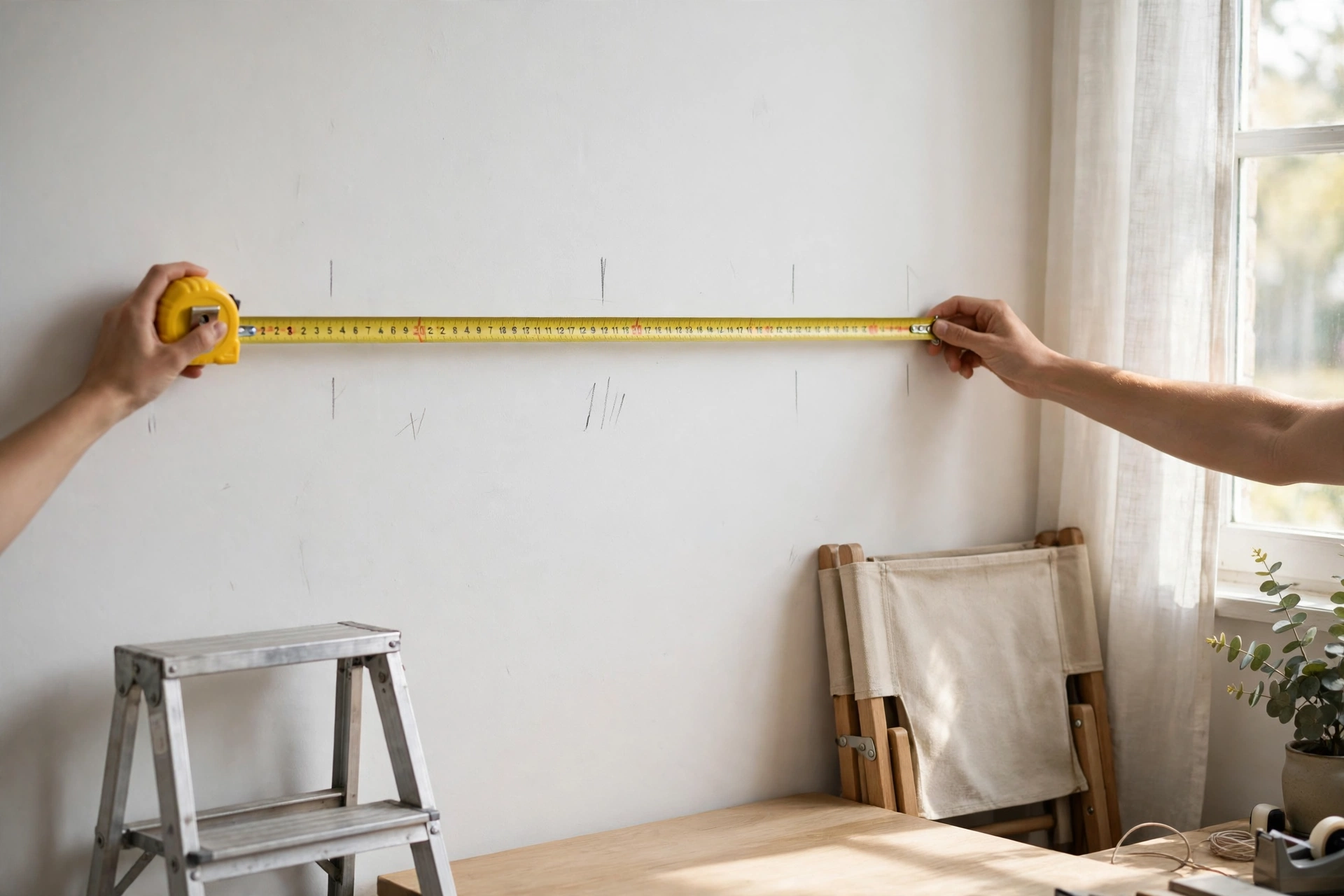
Before you buy anything, take three measurements. First, the clear wall width: the desk top plus the brackets need a flat run with no light switch, socket or skirting board in the way. Second, the fold-down clearance: measure from the wall out to where the open top will reach, and check nothing sits in that arc. Third, the sitting height: sit in the chair you plan to use and measure from the floor to your elbow; the desk top should land within a few centimetres of that number, usually around 72 to 76 centimetres.
Also check what the wall is made of. A fold-down desk hangs its whole load — desk, laptop, lamp, your forearms — off two brackets. A solid brick or stud wall holds it with the right fixings; a hollow plasterboard wall needs proper cavity anchors or a board screwed into the studs. If you are renting and cannot drill, stop here and pick a freestanding option instead.
1. The Classic Wall-Mounted Fold-Down Desk
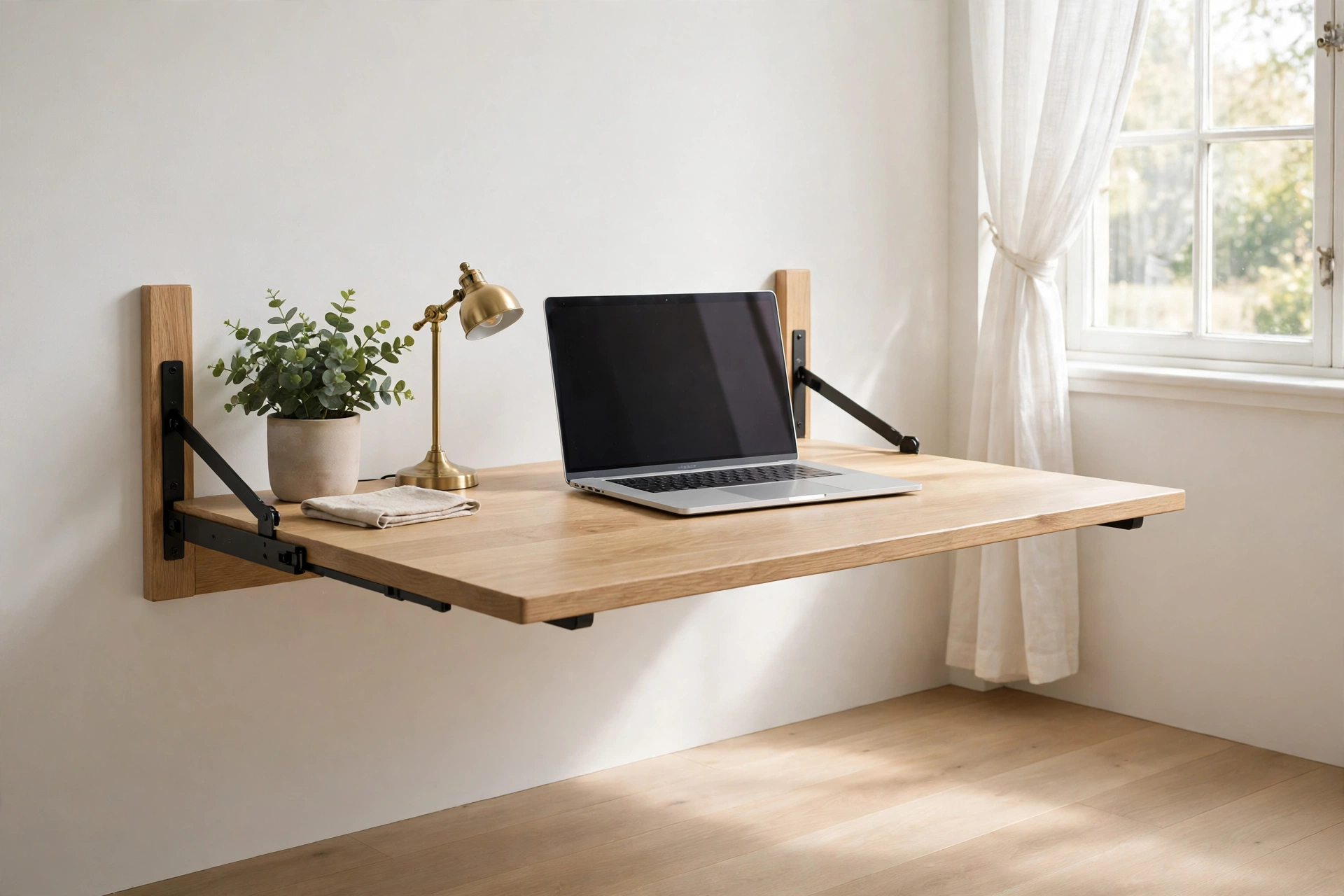
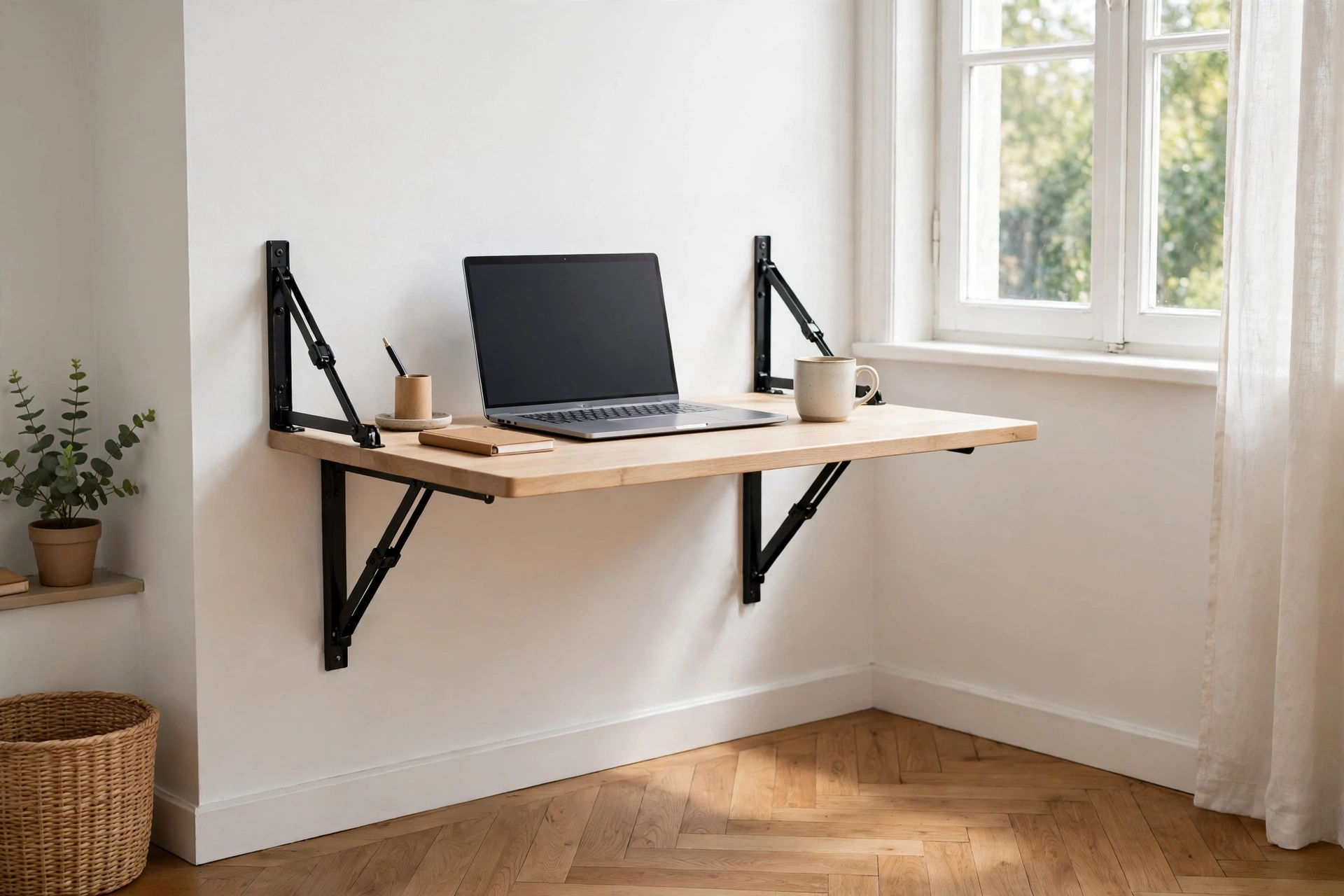
The simplest version is also the best starting point: a wall-mounted top, usually 80 to 120 centimetres wide, on a pair of folding brackets. Fold it down in the morning, fold it up at night, and the room gets its floor back.
Keep the top shallow — 45 to 55 centimetres is enough for a laptop, a notebook and a mug, and it folds flatter than a deep top. Choose brackets rated for at least twice the weight you expect on the desk; cheap brackets are the one place a fold-down desk fails, and they fail suddenly.
2. Shelves Above, Desk Below
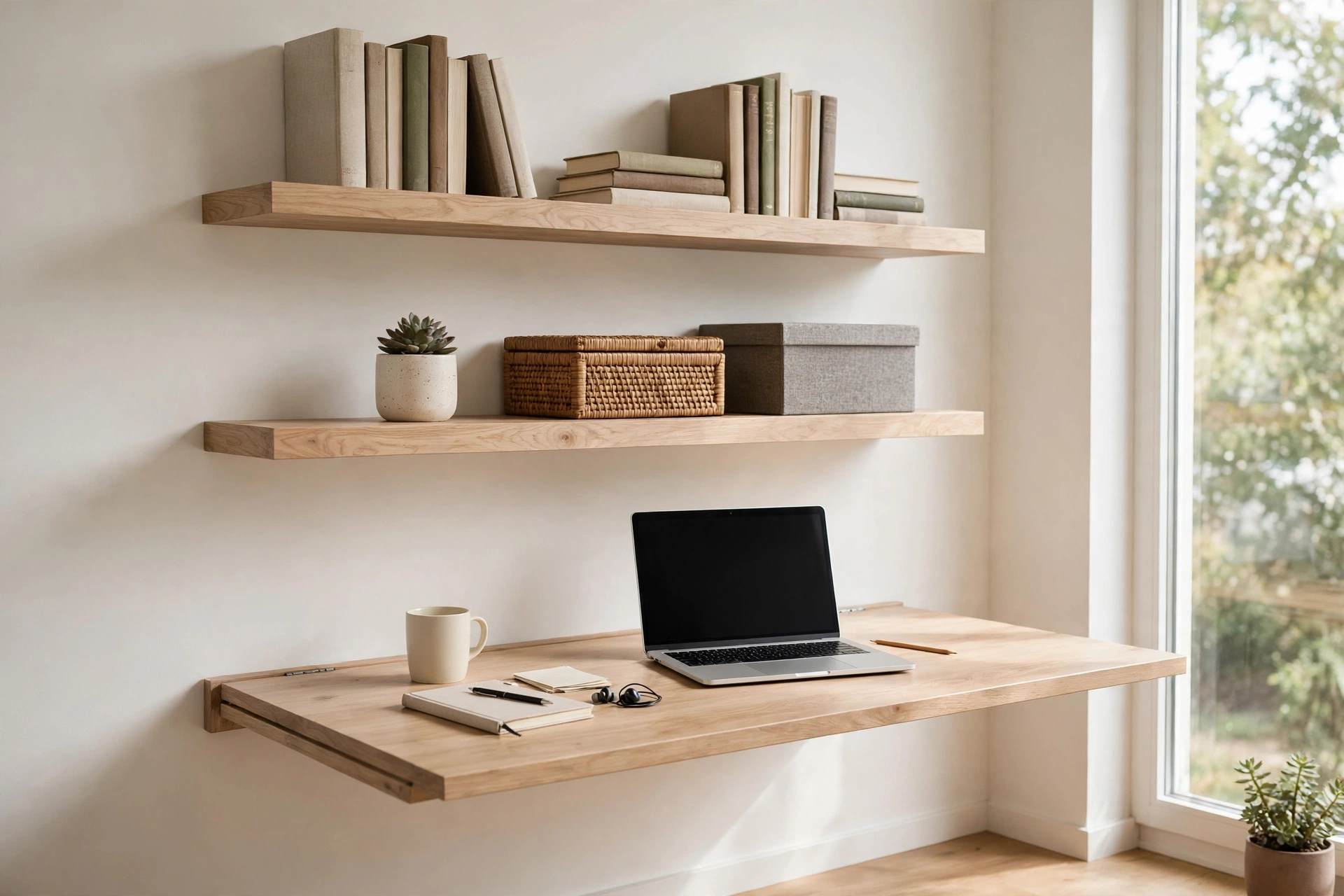
A fold-down desk has no drawers, so storage lives on the wall above it. One or two floating shelves directly over the desk hold the books and files that would otherwise pile up on the work surface — and they stay visible when the desk folds away.
Keep the lowest shelf high enough to sit upright without hitting your head — about 50 centimetres above the desk top — and keep the shelves shallow, around 20 to 25 centimetres deep. Heavy things go on the lower shelf, light decoration on the top one.
3. Pair It With a Chair That Folds Away Too
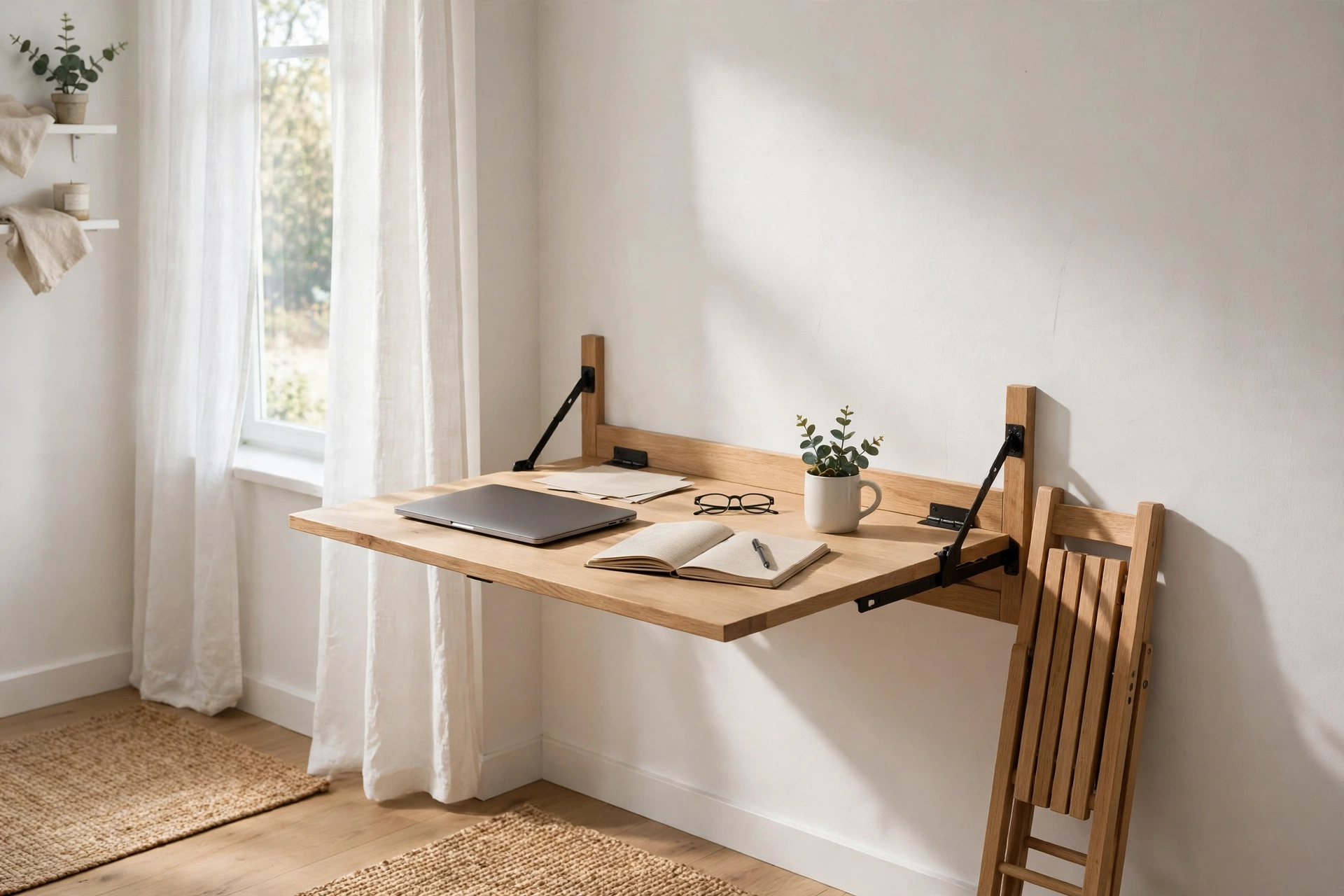
A fold-down desk that disappears is only half the trick if the chair stays out all day. Pair it with a chair that folds or stacks: a wooden folding chair, a slim stackable chair, or a small stool that slides under the folded desk. When both fold away, the wall is just a wall again.
Do not buy the cheapest folding chair you can find — you will sit on it for hours, not minutes. Look for a proper seat height, a backrest you can lean on, and feet that do not scratch the floor.
4. Use the Hallway’s Dead Wall
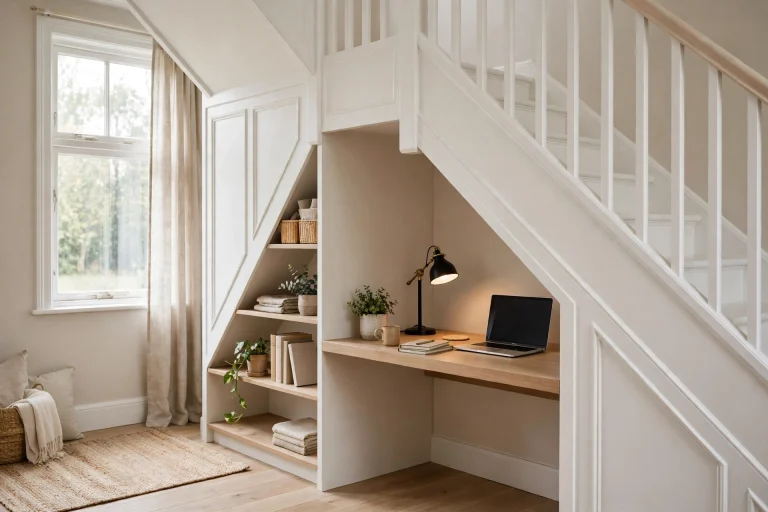
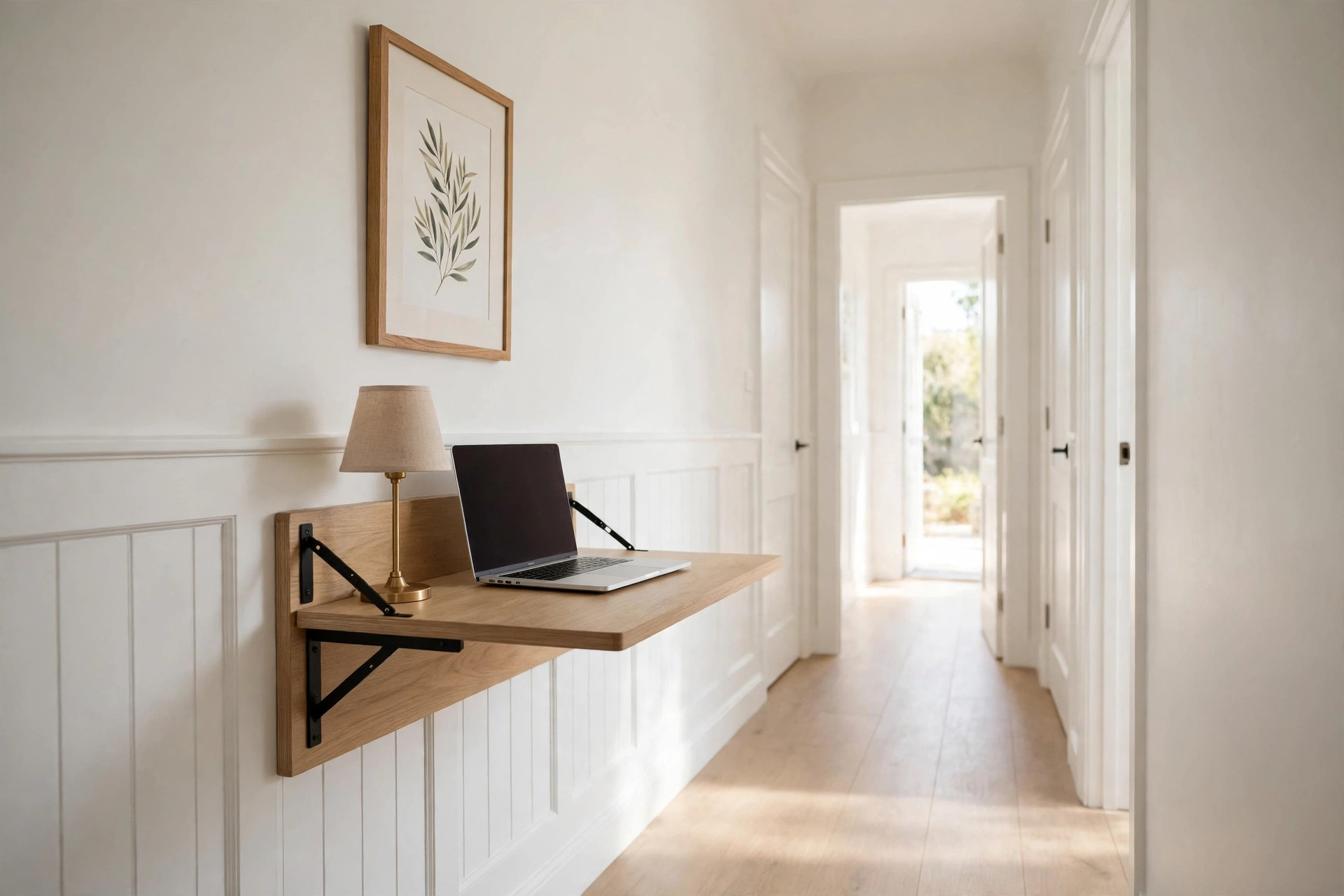
The best wall for a fold-down desk is often the one nobody uses: the long blank wall of a hallway, the stretch beside a staircase, or the wall at the end of a landing. These walls are dead space, and a desk that folds flat against them costs the hallway nothing when it is closed.
The hallway version has one extra rule: the desk must fold up every single time you finish, or the hallway stops being a hallway. Keep nothing on the desk that cannot be cleared in thirty seconds — laptop, notebook, mug, lamp.
5. Build the Cables In Before the Desk Goes Up
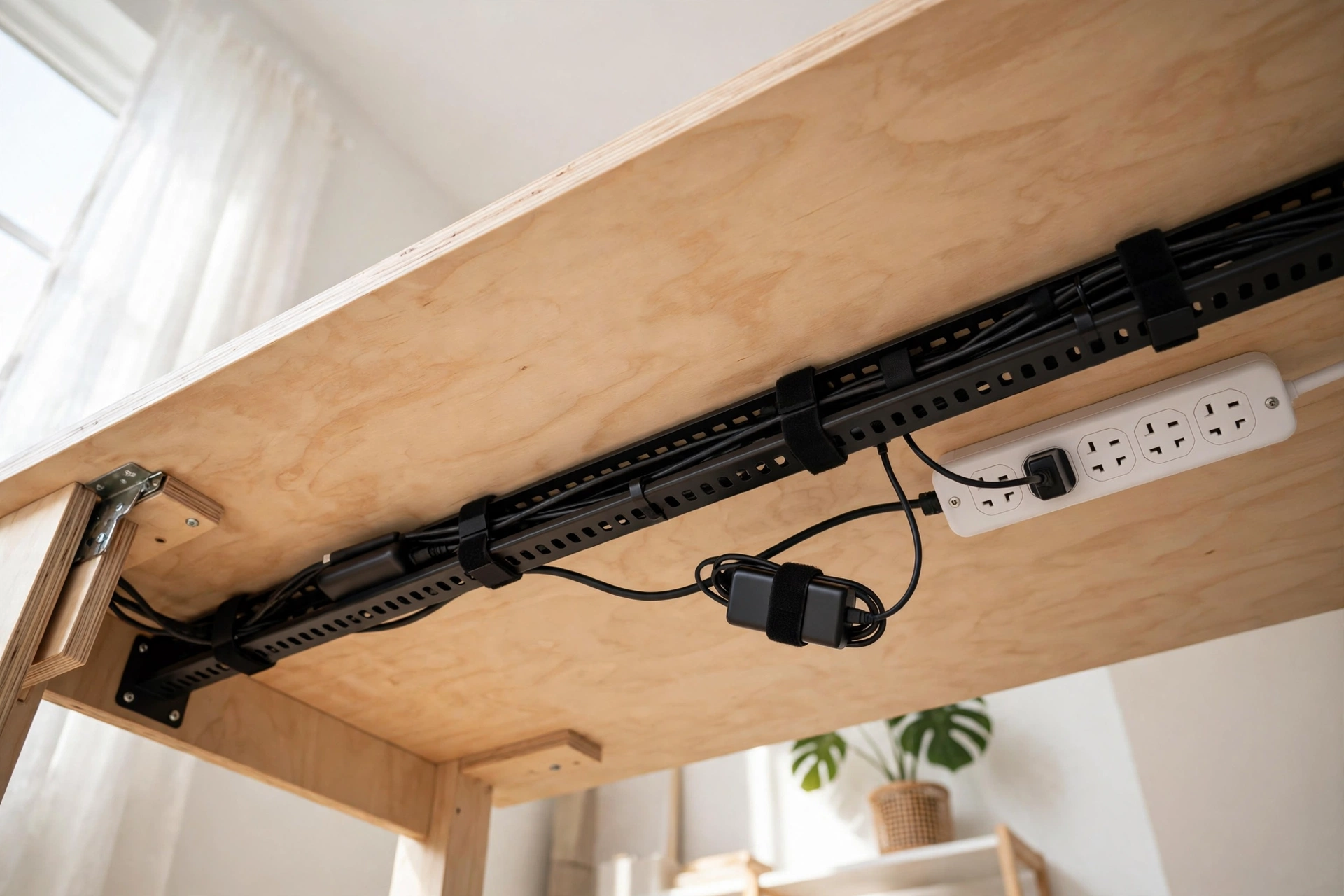
A fold-down desk has nowhere for cables to hide, so they end up exactly where you can see them — draped off the front edge, across the floor, into the one socket on the wrong wall — unless you plan for them before the brackets go on. Screw a small power strip and a cable tray to the underside of the desk top, and run one short lead to the wall socket.
Do the cabling while the desk is still empty and the top is off its brackets if you can. Keep the laptop charger and the lamp on the strip.
6. Two Desks on One Wall for a Shared Room
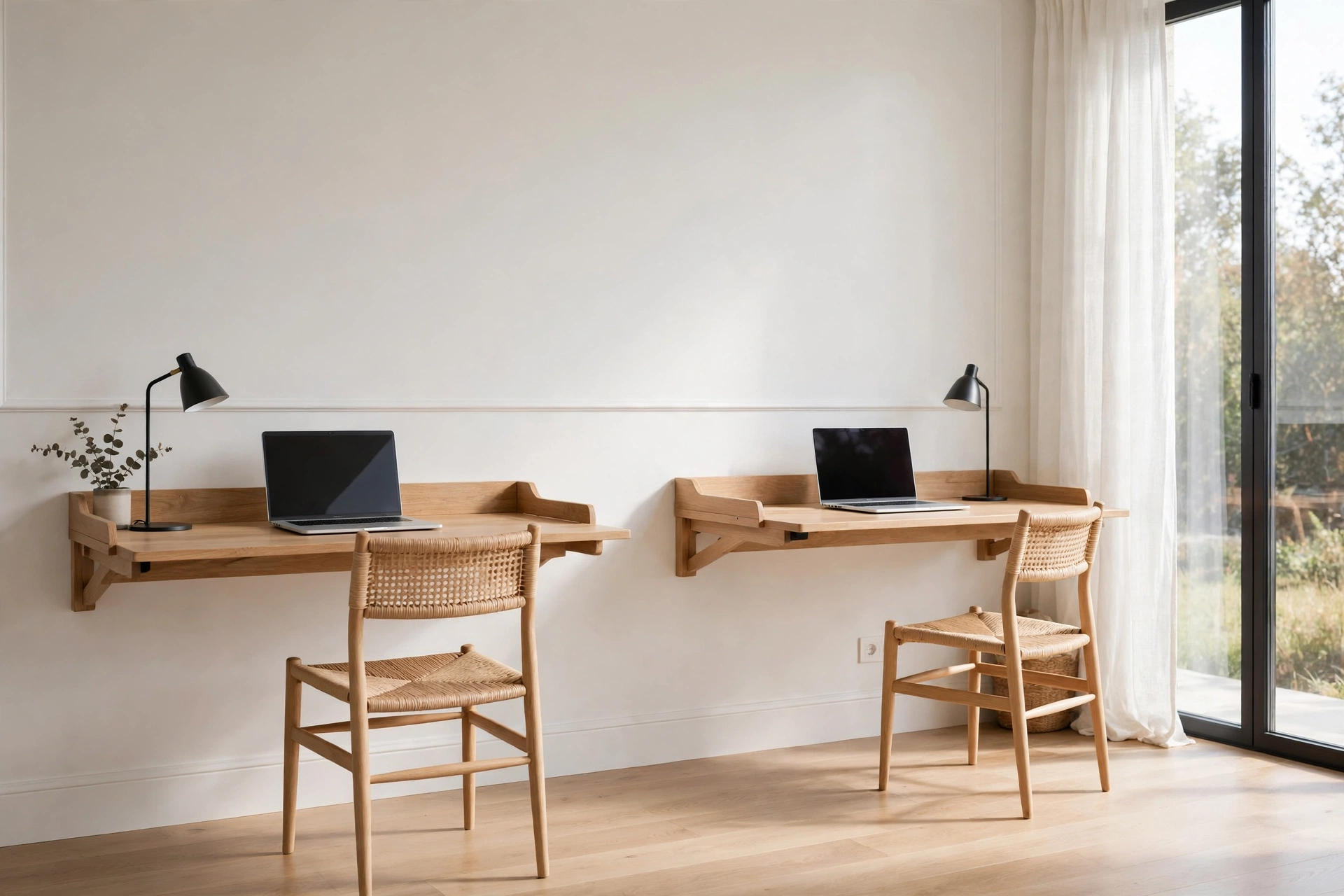
Two people working from home rarely get two rooms. Two fold-down desks on one long wall solve it better than one big shared desk: each person gets their own top, their own brackets and their own closing ritual, and when both fold up the room is a living room again instead of a shared office.
Give each desk at least 80 centimetres of width and leave a gap of 30 to 40 centimetres between the two tops, so elbows and laptop screens do not collide. A power strip under each desk keeps the cables apart.
7. Let the Living Room Keep Its Job Too
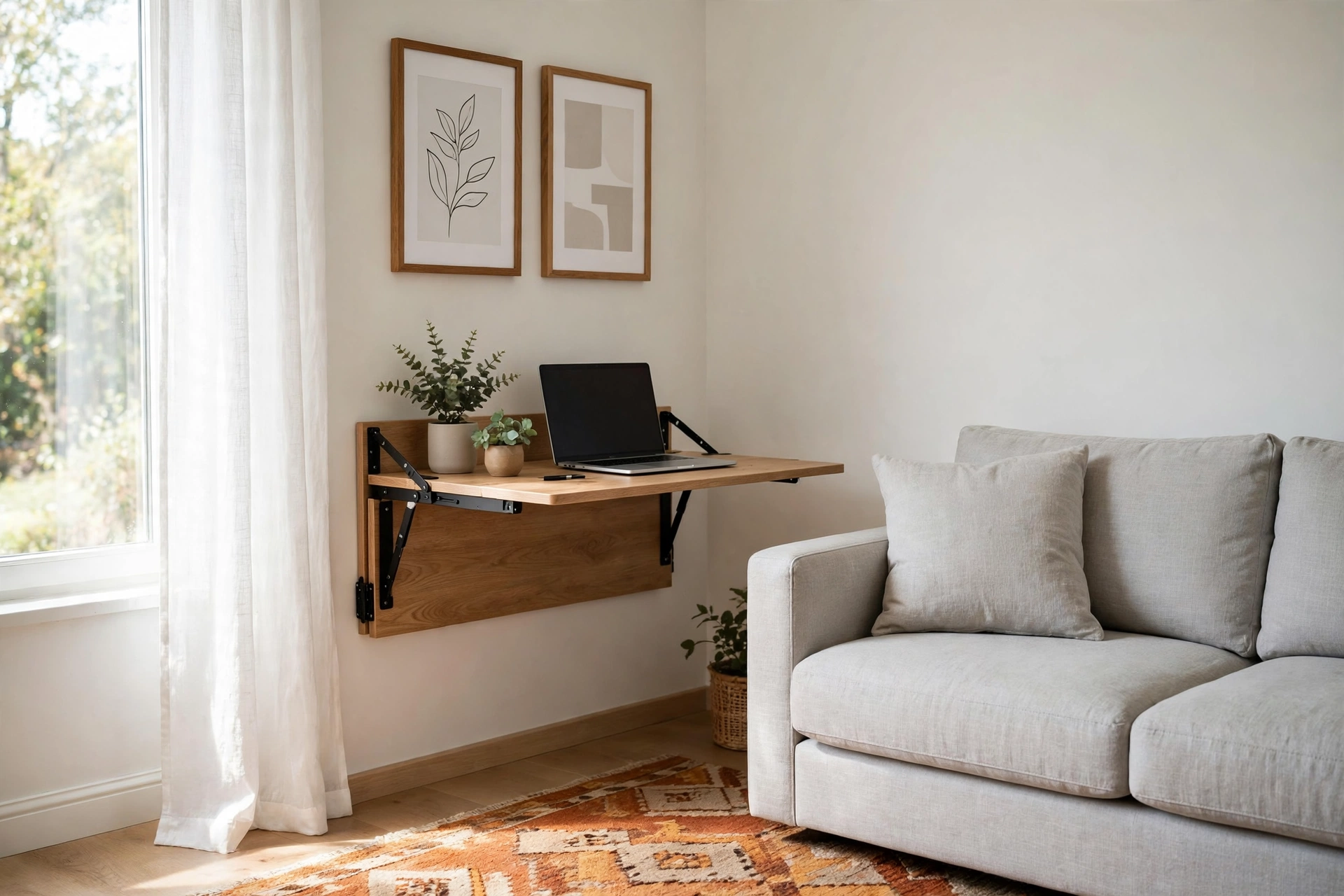
A fold-down desk in the living room works only if the living room still feels like a living room after work ends. Mount the desk in a corner the sofa does not face, match the wood to the furniture already in the room, and keep the shelves above it styled like living-room shelves — books, a plant, one framed print.
The closing ritual matters most here. At the end of the day, fold the desk up, put the laptop on the shelf, and slide the chair away. Five minutes of closing keeps the living room a living room.
8. Light It Like a Room, Not a Cupboard
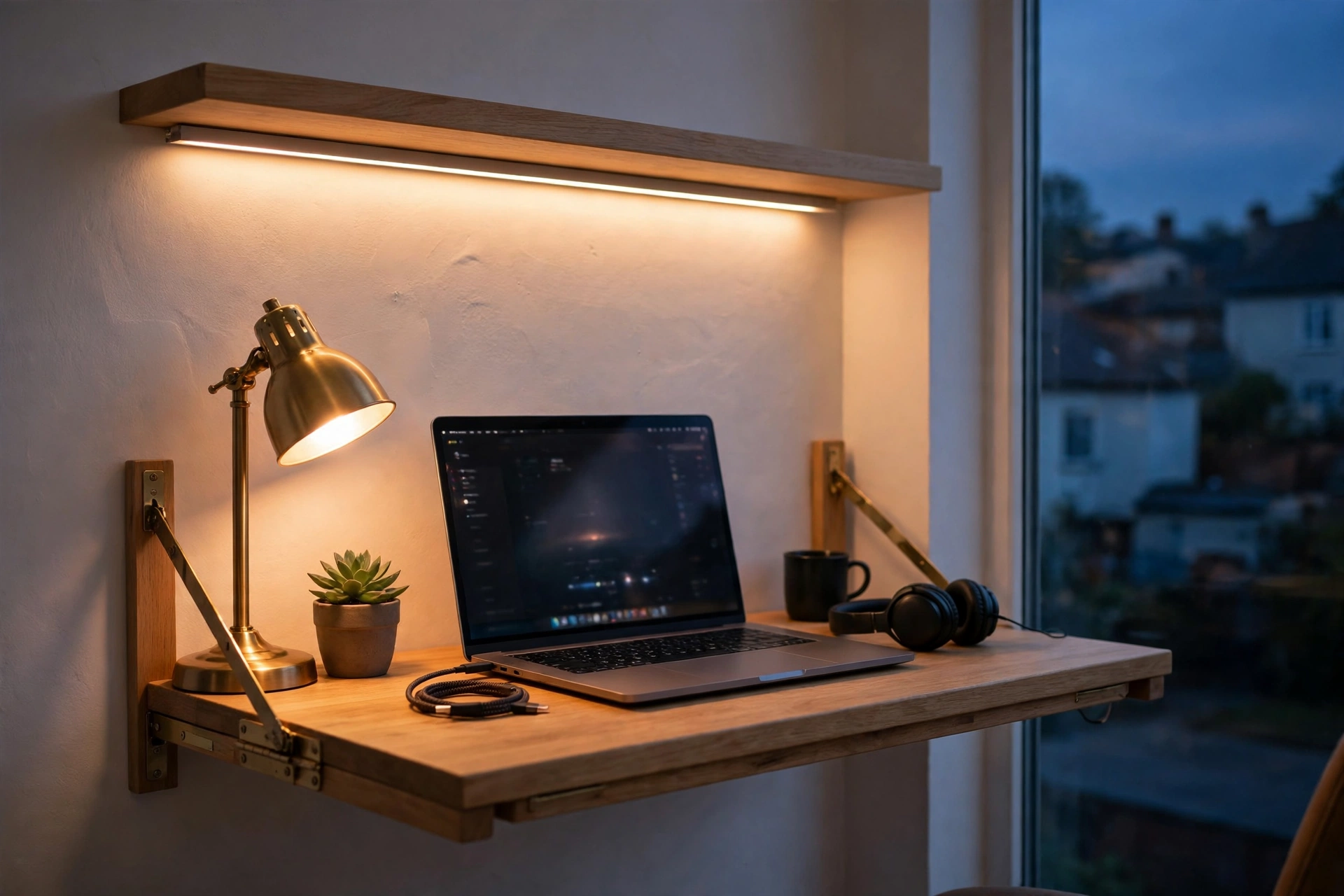
A fold-down desk usually lands on a wall with no window nearby, so light has to be built in. One bulb is never enough — it throws shadows exactly where your eyes work. Layer it instead: a slim LED strip under the shelf above the desk for the base light, and a small adjustable lamp on the desk itself for the work.
Warm white (around 2700 to 3000K) keeps the corner feeling like part of the house rather than a workstation, and a dimmer matters here more than anywhere else.
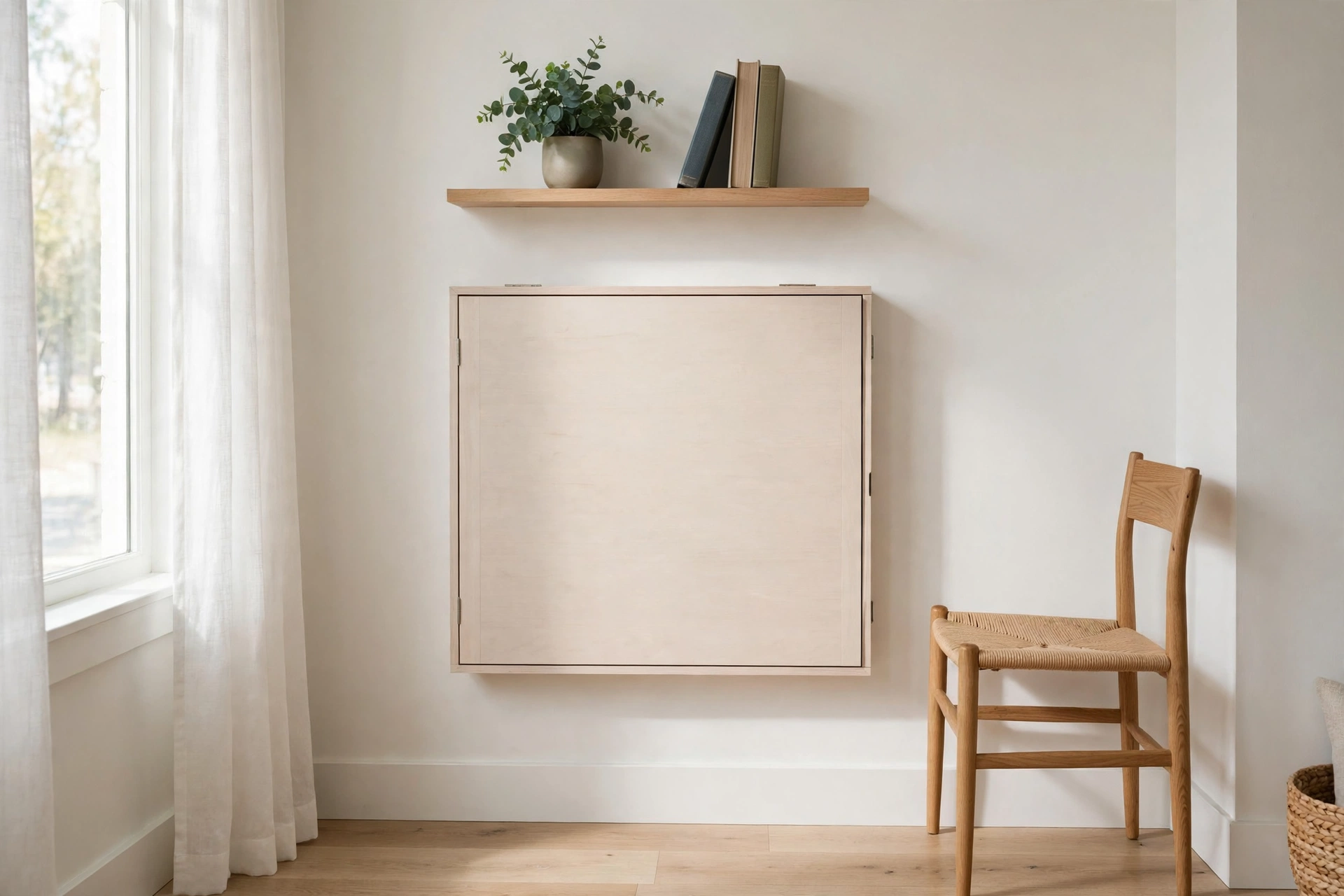
9. The Nightly Close: Make It Disappear Properly
The whole point of a fold-down desk is that it disappears — and it only disappears if closing it is a habit, not a chore. Build a thirty-second routine: laptop onto the shelf, notebook into its box, mug to the kitchen, chair to its hook, top up. Do it at the same time every day and the desk stops being a decision.
Keep the folded desk honest, too. If papers and cables pile up behind the folded top, the desk is not really closed — it is a cupboard with a door. Once a week, open it and clear out anything that has crept behind it.
Fold-Down vs. Floating Shelf: Which Tiny Desk Wins?
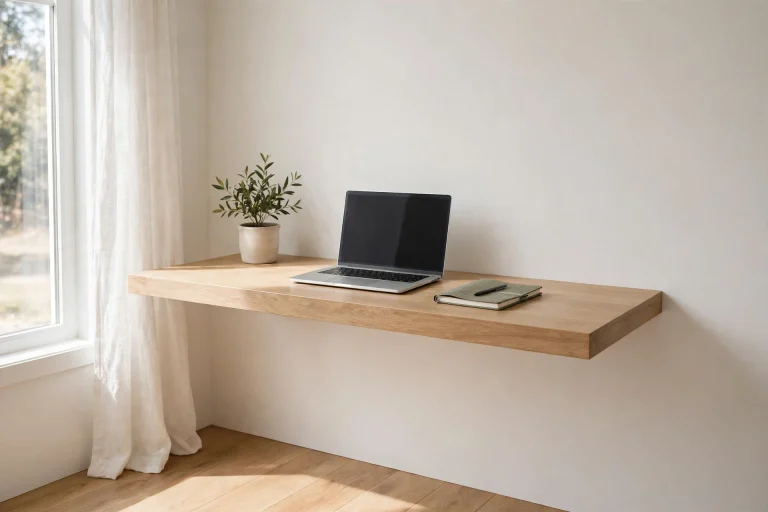
The other desk that fits a wall this small is a fixed floating shelf — a plain board screwed to the wall that never moves. The floating shelf wins on price and simplicity: nothing to fold, nothing to break, and it holds a laptop just as well. It also wins if you never need the wall back.
The fold-down desk wins whenever the room has a second job. A hallway, a living room, a bedroom that has to be a bedroom at night — anywhere the desk must vanish, the fold-down top is the only one of the two that gives the room back. The verdict: if the wall can stay a desk all day, buy the shelf and save the money; if the room has to forget the desk exists by evening, the fold-down brackets are worth the difference.
The Order to Do It In
The nine ideas work best in this order: measure the three numbers, check the wall can hold the brackets, mount the desk at elbow height, add the shelves above it, wire the cable tray and power strip, layer the light, then buy the folding chair that fits what is left. The nightly close comes last — it is a habit, not a purchase.
Done in that order, a fold-down desk takes an afternoon to mount and a weekend to finish properly with shelves and lighting. If your wall turns out unsuitable for brackets, the same measure-first thinking applies to any small corner — see our 25+ small home office ideas that actually fit for the next-best spot.
What It Typically Costs
A basic fold-down desk — a ready-made top with a pair of folding brackets, a small lamp and a folding chair — typically runs about $100 to $300. Adding floating shelves and layered lighting usually brings it to $200 to $500. A carpenter-built cabinet-style fold-down desk with shelves and cable management built in pushes the total toward $500 to $1,000 or more, depending on the size and local labour rates. Start with the basic version before spending on the built-ins.