No-Window Home Office: 10 Lighting Tricks
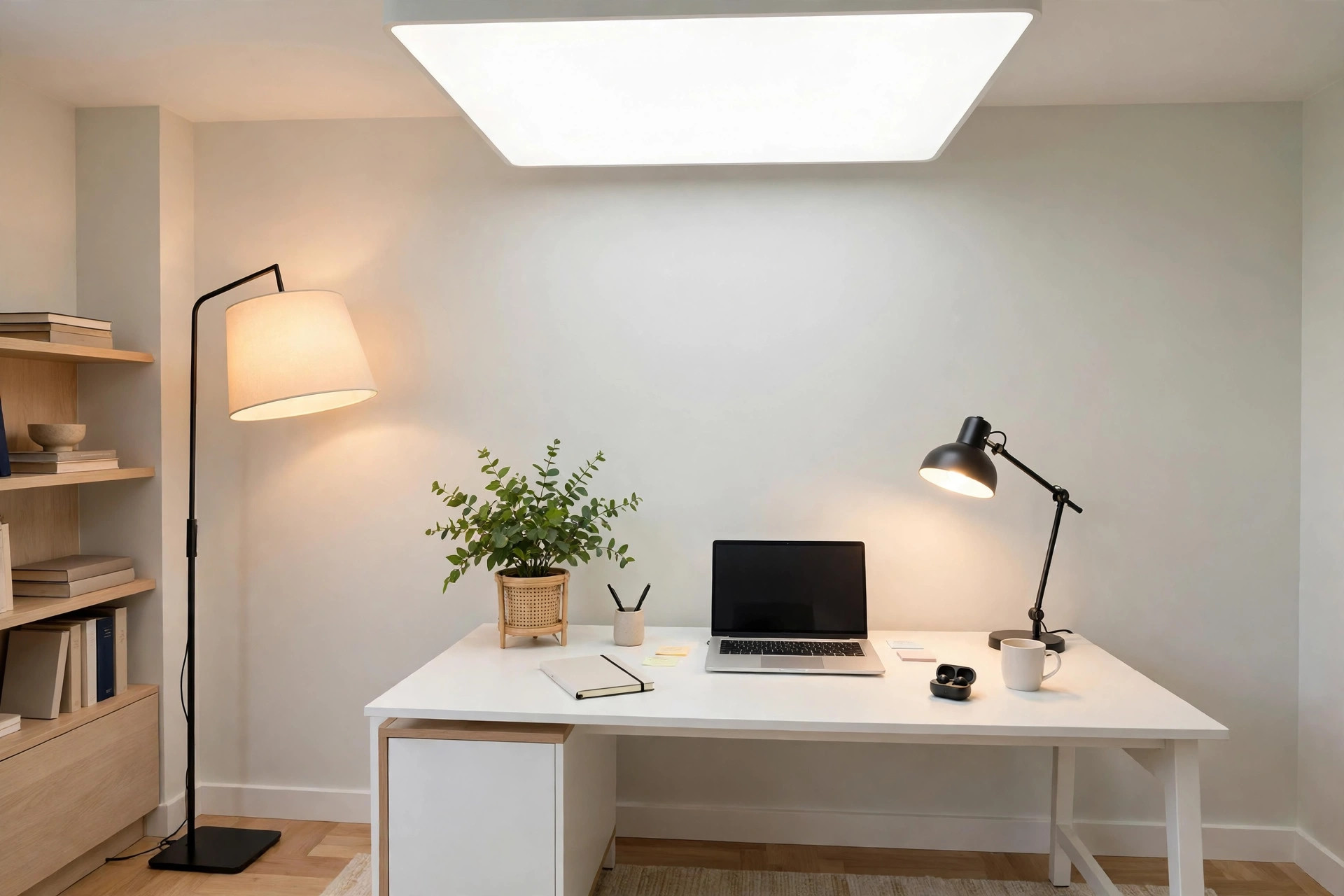
A room with no window can still be a good office. It just needs light that is planned, not left to a single ceiling bulb. The mistake most people make is buying one very bright lamp and wondering why the room still feels like a cave. The fix is layers: a bright base layer from above, a task light where your eyes work, and a little light on the walls.
Do it in that order — base first, task second, walls third — and a windowless room can feel almost as bright as a room with a window. The ten tricks below follow that order, and each one is cheap enough to try on its own.
1. Start with the ceiling — a bright, even base layer
A bare bulb throws hard shadows and leaves the corners dark, which is exactly what makes a room feel small. Replace it with a flat LED panel or a flush-mount fixture that spreads light evenly across the whole ceiling. Aim for something in the 2,000–3,000 lumen range for a small room — bright enough to read by on its own, without glare.
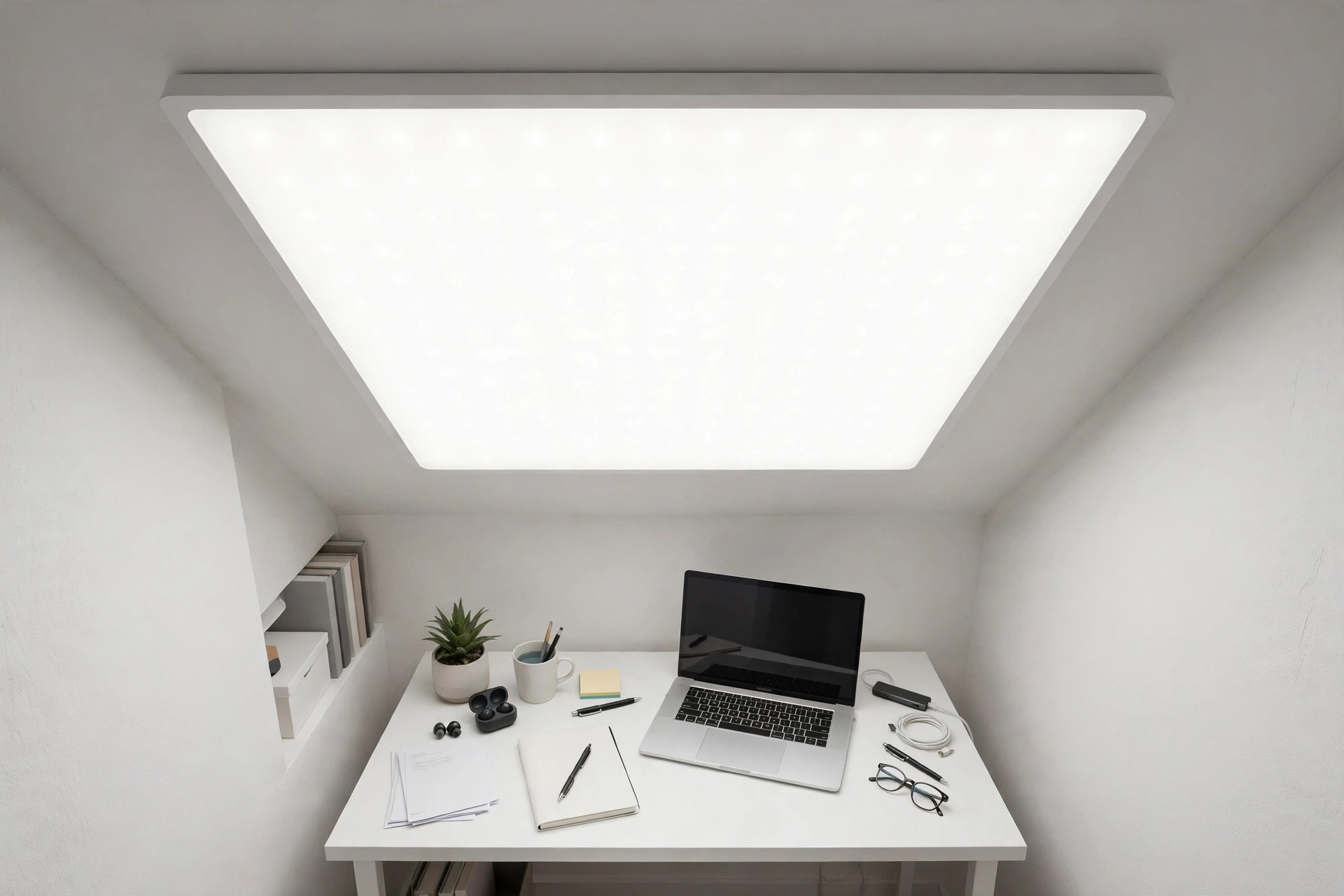
Typical cost is $25–$60 for the fixture, and most swap in with a screwdriver in under half an hour. If you rent and cannot change the fixture, a bright plug-in ceiling light or a pendant on a hook does the same job without touching the wiring. Until the base layer is right, every other lamp is just patching a dark room.
2. Put an adjustable desk lamp where your eyes work
Ceiling light gets you to “bright enough”. A desk lamp gets you to “comfortable to work in”. The difference is direction: a lamp you can aim puts light on the page, the keyboard and your hands, instead of washing the whole room. Pick an arm lamp with a pivoting head and a dimmer, so you can point it at the work and turn it down when the screen is doing most of the glowing.
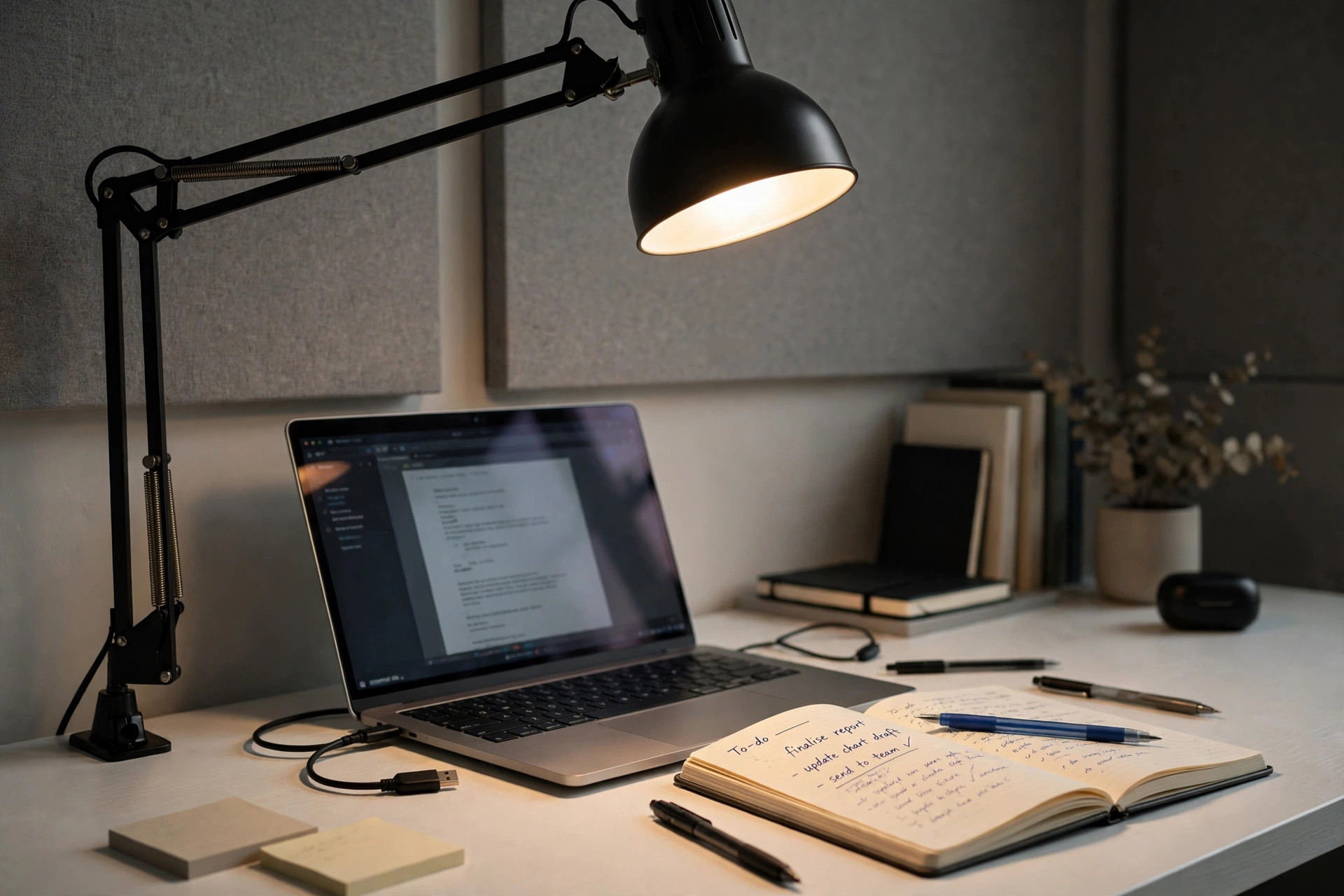
Put the lamp on the opposite side from your writing hand so your own hand never casts a shadow over the page, and keep the bulb out of your direct line of sight — if you can see the bulb, it is too low or too close. A good adjustable LED desk lamp typically runs $30–$80, and it is the one purchase in this list that pays off on day one.
3. Add a monitor light bar and kill the glare
If most of your day is on a screen, a monitor light bar is the quiet upgrade that changes everything. It clips onto the top of your monitor and throws a soft, even wash down onto your desk without putting any light on the screen itself. That matters in a windowless room, because without daylight the contrast between a bright screen and a dark desk is what tires your eyes by mid-afternoon.

Look for one with adjustable colour temperature and brightness, so it matches the rest of the room. Typical price is $40–$90. If video calls are part of your day too, the same thinking applies to your face: our desk lighting setups for video calls show how to light yourself so you do not look like a silhouette on camera.
4. Wash the wall behind your screen
The wall behind your monitor is doing more work than you think. When it is dark, your eyes keep adjusting between the bright screen and the black wall, and that constant adjustment is tiring. A soft wash of light on that wall — a small LED strip behind the monitor, a wall-washer lamp, or even a lamp pointed at the wall instead of at you — lifts the background brightness and the strain drops with it.
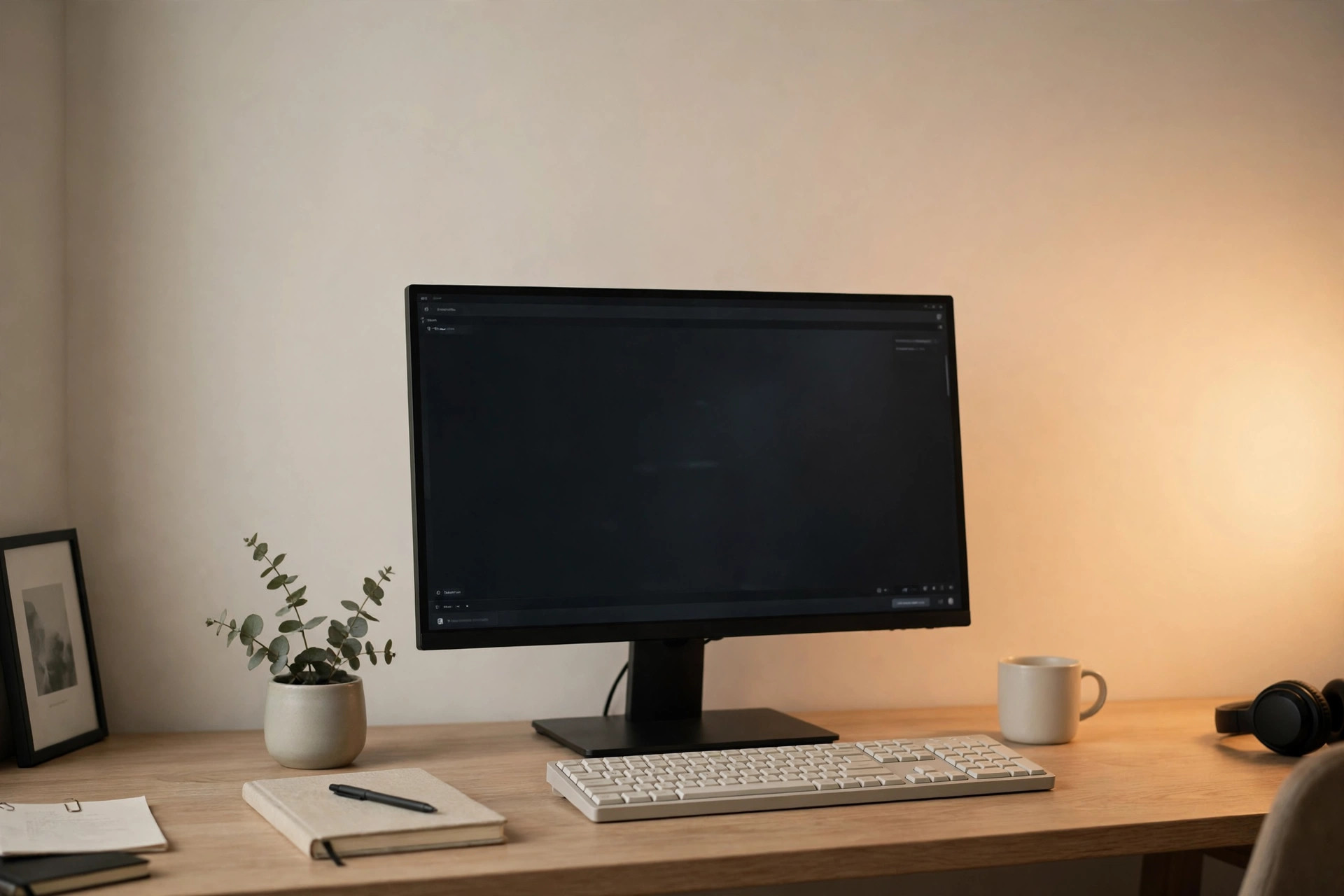
This is the cheapest trick on the list: a basic bias-light strip costs $15–$30 and sticks to the back of the monitor in minutes. Keep it warm-neutral and dim — the wall should glow, not glare.
5. Bounce light off the ceiling with an uplight
Direct light creates shadows; bounced light does not. A tall floor lamp that points straight up — a torchiere or an uplight — throws its light at the ceiling, and the ceiling throws it back down as a soft, shadowless wash. In a room with no window, that is the closest thing to daylight you can buy, because daylight is bounced light too.
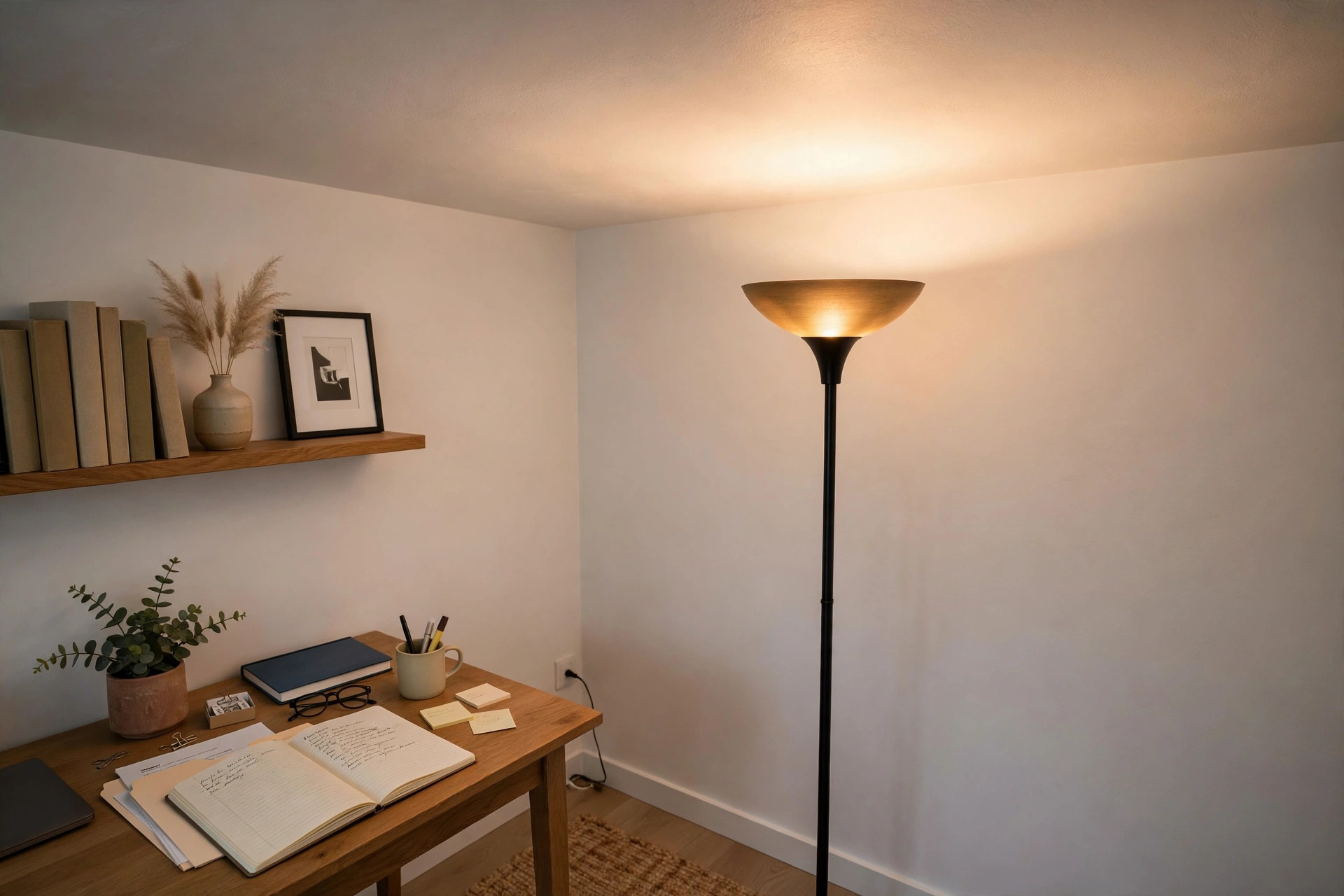
Put the uplight in a corner behind the desk, out of your eyeline, so its glow spreads across the ceiling. It pairs well with the ceiling panel from trick one: the panel gives you brightness, the uplight gives you softness. A decent uplight typically costs $40–$100, and it doubles as the room’s evening light when you are done working.
6. Pick one colour temperature and stick to it
Light has a colour, measured in kelvin, and mixing colours is why many windowless rooms feel “off” even when they are bright. A warm yellow desk lamp next to a cold blue ceiling light next to a daylight monitor makes the room feel like three different rooms at once. Pick one temperature for everything and the room instantly feels calmer.
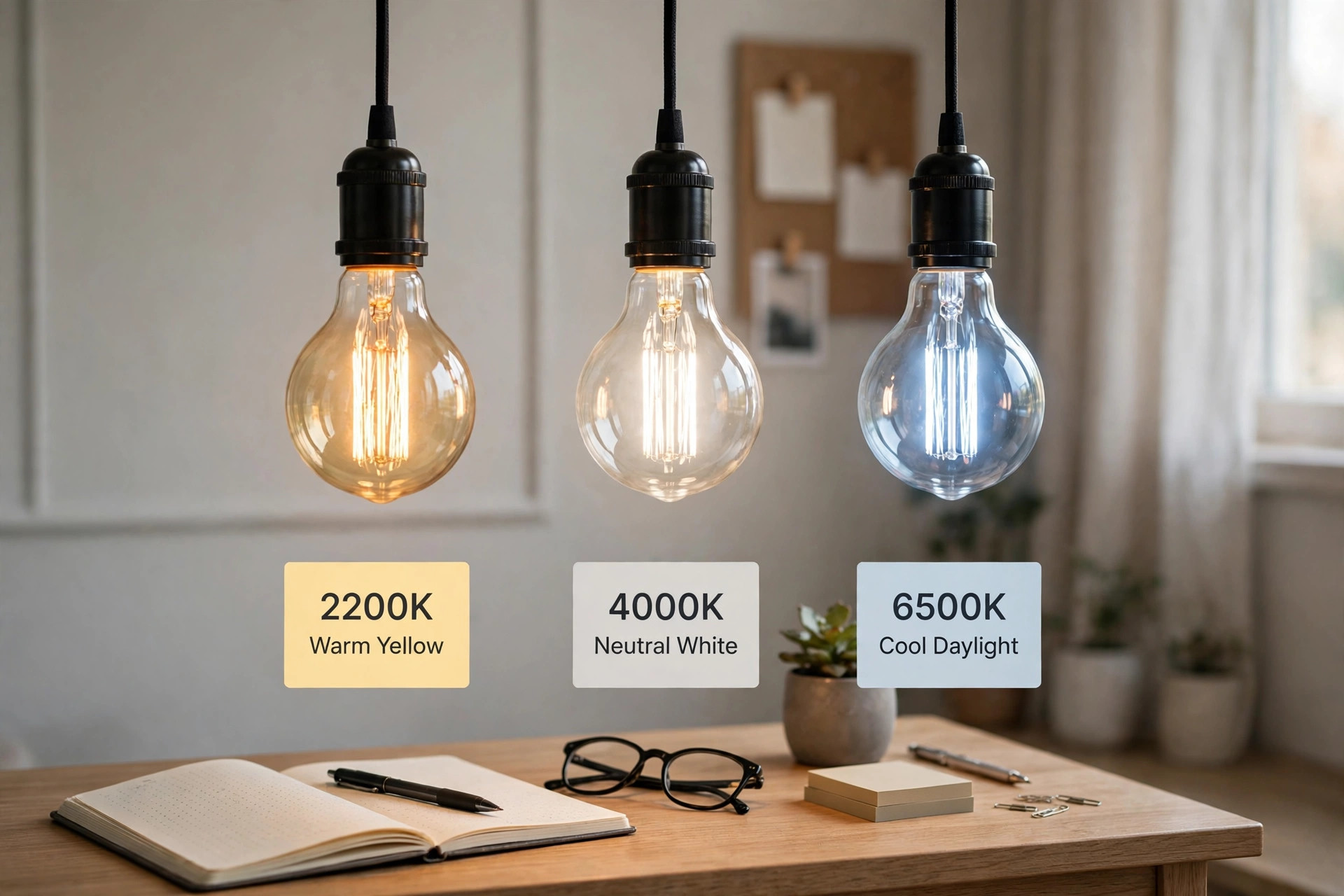
For a windowless office, neutral white — around 4000K — is the safe choice. It is bright and alert without feeling clinical, and close enough to daylight that your eyes relax. Avoid very warm 2700K bulbs as your main light (they make a windowless room feel like a cave) and very cool 6500K bulbs (harsh after a few hours). Check the kelvin number on the box, and match every new bulb to the ones you already have.
7. Brighten the room itself — pale walls, a mirror, a light desk
Light is only half the story; the other half is what the room does with it. Dark walls, dark furniture and a dark floor swallow light, so the same lamps look twice as bright in a pale room. If you can paint, one wall in a soft white or very pale warm grey is the highest-return change in this whole guide — a gallon of paint costs less than most lamps on this list.
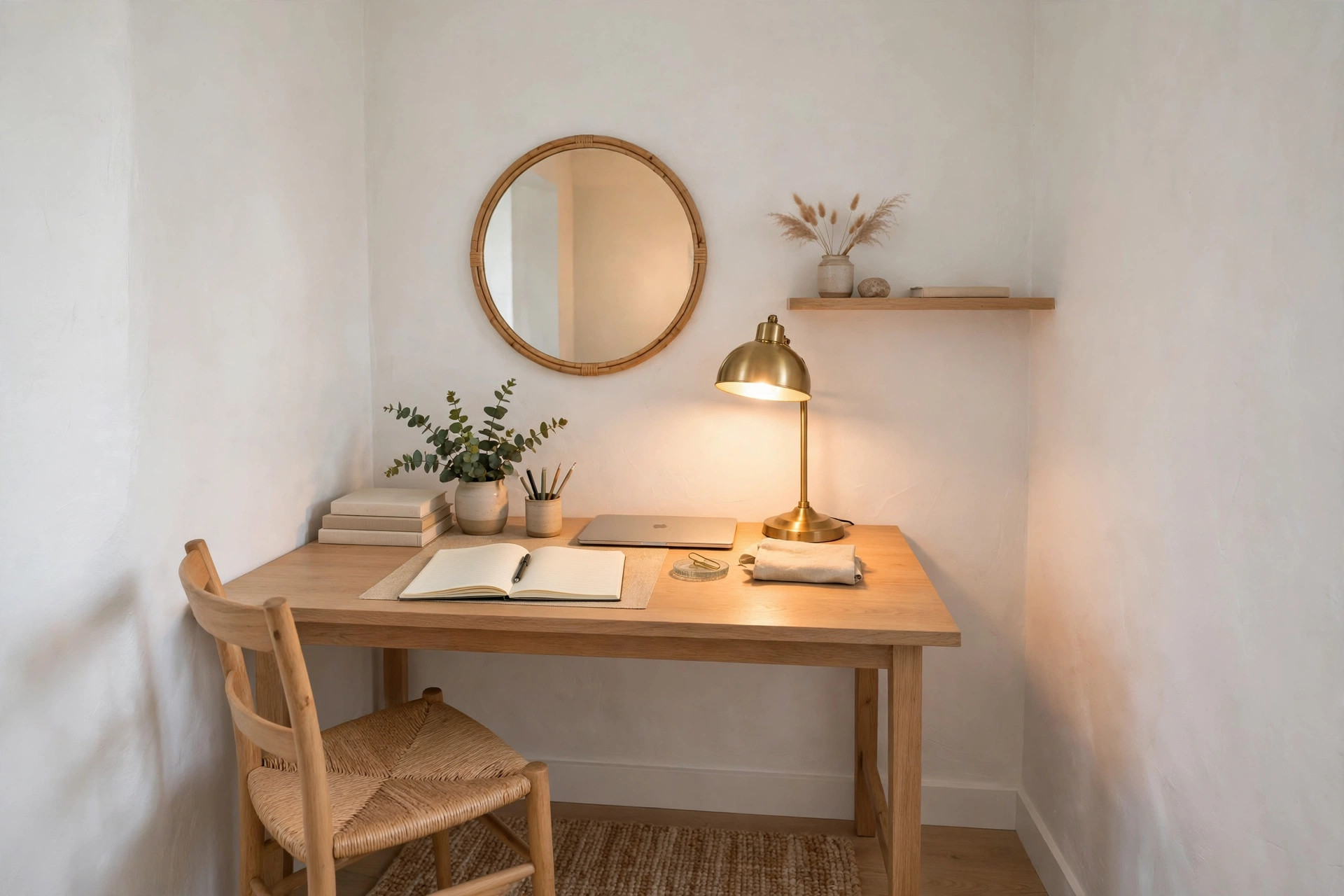
If you cannot paint, a mirror does similar work: hang one opposite your main lamp and it throws that light back across the room, and it makes the wall feel like it goes further. A light-coloured desk surface helps too — a white or pale wood top reflects the desk lamp instead of absorbing it. In a room with no window, every pale surface is a second light source.
8. Fake a window with a daylight panel
Sometimes the problem is not brightness but the feeling of being sealed in. A backlit daylight panel — the kind sold as a light-therapy lamp, or a slim LED panel mounted on the wall — gives your eyes a bright rectangle to rest on, the way a window would.
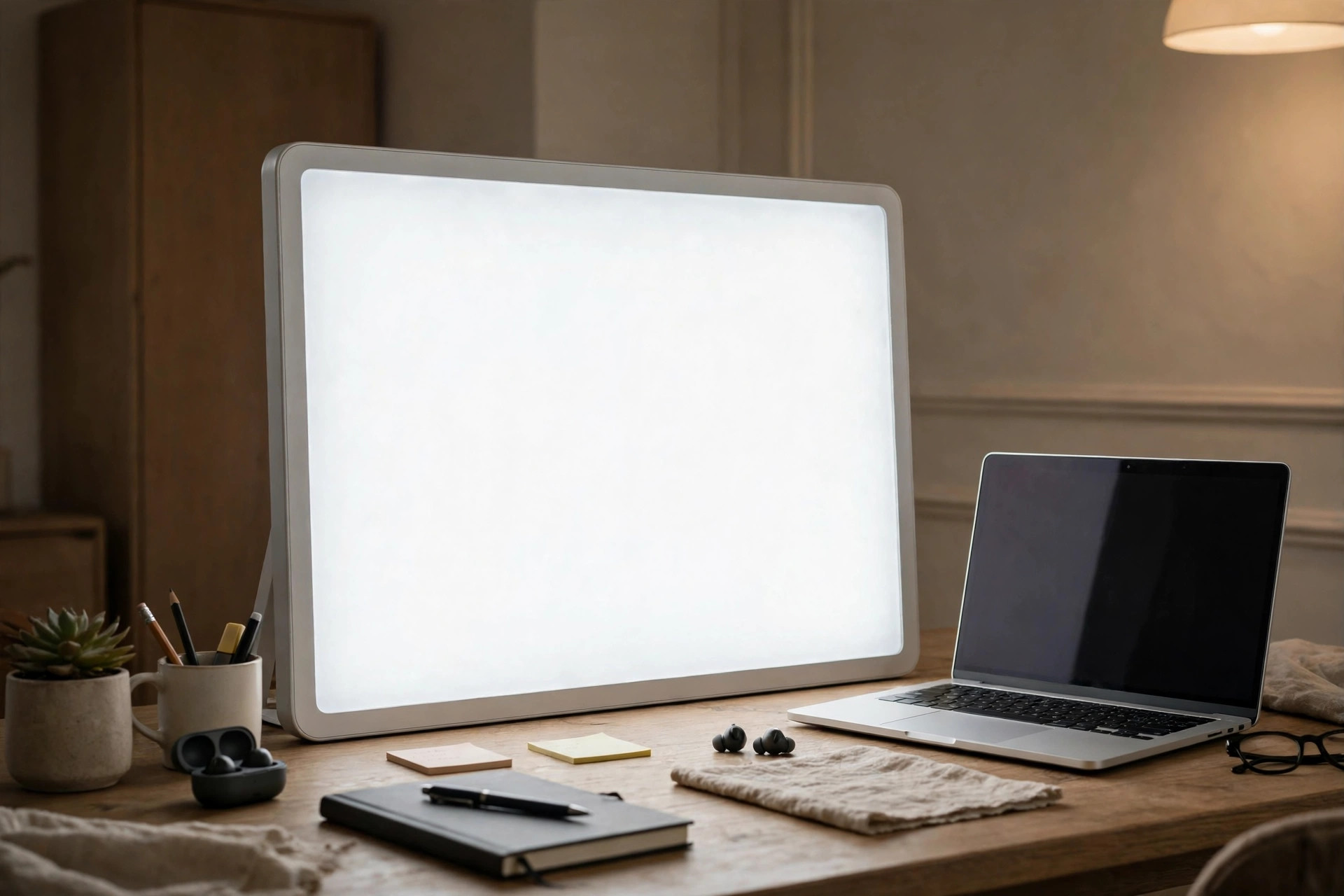
Put the panel on the wall you face, at roughly eye level, and run it during the first half of your workday. A basic 10,000-lux therapy lamp typically costs $30–$70. Keep it off to the side rather than dead centre if it is very bright — you want a glow in your peripheral vision, not a second screen to stare at.
9. Layer three kinds of light — and put them on dimmers
The trick that ties the pieces together is treating them as three separate layers and controlling each one. Ambient light (ceiling and uplight) sets the room’s brightness. Task light (desk lamp and light bar) lights the work. Accent light (the wall wash and the daylight panel) gives the room depth.
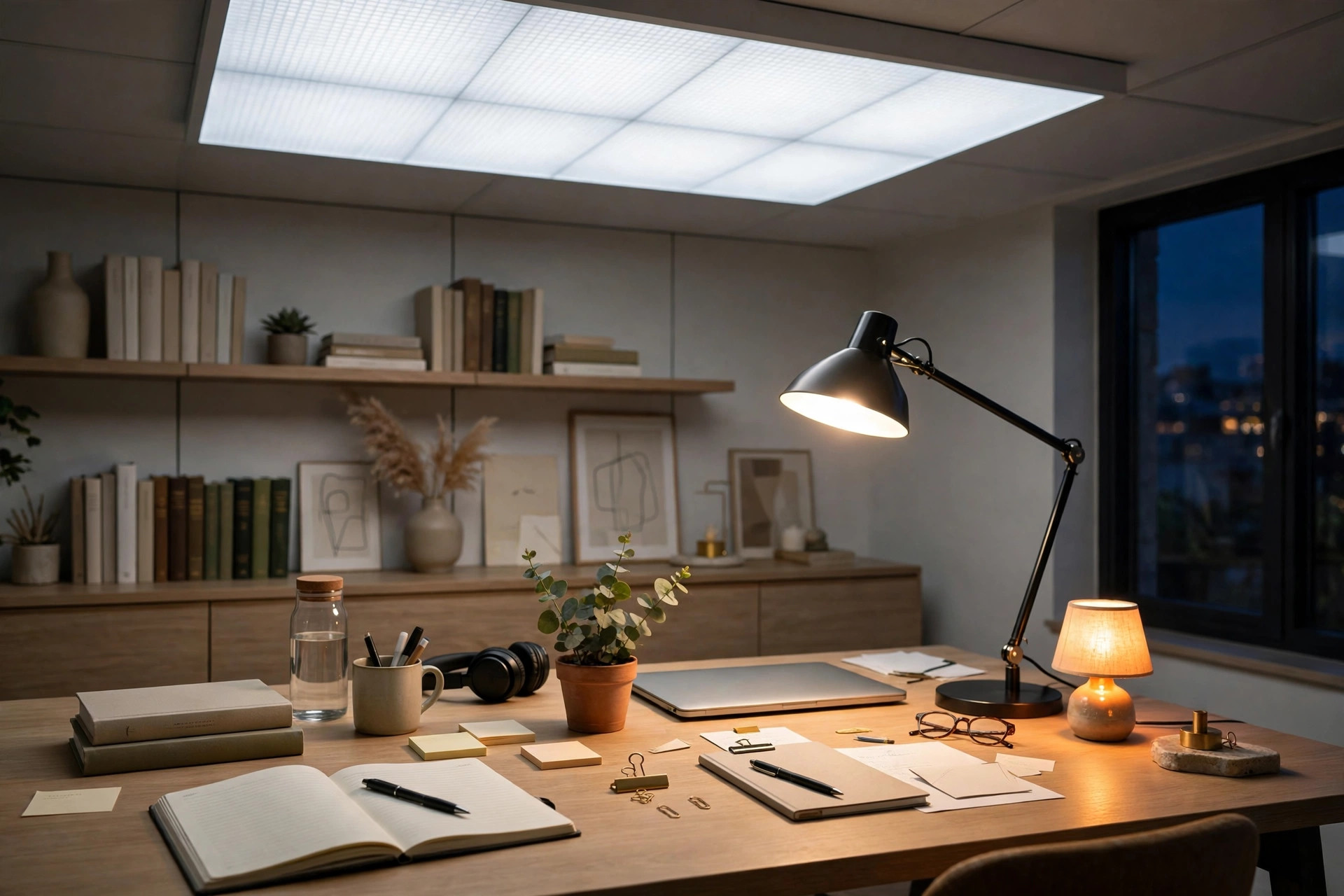
Put each layer on its own switch or dimmer — smart bulbs, a plug-in dimmer, or a simple three-way switch all work — so you can tune the room through the day: full brightness in the morning, softer and warmer in the evening. A room with three dim layers always feels better than a room with one bright switch, and the whole setup usually costs less than a single designer lamp.
10. Buy in this order — and skip the gimmicks
If you are starting from a bare bulb, buy in this order: ceiling panel first, adjustable desk lamp second, wall wash third, then the uplight and the daylight panel. Each step makes the room noticeably better on its own, so you can stop whenever the room feels right — many people stop after step three and never need the rest.
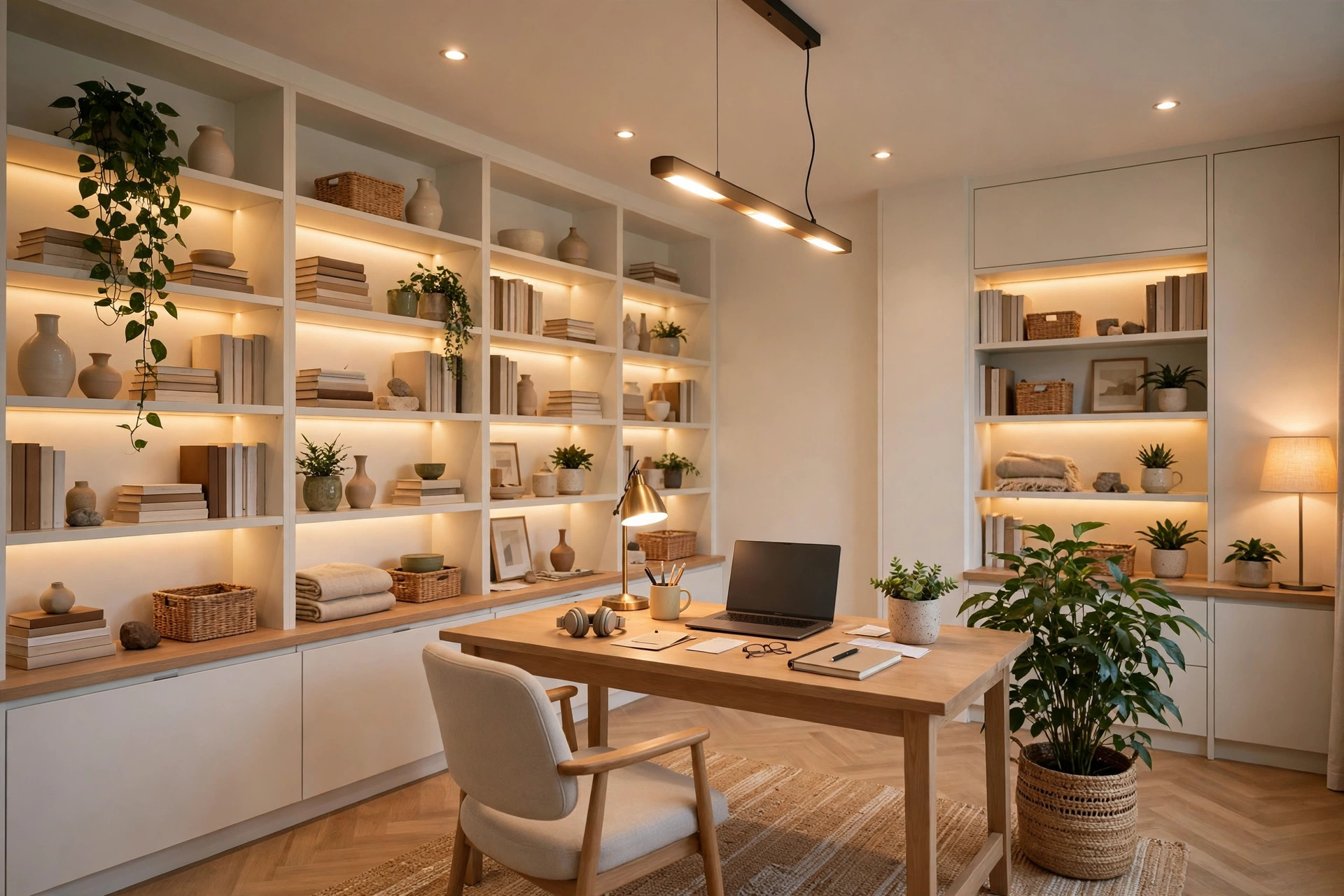
What to skip: colour-changing RGB strips as your main light, tiny clip-on book lights, and any lamp marketed as “sunlight in a bulb” without a kelvin number on the box. A windowless office is fixed by ordinary, well-placed light, not by one clever product. Start with the ceiling, work your way down to the desk, and the light will finally be doing the window’s job.