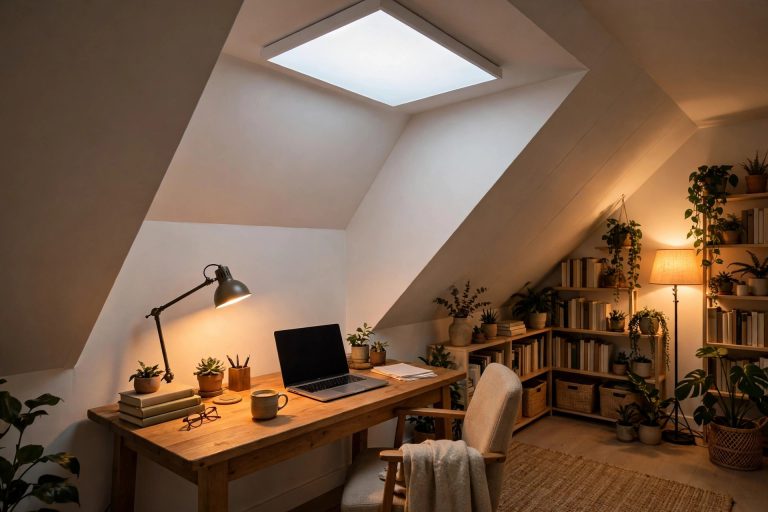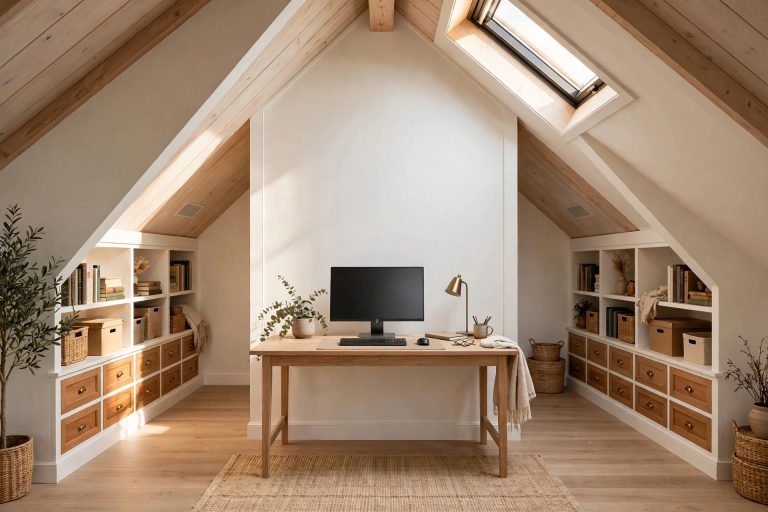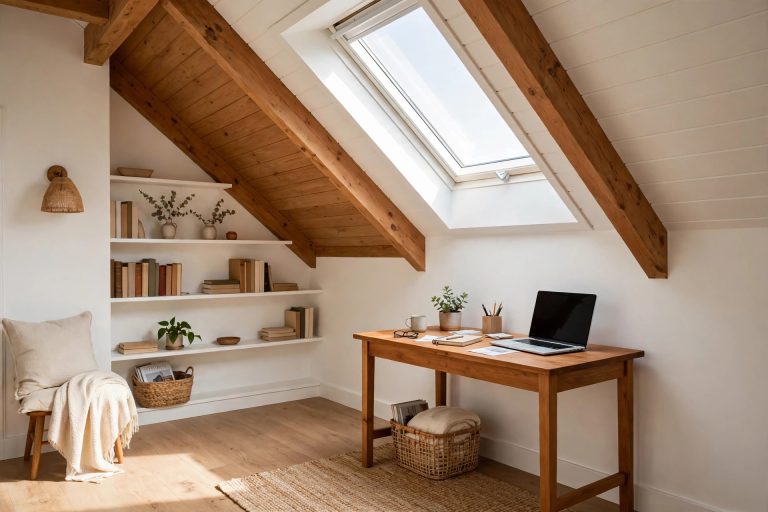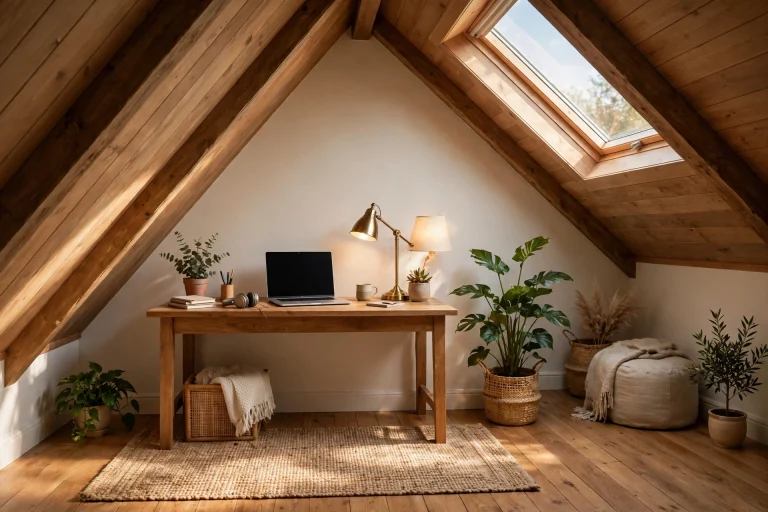
Standing Desks for Sloped-Ceiling Attic Offices: 6 Picks
A standing desk sounds simple until you try to fit one under a sloped ceiling. The desk that works in a spare bedroom suddenly needs headroom you do not have, a height range that clears the slope, and a footprint that leaves room to actually stand. Get the order wrong and you end up with a desk you can only use sitting down.
Work in this order: measure the ceiling where you will stand, pick a desk type that fits that height, then think about motors and accessories. The six picks below are desk types, not brand shootouts — each suits a different attic shape, with the typical price range and the trade-off stated plainly.
Measure first: three numbers that decide everything
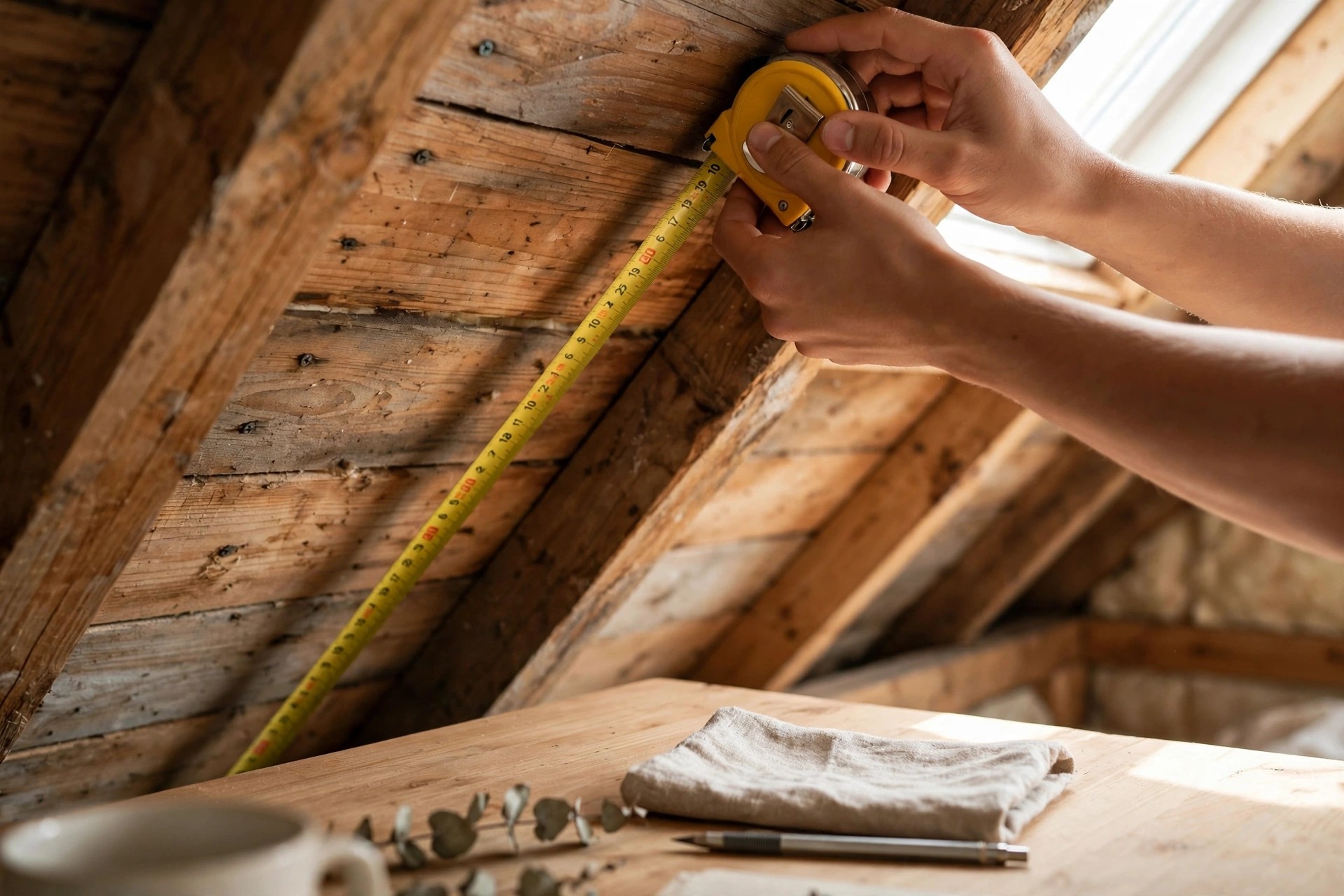
Three measurements decide which desk types are even possible. First, the ceiling height at the exact spot where you will stand, where your head will be when the desk is raised. You need roughly 15–20 cm (6–8 in) above your own height there, or you will duck every time you stand. Second, your elbow height while standing, which sets the desk height you need — for most adults, around 100–120 cm (39–47 in). Third, the depth you can spare: a standard desk is about 60 cm (24 in) deep, and that depth has to clear the slope as well as the wall.
Measure at the standing spot, not the sitting spot, and write the numbers down. Our sloped-ceiling desk placement guide covers the full routine — where the tall wall is, and how to check you can sit, stand, and work without ducking — and the same numbers decide which of the six picks below will fit.
Pick 1 — The compact electric frame
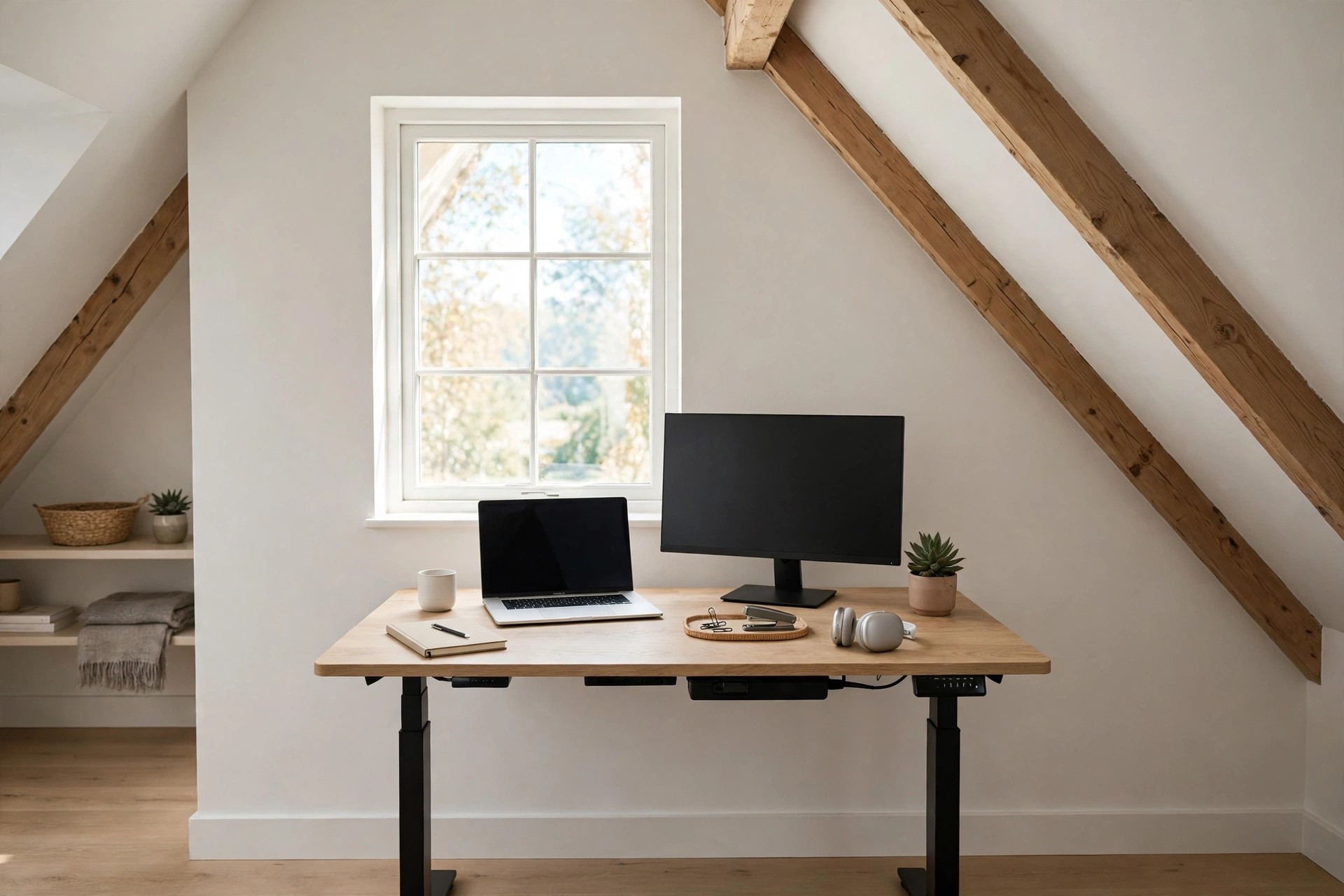
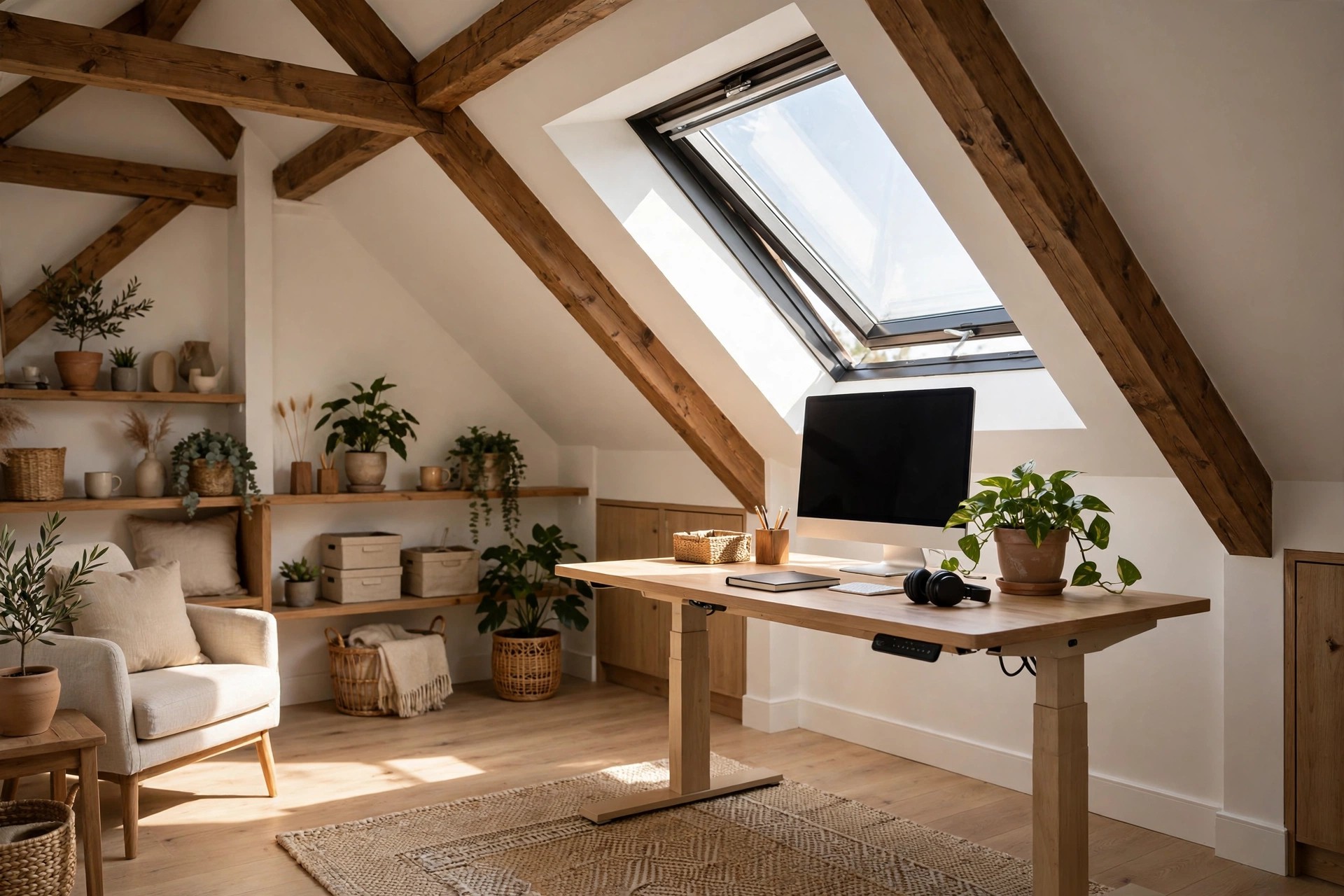
The most flexible choice for a sloped ceiling is a compact two-leg electric frame, usually with a 120 × 60 cm (48 × 24 in) top. It raises and lowers at the push of a button, so you can set the exact standing height your ceiling allows instead of guessing from a fixed height. The small top matters in an attic: it leaves room to stand beside the desk, and the narrow depth keeps the back edge away from the slope.
Expect a frame-plus-top set to cost roughly $200–$450. Check the minimum height before ordering — some frames only go down to about 70 cm, too high for a short chair — and the weight rating, which should cover your monitors plus a margin.
Pick 2 — The hand-crank desk
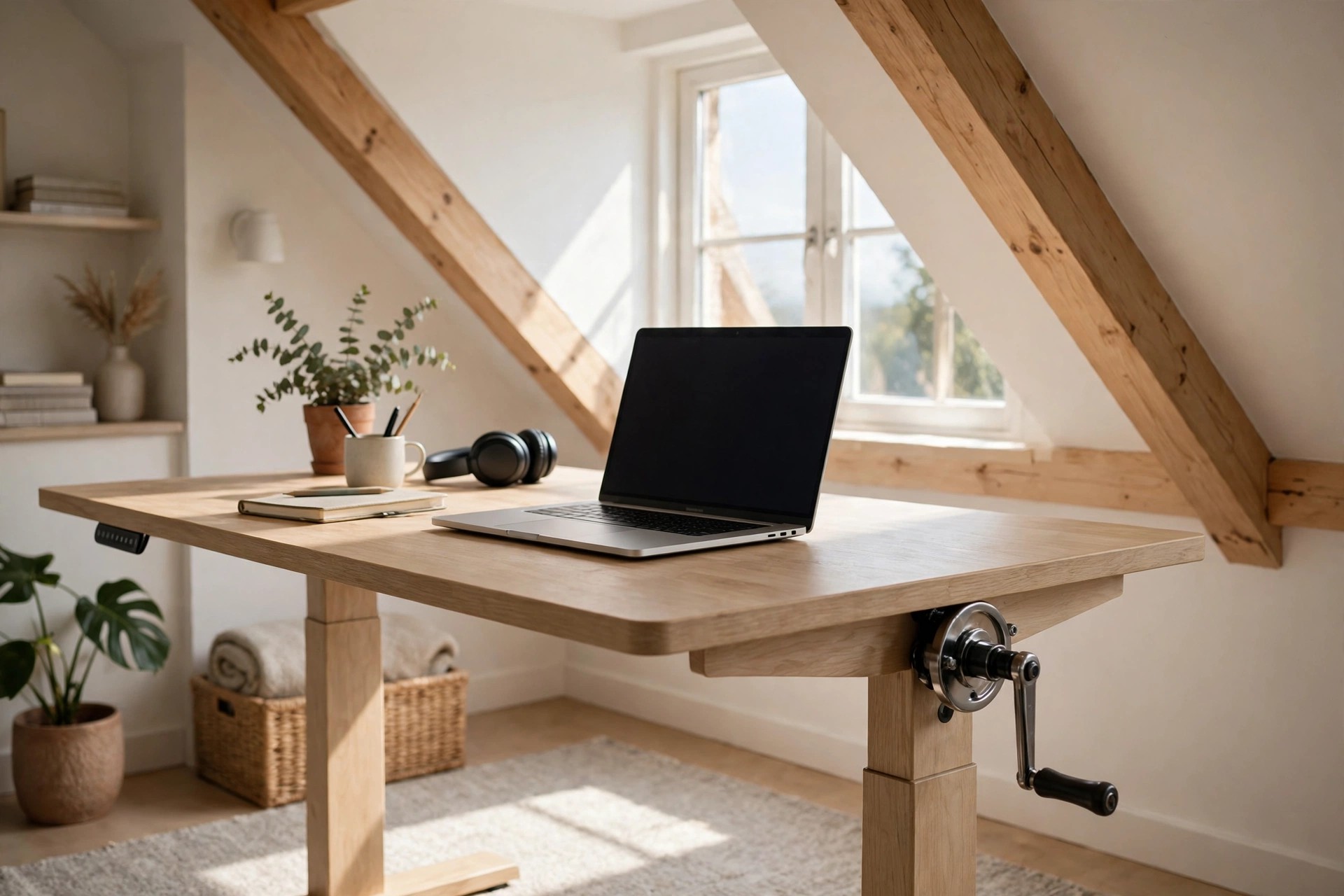
A hand-crank desk does the same job as an electric frame with a handle instead of a motor. You turn the crank, the desk rises; you turn it back, it lowers. There is no motor to fail, no socket to find behind the knee wall, and no hum while it moves.
The trade-off is speed: raising the desk takes 30–60 seconds of cranking, so people tend to leave it at one height for the day. If you stand for one long block and sit for the rest, it is the cheapest reliable way to get there; if you change height three or four times a day, the crank will wear thin. Typical price: roughly $150–$300.
Pick 3 — The fixed-height standing desk
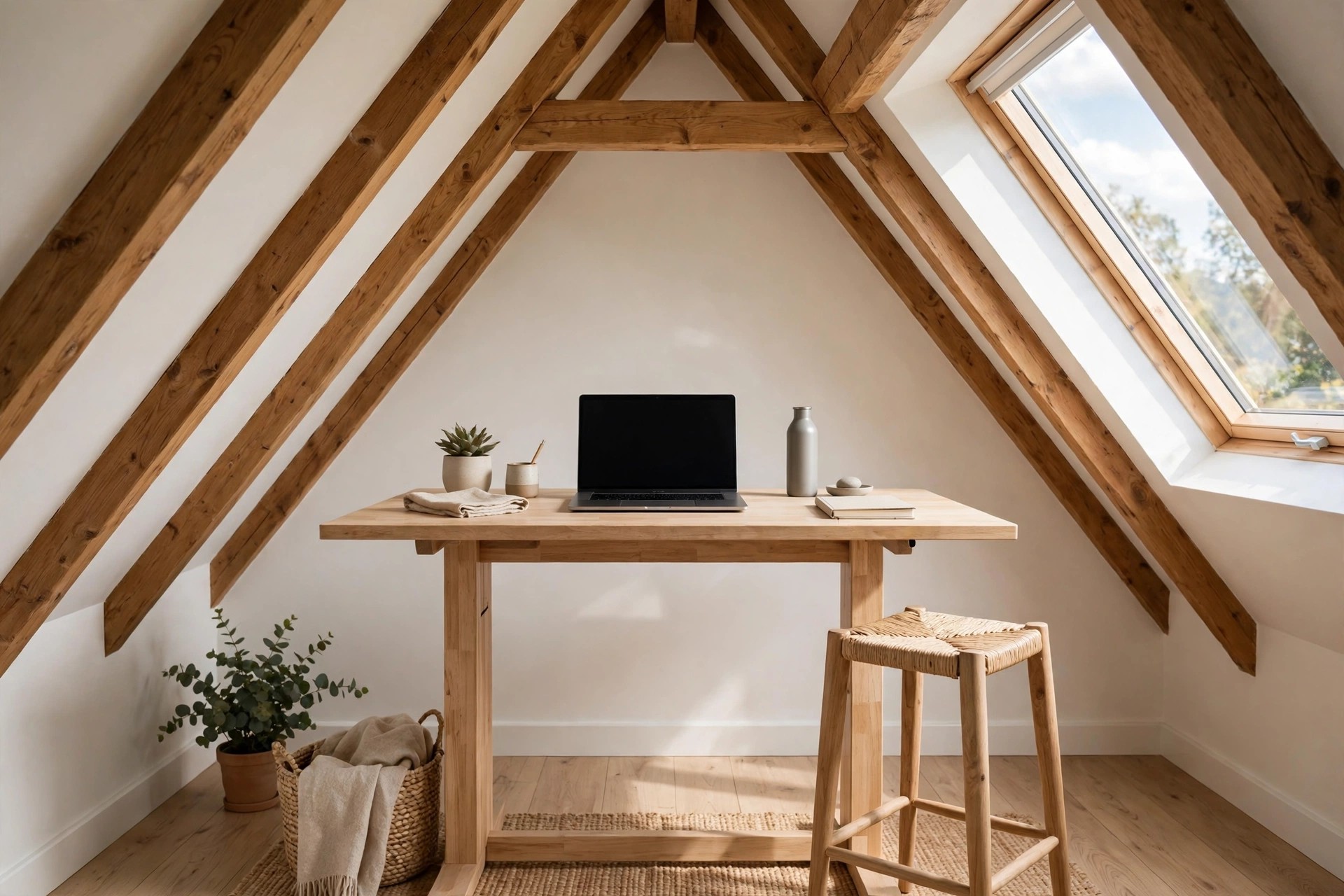
If you already know your standing elbow height, a fixed-height desk is the simplest pick of all: a table built at standing height, usually 100–110 cm (39–43 in), with no moving parts. Nothing to adjust, nothing to break, nothing to plug in.
The risk is getting the height wrong. Measure twice, then stand at that height for a full working day using a borrowed table or a stack of boxes before you buy — your shoulders will tell you within an hour whether it is right. Pair it with a tall stool for the moments you want to sit. Typical price: roughly $80–$200.
Pick 4 — The desk converter (riser)
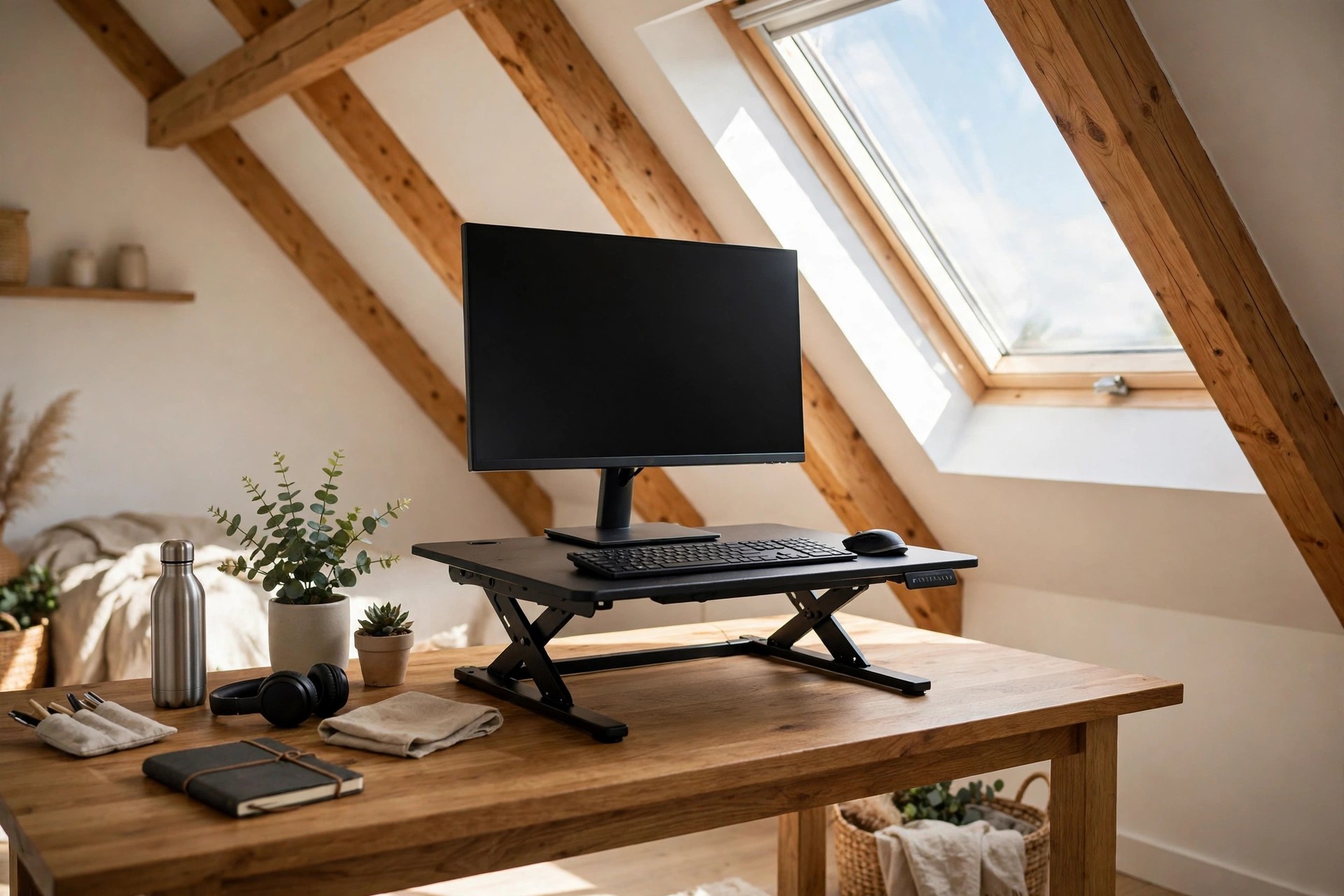
A converter, or riser, sits on top of the desk you already own and lifts just the keyboard and monitors to standing height. It is the only pick here that does not ask you to carry a new desk up the attic stairs — which matters when the stairwell is narrow and moving furniture is a two-person job.
Converters suit attics that already have a decent desk and a ceiling tall enough at the desk spot for standing. Watch the footprint: a converter needs a desk deep enough to hold it plus your forearms, usually at least 60 cm. Gas-spring models rise smoothly with one hand; cheaper scissor models need two hands and patience. Typical price: roughly $100–$300.
Pick 5 — The wall-mounted fold-down desk
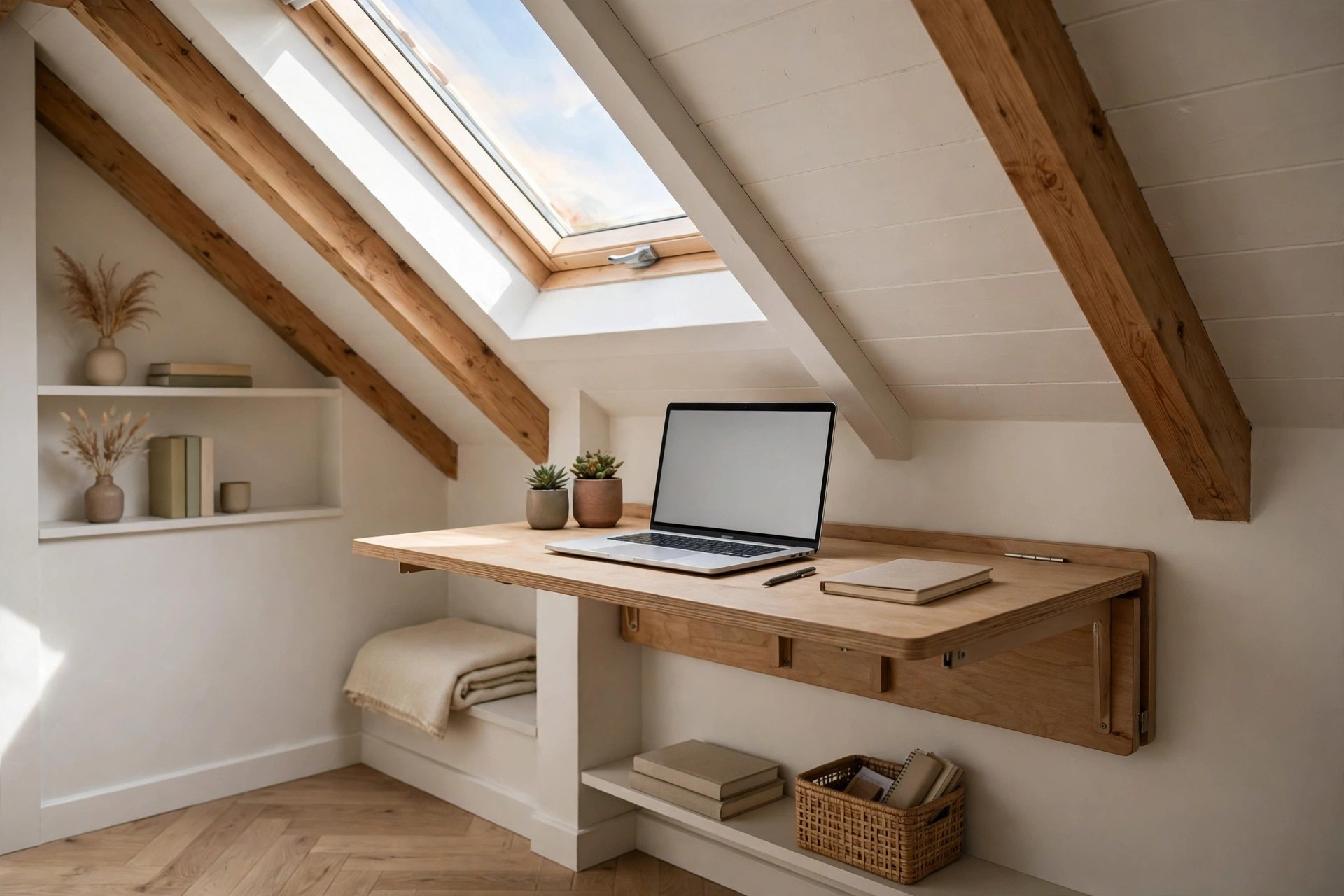
For the smallest attics, the desk that disappears wins. A wall-mounted fold-down desk hangs on the tall wall, folds up to a shelf-depth panel when you are done, and folds down to a standing-height worktop when you need it.
Mounting is the whole job: the bracket must go into studs, not plasterboard, and the folded-down height has to match your standing elbow height, so measure before you drill. It holds a laptop and a notebook comfortably; a dual-monitor setup is too much for most fold-down tops, so this pick suits laptop-first workers. Typical price: roughly $80–$250, plus fixings.
Pick 6 — The narrow corner desk
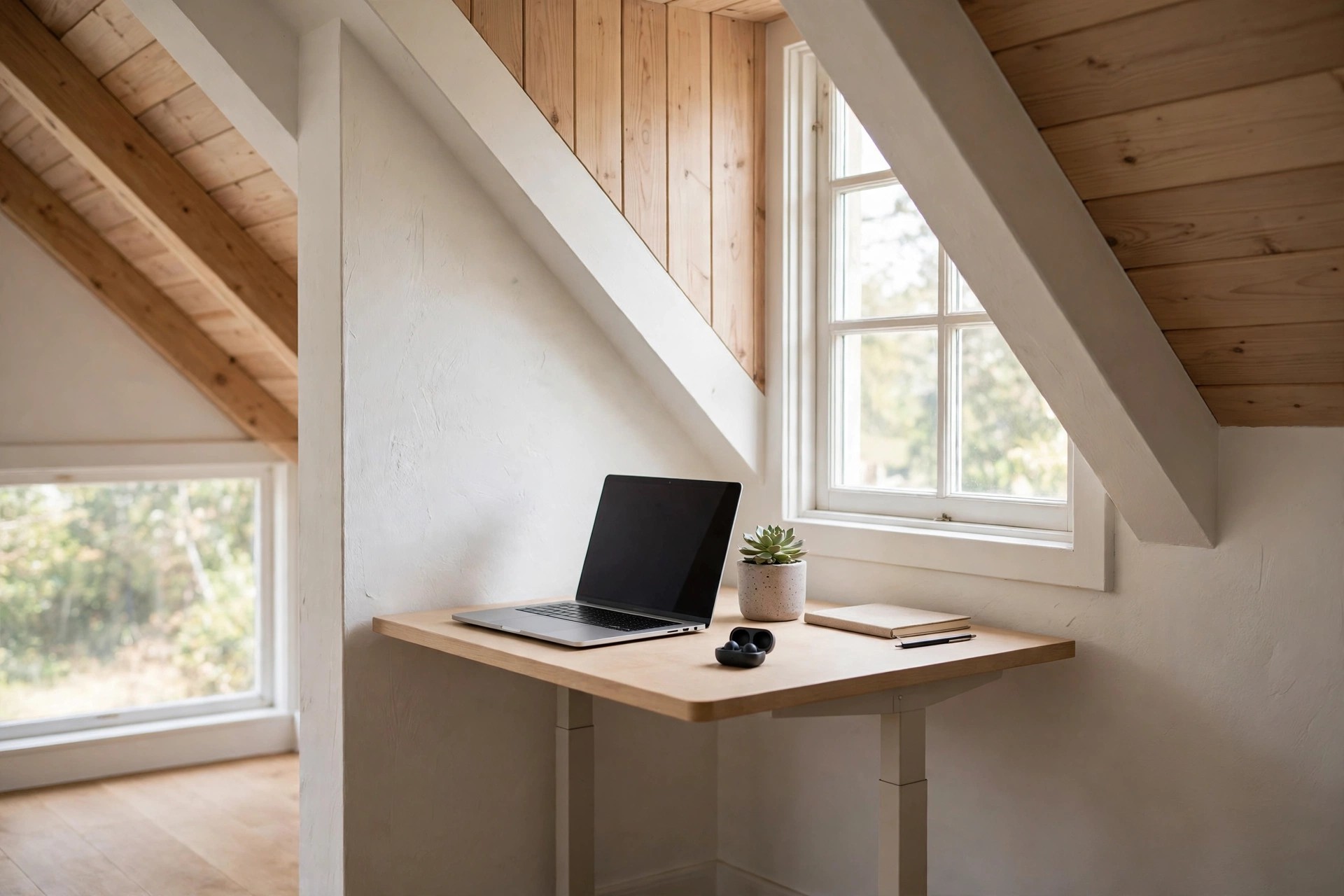
A narrow corner desk turns the attic’s worst spot — the corner under the slope — into the desk’s home. A shallow L-shaped or corner top, about 40–50 cm deep on each side, slides into the corner where a full desk would never fit, and the slope above it becomes dead space you were never going to stand under anyway.
This pick works best as a sitting desk with a standing option, or as a fixed-height standing corner if the ceiling at the corner’s outer edge is tall enough for you. Measure the standing spot, not the desk spot: the corner itself can be low, but where your feet and head go must clear your height. Typical price: roughly $180–$400 for a height-adjustable corner frame with a top.
What to check before you buy
Four checks save a return trip. First, stability: a frame that is rock-solid at sitting height can wobble at full standing height, and attic floors are rarely level — check the feet adjust, and keep the monitor load modest. Second, power: an electric desk needs a socket within reach of its cable, and the cable must not cross the path to the stairs. Third, the knee wall: the desk’s raised top must clear any knee-wall door or drawer you need to open. Fourth, the chair: a standing desk still needs a sitting option, so budget for a stool or keep your existing chair.
Do not buy the oversized L-desk first. It looks generous in a product photo and eats the whole attic in real life — in a sloped room, the desk you can walk around beats the desk you have to climb over.
Set it up in this order
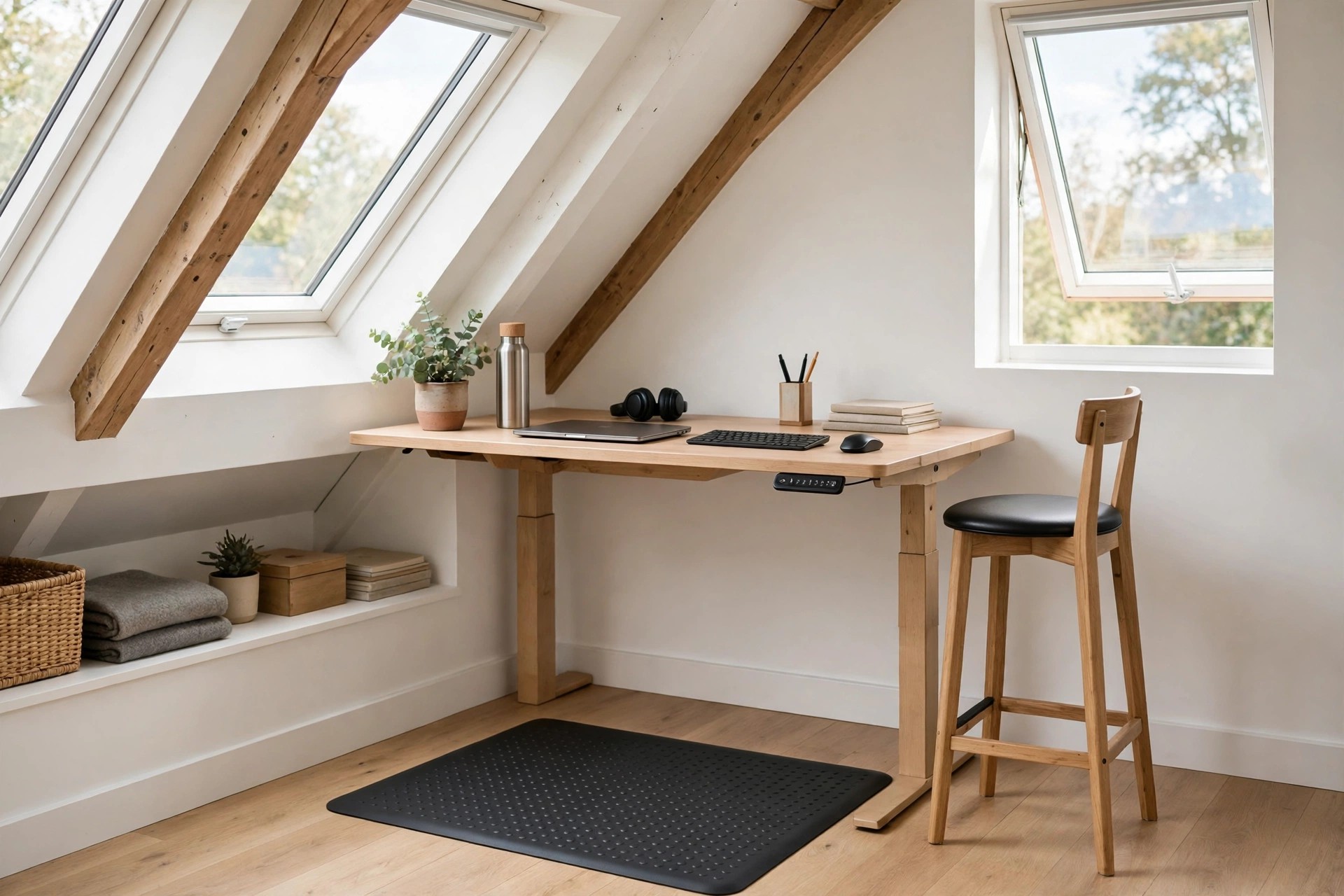
Put the desk on the tall wall first, with the standing spot under the highest ceiling you have. Set the sitting height, then the standing height, and mark both — most electric frames let you save presets, which is worth doing on day one. Then set the screen: top of the screen at or just below eye level, about an arm’s length away, so you are not tilting your neck up toward the slope.
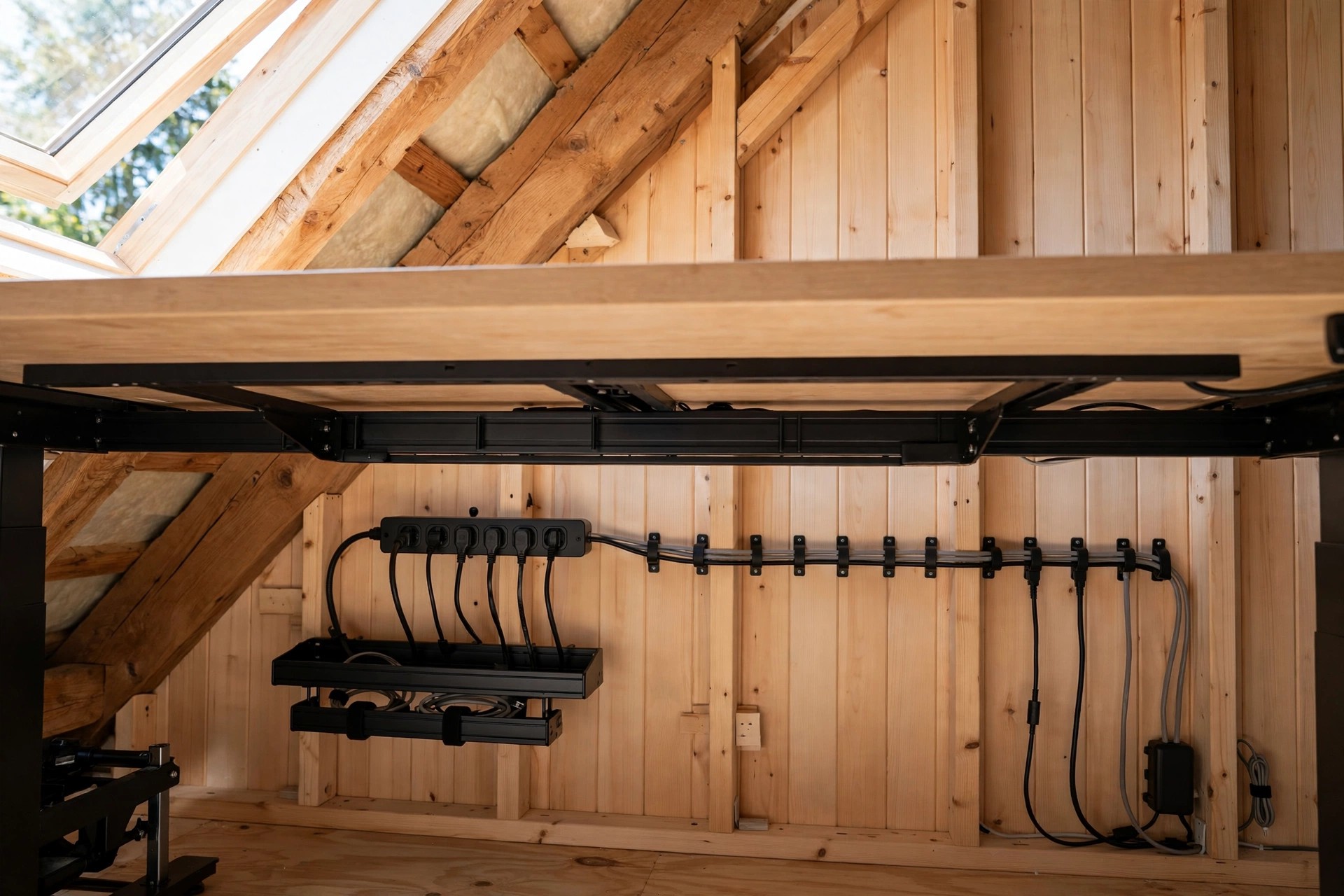
Then the floor: an anti-fatigue mat where you stand, and a stool within reach so sitting is one step, not a room rearrangement. Cables last — route them down the tall wall, not across the floor toward the stairs.
The quick verdict
If your ceiling is tall enough at the desk spot and you switch height often, the compact electric frame is the default pick — it adapts to the room instead of asking the room to adapt to it. On a tight budget, or where sockets are scarce, the hand-crank desk or a fixed-height desk does the same job for less. Already own a good sitting desk? Start with a converter. Working in under 40 square feet? The fold-down wall desk earns its keep. And if the only free wall is a corner under the slope, the narrow corner desk fits where nothing else will.
Whichever you choose, the rule from the top still holds: measure the standing spot first, buy the desk second.
Start today with the tape measure, not the shopping cart. Ten minutes of measuring tells you which of these six picks can even stand in your attic — and the one that fits is the one you will still be using a year from now.