5 Best Office Chairs for Back Pain, Tested
If your back hurts by 3 p.m. every workday, your chair is the first suspect — not your willpower, not your age, and not the hours. A chair that fits your body keeps your spine in its natural curve while you work. A chair that doesn’t will quietly load the same muscles and discs for eight hours straight, and by evening you feel it.
The good news: you don’t need the most expensive chair on the market. You need the right features, set up correctly. These five picks are the ones that check the boxes that matter for different backs, budgets, and rooms — each one judged against the ergonomic criteria below, with typical price ranges so you can judge value honestly.
Why your chair hurts your back
Most chair-related back pain comes from three mismatches. First, the lumbar gap: the chair back is flat where your lower back curves inward, so your spine rounds forward to find support it never gets. Second, the wrong seat height or depth: feet dangling, or a seat edge pressing behind your knees, pulls your pelvis out of position and cuts circulation. Third, static posture: a chair that locks you bolt upright with no recline forces the same muscles to hold you all day. None of this is fixed by a fancier cushion. It is fixed by shape and adjustability — which is why the features below matter more than brand, padding thickness, or price tag.

The 5 features that actually matter
Before the picks, the checklist every chair below was judged against. If a chair misses two or more of these, it is not a back-pain chair, whatever the marketing says.
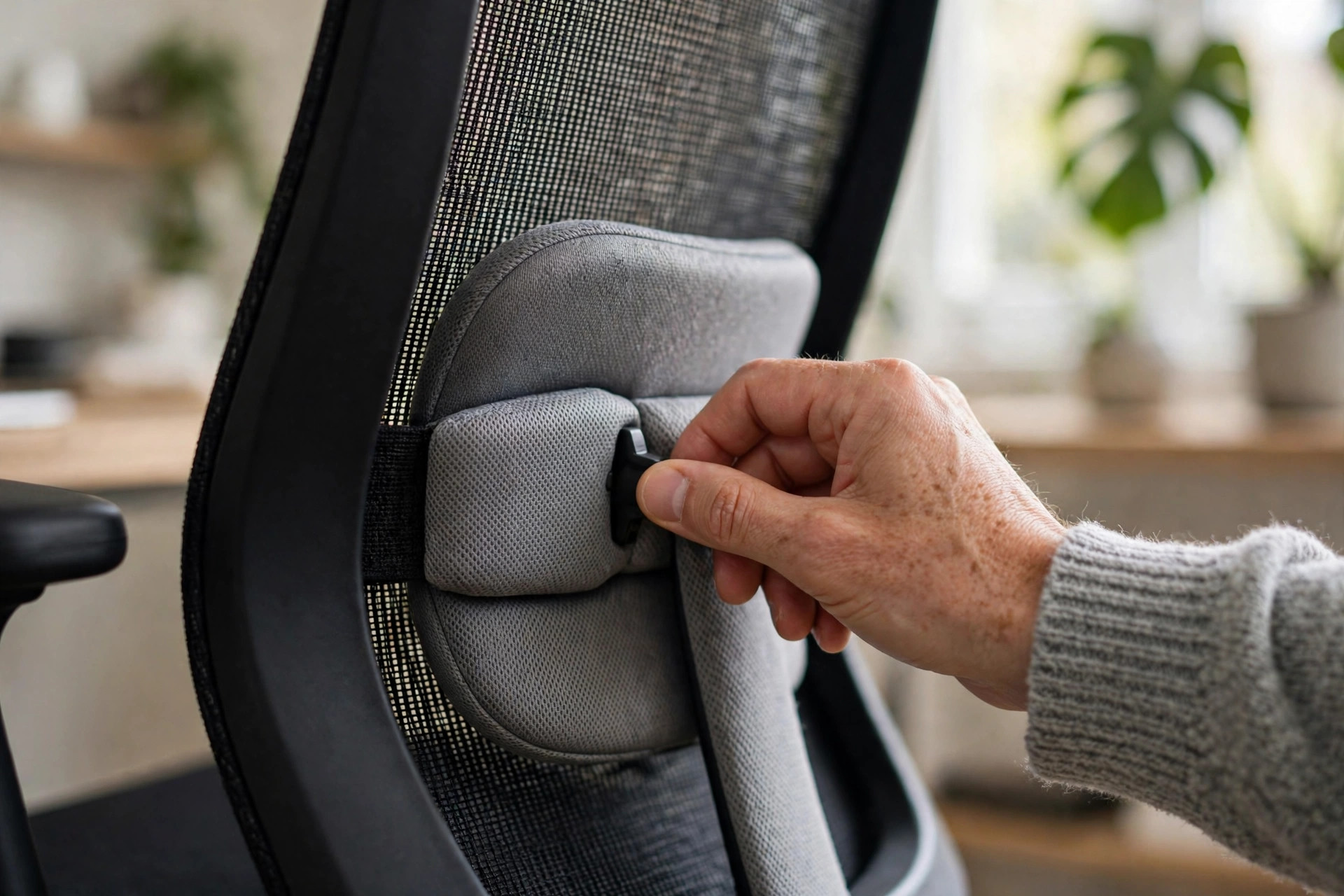
- Adjustable lumbar support — it should move up and down (and ideally in and out) so it lands at your belt line, not somewhere near your shoulder blades.
- Seat-depth adjustment — the seat should slide so two or three fingers fit between the seat edge and the back of your knees.
- Armrests that adjust in height — and in width, if possible — so your shoulders hang relaxed with elbows at about 90 degrees.
- A recline with tension control — a slight recline, around 100–110 degrees, takes load off your discs; a chair locked upright fights you all day.
- A seat-height range that lets your feet rest flat — thighs roughly level, knees at about 90 degrees.
Skip chairs that are all padding and no adjustment: a thick seat with a fixed back and fixed arms looks comfortable in the shop and punishes you by Friday.
1. Best overall: the adjustable-lumbar mesh chair
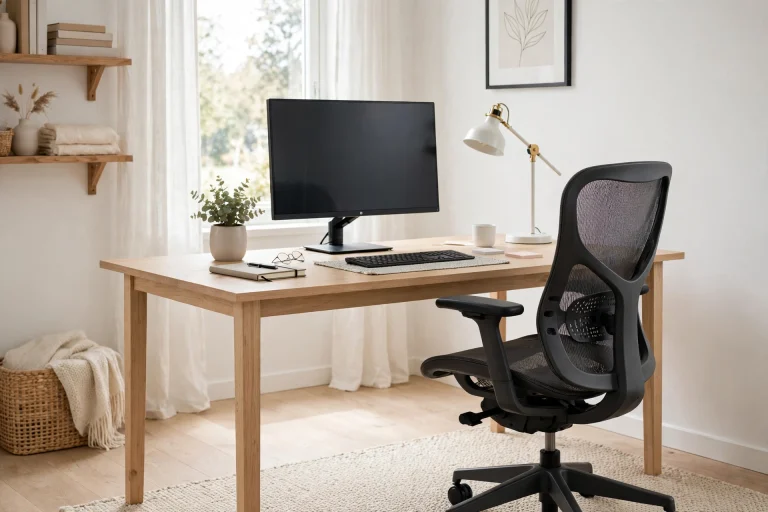
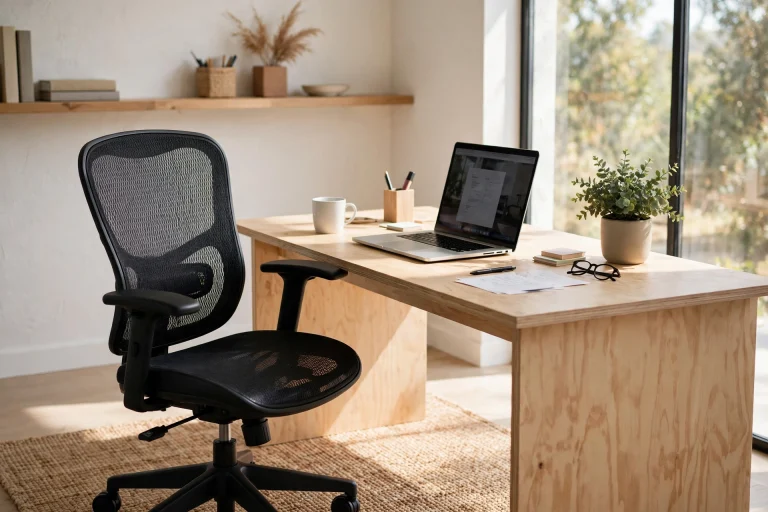
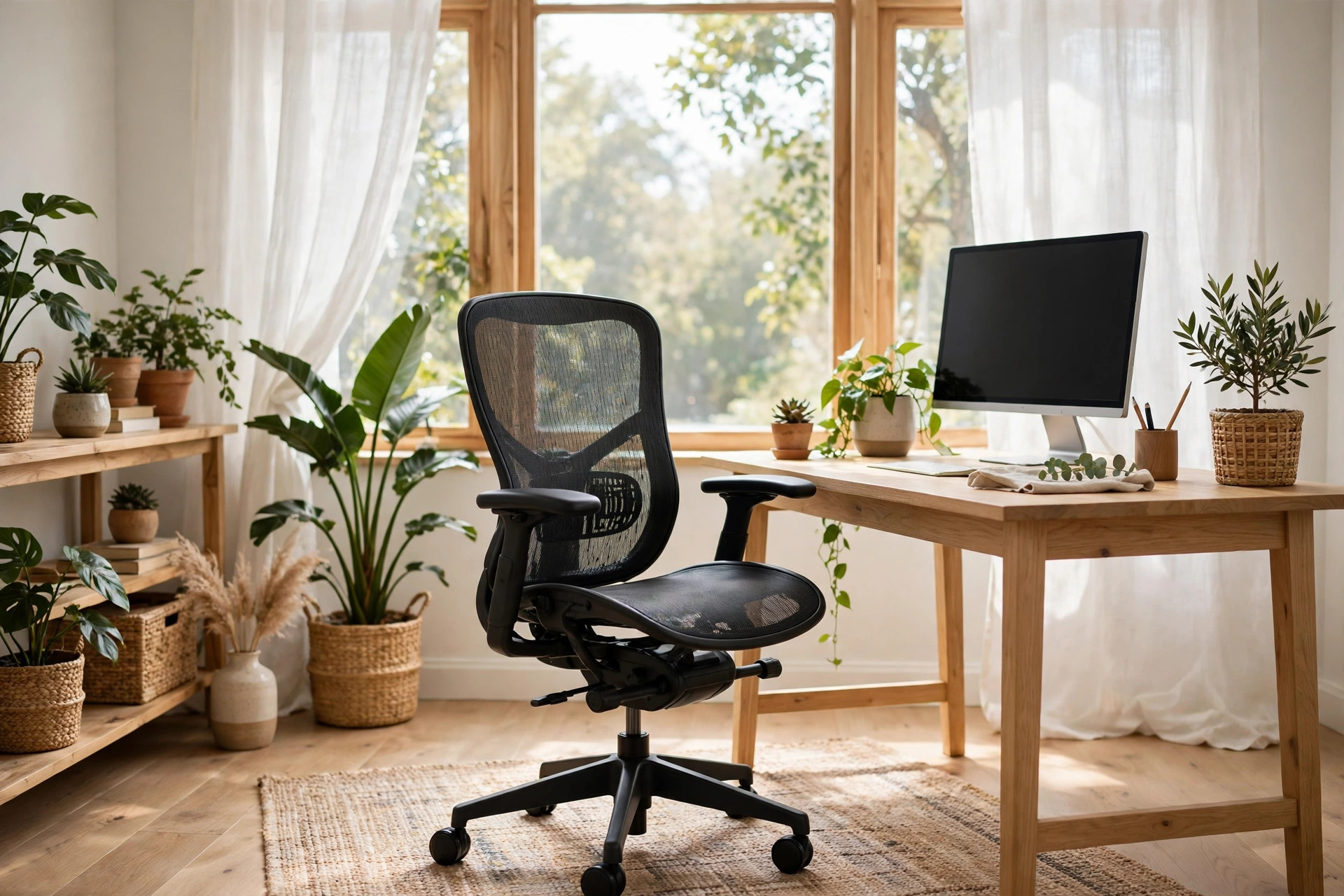
This is the pick for most people with most backs. A breathable mesh back with a lumbar pad you can slide up, down, and in or out, a seat that adjusts for depth, and a synchro-tilt that lets the back recline a little further than the seat. The mesh keeps you cool through a full workday, and the lumbar dial lets you tune the support as your back changes through the day — firmer in the morning, softer after lunch. Typical range: $300–$600.
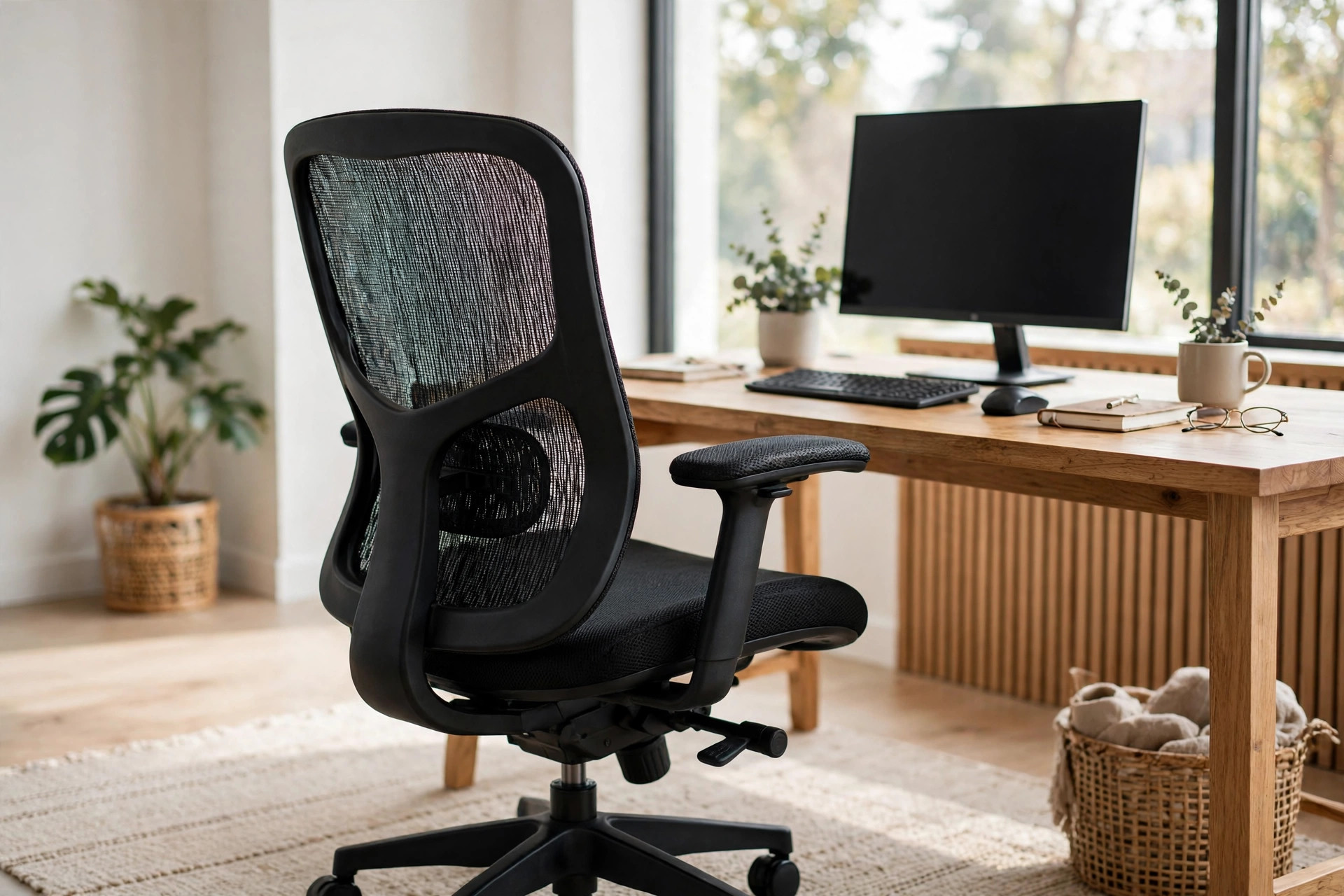
One honest caveat: mesh seats feel firmer than padded ones at first. Give it a week before you judge it; the support, not the softness, is what your back notices by day five.
2. Best budget: the under-$300 ergonomic chair
If the budget is tight, this is the honest floor — and it is a real floor, not a compromise that fails. At this price you still get the three things that matter most: seat-height adjustment, a lumbar pad you can move, and a tilt you can lock. What you give up is refinement: no seat-depth slide, simpler armrests, and a back that adjusts in fewer directions. Below this price, adjustability disappears almost entirely — and with it, the benefit for a sore back. Typical range: $150–$300.
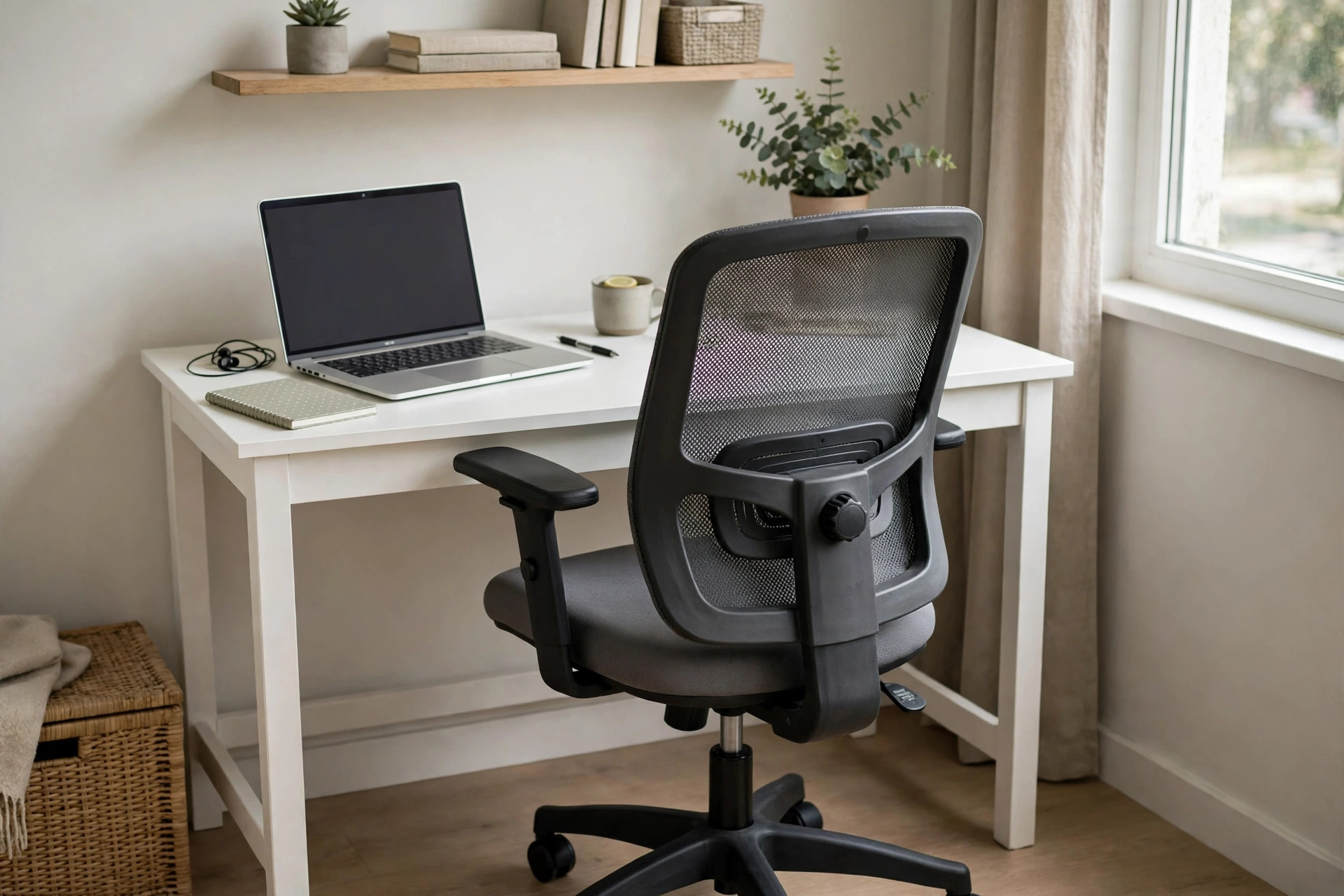
If you want to compare the budget field properly, our guide to the 7 best ergonomic chairs under $300 ranks the strongest options in this bracket in detail.
3. Best for lower-back pain: dynamic lumbar support
When the pain sits low — right at the belt line, worst after an hour of sitting — the fix is lumbar support that stays in contact while you move. A dynamic-lumbar chair does exactly that: the support pad follows your lower back as you recline or lean forward, instead of vanishing the moment you shift. Pair that with a firmer seat pan, which keeps your pelvis from sinking and rounding, and you have the chair built for this specific pain. Typical range: $400–$800.
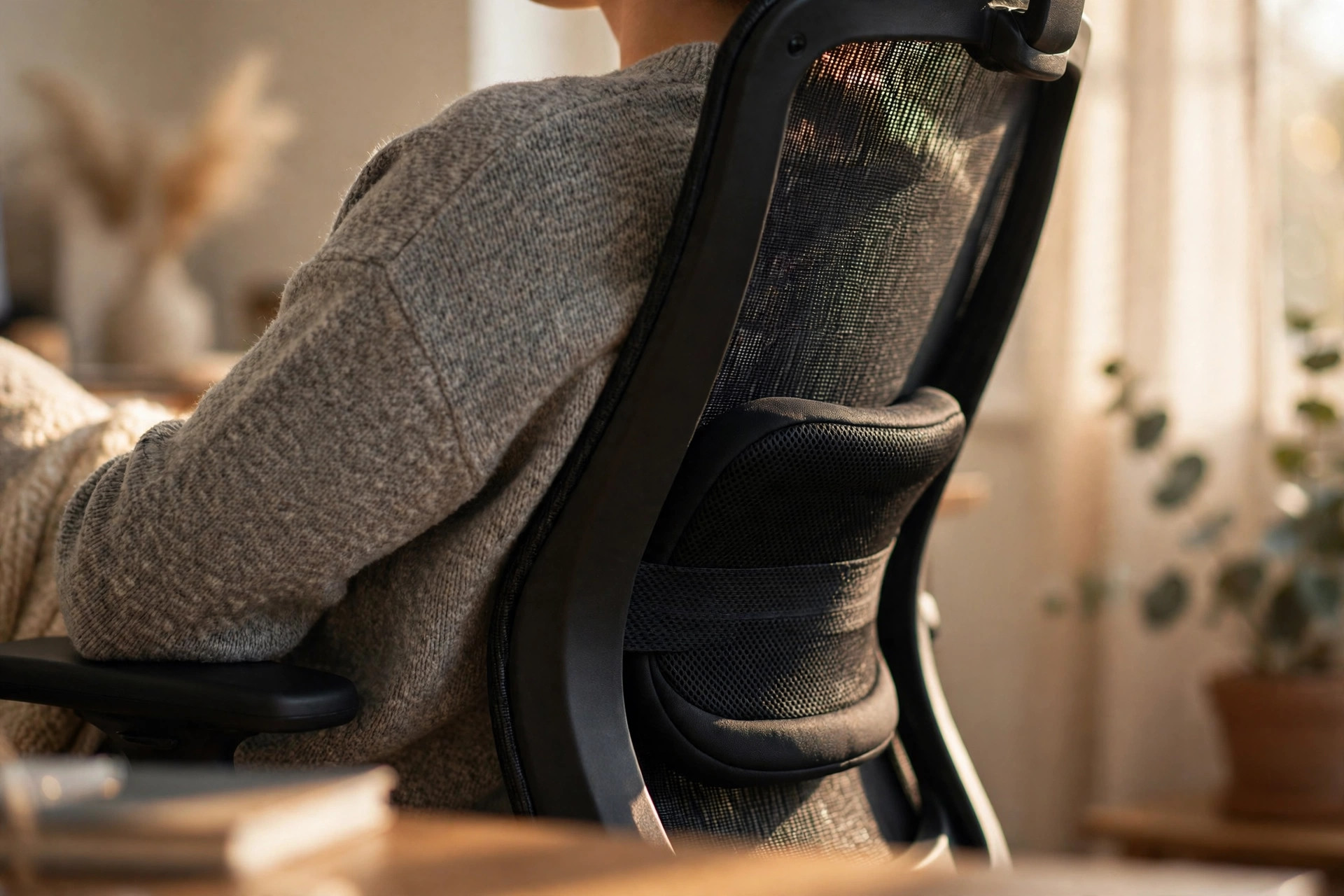
It costs more than the overall pick because the moving lumbar mechanism is genuinely more complex — but if your pain is specifically lower-back, this is the money best spent.
4. Best for long days: high-back with headrest
If your pain creeps up into your shoulders and neck by late afternoon, the problem is often not your lower back at all — it is eight hours of holding your head up with no rest. A high-back chair with an adjustable headrest takes that load off, and a deep recline gives you a real break position for a few minutes between calls. Look for a headrest that moves up and down and tilts, and a back tall enough to support your shoulder blades, not just your lumbar region. Typical range: $350–$700.
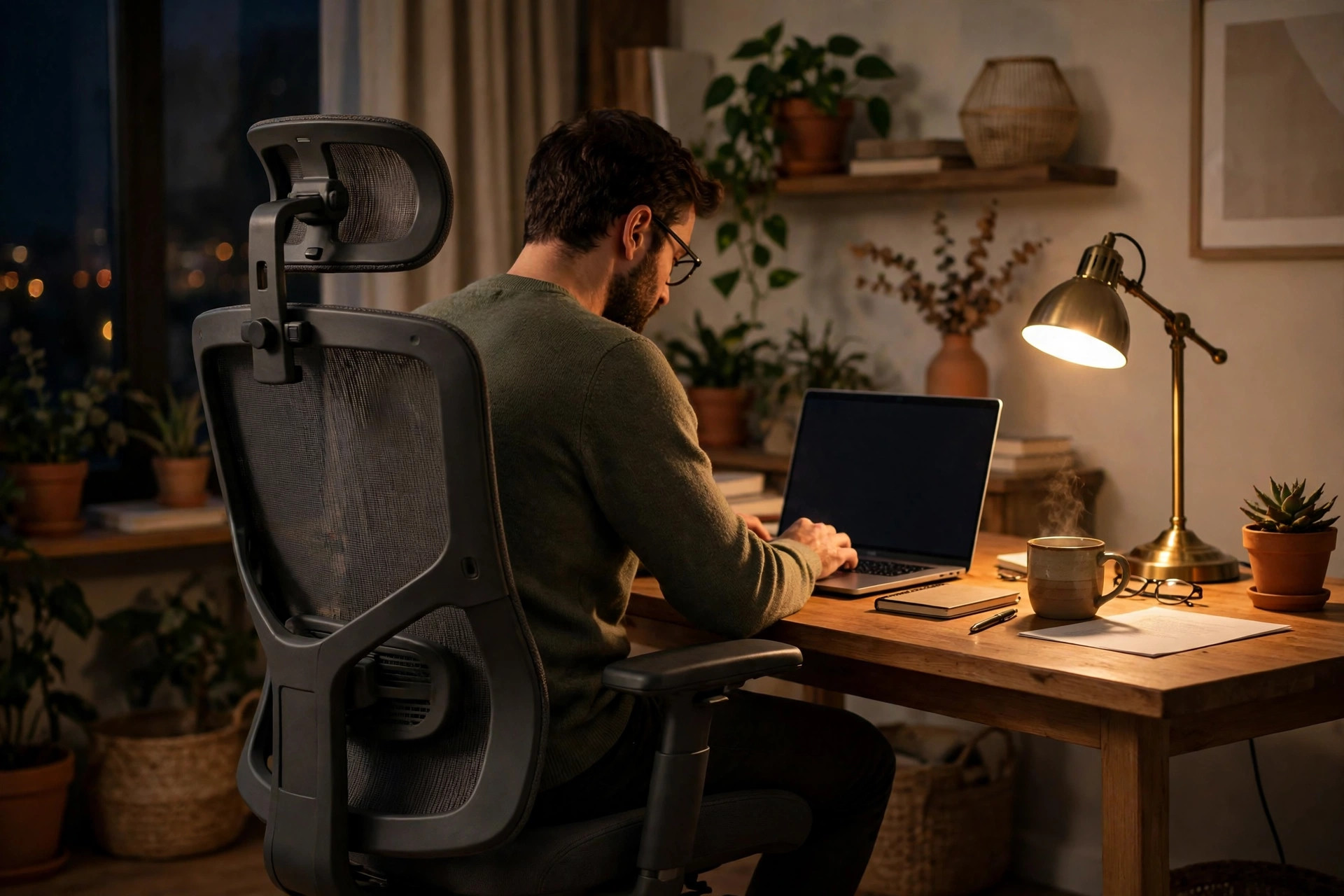
Best for full 8-plus-hour days, shared desks, and anyone whose pain migrates upward as the day goes on.
5. Best compact: the small-space ergonomic chair
A small room does not have to mean a bad chair. The compact pick keeps the essentials — adjustable lumbar, seat-height range, and a tilt — in a narrower frame with a smaller footprint, so it fits a corner desk or a room under 60 square feet without swallowing it. What you sacrifice is width and the headrest; the seat is narrower and the back is shorter. Typical range: $200–$400.
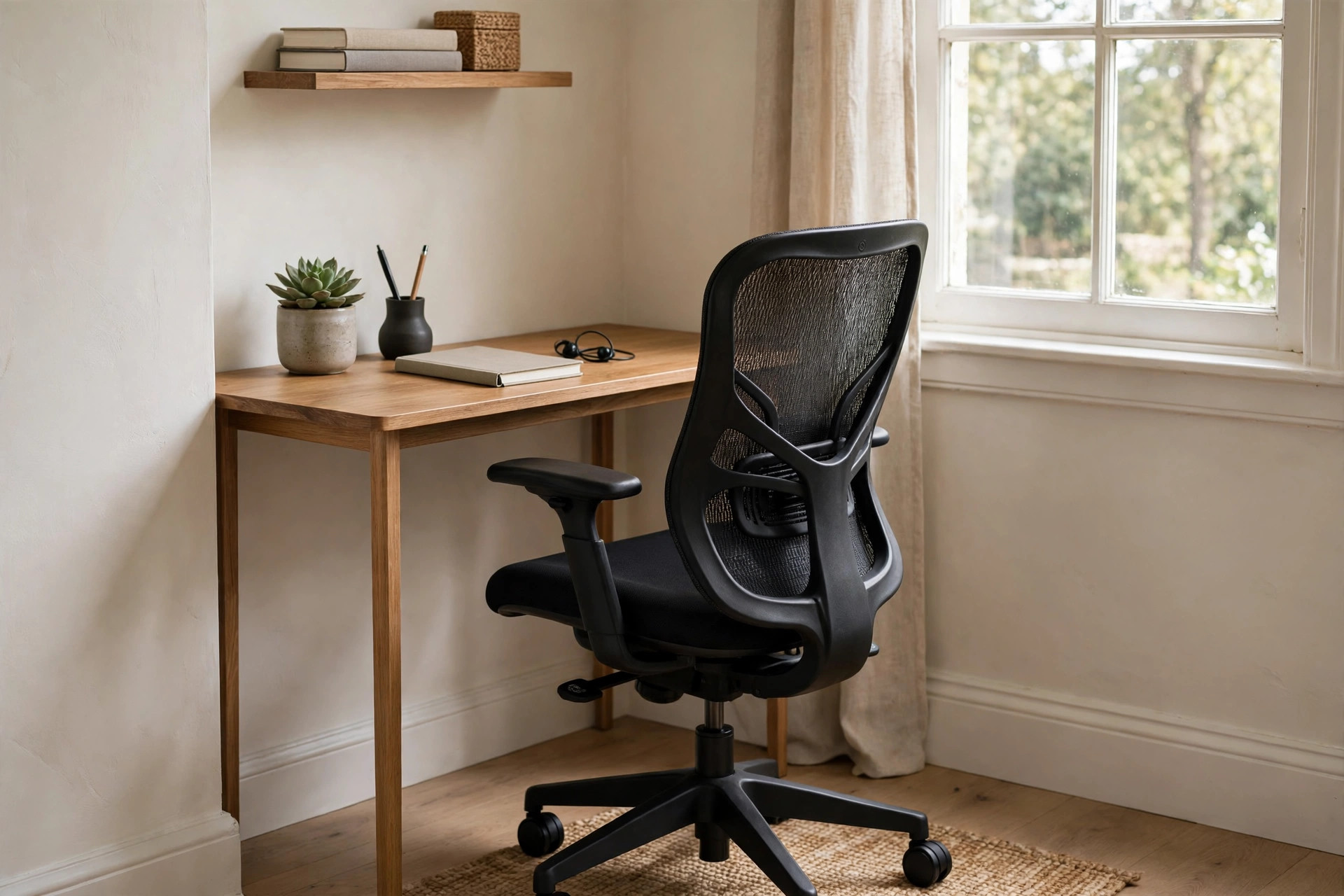
If your desk sits in a bedroom corner or a closet office, this is the pick that gives your back the support it needs without demanding floor space you do not have.
Set it up right in 10 minutes
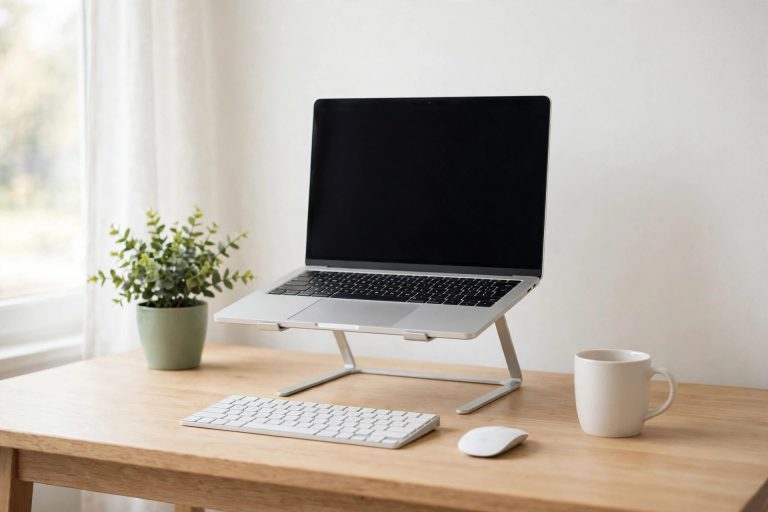
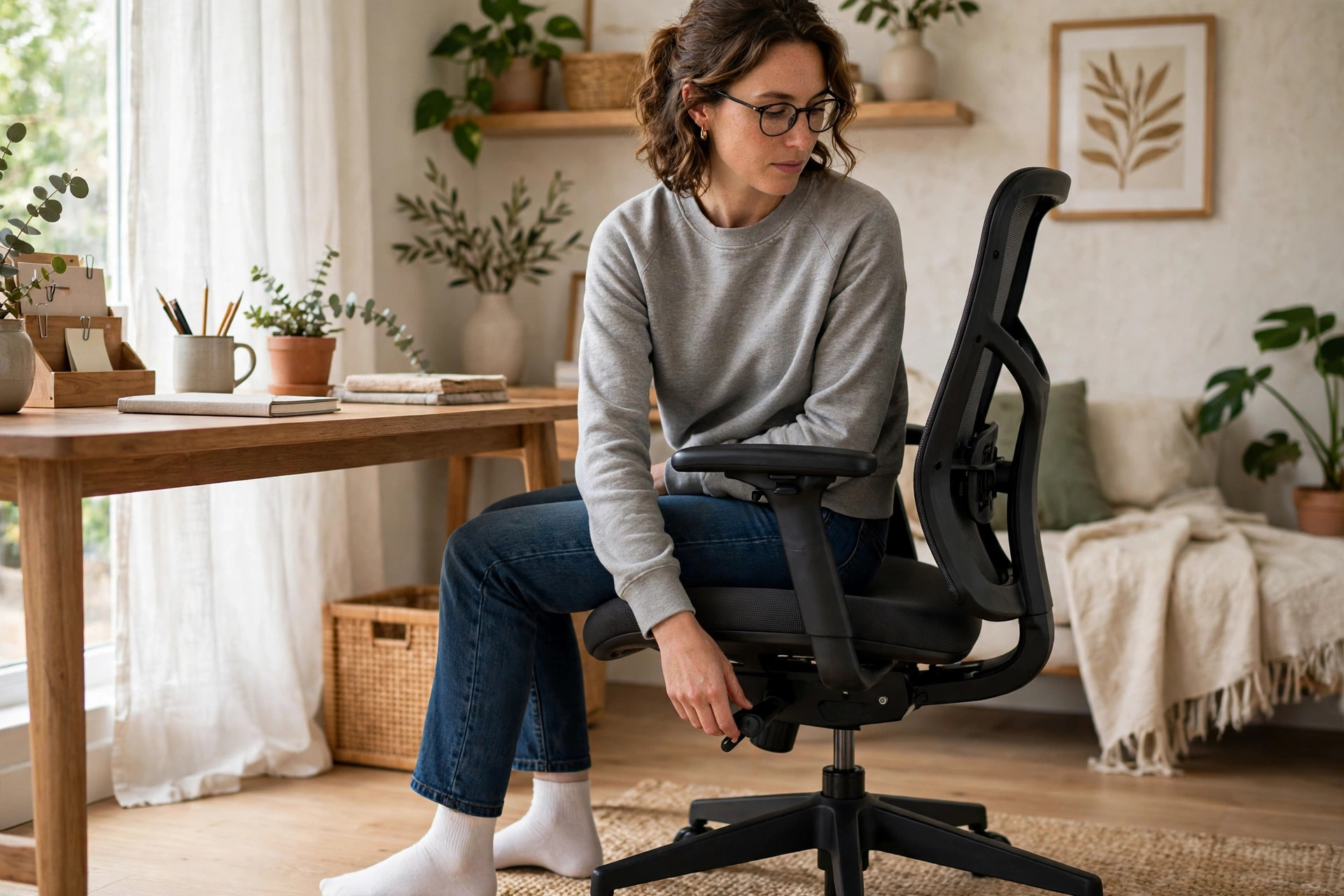
A great chair set up badly still hurts. Do this once, and it pays off every day: (1) seat height — feet flat on the floor, thighs roughly level, knees at about 90 degrees; (2) lumbar at belt line — slide the pad until it fills the curve of your lower back, not above it; (3) armrests at elbow height, shoulders relaxed and dropped; (4) recline open a touch, around 100–110 degrees, not bolt upright; (5) monitor at eye level, so you are not looking down all day. Then stand and move every 30–45 minutes — no chair, however good, replaces movement. And one honest boundary: if pain persists for weeks, or shoots down a leg, that is a clinician conversation, not a chair conversation.
The verdict
Most backs: pick 1, the adjustable-lumbar mesh chair — the best balance of support, adjustability, and price. Tight budget: pick 2, the under-$300 ergonomic chair — the honest floor that still helps. Pain that sits low at the belt line: pick 3, dynamic lumbar. Long days with neck and shoulder pain: pick 4, high-back with headrest. Tiny room: pick 5, the compact chair. The chair matters, but the setup matters just as much — buy the right one, then spend the ten minutes dialling it in. Your back will notice by Friday.