10 Best Ergonomic Office Chairs for Home (2026)
Your chair is the one piece of home-office gear your body actually touches all day. The right ergonomic chair does three quiet jobs: it holds your lower back where it belongs, it lets your feet rest flat, and it disappears — you stop thinking about sitting and start thinking about work.
This guide ranks the 10 best ergonomic office chairs for home use in 2026 by the thing that actually matters: how well each one fits a real person working a real full day at home. Prices are broad typical ranges for that type of chair, not a quote for one model — check the current price before you buy, and buy from somewhere with a real return policy.
How to Choose an Ergonomic Chair in 60 Seconds
Before the list, the five checks that decide 90% of comfort. Run through them on any chair you consider, in this order:
- Seat height: with your feet flat on the floor, your thighs should sit roughly level, knees at about 90 degrees. If the lowest setting still leaves your feet dangling, the chair is too tall for you.
- Lumbar support: it should press gently into the small of your back, and — ideally — move up and down so it meets your curve, not an average one.
- Armrests: they should adjust in height so your shoulders stay relaxed, not shrugged or stretched.
- Seat depth: you want two or three fingers of space between the front edge and the back of your knees.
- Tilt: a chair that lets you recline slightly — and locks where you like it — takes pressure off your spine during long sessions.
If a chair fails the first two checks, skip it no matter how good it looks. Now the ten picks.
1. Best Overall: A Fully Adjustable Mesh Task Chair
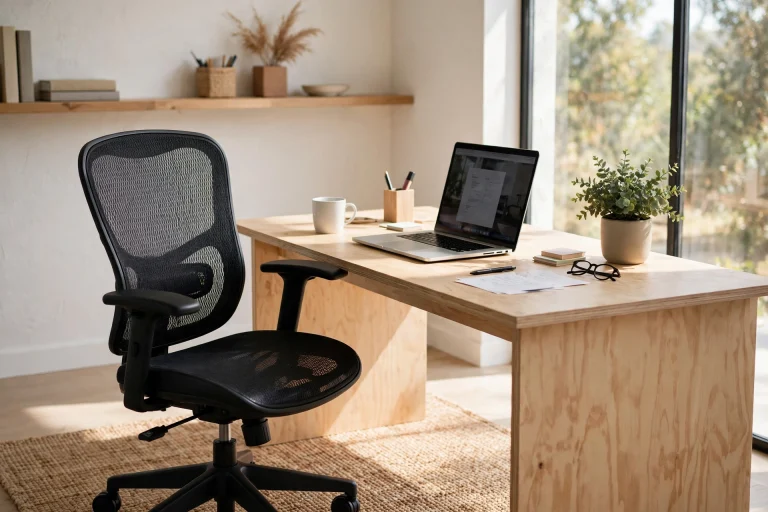
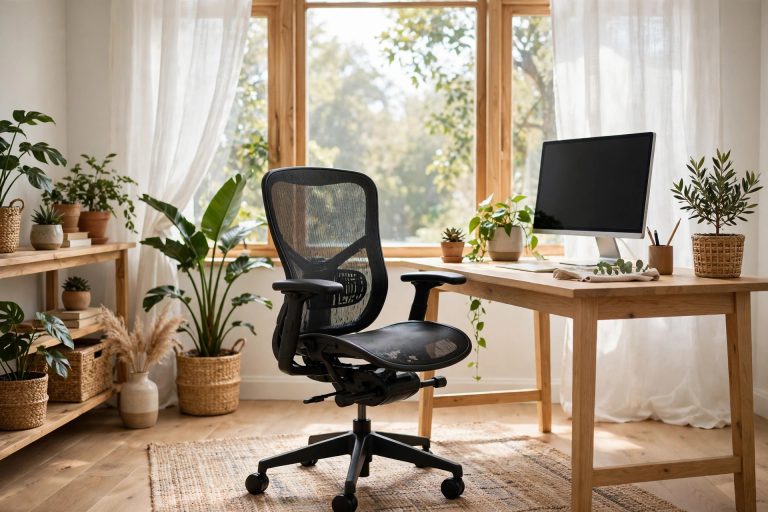
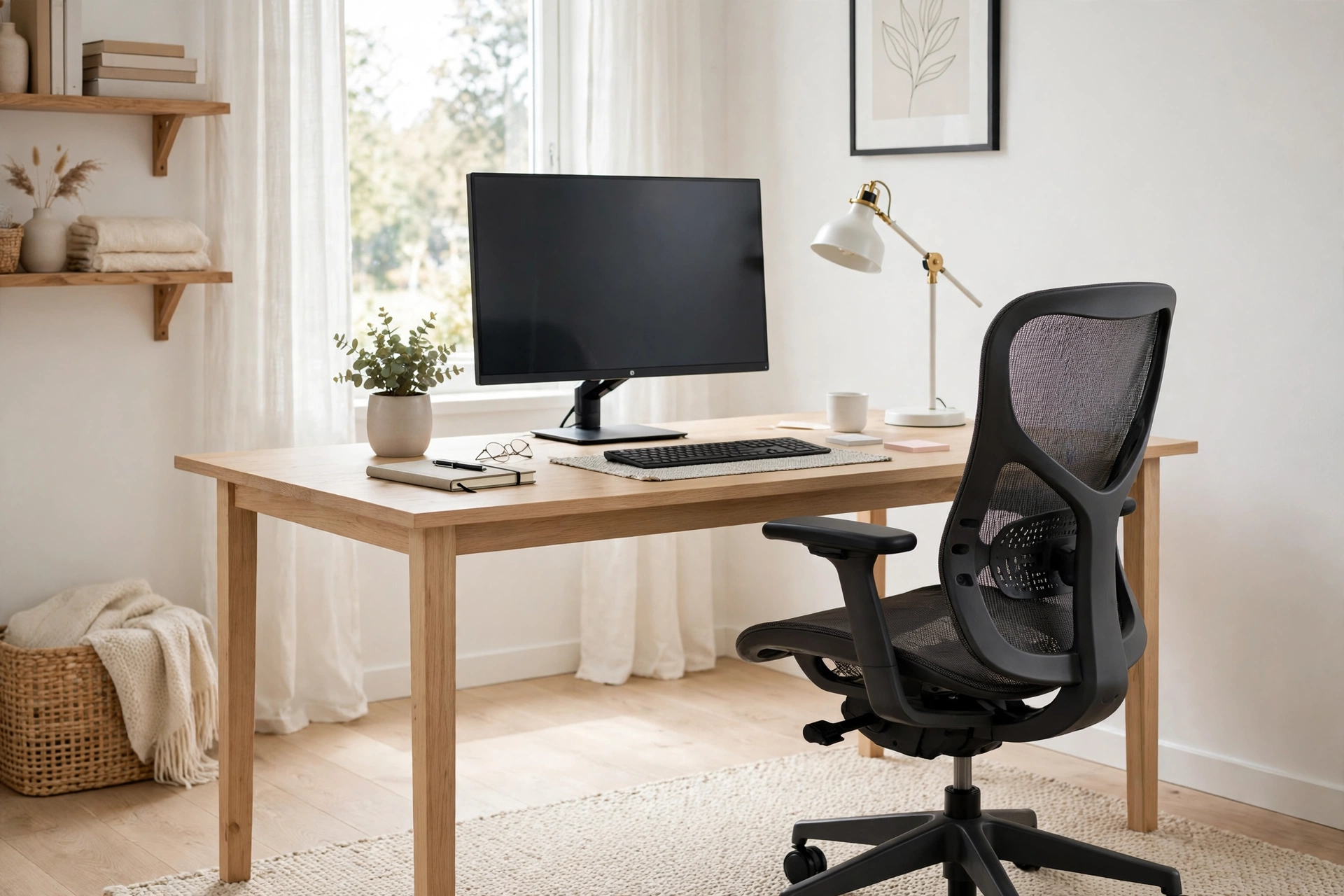
The workhorse of the home office, and the safest first pick if you only buy one chair. A mesh back breathes in summer, the seat slides to fit your leg length, the arms move in four directions, and the lumbar support adjusts up and down. It suits the widest range of body types because almost everything on it moves. Typical range: $250–$450. If your budget stretches to one chair, stretch it to this category.
2. Best for Back Pain: A High-Back Chair With Adjustable Lumbar
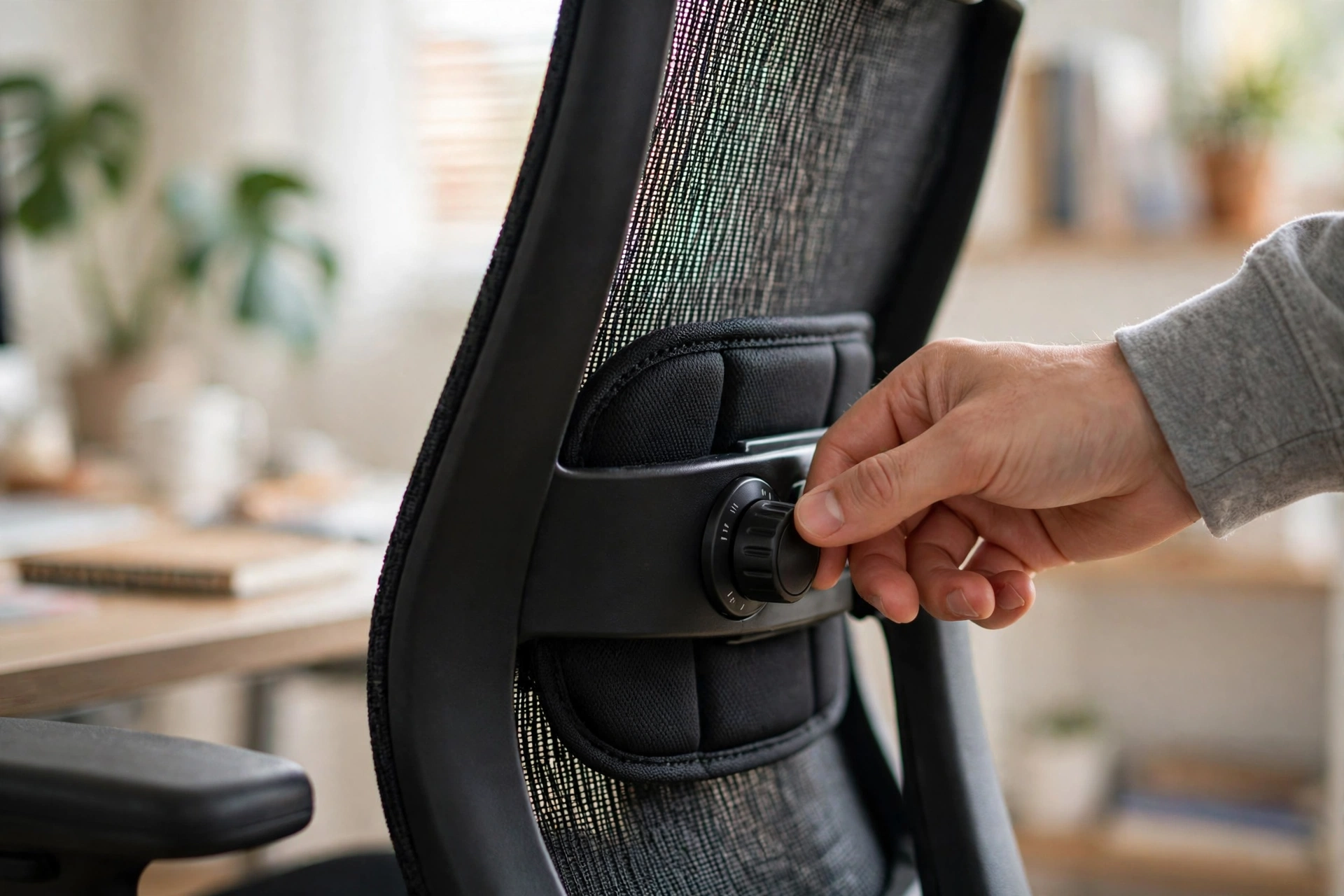
If your lower back complains by mid-afternoon, the lumbar support is the whole decision. A high-back chair with a lumbar pad that slides vertically — and ideally in and out — lets you place support exactly on your curve instead of hoping a fixed bump lands in the right spot. A slightly reclined working angle, around 100–110 degrees, takes load off the discs, so a tilt lock matters here more than anywhere else. Typical range: $300–$600. Sit in it first if you can, or buy from a seller with at least a 30-day return window.
3. Best Budget: The Basics Done Right
Under $200, you are not buying luxury — you are buying the four essentials: height adjustment, a lumbar curve that is actually shaped (not just a flat back), armrests that move up and down, and a seat that does not bottom out. The best budget chairs skip the extras — no headrest, no seat slide — and spend the money on a decent gas lift and a sturdy base. Expect a firmer seat and a shorter warranty, usually one to two years. Typical range: $100–$180. This is the right pick if your workday is under six hours or you are furnishing a first home office.
4. Best for Small Spaces: A Compact Chair That Tucks Away
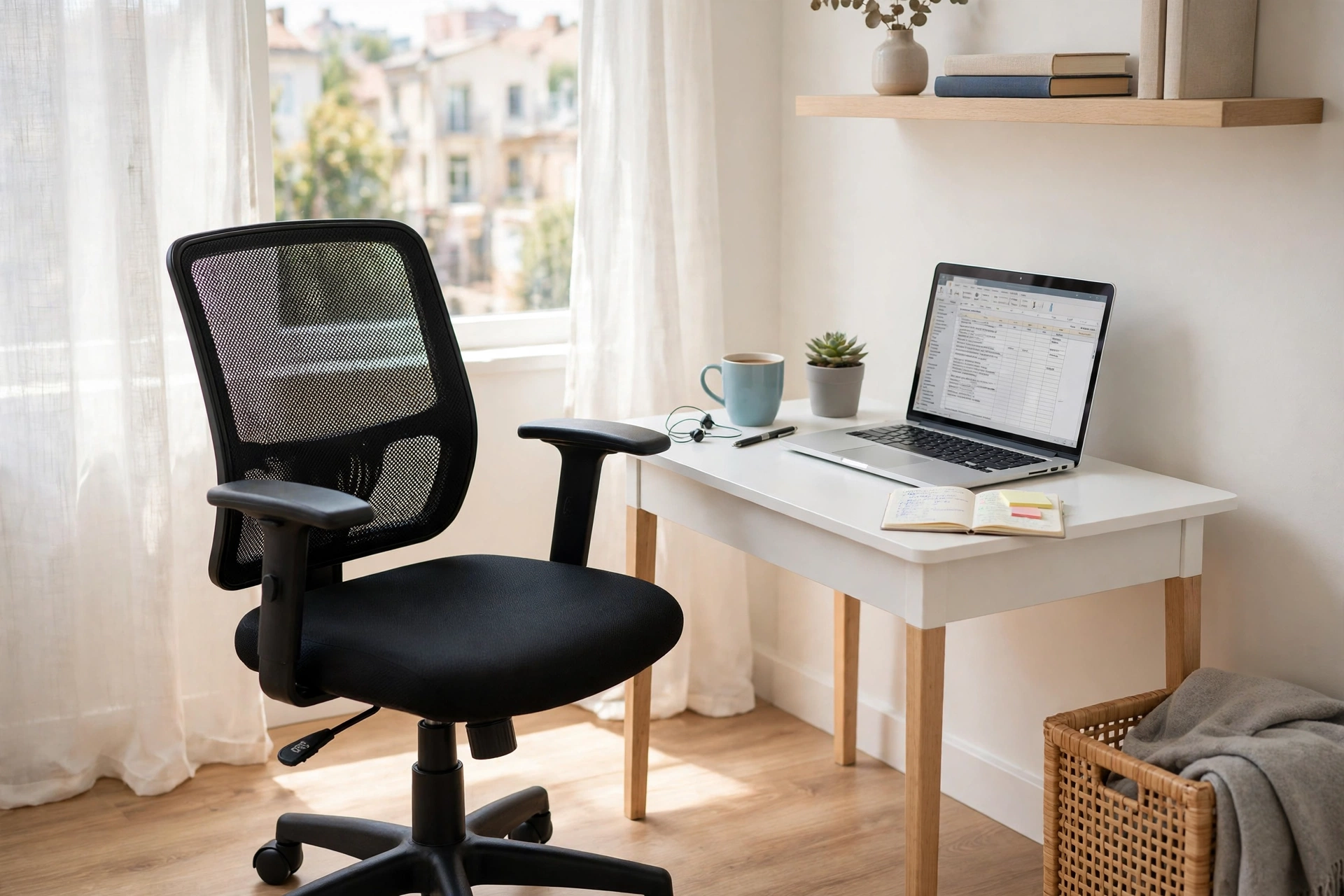
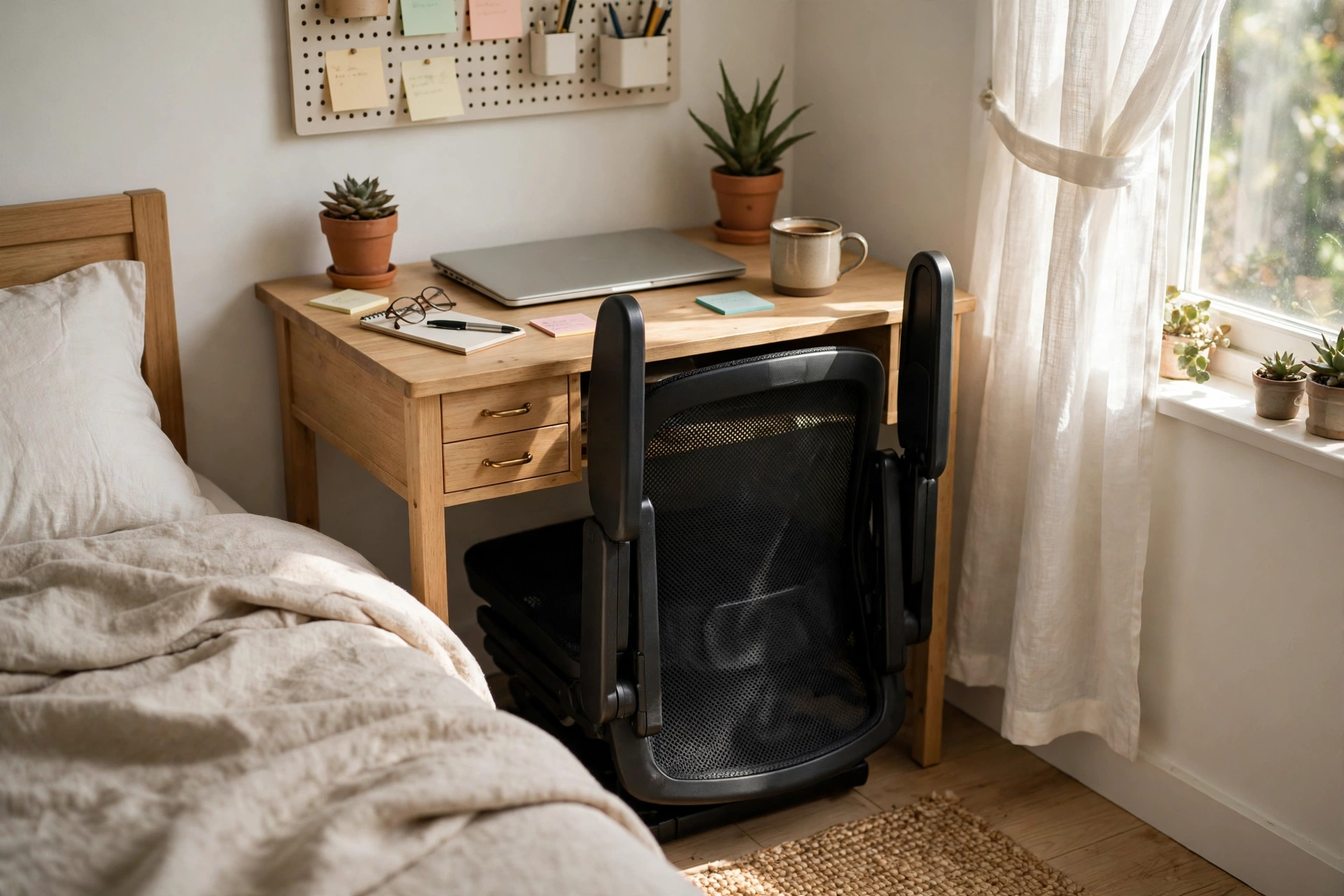
Small home offices punish big chairs. A compact ergonomic chair keeps the adjustable seat height and lumbar support but drops the wide base and bulky arms — some use flip-up armrests so the chair slides fully under the desk when you are done. Measure your desk clearance first: the chair needs to roll under without the arms catching the desktop edge. Mesh backs help here too, since a slim profile reads lighter in a tight room. Typical range: $120–$250. Ideal for a bedroom-corner office, a closet office, or any desk under 42 inches wide.
5. Best for Tall People: A Tall Back and a High Seat Range
Standard chairs are built for average height, and tall sitters pay for it with a backrest that ends mid-shoulder and a seat that sits too low. The fix is a tall backrest — one that reaches your shoulder blades at least — a seat-height range that reaches 21–22 inches, and a seat slide for depth. Typical range: $250–$500.
6. Best for Short People: Low Seat Height and a Shallow Seat
The mirror problem: a chair whose lowest setting still leaves your feet swinging. Short sitters need a seat that drops to around 16–17 inches and a seat depth on the shallow side, so the front edge does not press behind your knees. A waterfall seat edge — one that curves down at the front — helps a lot here. Adjustable lumbar matters just as much, since a fixed lumbar bump sized for a taller torso will hit the wrong spot. Typical range: $150–$350.
7. Best With a Headrest: For Full-Day Sitters
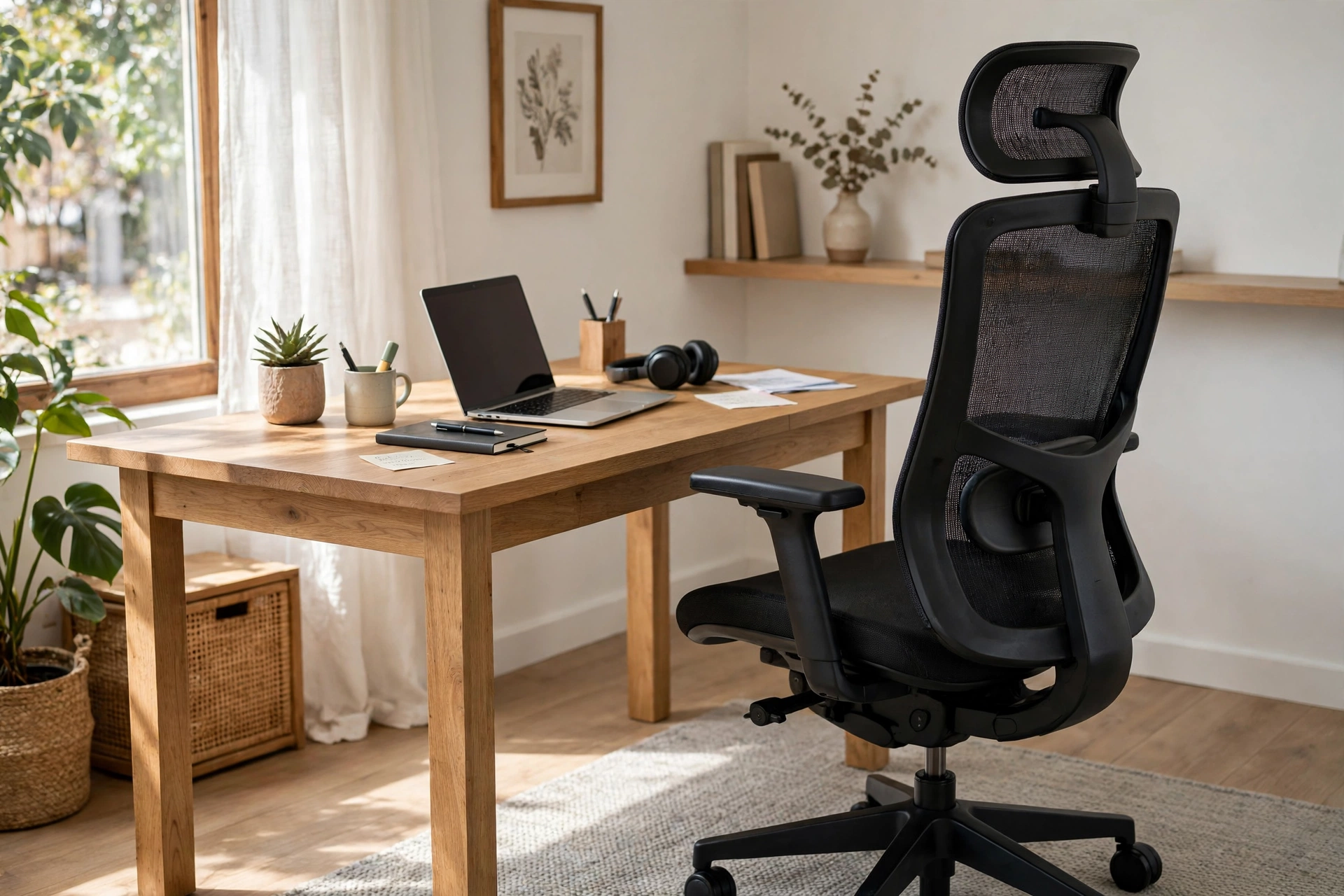
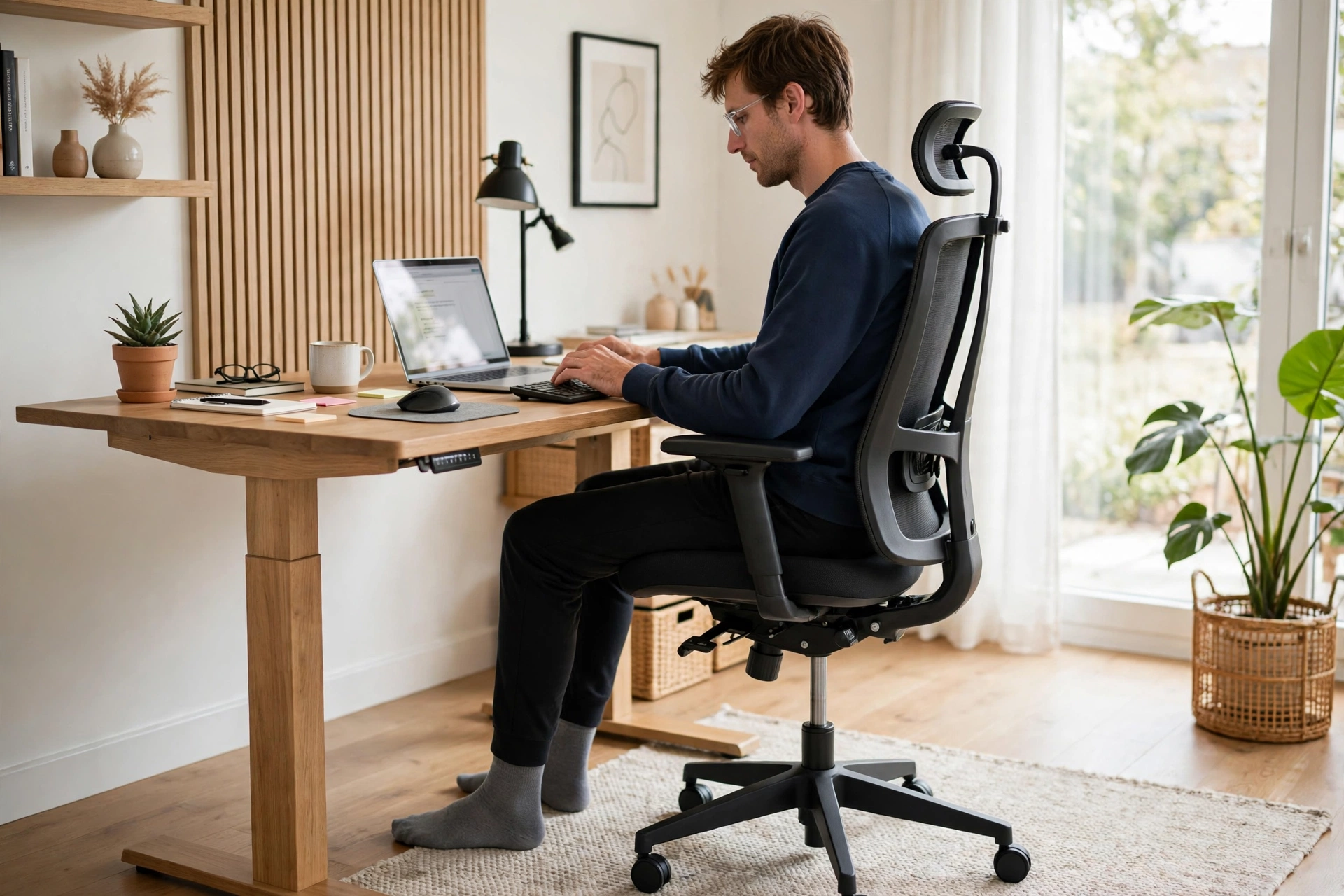
If you work eight hours and take calls, a headrest earns its keep. It supports your neck during phone calls and lets you lean back between tasks without your head hanging. The good ones adjust in height and angle; a fixed headrest that sits wrong pushes your head forward, which is worse than none. Typical range: $200–$450.

8. Best Leather Look: Executive Style Without Losing Adjustment
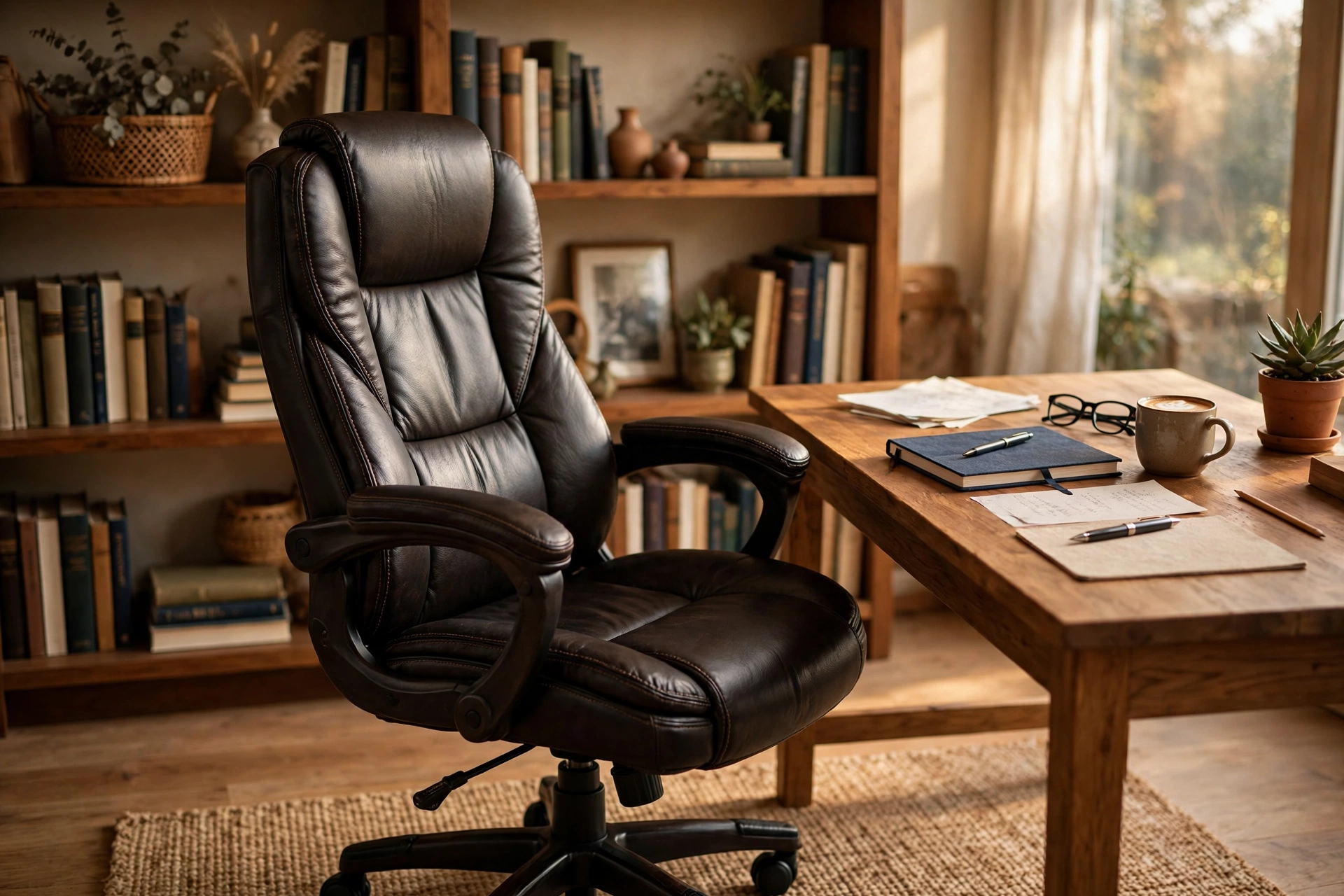
A leather (or good bonded-leather) executive chair can look right in a client-facing home office — but many trade adjustability for padding. The ones worth buying keep the ergonomic bones: height adjustment, tilt lock, adjustable arms, and at least a shaped lumbar area. Real leather breathes better and lasts longer but costs more; bonded leather looks the part for less and wears faster in warm rooms. Typical range: $300–$700. Choose this one for the look, and verify the adjustments before you fall for the upholstery.
9. Best for Long Hours: Synchronous Tilt and a Seat Slide
When your workday regularly passes eight hours, movement is the feature. A synchronous-tilt mechanism moves the seat and backrest together, so reclining does not lift you out of position or pull your feet off the floor. Add a seat slide for depth and four-way arms. This is the category where a standing desk setup pairs best — alternate sitting and standing through the day instead of asking one chair to do everything. Typical range: $350–$600.
10. Best Alternative: A Kneeling or Balance Chair for Short Sessions
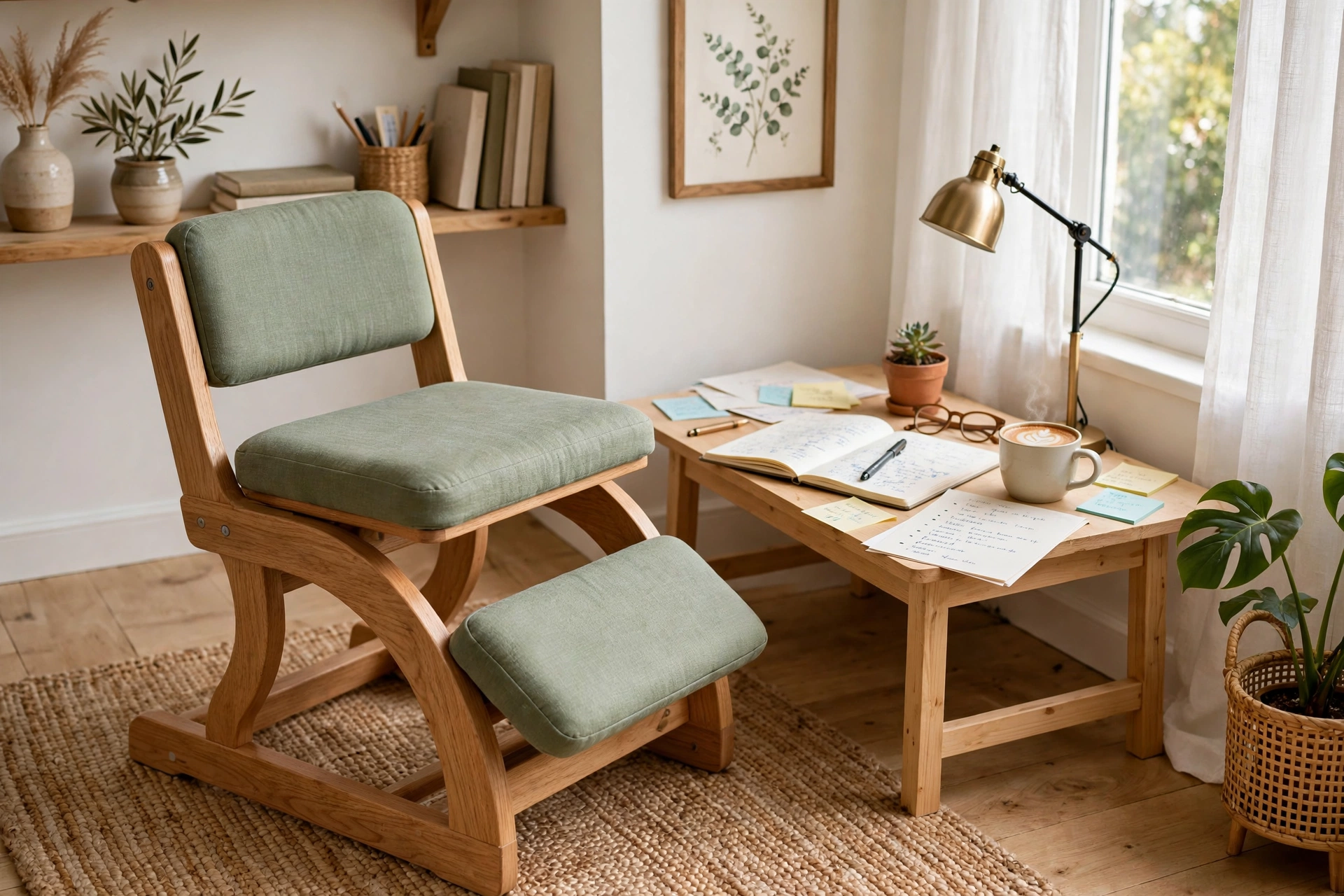
Not a replacement for a real task chair, but a useful second seat. A kneeling chair opens up your hip angle and encourages an upright posture, which some people find easier on the lower back for one- or two-hour stretches. It is not for all-day use, and it is a poor fit if you have knee problems — use it as a change of position during the day, alongside your main chair. Typical range: $80–$150.
Quick Comparison
| Pick | Best for | Typical price |
|---|---|---|
| Fully adjustable mesh task chair | Most people, most days | $250–$450 |
| High-back, adjustable lumbar | Back pain | $300–$600 |
| Budget basics | First office, short days | $100–$180 |
| Compact chair | Small spaces | $120–$250 |
| Tall back, high seat | Tall sitters | $250–$500 |
| Low seat, shallow depth | Short sitters | $150–$350 |
| With headrest | Full-day sitters, calls | $200–$450 |
| Leather executive | Client-facing office | $300–$700 |
| Synchronous tilt + seat slide | Long hours | $350–$600 |
| Kneeling / balance chair | Short posture breaks | $80–$150 |
Before You Buy: Four Checks
First, sit in it if you can — ten minutes in a showroom tells you more than ten reviews. Second, read the return policy: a chair needs a week of real workdays to judge, so a 30-day return window is the minimum worth accepting. Third, check the weight rating and the warranty — five years on the mechanism is a good sign; one year is not. Fourth, measure your desk — seat height, arm width, and whether the chair rolls under when you are done.
The Verdict
For most home offices, the fully adjustable mesh task chair is the right answer: it fits the widest range of people, it breathes, and every adjustment you actually need is on it. If your back is the problem, spend the extra on adjustable lumbar and a tilt lock. If your budget is tight, buy the basics done right and add a footrest — that combination beats a flashy chair with a fixed back every time. Buy the fit first, the features second, and the looks last.