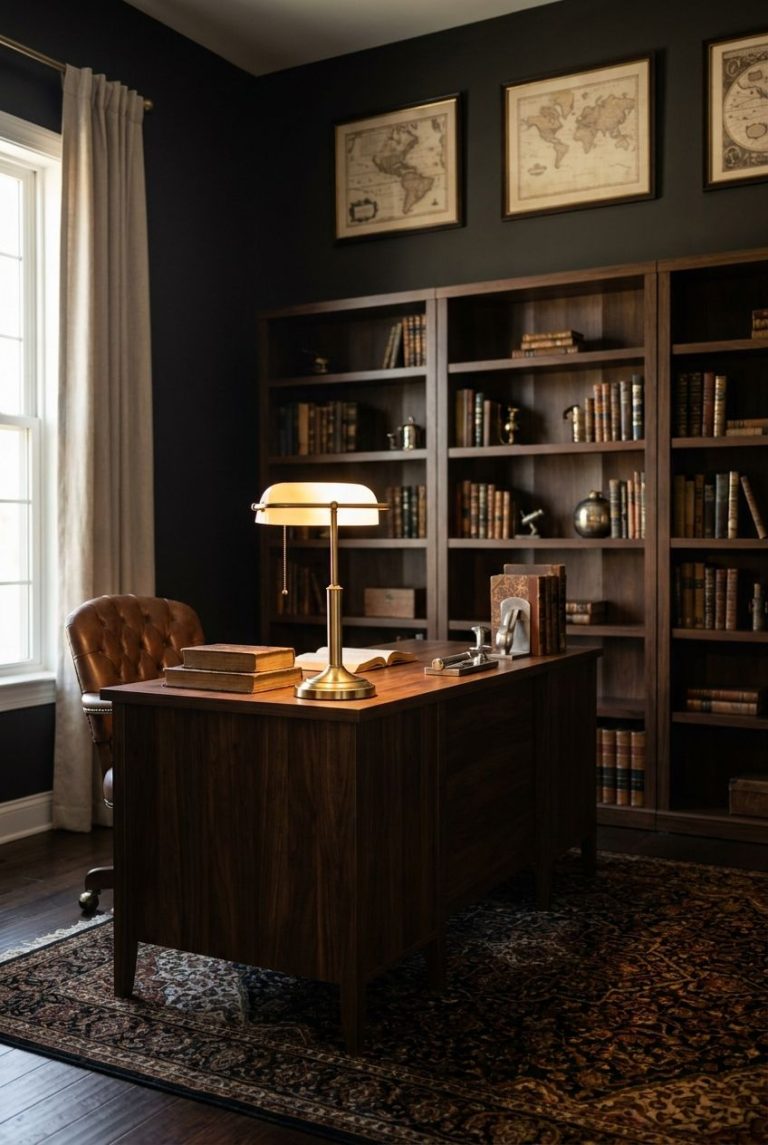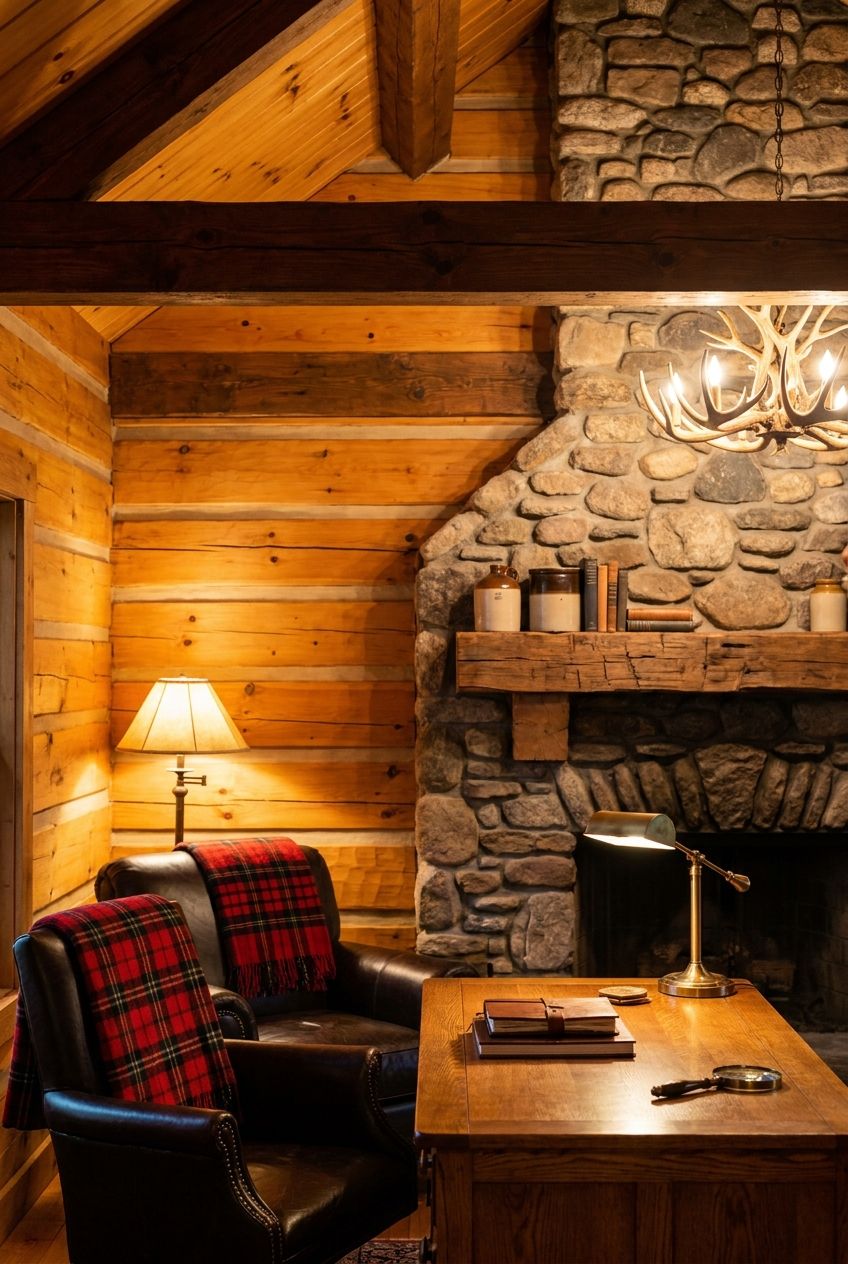
Rustic Mountain Cabin Decor Ideas for a Home Office You’ll Never Want to Leave
Most people who try to build a cabin-style home office end up with a room that looks like a hunting lodge gift shop: antlers, plaid everything, and a desk too cluttered to work at. The fix isn’t more rustic stuff. It’s fewer, better pieces chosen by a clear set of rules, and this guide gives you those rules with real prices, brands, and measurements.
Rustic Mountain Cabin Decor Ideas for a Workspace That Actually Works
These rustic mountain cabin decor ideas are built for people who work at a desk for six to eight hours a day and want that desk to feel like a lodge in the Rockies rather than a cubicle. You’ll find specific materials, budgets from $300 to $3,000, and the mistakes that make cabin offices look staged or feel uncomfortable. Everything here is built around one principle: the room has to function first and look rustic second.
Start With the Three-Material Rule: How to Pick a Cabin Palette in 10 Minutes
Real cabins feel cohesive because they use a small number of materials repeatedly. Your office should do the same. Pick exactly three: one wood, one metal, and one textile.
Choose Your Wood
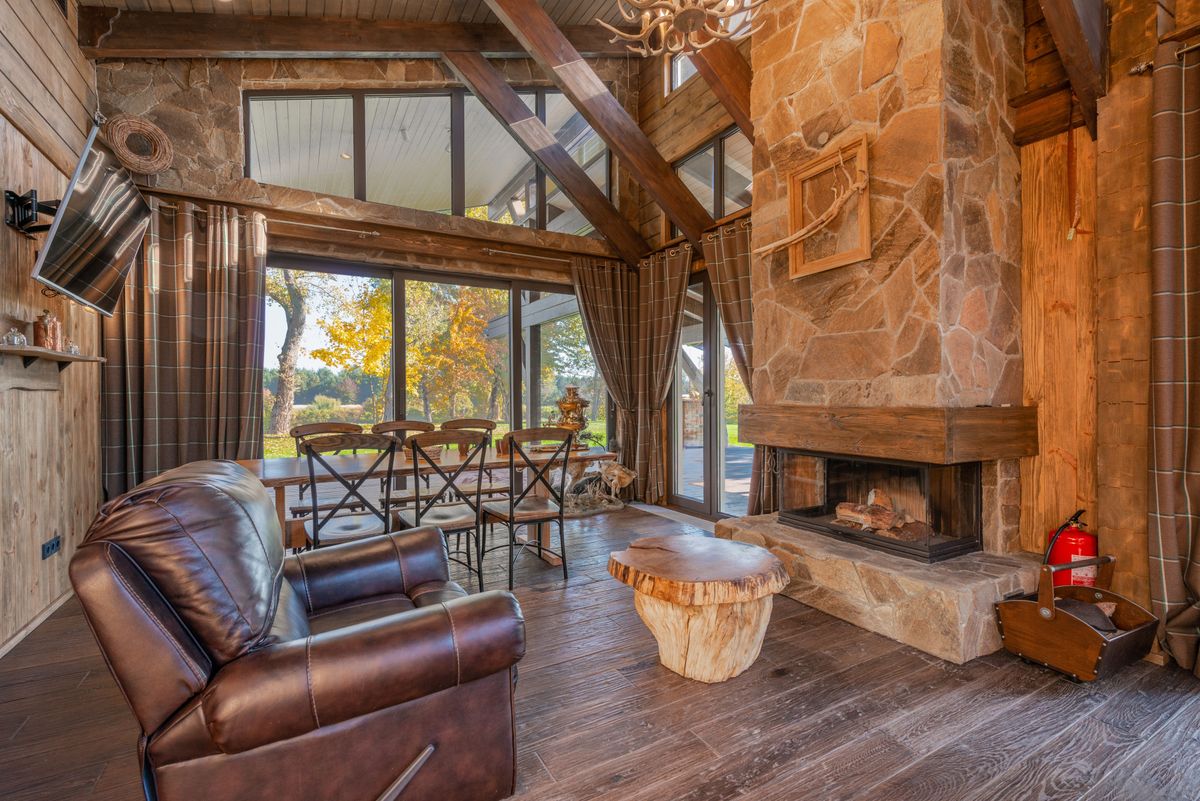
Wood is the backbone, so choose it first. Knotty pine is the budget option at roughly $2 to $4 per board foot and gives the classic yellow-orange cabin glow. Reclaimed barn wood runs $6 to $15 per board foot and brings gray weathered character. Hickory and walnut cost more ($8 to $16 per board foot) but look richer and resist dents better, which matters on a desk surface you’ll rest forearms on daily.
Choose Your Metal
Pick one finish and stick to it. Blackened steel (matte, dark gray-black) is the safest and hides fingerprints. Oil-rubbed bronze reads warmer and suits dark wood. Avoid mixing black iron with brass and copper in one small room; three metals will make the space look scattered.
Choose Your Textile
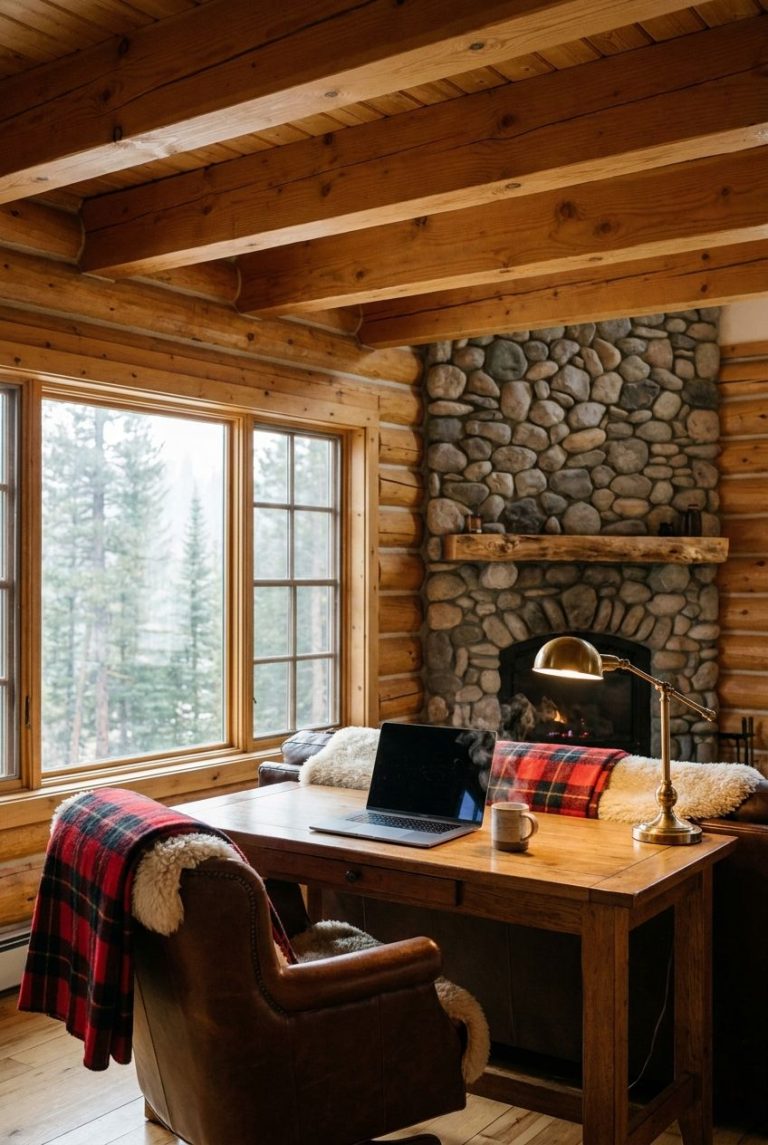
Wool is the cabin standard. Look for Pendleton blankets ($100 to $300) or Woolrich throws ($80 to $150). Both are dense, durable, and hold up to years of use. Cheaper acrylic imitations pill within a season and look flat in photos.
Success check: stand in the doorway and count the distinct materials you can see. If it’s more than five, remove something.
The Desk: How to Choose a Cabin-Style Workstation That Won’t Wreck Your Back
The desk is the biggest visual and functional decision in the room. Get the dimensions right before you fall for a beautiful slab of wood. A standard desk height is 28 to 30 inches; most people between 5’6″ and 6’0″ are comfortable at 29 inches with a keyboard tray or at 28 inches without one. Depth should be at least 24 inches, and 30 inches if you use a monitor larger than 27 inches.
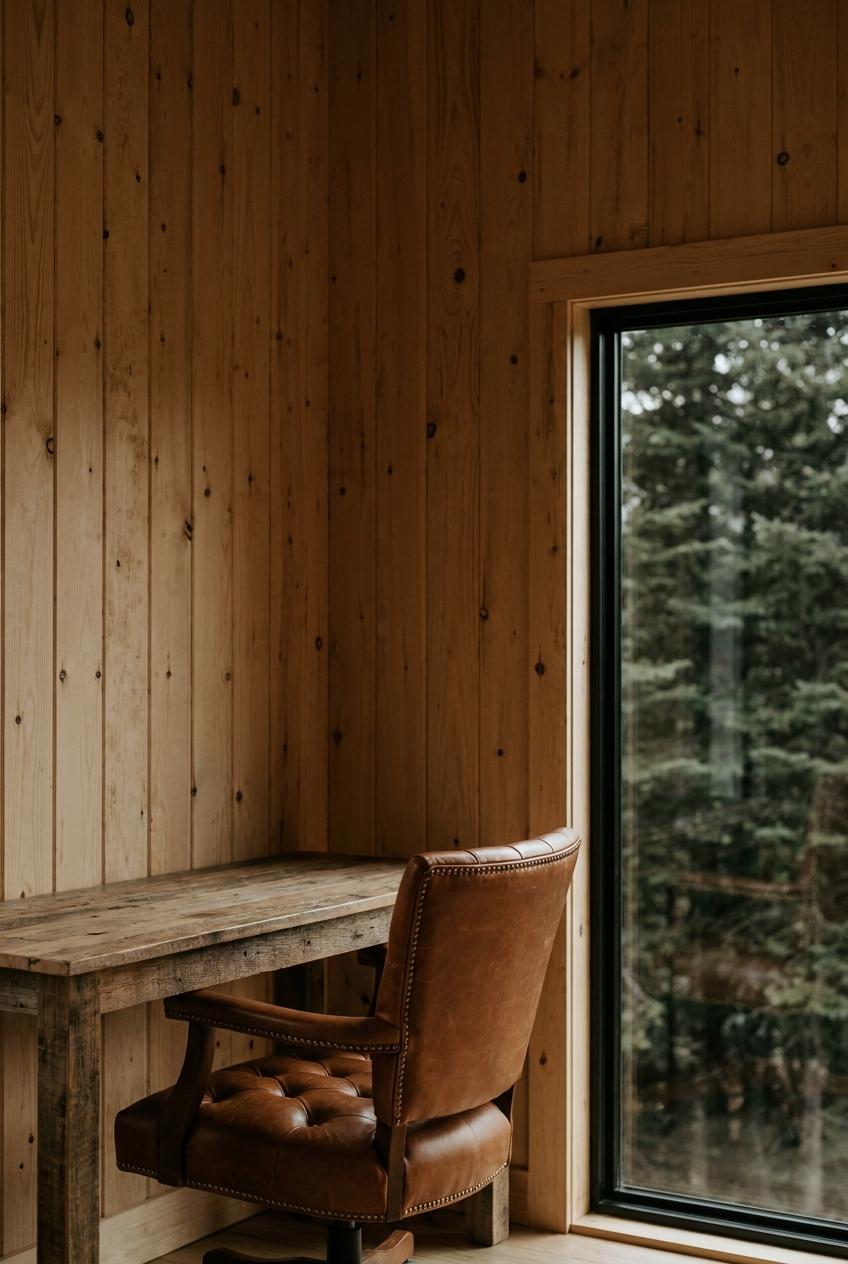
Here are the best routes, from cheapest to most investment-heavy:
- Butcher-block countertop on trestle legs ($250 to $450): IKEA’s KARLBY oak or walnut countertop (about $150 to $250 for a 74-inch length) paired with black steel trestle legs ($80 to $150) gives you a rustic look in an afternoon.
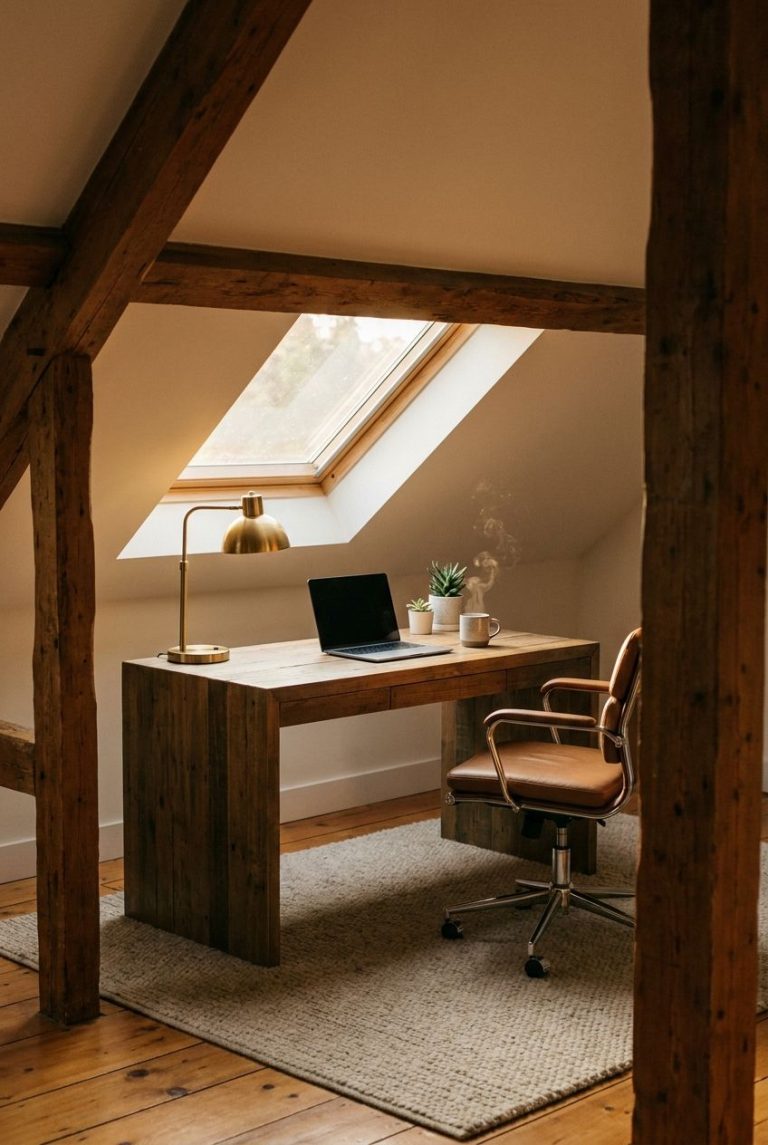
- Live-edge slab desk ($600 to $2,500): A kiln-dried walnut or maple slab with a natural edge is the signature cabin piece. Check Etsy, local sawmills, or Urban Wood Goods for options.
- Reclaimed wood desk, ready-made ($500 to $1,400): Brands like Rustic Furniture Depot and Union Rustic sell finished pieces. Always confirm the wood is kiln-dried.
But what if you want a standing desk? Use a motorized frame like the Uplift V2 ($399 for the base) or a FlexiSpot E7 (around $450) and mount a solid wood top. Both support 300 pounds or more, which handles even a thick live-edge slab.
But what if the wood is rough? Sand to 220 grit and finish with Osmo Polyx-Oil ($40 per liter), which gives a durable matte surface that still feels like real wood. Glossy polyurethane makes a cabin desk look like a bar top.
Lighting That Feels Like Firelight: How to Layer Warm Light for Eye Comfort
Cabin offices fail most often on lighting. Dark wood and low ceilings swallow light, and a single overhead fixture leaves you squinting at your screen by 3 p.m. The solution is three layers, each at a specific color temperature.
- Ambient layer (2700K): Use warm-white bulbs in ceiling fixtures or floor lamps. 2700K mimics firelight and incandescent bulbs. Philips Hue or any CRI 90+ LED will render wood tones properly.
- Task layer (3000K to 3500K): Your desk lamp should be slightly brighter and cooler for reading and screen work. A black iron articulating lamp like the Anglepoise Type 75 ($200 to $260) or a budget option from Amazon Basics (under $30) works. Aim for 500 lux at the desk surface.
- Accent layer (2200K to 2700K): Add a pendant or wall sconce in antler, wrought iron, or Edison-style cages. This is where the rustic personality lives, so it can be purely decorative.
But what if your office has no window? Add a full-spectrum 5000K desk lamp for use before noon and switch it off by early afternoon. Light that is too cool in the evening can interfere with sleep.
Also put every light on a dimmer. A Lutron Caseta dimmer switch runs about $60 and lets you drop the room to a fireside glow after 5 p.m.
Walls and Ceilings: Which Rustic Treatments Are Worth the Money
You can transform a drywall room without tearing anything down. The question is which treatment gives the biggest effect per dollar and per weekend of labor.
| Treatment | Cost per sq ft | Install Time (12×12 room) | Best For |
|---|---|---|---|
| Peel-and-stick wood planks | $3 to $6 | 4 to 6 hours | Renters and one accent wall |
| Tongue-and-groove knotty pine boards | $3 to $7 | 1 to 2 weekends | Authentic look on a budget |
| Reclaimed barn wood planks | $8 to $15 | 2 weekends | Statement wall behind the desk |
| Board-and-batten with dark paint | $2 to $5 | 1 weekend | Modern cabin look, low cost |
Recommendation: renters should choose peel-and-stick planks (Stikwood is the best-known brand at about $5 per square foot). Homeowners with a small budget should go with tongue-and-groove pine on a single wall. If you want maximum impact, reclaimed wood behind your desk gives you a background that looks great on video calls.
For paint, deep colors suit cabin offices better than white. Benjamin Moore’s Hale Navy (HC-154), Sherwin-Williams Urbane Bronze (SW 7048), and Farrow & Ball’s Green Smoke all pair well with wood tones and reduce glare on screens.
Textiles and Flooring: The Layer That Makes a Cabin Office Feel Warm
Hard surfaces dominate a rustic room: wood desk, wood walls, metal fixtures. Without soft layers, the space echoes and feels cold. Add three textile elements.
The Rug
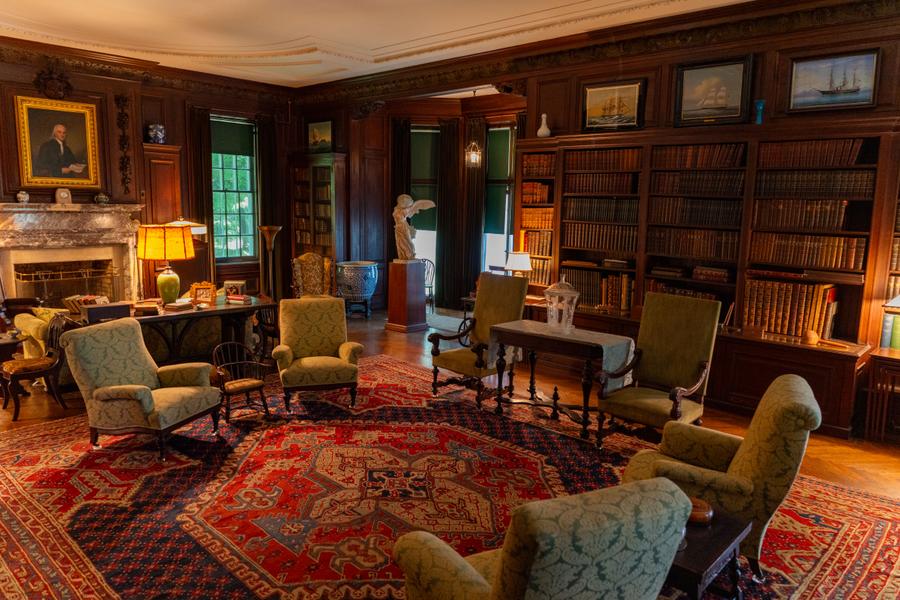
Use a 5×8 or 6×9 foot rug under your chair, large enough that all four chair wheels stay on it. Jute and wool blends ($150 to $400) look right. Vintage Persian or Turkish kilims ($300 to $900) add deep red and indigo tones that complement dark wood. A thin rug over hardwood needs a rug pad (about $40) to stop sliding, which is also a safety issue with rolling chairs.
The Chair
This is where cabin style meets ergonomics, and ergonomics must win. A leather executive chair in cognac or saddle brown, such as the Steelcase Leap with leather upholstery (around $1,200) or a budget option like the Hbada E3 (around $300), gives you the look and lumbar support. Avoid pure rustic chairs like log-frame seats for anything beyond 30 minutes of sitting.
The Throw
Keep one wool blanket over a chair back or a leather armchair in the corner. It looks right and handles the 62°F mornings that cabin-style rooms sometimes have.
But what if you have allergies? Choose washable cotton-wool blends and vacuum wool rugs weekly with a HEPA filter vacuum.
Rustic Accessories: How to Style a Desk and Shelves Without Looking Like a Souvenir Shop
Accessories make or break the look. The key is restraint and function: every object should either do something or carry real meaning.
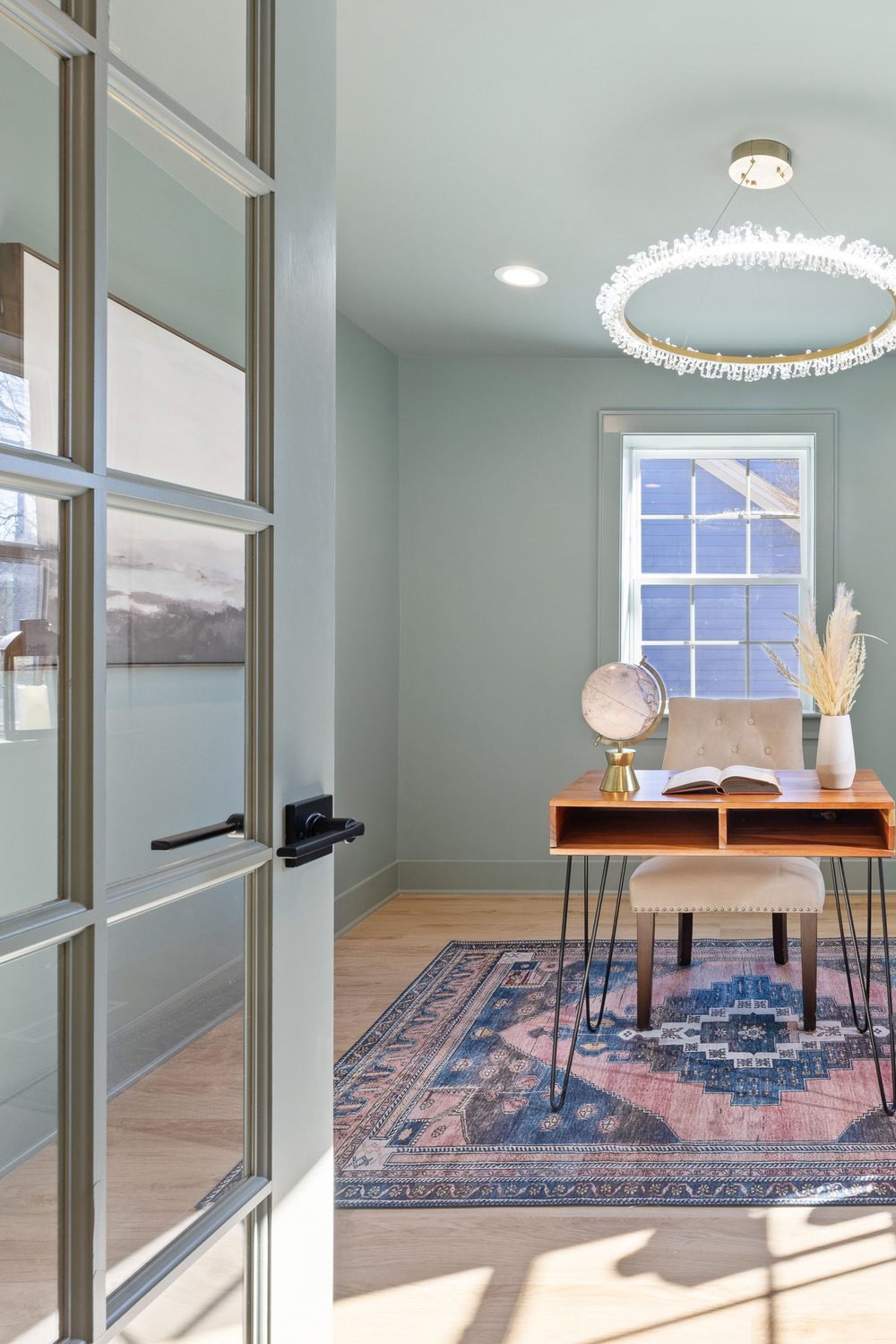
Stick to this formula on any shelf or desk surface: one-third books, one-third functional objects, one-third decor. A 36-inch shelf should hold roughly 8 to 12 items maximum, with at least 30 percent empty space.
- Functional pieces that look rustic: a cast iron pen cup, a leather desk pad (Grovemade makes a wool felt and leather model for around $130), a wooden monitor riser, a brass or copper lamp.
- Authentic natural elements: a piece of driftwood, river rocks as paperweights, a small branch bundle in a ceramic vase. Collect these yourself for free during a weekend hike.
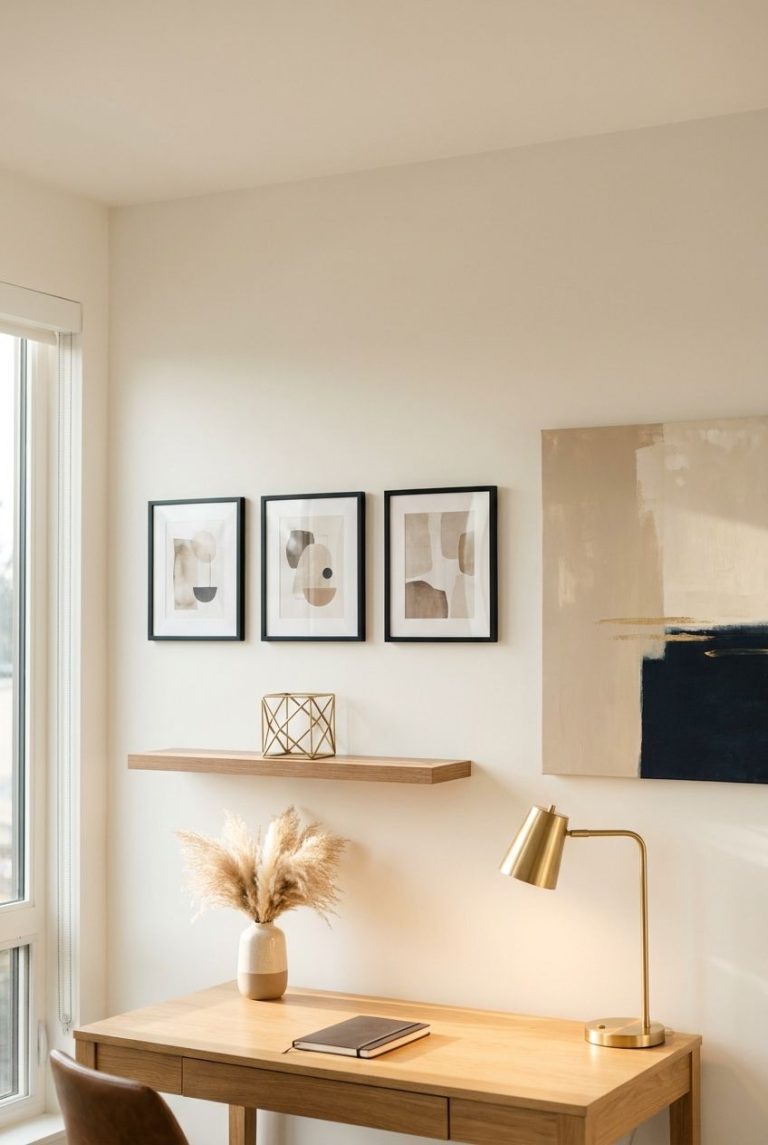
- Art and wall pieces: framed topographic maps of nearby mountains (Etsy sellers produce them for $30 to $90), vintage trail signs, or black-and-white landscape photography. One large piece over the desk beats five small ones.
Skip the mass-produced “Live Laugh Lodge” signs, plastic deer heads, and faux-fur everything. Each of these reads as costume rather than craft, and each one takes away from the better pieces around it.
Three Common Mistakes That Make Cabin Offices Look Fake (and How to Fix Each)
After seeing dozens of cabin-themed offices, the same errors appear over and over. Fix these first.
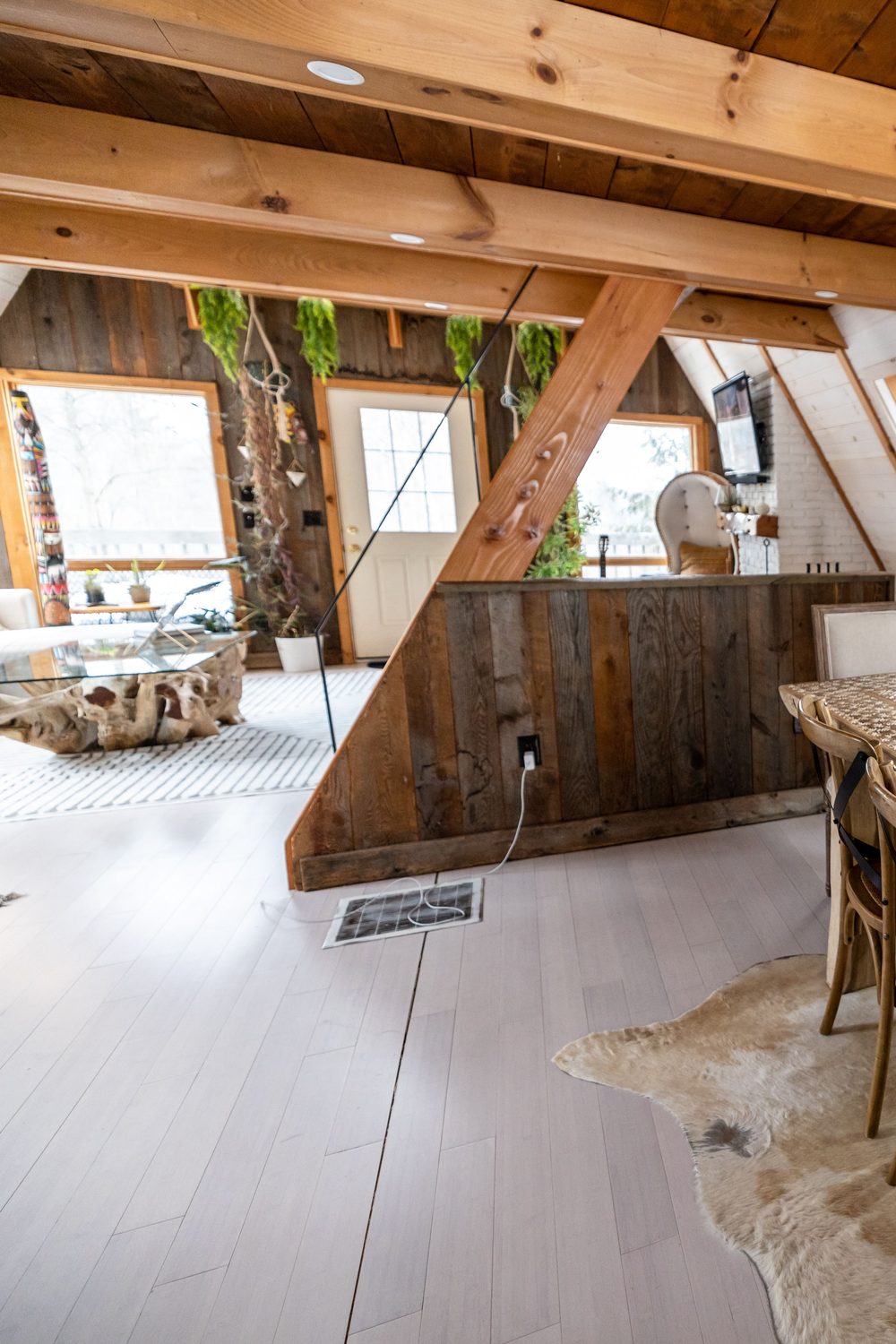
- Mistake: Too much dark wood with no contrast. A room with dark floors, dark walls, and a dark desk feels like a cave and tires your eyes. Fix: keep one major surface light. Use a pale oak floor, a cream wool rug, or white-washed ceiling beams to bounce light around.
- Mistake: Matching furniture sets. Buying a desk, bookcase, and filing cabinet in the same stain creates a showroom look. Fix: vary wood tones slightly. Pair a walnut desk with a pine bookcase and a reclaimed oak side table. Real cabins accumulate furniture over decades.
- Mistake: Ignoring cable and tech clutter. A rustic desk with a tangle of black cords looks worse than a plain white desk. Fix: mount a cable tray under the desk (J-Channel trays cost about $25), run cords through a drilled grommet hole (a 2-inch bit costs under $10), and wrap the rest in leather cord wraps or fabric sleeves.
A fourth bonus mistake: ignoring acoustics. Wood and stone reflect sound, so video calls in a cabin office can sound hollow. A thick rug, heavy curtains, and a wall-hung wool tapestry reduce echo noticeably.
Budget Builds: Three Complete Cabin Office Setups at $300, $1,000, and $3,000
Here’s what you can build at each price point, with specific items.
The $300 Weekend Cabin Corner
Butcher-block top ($130) on black steel hairpin or trestle legs ($70), a thrifted leather chair ($50), a Pendleton-style wool throw from a thrift store ($15), a black iron desk lamp ($30), and a jute rug ($40). Add found items like branches and stones. Result: a respectable cabin look in a single afternoon.
The $1,000 Weekend-Warrior Office
A 60-inch reclaimed wood desk ($450), the Hbada E3 leather chair ($300), one accent wall in peel-and-stick planks ($120), a warm-toned layered lighting kit with dimmer ($80), and a wool rug ($100). The room now reads convincingly rustic and supports full workdays.
The $3,000 Full Cabin Office
A live-edge walnut slab desk on a motorized frame ($1,300), a Steelcase Leap in leather ($1,200 on sale), a reclaimed wood feature wall ($400), and a vintage kilim ($300). Add Lutron dimmers and quality lighting from Rejuvenation or Schoolhouse (about $300 combined) if budget allows.
Spend your money in this order: chair, desk, lighting, rug, wall treatment, accessories. A cheap chair ruins your back no matter how good the room looks.
Objections and “What If” Scenarios: Making Cabin Style Work in Real Homes
Not everyone has a mountain view or a spare log room. Here are the questions people ask most.
What if I live in a city apartment? Cabin style works anywhere. Focus on warmth over literalism: wood desk, wool textile, warm lighting, and one natural element. You don’t need antlers or stone fireplaces to capture the feel.
What if my ceilings are low (under 8 feet)? Avoid heavy beams and dark ceiling paint. Use light-colored ceilings and keep wall treatments to one accent wall. Choose a low-profile chandelier or flush mount rather than a hanging iron fixture.
What if I’m renting? Use peel-and-stick planks, freestanding furniture, plug-in sconces, and area rugs. Check your lease before attaching anything to walls, and test peel-and-stick in a hidden corner first.
What if the style feels too heavy for video calls? Keep the background simple: one wood wall or a shelf with 4 to 5 objects, and good front lighting from a ring light or window. Cabin backgrounds typically look warm and trustworthy on camera.
What if I’m allergic to dust or have pets? Choose sealed wood surfaces over raw ones, wipe weekly with a damp microfiber cloth, and skip shag and faux-fur layers.
Cabin Desk Surface Options Compared: Which Wood Fits Your Work Style?
The desktop is where your hands, wrists, and elbows live all day. Different woods and finishes suit different habits, so here is how the main choices compare.

| Surface | Typical Cost (60-inch) | Durability | Look | Best For |
|---|---|---|---|---|
| Knotty pine slab | $150 to $300 | Soft, dents easily | Classic yellow cabin | Tight budgets, light use |
| Butcher-block oak | $200 to $350 | Hard, takes years of wear | Clean, light-toned | Daily heavy use |
| Reclaimed barn wood | $400 to $900 | Medium, varies by species | Weathered, character-rich | Statement pieces |
| Live-edge walnut | $900 to $2,500 | Hard, premium finish | Dark, dramatic | Investment desks |
My recommendation: choose butcher-block oak if you type and write all day and want a surface that survives coffee rings and laptop scratches. Pick reclaimed wood if your desk is mainly a visual centerpiece. Go live-edge walnut only if you’ve settled on a long-term space and want one piece you’ll keep for 20 years.
Whatever you choose, test the surface for flatness. Place a ruler across the desktop; gaps over 1/8 inch cause wobbly keyboards and uneven mouse tracking.
Your First Step: Build Your Cabin Office in One Weekend
Skip the mood boards and open your calendar. This Saturday morning, measure your desk area, write down your three materials (one wood, one metal, one textile), and set a firm budget from the three tiers above. By Saturday afternoon, order or buy the desk and the chair, since those two items decide everything else. On Sunday, swap your overhead bulbs for 2700K warm-white LEDs, add a rug, and drape one wool blanket over your chair.
That alone will change how the room feels before you spend another dollar. Live with it for two weeks, note what bothers you, and add the next layer, whether that’s a feature wall, better lighting, or one meaningful piece of art. The best cabin offices are never finished in a day; they’re built the way real cabins are, one honest piece at a time.