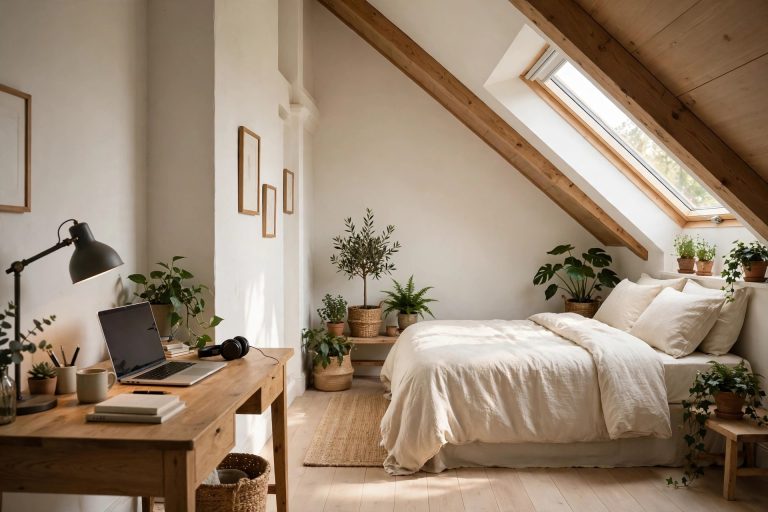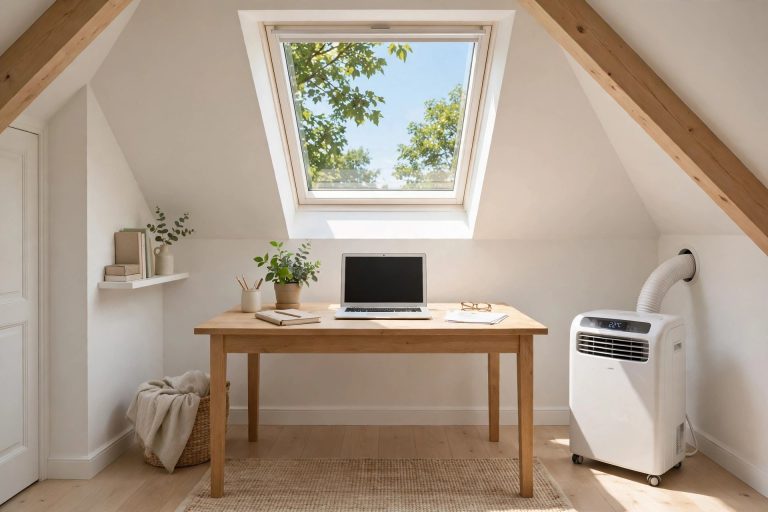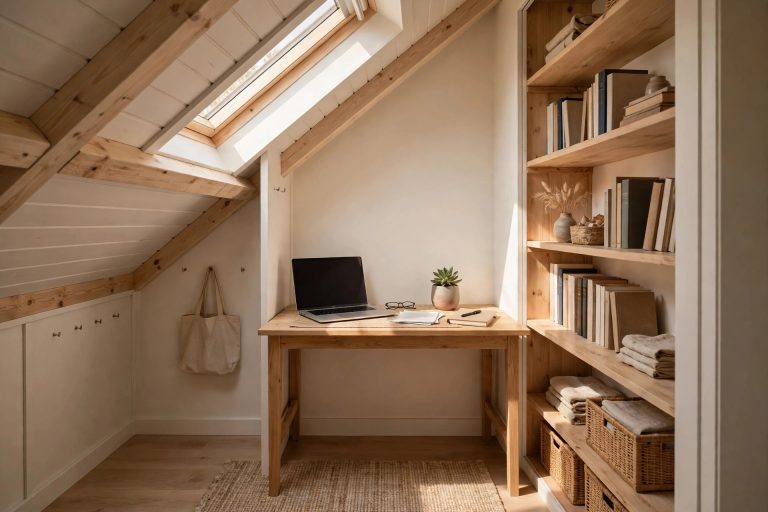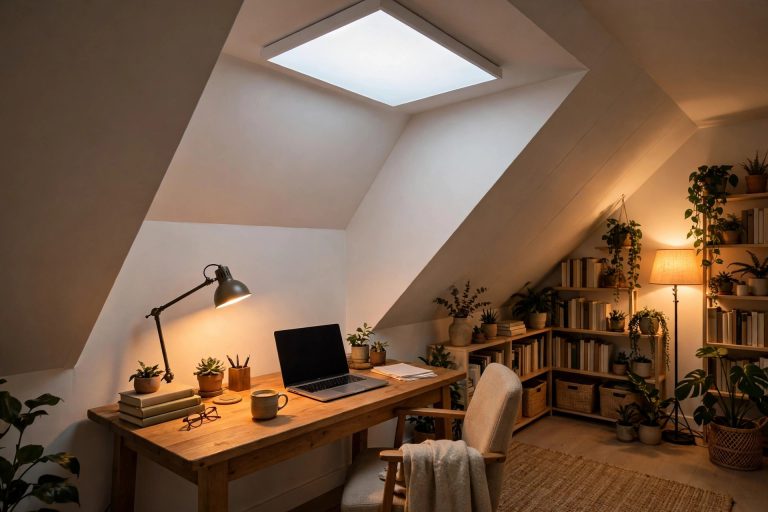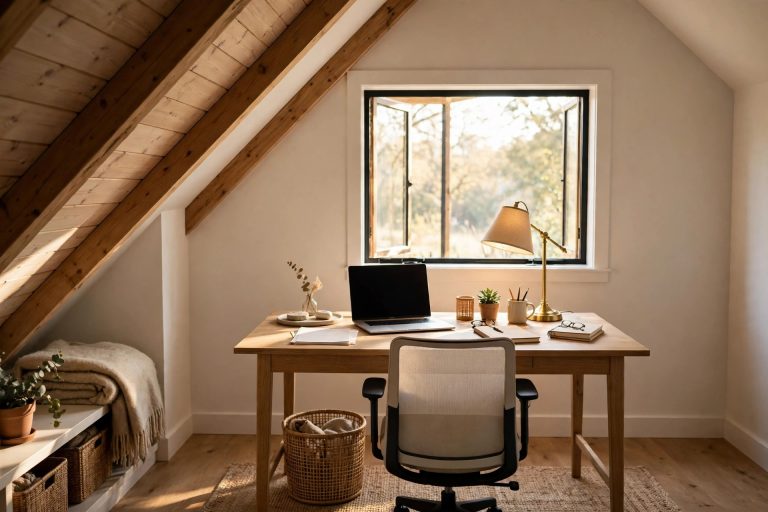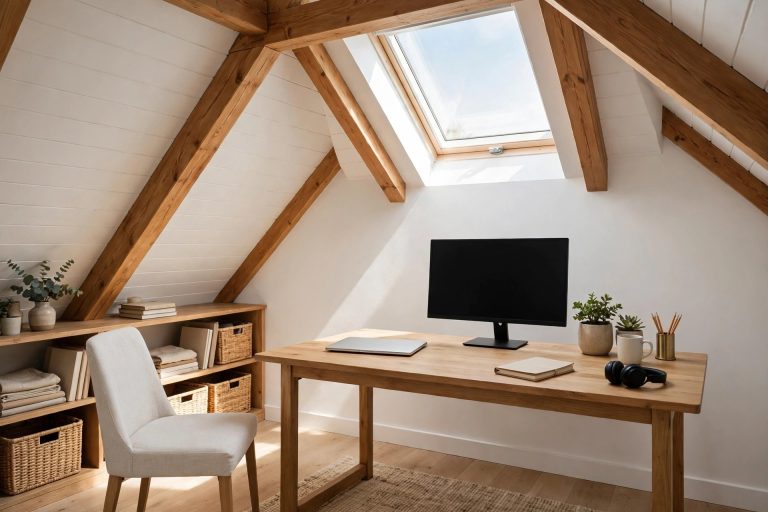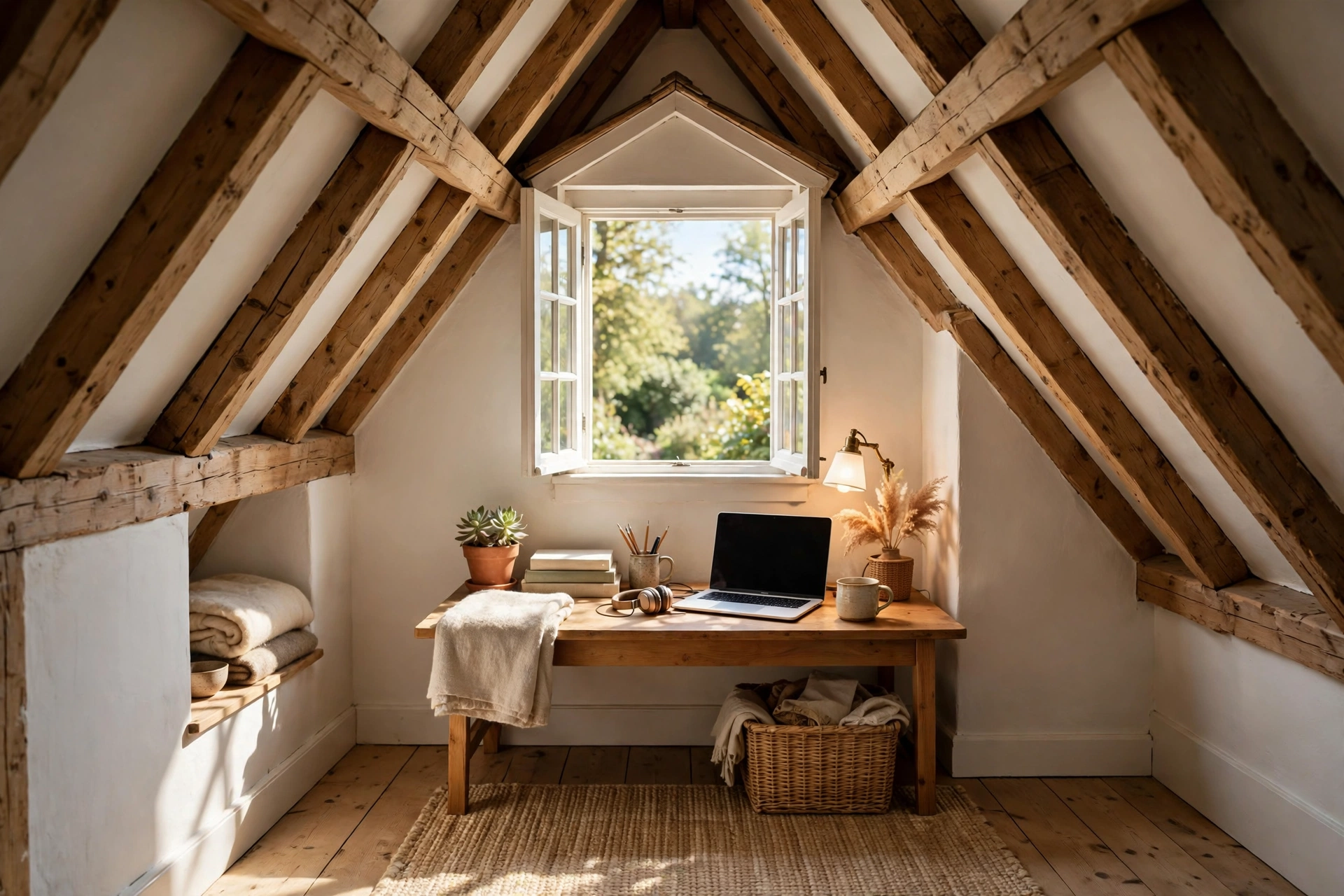
Tiny Attic Nook Office: 10 Setups Under 40 Sq Ft
Forty square feet is not much. It is roughly a 5-by-8-foot patch of floor — about the size of a large closet. But in an attic, that patch is often the only flat, usable space you have, and it is enough for a real desk, a real chair, and a full working day — if you spend it in the right order.
The order matters more than the furniture. Measure your headroom first, then pick the wall, then sort the light, and only then buy the desk. A desk bought before the measuring is how attics end up with furniture that only fits under the slope where nobody can sit. The ten setups below all follow that order, and each one fits in under 40 square feet. If you want the bigger picture first, our guide to 12 attic home office ideas covers the full room — these nooks are the small-space version of the same thinking.
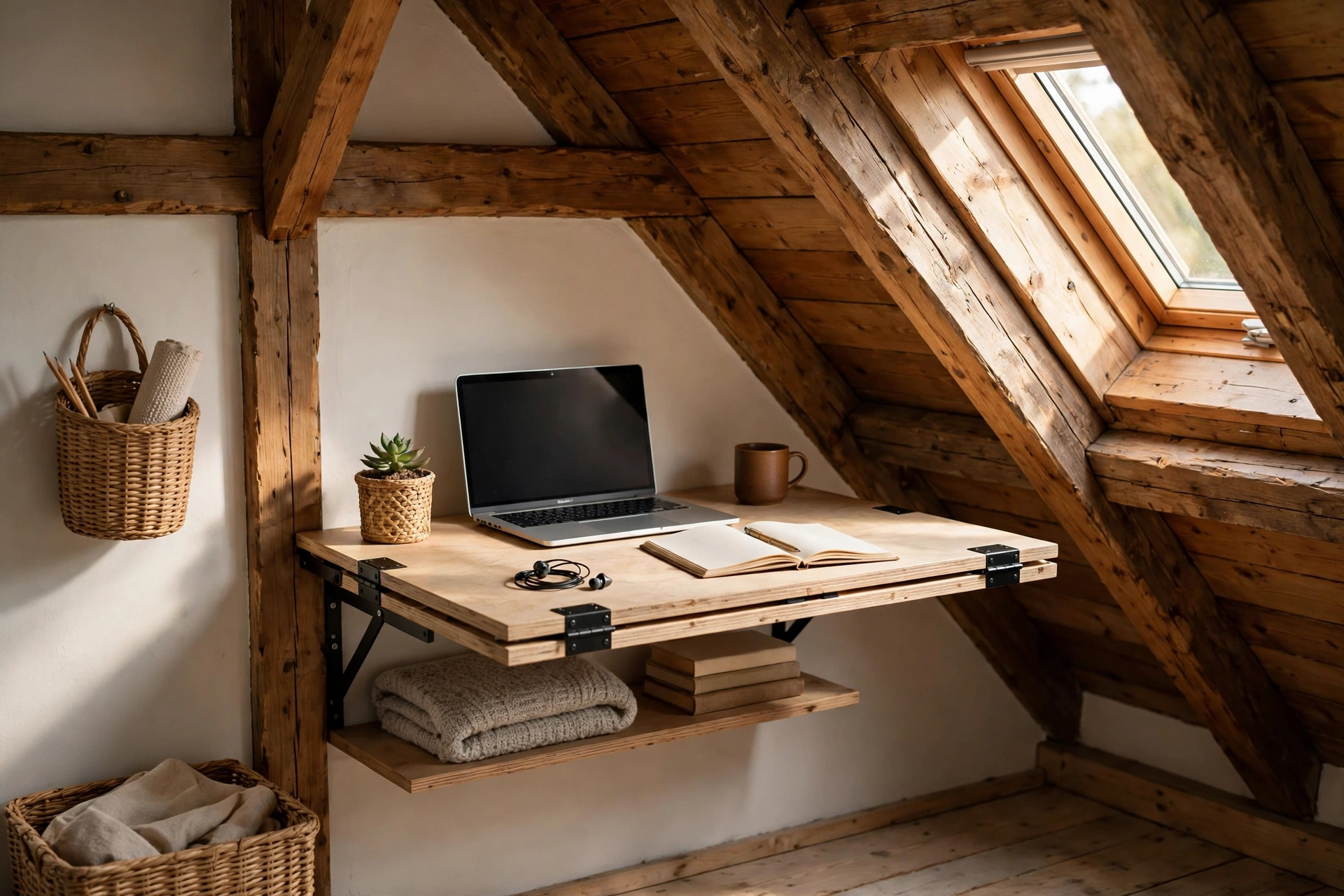
1. The fold-down wall desk
A fold-down desk is the smallest honest office there is. A wall-mounted panel, usually 24 to 30 inches wide, folds flat against the wall when you are done and drops to desk height when you work. Mount it on the tall wall — the one where you can stand upright — at standard desk height, around 29 to 30 inches, and put a small shelf above it for the things you reach for. Typical cost: $60–$200 for the desk itself, plus fixings. The trade-off is real: there is no drawer, so keep a small basket or a wall pocket nearby for chargers and notebooks, or the surface will collect clutter by day three.
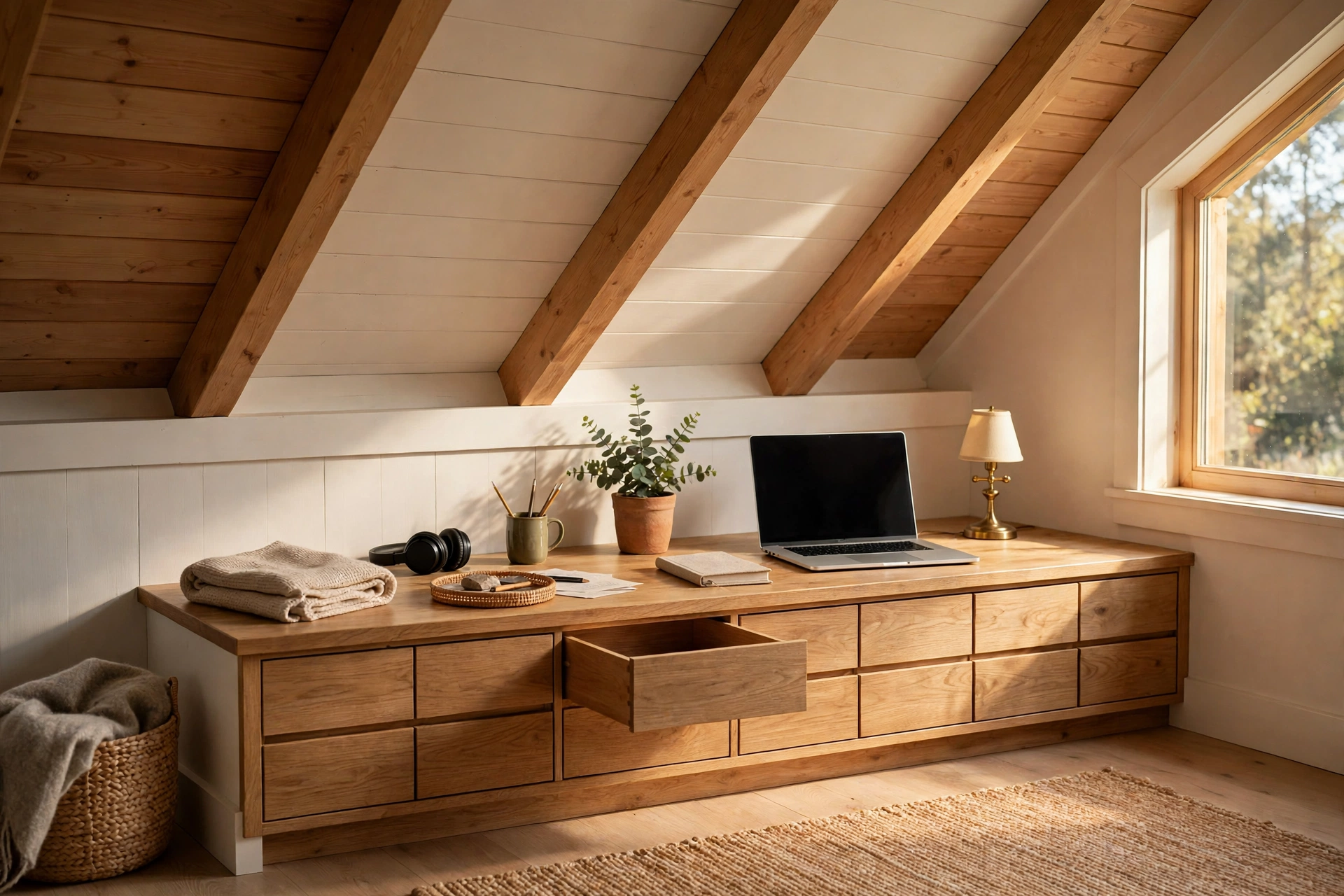
2. The knee-wall drawer desk
The knee wall — the short wall where the sloped ceiling meets the floor — is dead space in most attics, and it is the best place for a desk that never moves. A shallow drawer unit built into the knee wall gives you a work surface at the right height with storage underneath, and it uses floor space you were never going to stand on anyway. Our knee-wall storage guide covers the drawer and cubby combinations in detail. Typical cost: $150–$400 for a ready-made drawer unit, more if it is built in. Measure the knee-wall height before you buy anything — most are 3 to 4 feet tall, and a standard desk depth of 24 inches will not fit behind a 3-foot knee wall without sticking out.
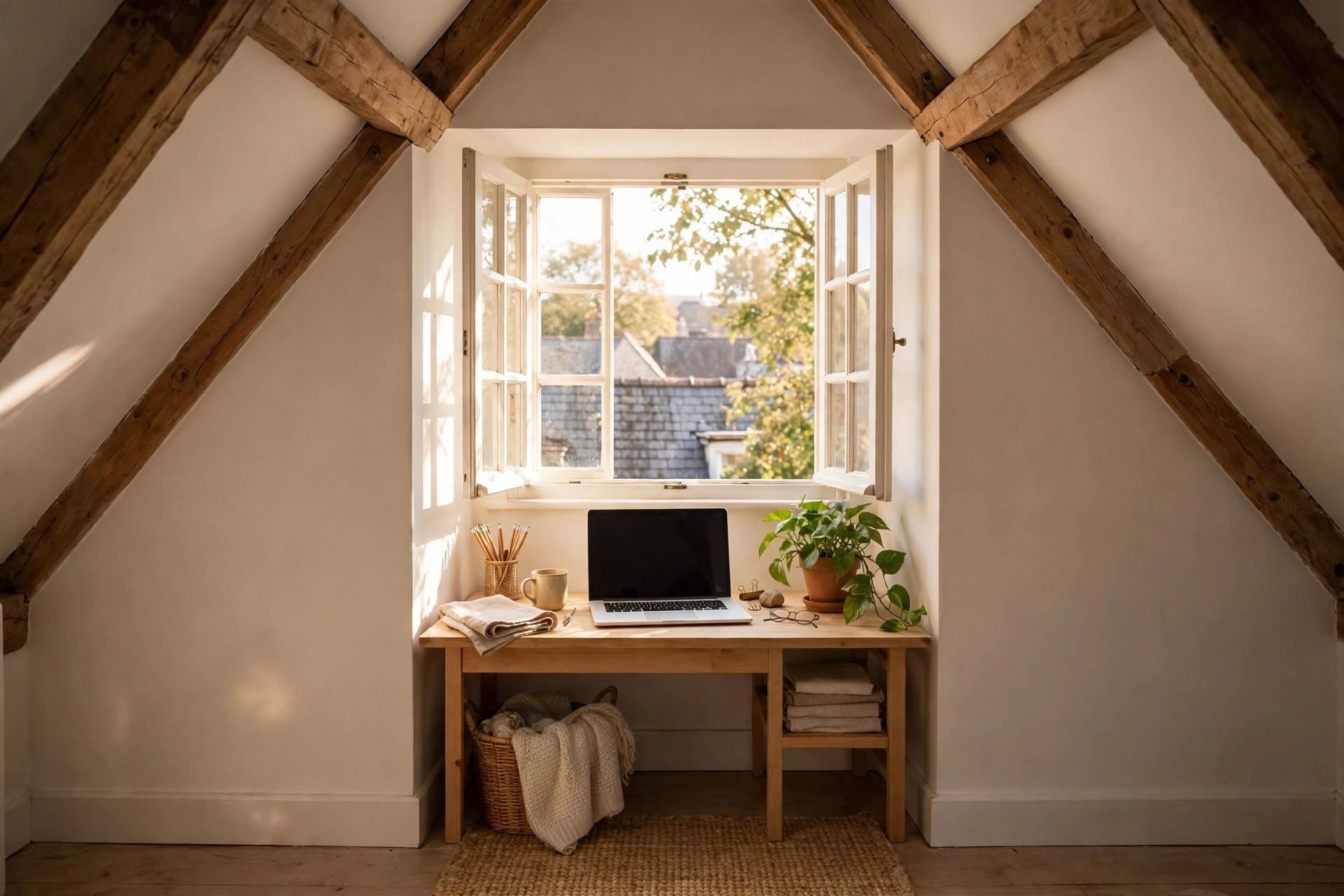
3. The dormer window desk
If your attic has a dormer, the desk goes under it. Full stop. The dormer is the one place with vertical walls, a window at eye level, and natural light that does not come through a skylight at a glare angle. A desk 36 to 48 inches wide fits most dormers, with the monitor or laptop facing into the room so the window light falls on the desk from the side rather than straight into the screen. Typical cost: the desk itself, $80–$300, plus $20–$60 for a blind. This is the setup to pick if you take video calls: the window behind the camera gives you the best light in the house for free.
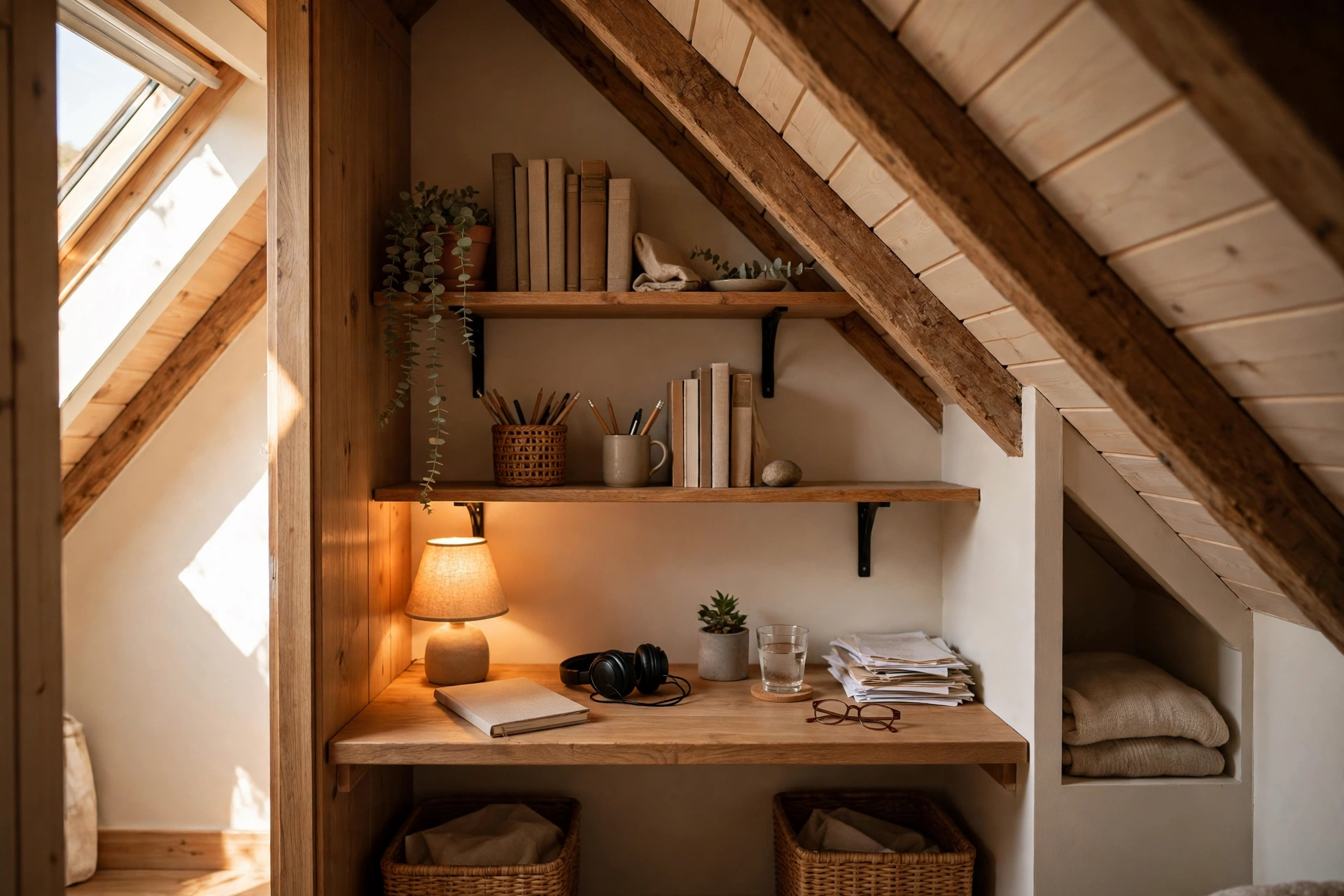
4. The closet-to-nook conversion
Some attics already have a shallow closet or an under-eaves cupboard, and that cupboard is a nook waiting to happen. Take the door off, fit a desktop across the opening at desk height, add two shelves above and a small LED strip under the top shelf, and you have an office that disappears when you slide the chair away. Usually 30 to 48 inches wide — enough for a laptop, not a dual-monitor spread. Typical cost: $100–$300 for the desktop, shelves, and lighting. Keep the chair small and armless so it tucks fully inside the opening when you are done.
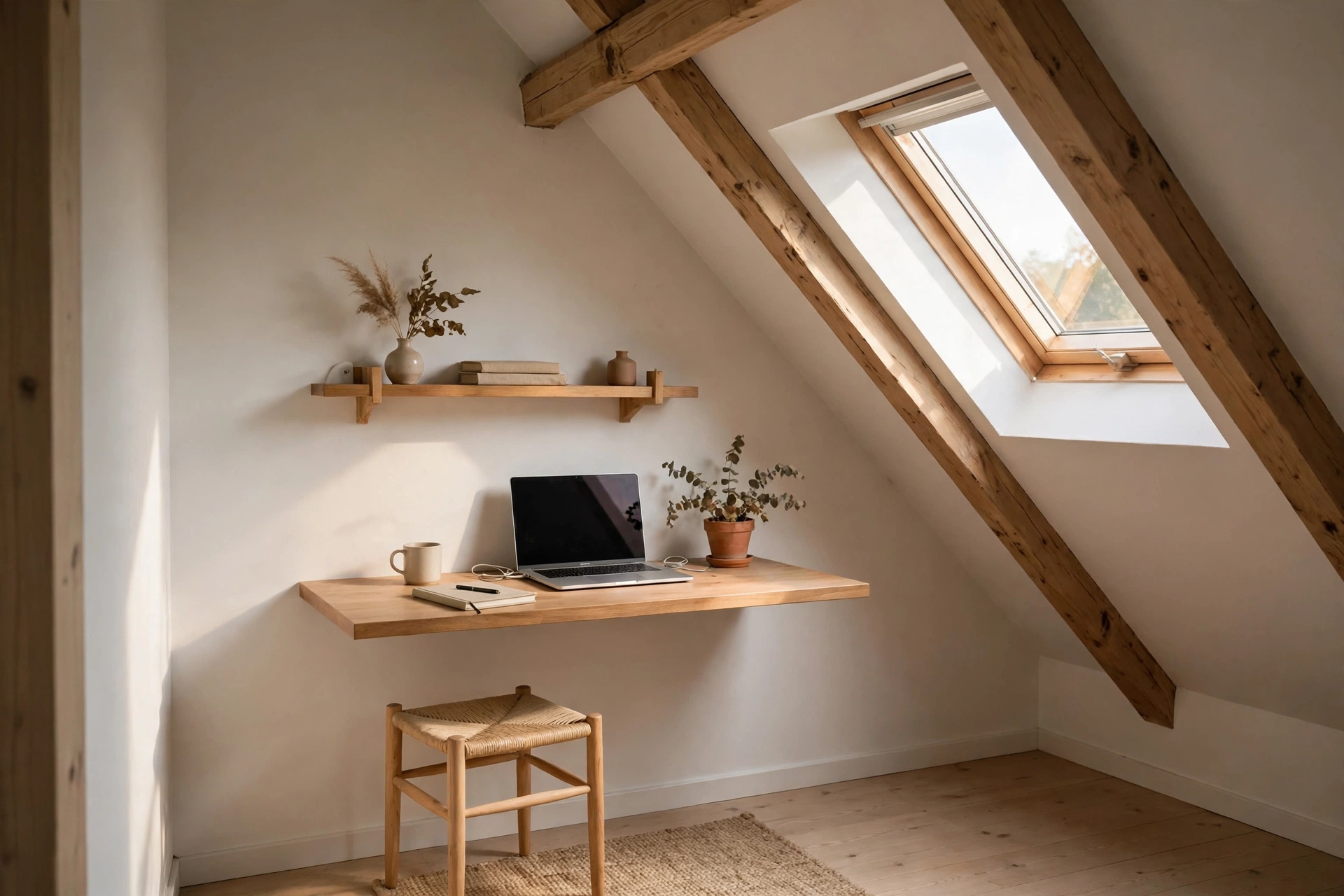
5. The floating shelf and laptop setup
The lightest setup on this list is a floating shelf and a laptop, and it suits people whose work is mostly a screen and a keyboard. A shelf 20 to 24 inches deep, mounted at desk height on the tall wall, holds the laptop; a laptop stand lifts the screen to eye level, and a small wireless keyboard keeps your wrists straight. Typical cost: $40–$150 all in, which makes it the cheapest real office here. The limit is storage: there is none, so this setup only works if your papers and gear already live somewhere else in the house.
6. The corner L-desk
A corner is the most efficient shape in a small attic, because two walls do the work of one long desk. A compact L-desk — usually 42 inches along each wall — gives you a main work surface and a second surface for a notebook, a printer, or a second screen, without taking any more floor than a straight desk would. In an attic, put the long side along the tall wall and the short return under the slope, where it holds things rather than people. Typical cost: $120–$350 for a ready-made compact L-desk.
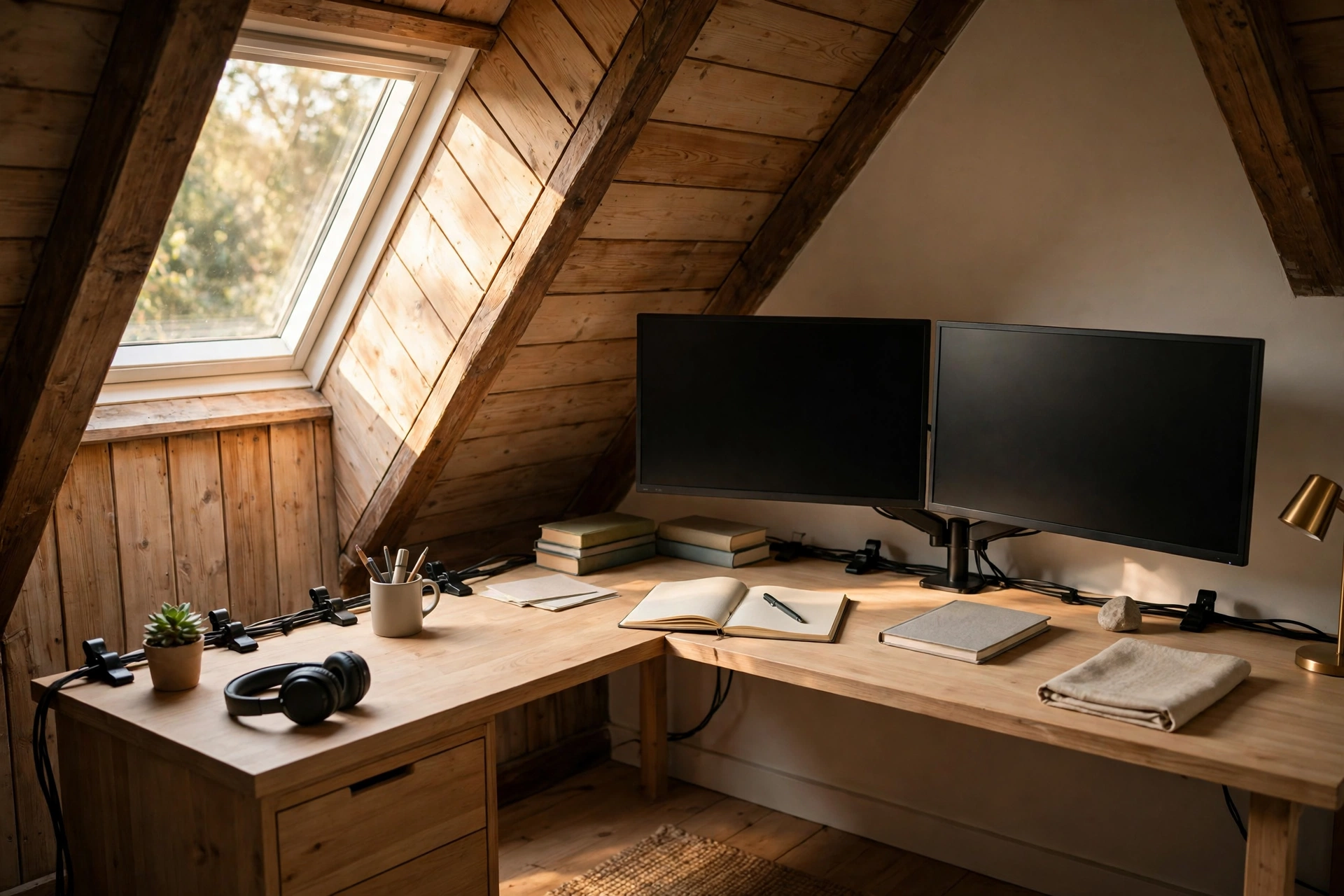
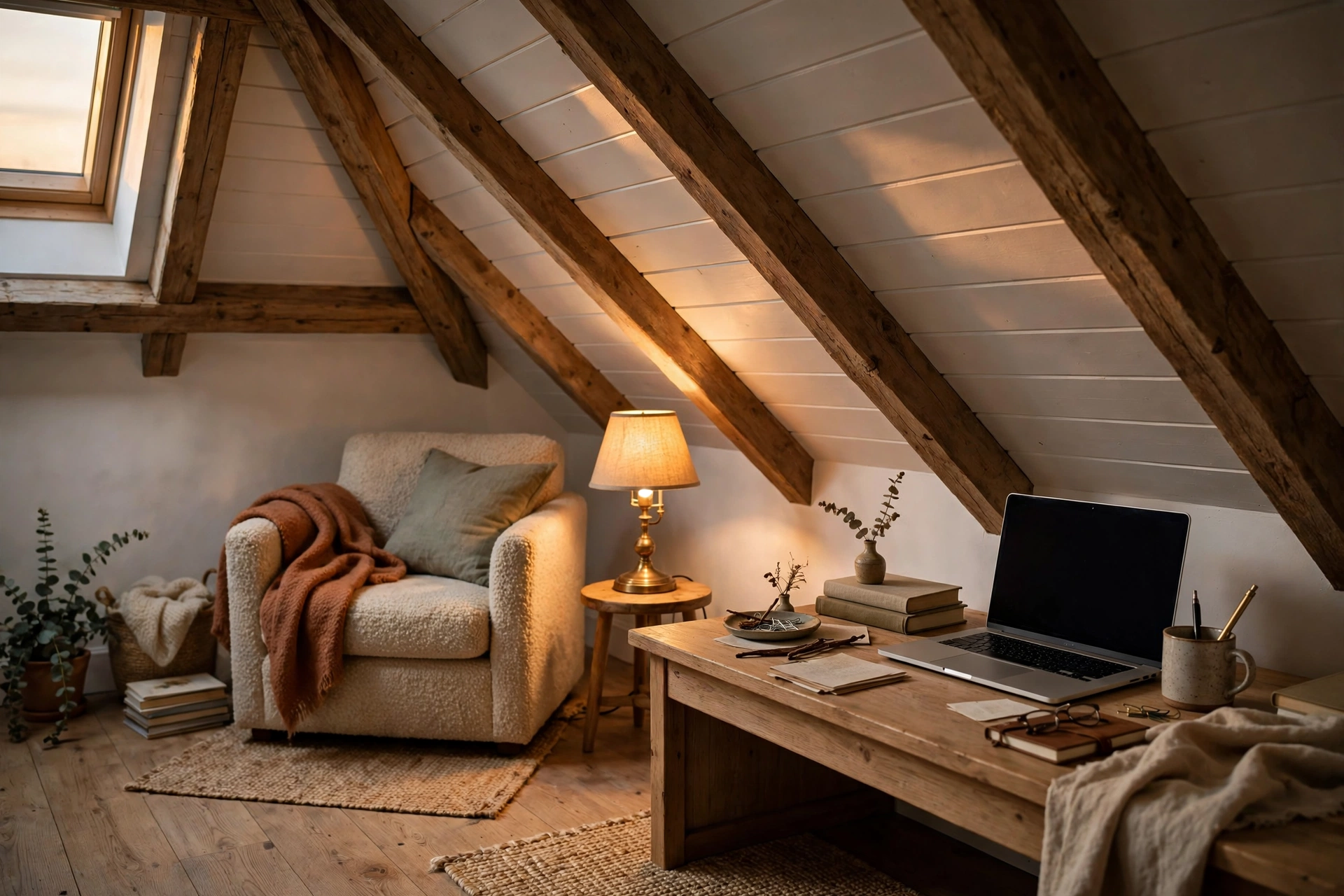
7. The under-eaves reading and work nook
Not every nook needs to be a desk. If your attic work is mostly reading, marking up, or calls, a low armchair with a good lamp and a side table is a legitimate office — and it fits where no desk can, under the lowest part of the slope. Put the chair where the ceiling is just high enough to sit upright comfortably, add a floor lamp or a wall light at shoulder height, and keep a small side table for the laptop and a notebook. Typical cost: $100–$300 for a second-hand armchair, a lamp, and a table.
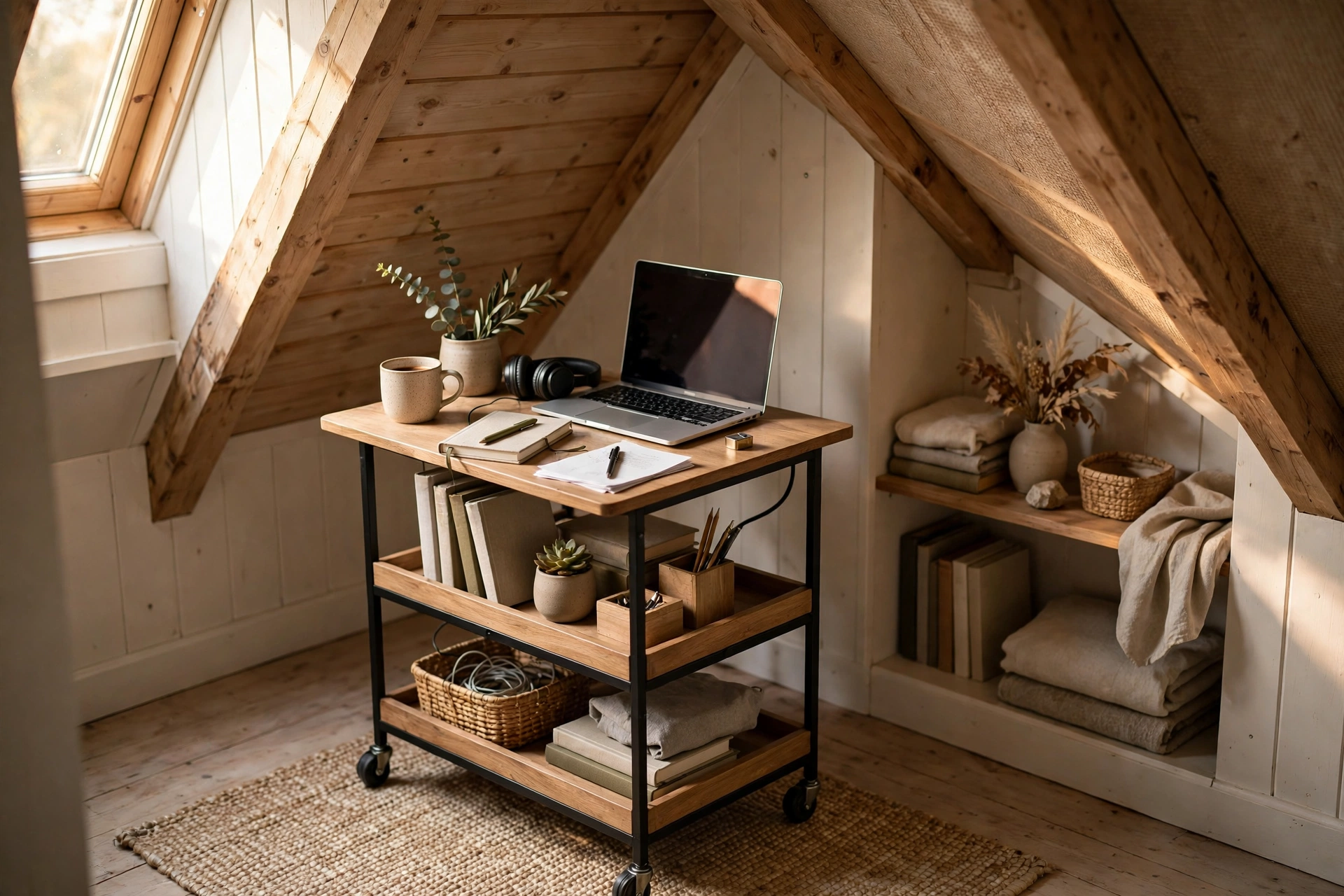
8. The rolling cart office
A rolling cart is the attic office for people who share the room. A small kitchen-style cart or a utility trolley, around 24 by 16 inches, holds a laptop, a notebook, and a charger; you wheel it to the tall wall to work and wheel it back under the eaves when the room is needed for something else. It is the only setup here that moves, and that matters in an attic that is also a bedroom, a playroom, or a guest room on weekends. Typical cost: $50–$150 for the cart, plus a laptop stand.
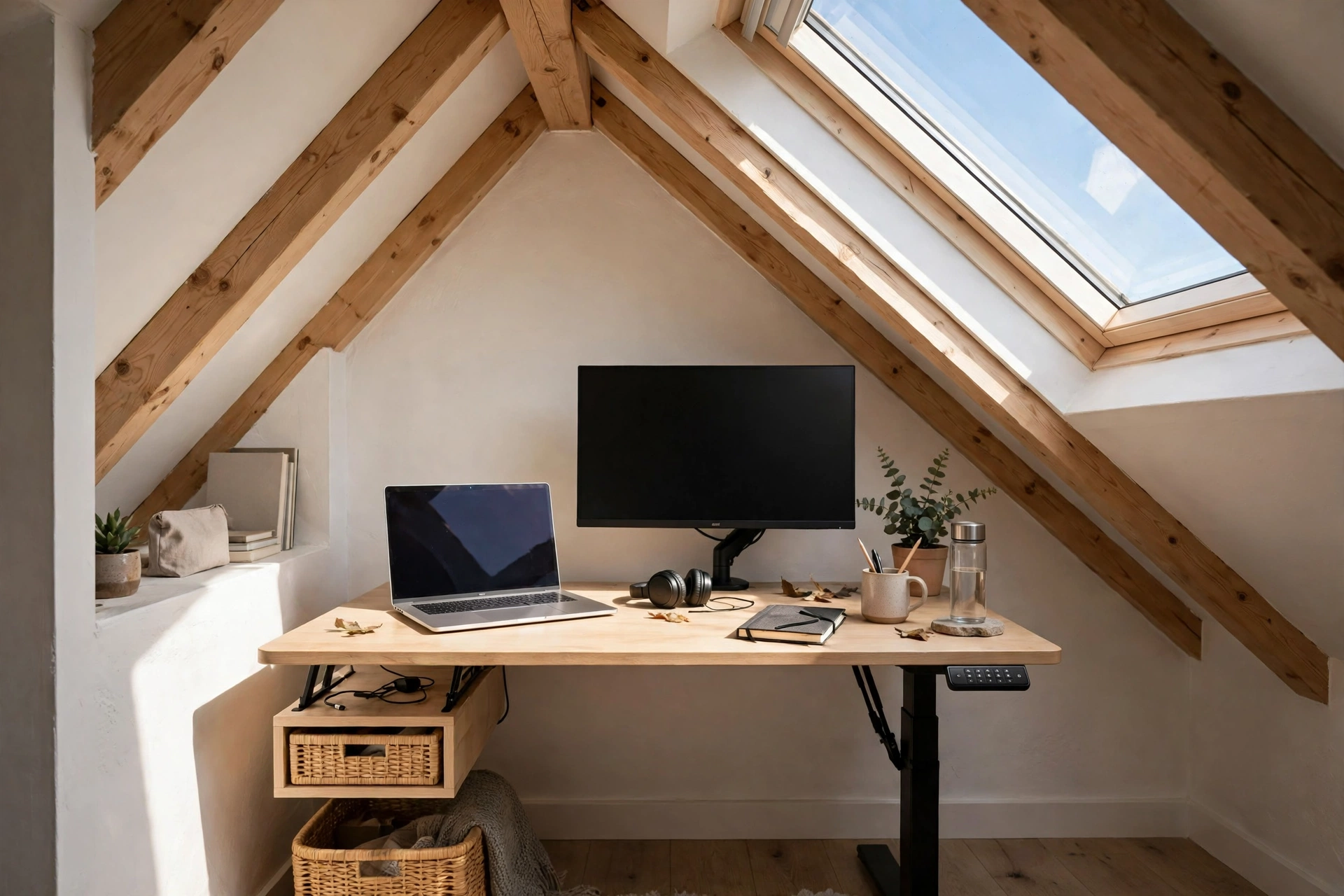
9. The compact standing-desk nook
A standing desk sounds like the opposite of a tiny attic nook, but the compact frames — 36 to 42 inches wide — fit, and they solve the attic’s worst habit: sitting hunched under a slope for eight hours. Set the frame at the tall wall, raise it to standing height for part of the day, and lower it to sit the rest. The key measurement is the raised height plus your head: you need the ceiling at the standing position to clear the top of your head by a few inches, so this setup only works on a wall where the ceiling is at least 7 feet at the desk line. Typical cost: $200–$500 for a compact electric frame with a desktop.
10. The two-zone nook: work wall and storage wall
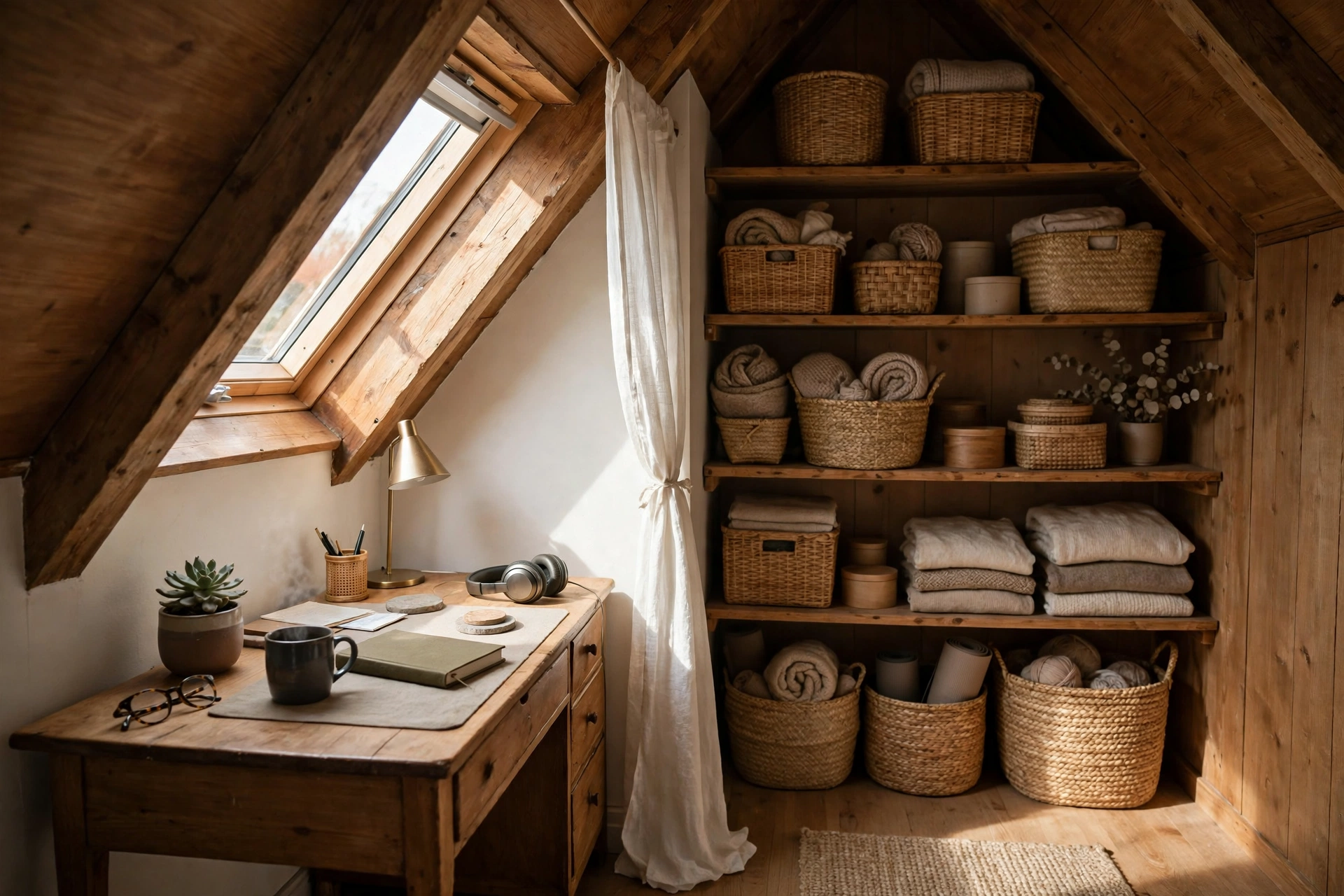
The most grown-up setup on this list splits the nook in two. One wall is the work wall: desk, screen, lamp, nothing else. The opposite wall — usually the sloped one — is the storage wall: shelves, baskets, and a small filing box for everything the desk does not need. The split is what keeps a 40-square-foot office usable after the first month, because the desk stays clear and the clutter has somewhere to go that is not the desk. Typical cost: $150–$400 for the desk plus shelving.
What to buy first
If you build one of these this weekend, buy in this order: a tape measure and an hour of measuring, then the light, then the desk, then the storage. Start with the setup that matches the wall you actually have — tall wall, dormer, knee wall, or closet — not the one in the photo you liked best. A 40-square-foot attic office is small, but it is yours, and a nook that fits is worth more than a room that does not.