Healthy Workplace Snacks: 25 Desk-Friendly Picks That Beat the 3 p.m. Crash
The average office worker eats 400 to 600 snack calories a day without noticing, and most of them come from the break-room candy bowl or a vending machine slot labeled B4. That habit costs more than waistlines: a sugar-heavy 2 p.m. snack can push blood sugar up fast and drop it faster, leaving you foggy by 3:30. This guide to healthy workplace snacks gives you specific foods, exact quantities, real prices, and a system that survives a packed calendar.
Why Your Desk Snack Decides How the Afternoon Goes
Snacking is not the problem. Snacking on the wrong things at the wrong time is. A 20-gram bag of pretzels digests in minutes, while a snack that pairs protein, fiber, and fat takes two to three hours to break down. That slower release is what keeps your focus level.

Researchers who study glycemic response (how quickly a food raises blood sugar) consistently find that pairing carbohydrates with protein flattens the spike. An apple alone is fine. An apple with 2 tablespoons of peanut butter is better.
The 3-Part Snack Formula
Build every snack from this template and you will rarely go wrong:
- Protein (5-12 g): Greek yogurt, hard-boiled eggs, edamame, cheese, nuts.
- Fiber (3+ g): Fruit, raw vegetables, whole-grain crackers, chickpeas.
- Calories (150-250): Enough to bridge a 3 to 4 hour gap between meals, not enough to replace lunch.
But what if you only have 100 calories to spare? Drop the fat and keep the protein and fiber: a small apple plus one string cheese lands near 130 calories and still passes the test.
10 Healthy Workplace Snacks That Need Zero Prep
Zero prep means you can grab it, eat it, and keep typing. These ten work from a drawer or bag with no fridge at all, and most cost under $1 per serving.
- Almonds (1 oz, about 23 nuts): 164 calories, 6 g protein. A 16 oz bag from Costco runs about $9 and yields 16 servings.
- Roasted chickpeas (1/3 cup): 130 calories, 6 g protein, 5 g fiber. Brands like Biena and Saffron Road cost $3 to $4 a bag.
- Whole apples or bananas: 95 to 105 calories, about 4 g fiber. Bananas bruise, so carry them in a hard container.
- Single-serve nut butter packs: Justin’s squeeze packs (2 tbsp, 190 calories) pair with apple slices or crackers.
- Beef or turkey jerky (1 oz): 9 to 12 g protein. Choose under 8 g sugar per serving; Chomps and Epic are solid.
- Dark chocolate (70%+ cacao, 1 oz): 170 calories. Two squares satisfy a sweet craving better than a full candy bar.
- Roasted seaweed snacks: 25 calories per pack. Light, salty, and crunchy.
- Whole-grain crackers with a cheese stick: Triscuits (6 crackers, 120 calories) plus string cheese (80 calories, 7 g protein).
- Dried fruit (1/4 cup, unsweetened): About 100 calories. Portion it out first, because dried mango disappears fast.
- Unsalted pistachios in the shell: 1 oz is about 49 nuts. Shelling slows you down, which helps portion control.
But what if you share your desk area with allergy-sensitive coworkers? Swap nuts for roasted chickpeas, seaweed, or pumpkin seeds, and check labels for “processed in a facility with tree nuts.”
Fridge-Friendly Options: 8 Fresh Picks Worth the Prep
If your office has a refrigerator, the menu expands considerably. These snacks take under 10 minutes to assemble on Sunday and last through Friday.

Protein-Forward Choices
- Hard-boiled eggs: Boil 12 minutes, chill in ice water 5 minutes, and they keep 7 days peeled or unpeeled. One egg is 78 calories and 6 g protein.
- Plain Greek yogurt (3/4 cup): 130 calories, 17 g protein. Fage and Chobani both work. Add 1/2 cup blueberries for sweetness without added sugar.
- Cottage cheese cups: Good Culture packs 19 g protein in a 5.3 oz cup for about $1.75.
Crunch and Dip Combos
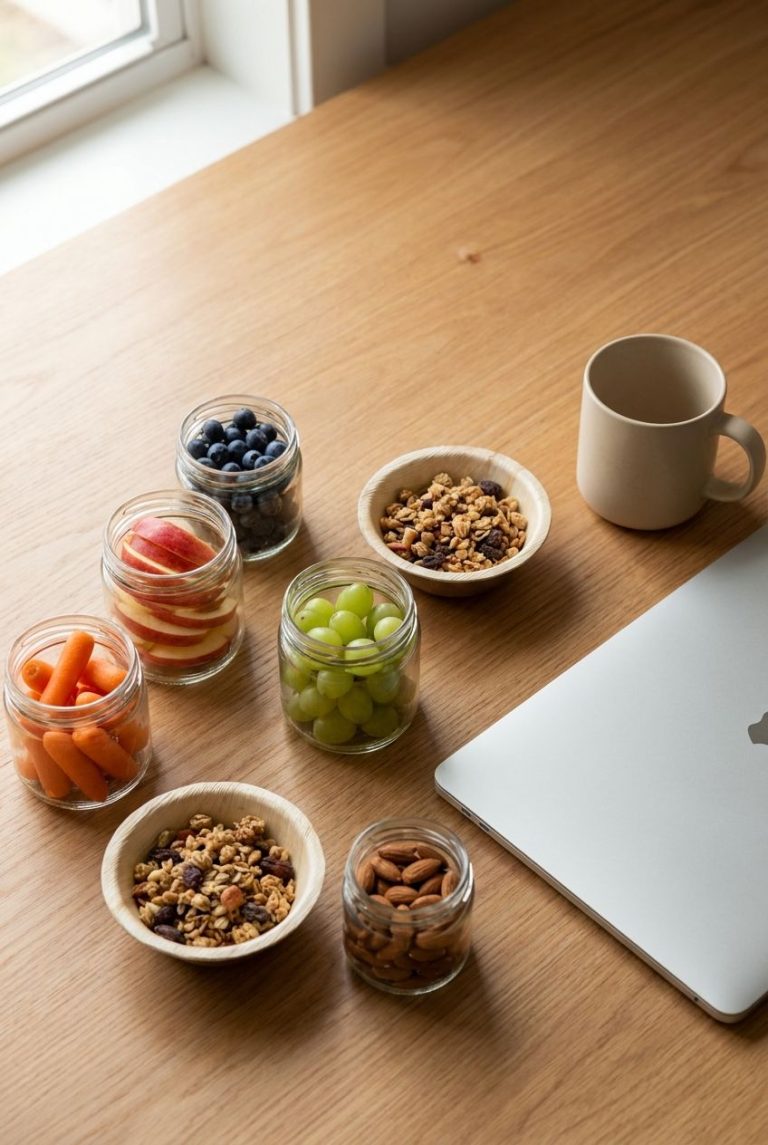
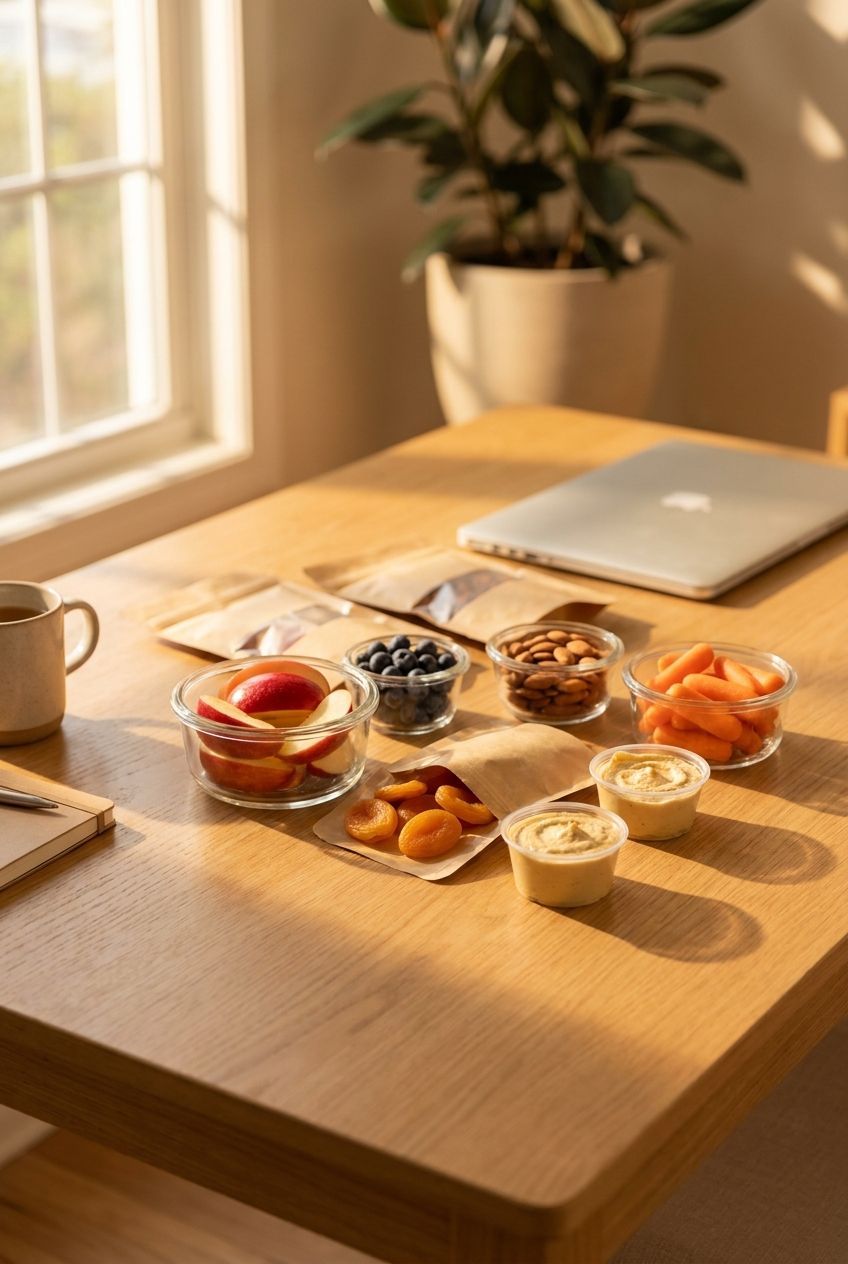
- Hummus with carrots, cucumbers, or bell pepper strips: 2 tbsp hummus (50 calories) plus a cup of raw vegetables. Slice veggies Sunday; they stay crisp 5 days in a sealed container with a paper towel.
- Cheese and grapes: 1 oz cheddar plus 15 grapes is about 190 calories.
- Edamame pods (1 cup): 120 calories, 11 g protein. Buy frozen and microwave 90 seconds if there is a shared microwave.
But what if the office fridge is a chaotic free-for-all? Use a clear container with your name on masking tape, and keep snacks on the middle shelf where they are easy to see and hard to forget.
Healthy Workplace Snacks Compared: Price, Protein, and Convenience
Not every snack fits every situation. This table compares five popular options so you can match the choice to your routine.
| Snack | Cost per serving | Protein | Needs fridge? | Best for |
|---|---|---|---|---|
| Almonds (1 oz) | $0.55 | 6 g | No | Budget-conscious, desk-drawer stash |
| Greek yogurt (3/4 cup) | $1.10 | 17 g | Yes | Post-lunch protein boost |
| Beef jerky (1 oz) | $1.75 | 10 g | No | Long meetings, travel days |
| Hummus + carrots | $0.80 | 3 g | Yes | Crunch cravings, high volume for few calories |
| Apple + nut butter packet | $1.20 | 4 g | No | Sweet cravings, fastest to grab |
Recommendation by use case: choose almonds if cost is your top concern, Greek yogurt if you need real staying power, and jerky if your schedule is unpredictable and nothing needs refrigeration.
How to Stock a Desk Drawer in 15 Minutes for Under $30
A stocked drawer beats willpower every time. Follow these steps once and you are set for about three weeks.

- Pick a container: Use a shoebox-size bin or drawer organizer, roughly 12 x 6 inches. Success looks like everything visible at a glance.
- Buy in bulk: Get a 16 oz bag of almonds ($9), a 6-count box of RXBAR or similar protein bars ($10), and a bag of unsweetened dried apricots ($5).
- Portion immediately: Divide almonds into 1 oz snack bags or small containers. A $0.05 sandwich bag and a $12 kitchen scale pay for themselves within a month.
- Add one treat: Include 4 oz of 70% dark chocolate ($4). A planned treat prevents the unplanned vending machine run.
- Label the date: Nuts keep 3 to 4 months in a cool drawer. Write the purchase date on masking tape.
But what if your desk gets hot in summer? Heat turns nuts rancid faster. Keep them in an airtight jar and use within 6 weeks, or move them to the fridge.
The Common Mistakes That Turn Healthy Snacks Into Junk
Even people with good intentions fall into these three traps.
Mistake 1: Trusting the Word “Healthy” on the Package
Many granola bars contain 12 to 18 g of sugar, as much as a small candy bar. Flip the package and check two numbers: added sugar under 8 g, and protein or fiber above 4 g. If it fails both, put it back.
Mistake 2: Eating Straight From the Bag
A 16 oz bag of almonds holds about 2,700 calories. Eating from it during a long email session is how a 160-calorie snack becomes 500 without you noticing. Always portion into a bowl or small bag before you start.
Mistake 3: Snacking Out of Boredom, Not Hunger
Before reaching for food, drink a 12 oz glass of water and wait 10 minutes. Thirst often mimics hunger, and if you are still hungry afterward, eat without guilt. The goal is awareness, not restriction.
A fourth error worth a mention: skipping snacks entirely until you are ravenous. By then, you will choose the fastest food, not the best. Schedule a snack around 10:30 a.m. and 3:00 p.m. and you will rarely hit that wall.
A 5-Day Healthy Workplace Snack Plan You Can Copy This Week
Planning removes the daily decision. This week of snacks totals about $14 and requires one 20-minute prep session on Sunday.

- Monday: Apple slices with 2 tbsp peanut butter (about 270 calories, 8 g protein).
- Tuesday: Greek yogurt with 1/2 cup blueberries (about 180 calories, 17 g protein).
- Wednesday: Hummus with carrot and cucumber sticks (about 130 calories, 4 g protein).
- Thursday: Two hard-boiled eggs with a pinch of salt and pepper (about 156 calories, 12 g protein).
- Friday: 1 oz almonds plus two squares of dark chocolate (about 270 calories, 7 g protein).
The Sunday prep: boil 6 eggs (12 minutes), slice vegetables, portion almonds, and spoon hummus into two small containers. Everything goes into one grab-and-go bag per day.
But what if you get invited to a team lunch and skip the snack? Great. Cross that day off. The plan is a menu, not a contract.
Healthy Workplace Snacks for Specific Goals: Focus, Weight, and Energy
Different goals call for different picks. Use this guide to match your snack to what you need.
For Sharper Focus
Walnuts, blueberries, and dark chocolate contain compounds linked to cognitive support. A small handful of walnuts (1 oz, about 14 halves) provides 4 g protein and omega-3 fats. Pair with a small cup of green tea for a gentle caffeine lift of roughly 28 mg per cup.
For Weight Management
Volume matters. Two cups of raw vegetables with 2 tbsp hummus fills a container for about 130 calories. Air-popped popcorn (3 cups, 90 calories) works too, as it is a whole grain with 3.5 g fiber.
For All-Day Energy
Combine slow carbs with protein: a banana with a string cheese, or whole-grain toast with a thin layer of almond butter. Aim for 20 to 30 g of carbohydrate and at least 5 g of protein.
But what if your goal is muscle gain? Increase portions: a protein shake mix (20 to 25 g protein) kept in your drawer and blended with water takes 30 seconds and covers a missed meal.
Objections and What-Ifs: When Healthy Snacking Seems Impossible
Every plan meets resistance. Here are the most common objections and workable answers.

“Healthy food is too expensive.” It does not have to be. A serving of almonds costs $0.55, a banana about $0.25, and a hard-boiled egg around $0.30. Compare that to a $2.25 vending machine bag of chips with no protein.
“I have no time to prep.” Then use zero-prep options: whole fruit, single-serve nut butter, jerky, roasted chickpeas. Buying them once a month takes 10 minutes online.
“My office provides donuts and pizza constantly.” Eat your planned snack first, 30 minutes before the event. Arriving slightly full cuts the temptation. And if you do have a donut, enjoy it and move on; one treat does not erase a week of good habits.
“I work remotely, so what is the point?” The kitchen is closer, which makes portioning even more important. Pre-pack snacks the same way you would for an office, and keep them out of sight of your desk.
“I have dietary restrictions.” Gluten-free: pick rice cakes, fruit, and nuts. Vegan: roasted chickpeas, hummus, and fruit with seed butter. Dairy-free: coconut yogurt (check for 5+ g protein) or seed-based snacks.
Your Next Move: Build Tomorrow’s Snack Before You Leave Today
Open your kitchen right now and grab one protein item and one fiber item. An egg and an apple, yogurt and berries, or cheese and crackers all qualify. Put them in a bag next to your keys so they leave the house with you. Tomorrow at 3 p.m., when the craving hits, you will already have your answer.