Healthy Office Snacks: 25 Desk-Friendly Picks That Beat the Vending Machine
The average office worker spends roughly $1,000 a year on vending machine and break-room snacks, and most of it buys a 200-calorie sugar spike followed by a 3 p.m. crash. The fix is not willpower. It is a small, well-stocked drawer of healthy office snacks that cost less per serving than a candy bar and take zero preparation.
This guide gives you the exact foods, brands, prices, and storage rules to build that drawer in one grocery trip. You will also learn the mistakes that quietly ruin an office snack stash and how to handle the objections that stop most people from trying.
Why Your 3 p.m. Crash Is Really a Snack Problem
Energy dips in the afternoon are rarely about being tired. They are about blood sugar. A refined-carb snack, such as a granola bar with 14 grams of sugar or a bag of pretzels, raises blood glucose quickly and drops it just as fast, usually within 60 to 90 minutes.
A better snack pairs protein or fat with fiber. Both slow digestion, so energy arrives gradually. Nutrition researchers often cite roughly 5 to 10 grams of protein and 3 or more grams of fiber per snack as a practical target for steady focus.
The Simple Formula for Any Snack
Use this rule when you read a label: aim for 150 to 250 calories, at least 5 g protein, at least 3 g fiber, and under 8 g added sugar. If a snack hits three of the four, it is a solid pick. If it hits none, it is dessert, and that is fine, but call it what it is.
Timing matters too. Most people crash between 2:30 and 4:00 p.m., so eat your snack at about 2:30, not at 4:00 when you are already ravenous and reaching for anything.
Shelf-Stable Healthy Office Snacks That Last Months in a Drawer
Your desk drawer is the backbone of your snack plan because it needs no fridge, no prep, and no coordination with coworkers. The goal is items that survive 3 to 12 months at room temperature.
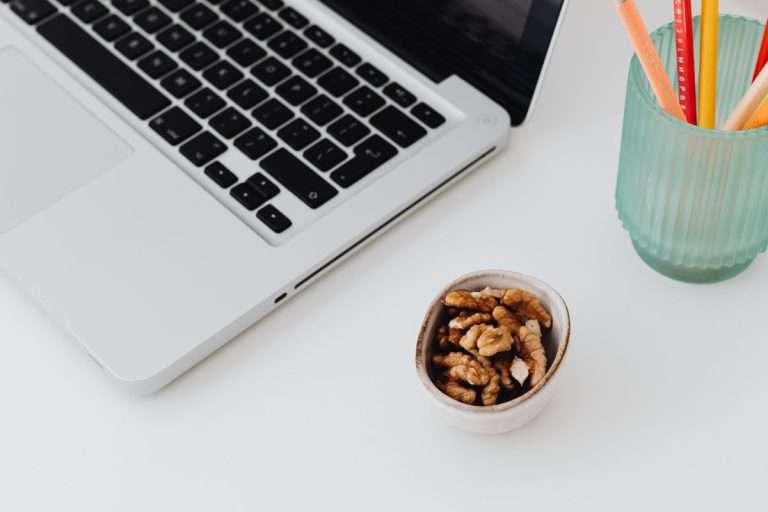
- Almonds, raw or dry-roasted: about 160 calories and 6 g protein per ounce (a small handful, roughly 23 nuts). A 16 oz bag from Costco or Trader Joe’s runs $6 to $9 and provides 16 servings.
- Single-serve nut butter packets: Justin’s squeeze packs (about 190 calories, 7 g protein) cost roughly $1.25 each in a 10-pack. Pair with an apple or eat straight.
- Roasted chickpeas: Biena or Saffron Road versions give about 5 g protein and 4 g fiber per ounce at around $1.50 per single-serve bag.
- Whole-grain crackers with seeds: Mary’s Gone Crackers or Simple Mills at about $5 per box, 20 to 25 crackers per serving.
- Unsweetened dried fruit: dried mango, apricots, or tart cherries at roughly 1/4 cup per serving. Watch portions, as it is calorie-dense.
- Protein bars with real ingredients: RXBAR (12 g protein, about $2 each) or Larabar (simple 3 to 5 ingredient list, about $1.50 each).
But what if you hate nuts? Swap in pumpkin seeds (pepitas), which deliver 8 g protein per ounce and cost about $8 for a 16 oz bag. And if allergies exist in your office, check whether a nut-free policy applies before stocking up.
Fridge Snacks Worth the Shelf Space (And How to Keep Them Safe)
A shared office fridge opens up the best protein sources, but only if you handle them safely. The USDA’s two-hour rule applies: perishable food should not sit above 40°F for more than 2 hours, or 1 hour if the room is above 90°F.

Top Fridge Picks
- Greek yogurt cups: Chobani Plain or Fage 0% deliver 15 to 18 g protein per 5.3 oz cup for about $1.30. Choose plain and add your own honey, since flavored cups often carry 12 to 17 g added sugar.
- Hard-boiled eggs: 6 g protein each, about 70 calories. Boil a dozen on Sunday (12 minutes in boiling water, then an ice bath) and they stay good for 7 days refrigerated.
- String cheese: about 80 calories and 7 g protein per stick, $0.40 to $0.60 each in a 12-pack.
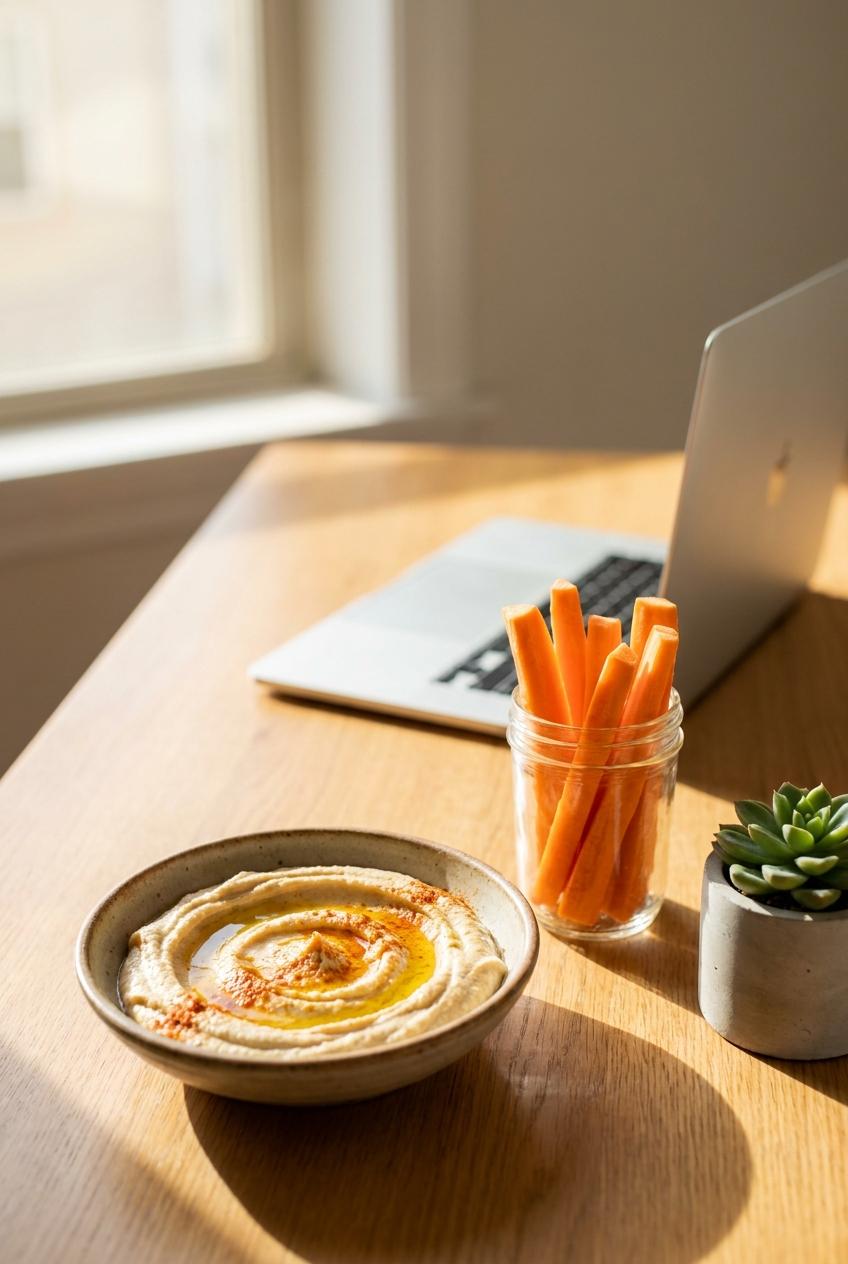
- Hummus with cut vegetables: a 2 tablespoon serving is about 70 calories. Pre-cut carrots, cucumbers, and bell peppers last 4 to 5 days in a sealed container.
- Cottage cheese singles: Good Culture packs 19 g protein per 5.3 oz at about $2.
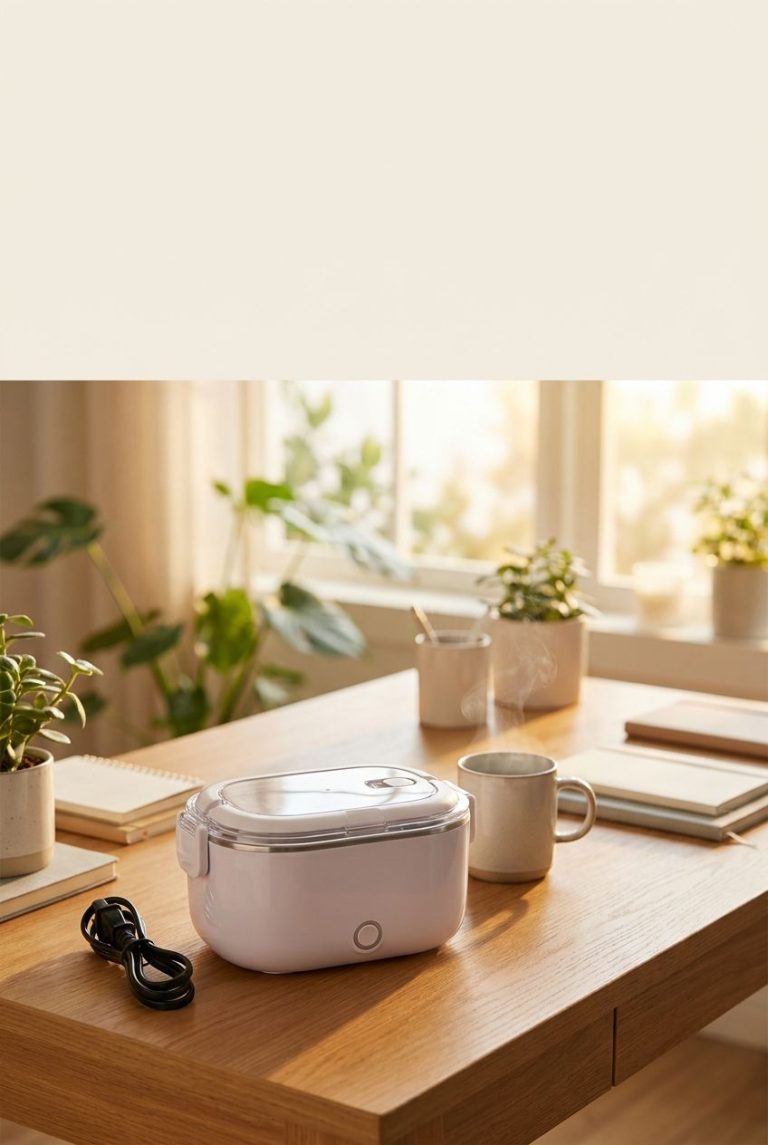
But what if your office fridge is a chaotic free-for-all? Use a clear, lidded container labeled with your name and the date you packed it. Or skip the shared fridge entirely and use a small insulated lunch bag with a frozen gel pack, which keeps food under 40°F for roughly 4 to 5 hours.
The Best Healthy Office Snacks for Focus and Energy: A Comparison
Not every snack suits every situation. Here is how the most popular categories compare, with a clear pick for each use case.
| Snack | Cost per serving | Protein | Prep time | Best for |
|---|---|---|---|---|
| Almonds (1 oz) | $0.45 | 6 g | 0 min | Budget, all-day grazing |
| Greek yogurt (5.3 oz) | $1.30 | 15-18 g | 0 min (fridge needed) | Pre-meeting protein hit |
| RXBAR | $2.00 | 12 g | 0 min | Travel days, no fridge |
| Hard-boiled egg (2) | $0.60 | 12 g | 15 min weekly | Lowest cost per gram of protein |
| Apple + nut butter packet | $1.75 | 7 g | 1 min | Sweet cravings without sugar crash |
| Vending machine candy bar | $1.75 | 2-4 g | 0 min | Nothing, honestly |
Recommendation: If you only buy one thing, buy almonds. If you can use a fridge, add Greek yogurt. If you need grab-and-go with no fridge or prep, keep three RXBARs in your bag.
How to Stock a Week of Healthy Office Snacks in 30 Minutes for Under $25
Follow these steps in order. Each includes what success looks like.
Step-by-Step Setup
- Count your snack slots. Most people need 5 snacks per week (one per workday). Write that number down. Success: you know you need exactly 5, not 15.
- Pick one item from each of three groups: a nut or seed, a protein, and a fruit or vegetable. Success: your list has 3 items.
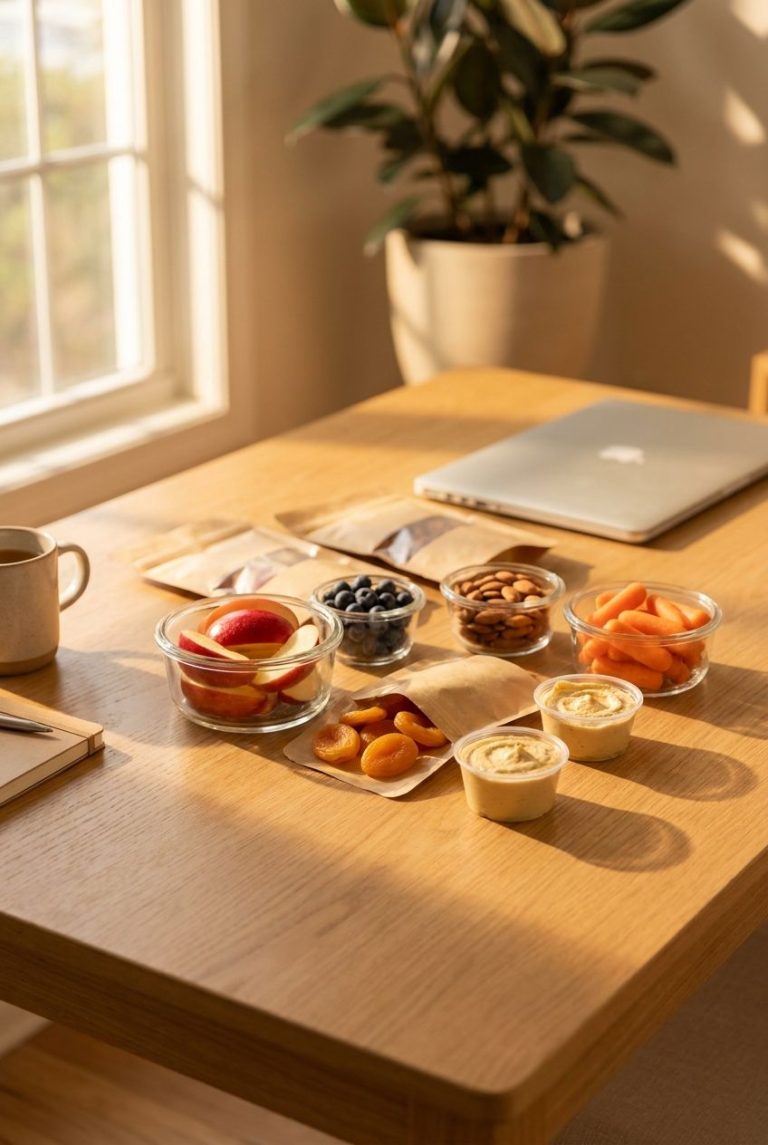
- Shop in one pass. A sample cart: 16 oz almonds ($7), a 6-pack of Greek yogurt cups ($8), 5 apples ($4), 1 dozen eggs ($3), and a 10-pack of nut butter packets ($12 but lasts two weeks). Success: total under $25 for the first week.
- Portion immediately. Split almonds into 1 oz portions using small reusable bags or a $4 set of 4 oz glass containers. But what if you skip this? You will almost certainly eat 3 servings in one sitting, since studies on portion size consistently show people eat more from large containers.
- Load your desk on Monday morning. Dry goods in the drawer, perishables in the fridge. Success: you can see your snacks within arm’s reach.
The whole routine takes about 30 minutes, and the weekly top-up is closer to 10.
5 Mistakes That Quietly Ruin Your Office Snack Plan
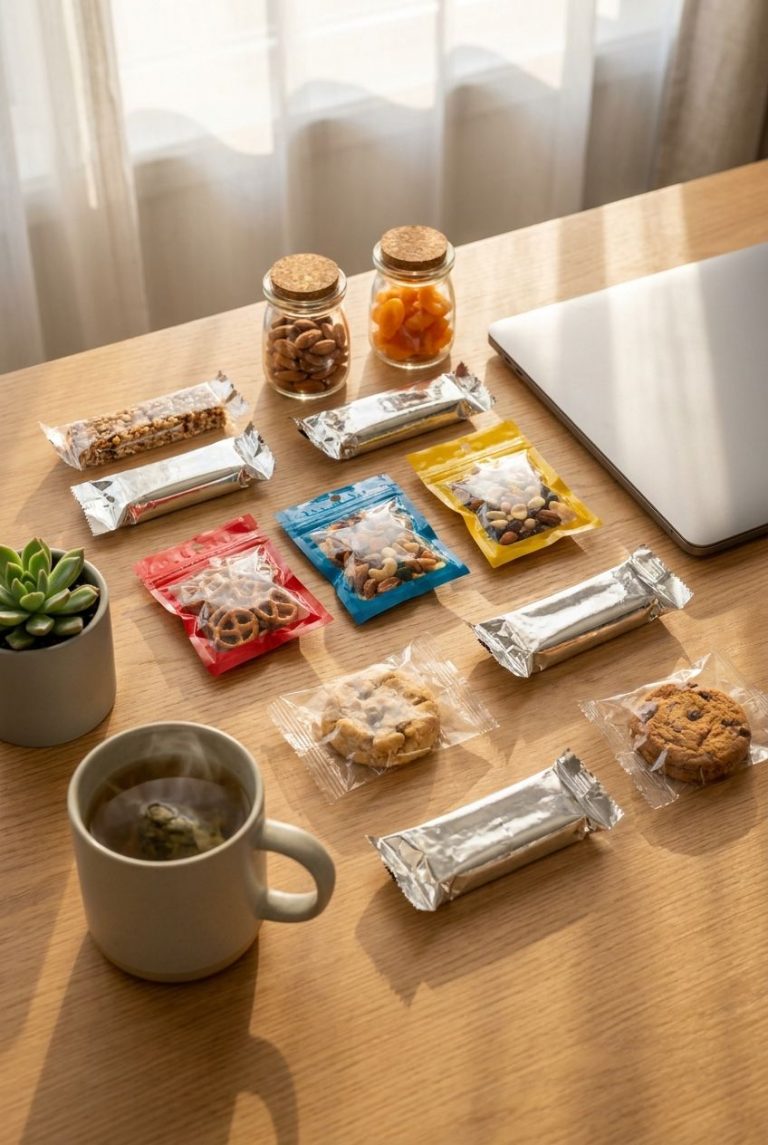
- Trusting the front of the package. Words like “natural,” “protein,” and “made with whole grains” are marketing. Read the nutrition panel: if added sugar tops 10 g, it is candy in disguise. Many popular granola bars land at 12 to 16 g.
- Buying in bulk before testing. That 48-count box of protein bars is a bargain until you discover you dislike the texture. Buy a single bar or small bag first, then scale up.
- Leaving fresh fruit on the desk. Bananas brown in 2 to 3 days, and berries mold in 3 to 5. Choose apples, oranges, or clementines, which last 1 to 2 weeks at room temperature.
- Eating straight from the bag. A 16 oz tub of trail mix holds about 2,800 calories. Always pre-portion.
- Snacking out of boredom, not hunger. Before you eat, drink a full glass of water and wait 10 minutes. If you are still hungry, eat. If not, it was boredom or thirst.
Healthy Office Snacks for Special Diets: Vegan, Gluten-Free, and Low-Carb
Dietary needs do not have to complicate your stash. Most of the best options already fit multiple categories.

Vegan
Roasted chickpeas, edamame (shelled, in a sealed container, about 8 g protein per half cup), nut butter packets, and Larabars are all plant-based. For a creamy option, try Kite Hill almond yogurt at about $1.50 a cup, though its protein is lower at roughly 5 g.
Gluten-Free
Nuts, seeds, fruit, hard-boiled eggs, cheese sticks, and RXBARs are naturally gluten-free. Check crackers carefully, since cross-contamination is common. Simple Mills and Mary’s Gone Crackers are both certified gluten-free.
Low-Carb
Cheese crisps (Whisps, about 1 g carb per serving), pork rinds, olives in single-serve cups, and jerky fit well. Look for jerky with under 3 g sugar per ounce, as sweetened teriyaki varieties can hit 8 g. Chomps meat sticks run about $2 each with 10 g protein and zero sugar.
But what if you have multiple restrictions at once? Start with whole, single-ingredient foods like nuts, seeds, eggs, and fresh produce, which sidestep most labeling headaches.
“But What If…” Answering the Common Objections
“Healthy snacks are too expensive.” Compare the real numbers. A vending machine snack averages $1.75 to $2.50. A 1 oz portion of almonds is $0.45, and a hard-boiled egg is $0.30. Even your priciest healthy snack, an RXBAR at $2, delivers 12 g protein versus 2 to 4 g from candy.
“I do not have time to prep.” The routine above takes 30 minutes once, then 10 weekly. Every item in the shelf-stable list requires zero prep at all.
“My coworkers will eat my food.” Label containers with your name, and keep your best items in your own desk drawer or bag. A small lockable drawer or a clearly marked box solves 90 percent of this.
“I get bored eating the same thing.” Rotate on a 3-week cycle. Buy one new item each shop, such as wasabi peas, dried edamame, or a new flavor of roasted chickpeas, and drop whatever you liked least.
“What if I really need something sweet?” Keep 70 percent dark chocolate. Two squares (about 1 oz) run 170 calories with 3 g fiber and roughly 7 g sugar, far less than a standard candy bar’s 25 to 30 g.
How to Build a Team Snack Program Without Starting an Office War
If you manage a team or want to push for a better break room, a structured approach avoids both budget fights and wasted food. Start small and let data guide you.

- Survey first. Send a 3-question poll: dietary restrictions, top 3 snack preferences, and willingness to chip in. Success: a response rate above 60 percent.
- Set a per-person budget. Typical workplace programs run $10 to $20 per employee per month. A 10-person team can stock a solid shared supply for $100 to $200 monthly.
- Choose a supplier. Options include Costco or Sam’s Club runs for the lowest cost, or subscription services like Fruit Box or Snack Nation, which typically charge $4 to $8 per person per month for curated boxes.
- Use clear containers and labels. Mark allergens like tree nuts, peanuts, and dairy visibly on each bin.
- Review quarterly. Track what runs out fastest and what expires unopened. Cut the losers.
But what if budget is zero? Run a rotating “snack captain” schedule where each person brings one shared item per week, such as a bag of clementines or a tub of hummus.
Your First Move: Buy These Three Things Today
Skip the perfect plan. On your next grocery run, pick up one bag of raw almonds, one 6-pack of plain Greek yogurt, and five apples. That is roughly $19, and it covers a full workweek of healthy office snacks.
Portion the almonds into five 1 oz bags before you leave the kitchen, put them in your desk drawer, and set a recurring 2:30 p.m. phone reminder labeled “snack.” Do it for five days and notice what happens to your 4 o’clock slump.