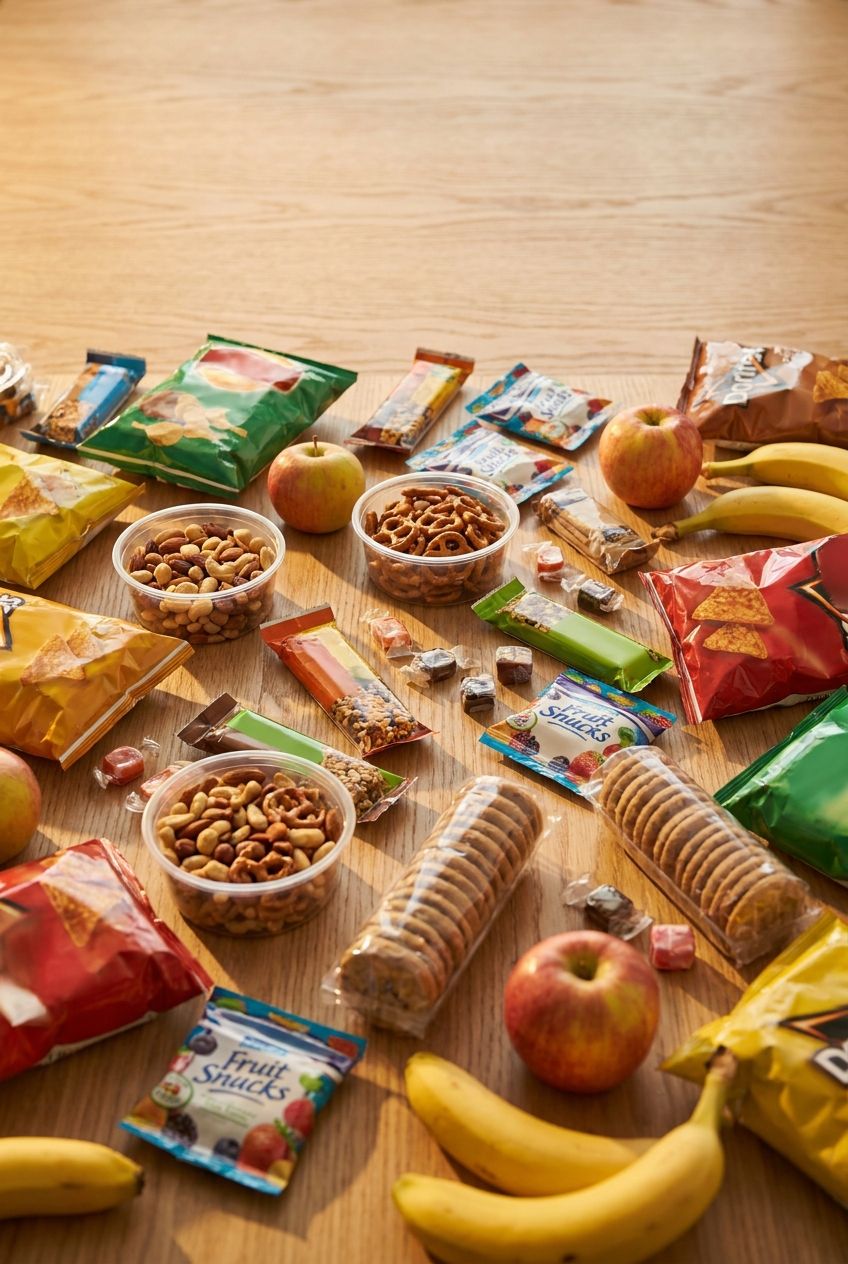
Office Snacks: How to Stock a Workplace Pantry for $4 Per Person Per Week
The average office throws away roughly 20% of the snacks it buys, and the culprit is rarely a tight budget. It is almost always a pantry stocked by guesswork. This guide shows you how to build an office snacks program that gets eaten, stays under about $4 per person per week, and does not turn into a part-time job for whoever drew the short straw.
What Office Snacks Really Cost: The Numbers Before You Shop
Most managers underestimate snack spend because they only count the receipt. The real cost includes shipping fees, storage equipment, waste, and the hours someone spends restocking.
Here is a realistic range for a basic, healthy-leaning pantry in the US:
- Lean program: $2.50 to $3.50 per person per week (fruit, coffee add-ons, a few shelf-stable items).
- Standard program: $4 to $6 per person per week (fruit, two or three snack categories, drinks, a rotating treat).
- Premium program: $8 to $12 per person per week (fresh meals, specialty items, full beverage bar).
For a team of 20 on the standard tier, expect roughly $80 to $120 per week, or $4,000 to $6,000 per year. Add $300 to $800 one time for a mini fridge, shelving, and containers.
The hidden costs people forget
Delivery fees run $5 to $15 per order from grocery apps, and Costco or Sam’s Club memberships cost $60 to $65 per year. Staff time matters too: 45 minutes a week of restocking at a $35 hourly loaded cost adds about $1,365 per year. Count it.
What success looks like
Track spend for four weeks. If your cost per head lands within 15% of your target and waste stays under 10%, your program is healthy.
How to Survey Your Team in 10 Minutes and Avoid Wasted Purchases
Guessing is the fastest way to buy 12 boxes of granola bars nobody likes. A short survey fixes this before you spend a dollar.
Follow these steps in order:
- Open a free form tool. Google Forms or Typeform both work. Time: 3 minutes.
- Ask five questions only. Which snacks do you eat weekly? Which do you refuse to eat? Any allergies or dietary needs? Do you prefer sweet or savory? What time of day do you snack? Keep it under 90 seconds to complete.
- Offer a checklist of 20 items. Include nuts, chips, fruit, yogurt, jerky, popcorn, crackers, cheese sticks, and dark chocolate. Checklists beat open text because they are easy to tally.
- Close the survey in 48 hours. Anything longer gets ignored.
- Rank the top 10 items. Stock those first and fill the rest with rotating options.
But what if response rates are low? Post a physical sheet next to the coffee machine with sticky dots for voting. People who skip forms will happily stick a dot on the way past.
Success looks like 60% or more of staff responding. Below 40%, you are still guessing, so repeat the survey with a small incentive such as a raffle for a $25 gift card.
The 12 Best Office Snacks Ranked by Popularity, Price, and Shelf Life
Not all snacks deserve shelf space. These twelve consistently perform across offices because they are cheap, filling, and hard to mess up.

- Bananas and apples: $0.25 to $0.60 each, last 5 to 14 days. Cheapest way to look generous.
- Mixed nuts (unsalted): about $9 for a 40-ounce Kirkland container, lasts 6 months.
- Popcorn (SkinnyPop, Boomchickapop): roughly $0.60 to $1.00 per single-serve bag.
- String cheese: about $0.35 each, needs refrigeration, lasts 4 to 6 weeks.
- Clif Bars or RXBARs: $1.25 to $1.75 each, lasts 9 to 12 months.
- Pretzels (Snyder’s of Hanover): $0.40 to $0.70 per small bag.
- Greek yogurt cups (Chobani): $1.20 to $1.50 each, 3 to 4 weeks refrigerated.
- Dark chocolate squares (Ghirardelli): $0.25 per square, lasts a year.
- Beef jerky (Jack Link’s): $1.50 to $2.50 per bag, lasts 12 months.
- Cheddar crackers (Cheez-It, Annie’s): $0.50 to $0.80 per pack.
- Dried mango or apricots: $0.75 to $1.25 per serving, lasts 6 to 12 months.
- Rice cakes with nut butter packs (Justin’s): $1.00 to $1.40 per pack.
A healthy mix is roughly 40% fresh or refrigerated, 40% shelf-stable savory or protein, and 20% treats.
Where to Buy Office Snacks: A Comparison of Six Sourcing Options
Where you buy shapes your budget more than what you buy. The same 20-person pantry can cost 30% more through the wrong channel.
| Option | Typical Cost per Person/Week | Effort Level | Variety | Best For |
|---|---|---|---|---|
| Costco or Sam’s Club runs | $2.50 to $4.00 | High (monthly trip) | Medium | Teams of 15 to 60 with someone willing to shop |
| Amazon Subscribe and Save | $3.50 to $5.00 | Low | Medium | Shelf-stable items for small teams under 15 |
| Instacart or grocery delivery | $4.00 to $6.00 | Low | High | Fresh fruit and dairy top-ups |
| Snack subscription (Snack Nation, Healthy Box) | $5.00 to $9.00 | Very low | High, curated | Remote-heavy teams and hybrid offices |
| Vending machine service | $0 upfront, employees pay | Very low | Medium | Offices that want zero budget |
| Full-service pantry vendor (Fooda, Crafty) | $8.00 to $15.00 | Very low | Very high | Companies of 75+ with a benefits budget |
Recommendation by use case: choose Costco for the lowest cost, Amazon Subscribe and Save for convenience on a small team, a snack subscription if you have fewer than 10 people in the office on any given day, and a full-service vendor only if recruiting and retention justify the spend.
How to Set Up a Snack Station in 90 Minutes for Under $400
A good setup makes snacks visible, tidy, and easy to restock. A bad one becomes a crumb-covered shelf nobody wants to touch.

What you need
- Shelving or a cart: an IKEA Raskog cart runs about $40 and moves anywhere.
- Clear airtight containers: OXO Good Grips sets cost $30 to $60 and keep nuts and crackers fresh.
- A mini fridge: a 3.2 cubic foot model from Insignia or Frigidaire costs $120 to $180.
- Baskets and labels: $20 for a pack, plus a $25 label maker.
- A trash and recycling bin: $30 to $50, essential if you want to avoid a mess.
Step-by-step setup
- Pick the spot. Choose a place near the kitchen but not blocking foot traffic. Success: two people can grab snacks at once without bumping.
- Group by category. Sweet, savory, protein, fruit. Label each basket.
- Put the healthy items at eye level. Studies on cafeteria design show eye-level placement increases selection by up to 25%.
- Add a par sheet. A clipboard listing each item and a minimum quantity tells the restocker when to reorder.
But what if you have no kitchen? A wheeled cart with a lid and a small cooler bag works for dry goods and fruit. Skip dairy until you have fridge access.
How to Handle Allergies, Dietary Needs, and Legal Risk
About 33 million Americans have a food allergy, and roughly 1 in 10 adults is affected. Ignoring this is not just rude, it is a liability.
Follow these rules:
- Label everything with major allergens. Peanuts, tree nuts, milk, eggs, wheat, soy, fish, shellfish, and sesame are the nine legally recognized in the US.
- Separate nut-containing items. Use a dedicated shelf or bin with a bright label.
- Keep original packaging for at least a week. If someone has a reaction, you need the ingredient list.
- Offer at least two options for each common diet. That means vegan, gluten-free, and nut-free. Rice cakes, fruit, popcorn, and Larabars cover most bases.
But what if someone has a severe allergy? Talk to them directly and ask what they feel safe around. Some people are fine with nuts in the room, others are not. A nut-free office is the cleanest solution for severe airborne cases, and it costs you nothing but a policy change.
Check with HR or a local attorney on state-level rules, especially if you serve prepared food. Pre-packaged snacks carry far less risk than homemade ones.
Healthy vs. Indulgent: How to Balance Both Without a Revolt
Go all healthy and people bring their own candy. Go all treats and the wellness-minded feel ignored. The answer is a ratio, not a rule.

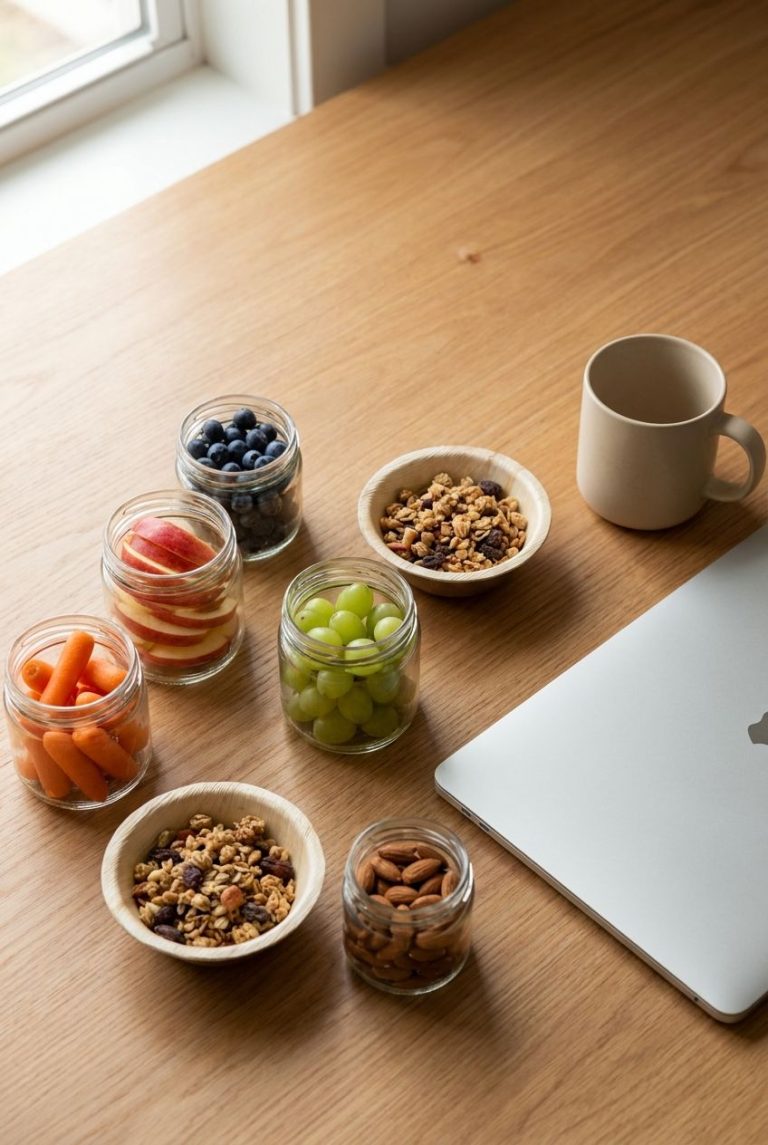
Aim for 70% nutritious staples and 30% fun items. That might look like fruit, nuts, yogurt, and protein bars alongside chocolate, chips, and a monthly special like donuts or cookies.
Placement trick that nudges behavior
Put fruit in a bowl at the front and treats in an opaque container on a lower shelf. Research from Cornell’s Food and Brand Lab found that visible fruit increases consumption significantly, and hiding treats reduces mindless grabbing without banning them.
A simple weekly rhythm
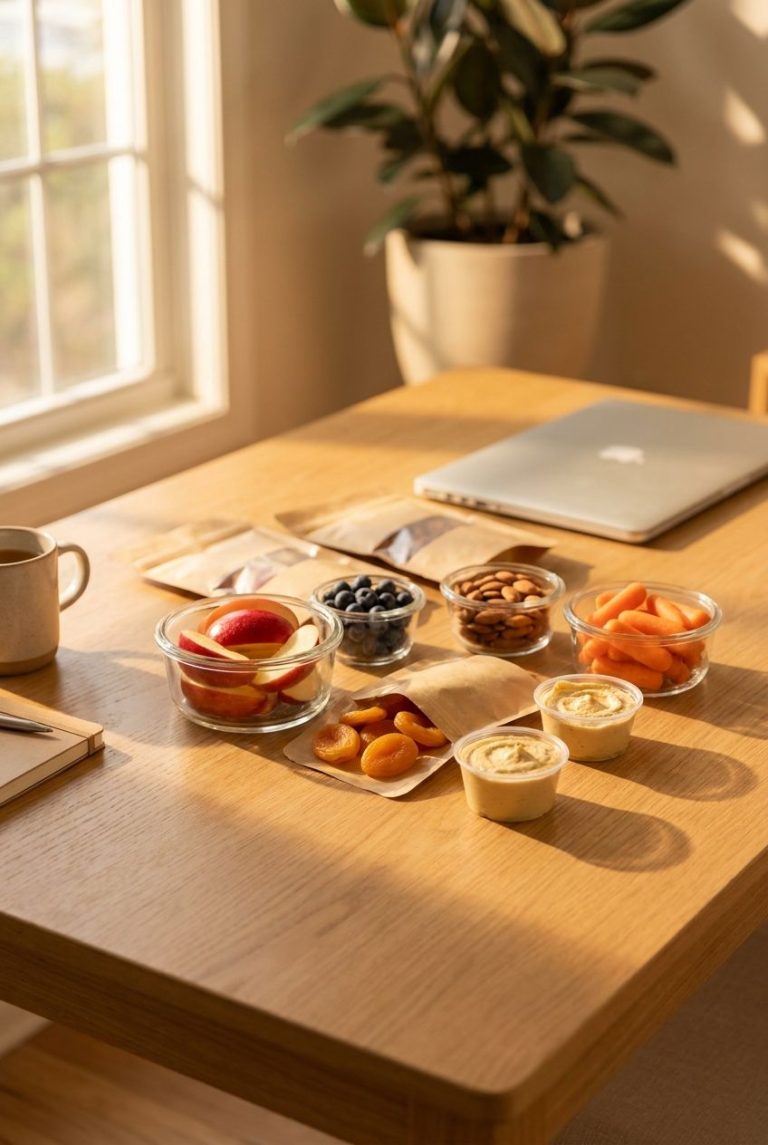
- Monday and Tuesday: fresh fruit and veggies with hummus.
- Wednesday: a mid-week treat such as cookies or pastries.
- Thursday and Friday: restock protein and savory items.
But what if people complain about sugar? Offer unsweetened options and swap sodas for sparkling water such as LaCroix or Spindrift. You will reduce sugar intake without taking anything away.
5 Office Snacks Mistakes That Waste Money and How to Fix Them
These errors show up in almost every office pantry audit. Each one has a straightforward fix.
- Buying in bulk without checking expiration dates. A 60-count box of yogurt expires in under a month. Fix: calculate weekly consumption first, then buy only what you can use in 70% of the shelf life.
- Ignoring the survey results. If 8 people said they hate coconut, do not buy coconut. Fix: re-survey every quarter and swap out the bottom three items.
- Leaving restocking to whoever notices. Shared responsibility means no responsibility. Fix: assign one named owner and one backup, rotating monthly.
- Skipping a par sheet. Without it, you either overbuy or run out on Friday afternoon. Fix: set a minimum for each item and check it weekly.
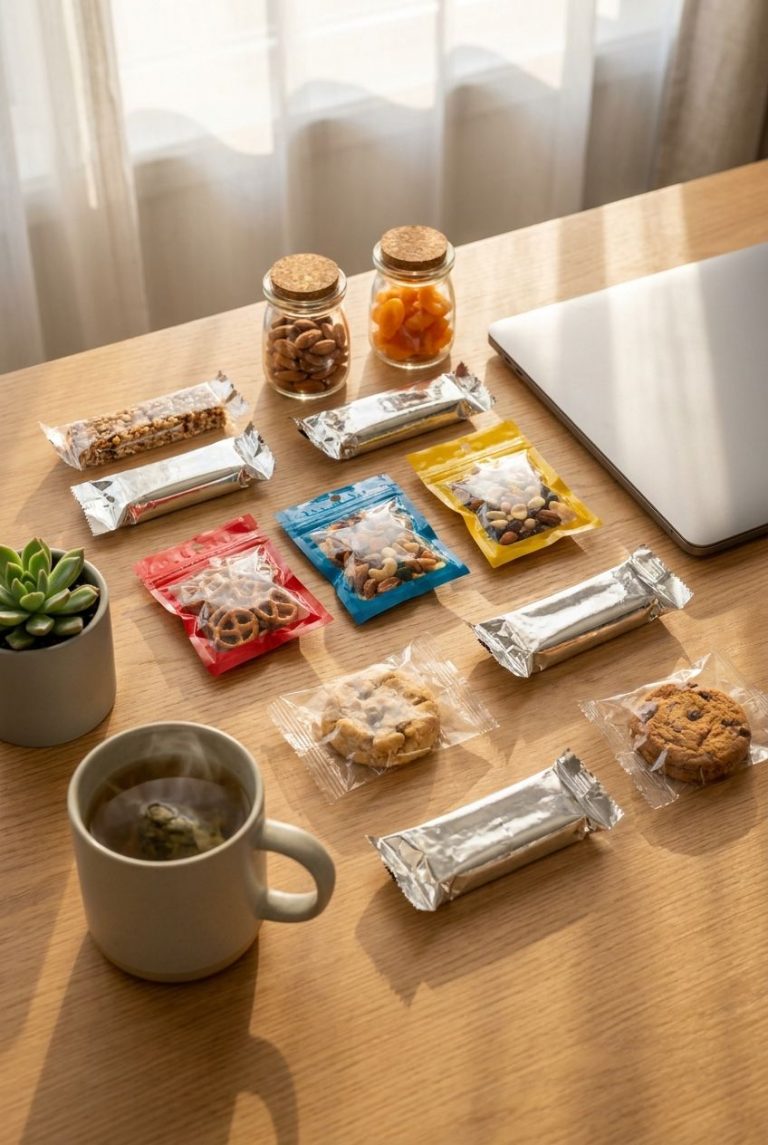
- Stocking only individually wrapped items. They cost 30% to 50% more per ounce than bulk containers. Fix: buy bulk for nuts and crackers, and portion into scoops and bowls.
Fix just the first three and most offices cut waste by half within two months.
Common Objections: What If Budget, Space, or Mess Is Your Problem?
Every office has a skeptic. Here are the usual pushbacks and honest answers.

“We cannot afford it.”
Start with a lean tier at $2.50 per person per week. For 10 people, that is $25 weekly, less than a single team lunch. Fruit and coffee extras alone move morale more than most perks.
“People will take too much home.”
Some will, and it is usually under 5% of total consumption. Use smaller portions, such as single-serve bags and a scoop in the nut jar, and add a friendly sign asking for snacks to stay in the office.
“We have no space.”
A 24-inch-wide cart or one wall shelf is enough for a team of 10. Use stackable bins and wall-mounted racks to reclaim floor space.
“It will attract ants or mice.”
Store everything in sealed containers, wipe surfaces daily, and empty trash every evening. Pest problems come from open bags and crumbs, not from snacks themselves.
“Is it taxable as a perk?”
In the US, occasional snacks and coffee are generally treated as de minimis fringe benefits, meaning too small to tax. Confirm with your accountant if you provide meals regularly.
How to Measure Whether Your Snack Program Is Working
Free food only matters if it improves something. Track a few simple numbers so you can defend the budget or adjust it.

Metrics worth tracking
- Cost per person per week: total spend divided by headcount divided by weeks. Target is under $6 for most teams.
- Waste rate: items thrown out divided by items purchased. Under 10% is excellent, over 20% needs attention.
- Stockout frequency: how often a top-five item runs out. More than once a month means your par levels are too low.
- Satisfaction score: a one-question pulse survey each quarter, rated 1 to 5. Aim for 4.0 or higher.
How to collect the data in 15 minutes a week
- Photograph the pantry every Friday afternoon.
- Log spend in a shared Google Sheet.
- Note any items tossed and any stockouts.
After 8 weeks you will see which items overperform and which sit untouched. Cut the bottom 10% and replace them with new tests.
Your First Week: A Concrete Plan to Launch Your Snack Program
Do not wait for a perfect plan. Launch lean, learn fast, and improve.
Here is a seven-day starter schedule:
- Monday: send the five-question survey and set a 48-hour deadline.
- Wednesday: tally results and write a shopping list capped at $50 per 10 people.
- Thursday: place your first order through Costco, Amazon, or Instacart, and buy two containers and a label maker.
- Friday morning: set up the station, label allergens, and tape the par sheet to the wall.
- Friday afternoon: send a short announcement with the pantry location, the restocking owner, and a feedback link.
Run that cycle for four weeks, then review your cost per person and waste rate. Adjust, repeat, and resist the urge to expand until the basics are steady.
Your next action: open Google Forms right now and build the five-question survey. It takes ten minutes, and it is the single step that separates a pantry people love from one they ignore.