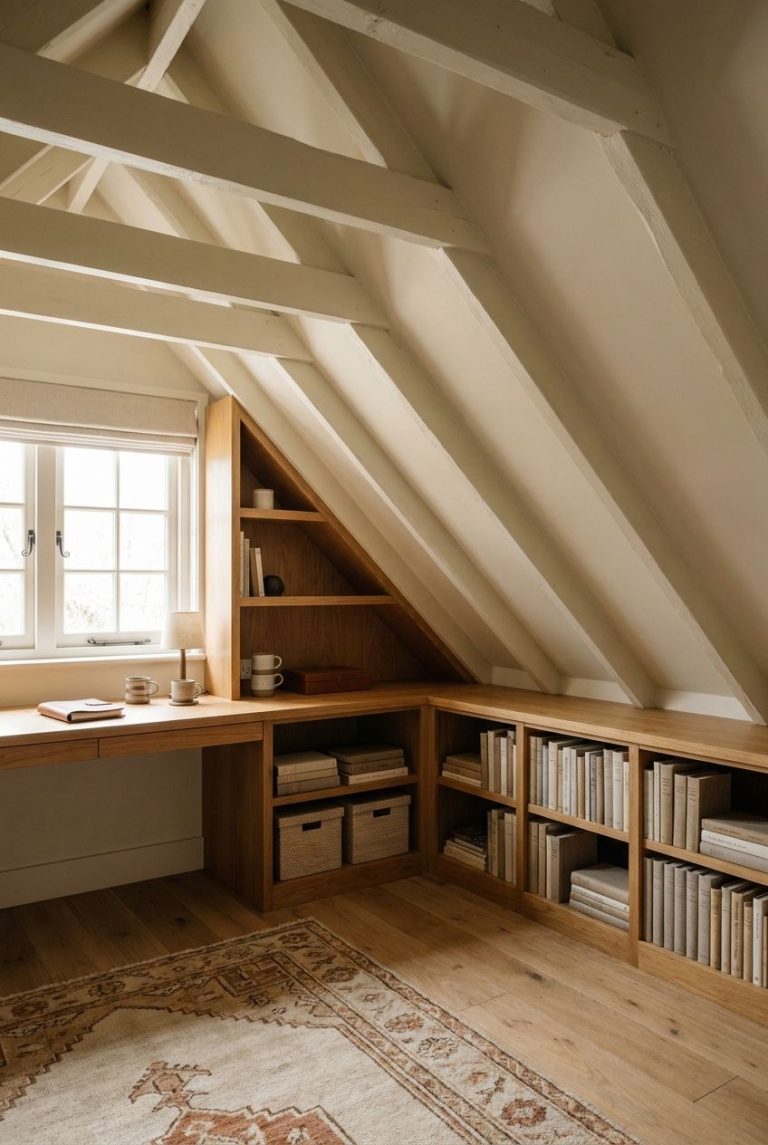
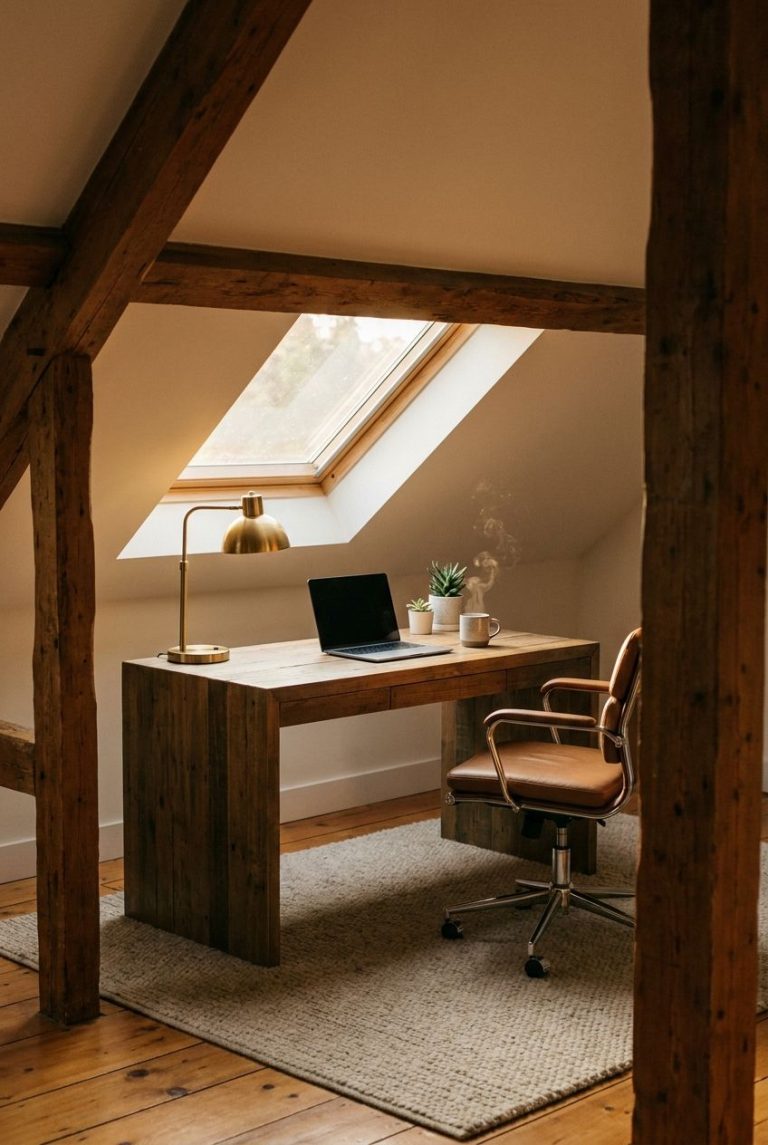
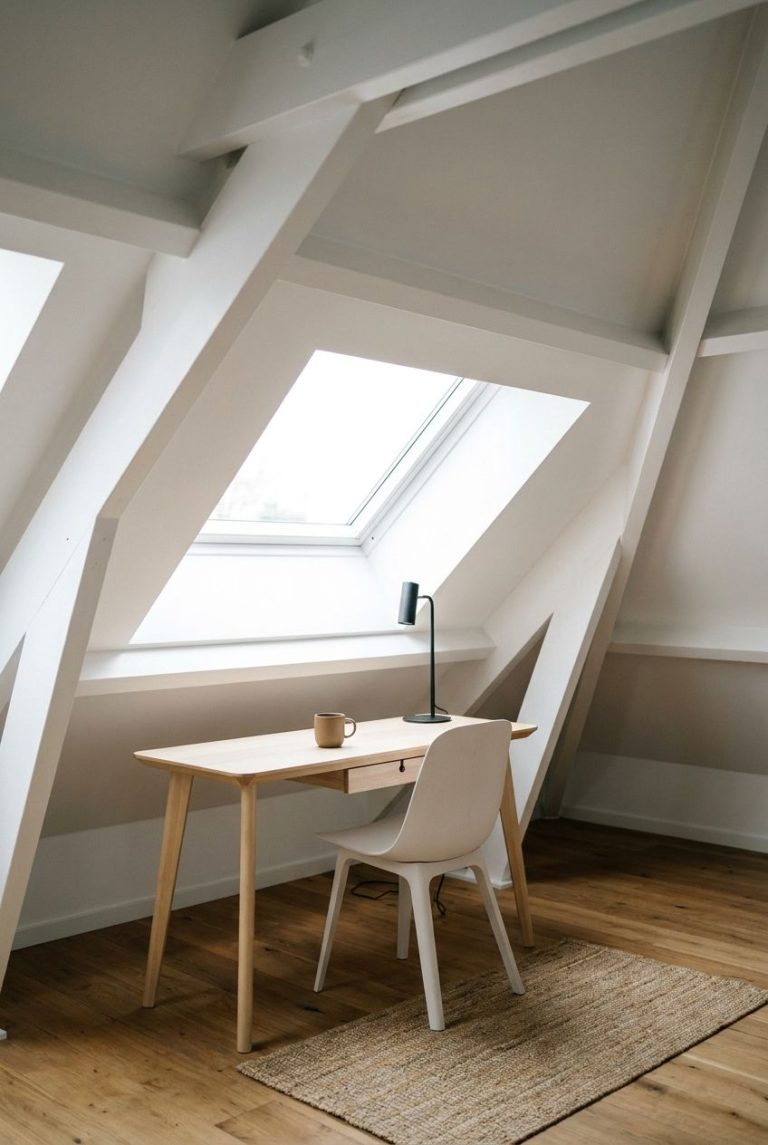
Mens Office Decor: How to Build a Sharp, Productive Workspace for Under $1,500
Most men spend $800 on a desk and $0 on lighting, then wonder why their office feels like a storage unit with a monitor. The truth: mens office decor succeeds or fails on five boring decisions made in the right order, and none of them is the artwork.
This guide walks you through those decisions with exact measurements, real product names, and prices. You will finish with a workspace that looks deliberate, reads well on video calls, and keeps your back intact. Budget: roughly $1,500 for a full build, or $400 if you reuse what you own.
The 5-Decision Framework for Mens Office Decor That Actually Works
Decor is the last 10% of a good office. The first 90% is structure. Decide these five things, in this order, and everything after becomes easy:

- Room layout: where the desk sits relative to the door and window.
- Desk and chair: the two items that determine whether you can work 8 hours without pain.
- Lighting: three layers, not one ceiling fixture.
- Color and materials: a palette of three colors plus one accent.
- Personal objects: the 5 to 7 items that make the room yours.
Skip step one and you will buy furniture that fights the room. Skip step two and you will pay for it in chiropractor bills. Most men reverse the order, starting with wall art and a whisky decanter, and end up with a room that photographs well and works badly.
But what if the room is tiny? The framework still holds. A 6 x 8 foot closet office needs the same five decisions, just made with smaller numbers. We cover that in the “what if” section below.
Set aside one weekend. Saturday for layout, furniture, and lighting. Sunday for paint, cable work, and styling. Success looks like this: you walk in on Monday morning and sit down without moving a single thing.
How to Choose a Layout in 20 Minutes (Command Position and Beyond)
Start with command position: sitting with your back to a solid wall, facing the door, with a clear view of the room. It is borrowed from feng shui but also just good sense. You are not startled by people walking in, and your video call background is a wall instead of a hallway.
The tape-and-cardboard test
Before buying anything, mark your desk footprint on the floor with painter’s tape. A standard desk is 60 inches wide by 30 inches deep. Leave 36 inches of clearance behind the chair so you can stand and pivot, and 30 inches minimum for any walkway.
Cut a cardboard box to 60 x 30 inches and sit at it for ten minutes. Success looks like: your elbows rest naturally, you can reach both sides of the desk surface, and you are not staring into a corner.
Window placement rules
Never face the window directly; glare will wreck your eyes by 3 p.m. Never put your back to it either, because your monitor will reflect the light. Position the desk so the window is to your left or right, at roughly 90 degrees to your screen.
But what if the only wall available has the window? Use sheer roller shades like IKEA’s Tretur (about $30) to diffuse light, and angle the desk 30 degrees off the wall. It is not ideal, but it works.
Measure twice. A desk that is 4 inches too deep in a narrow room will annoy you for years.
The Desk and Chair: Where to Spend $900 and Where to Save
Your desk and chair absorb roughly 60% of the budget. Spend here and nowhere else will feel cheap.
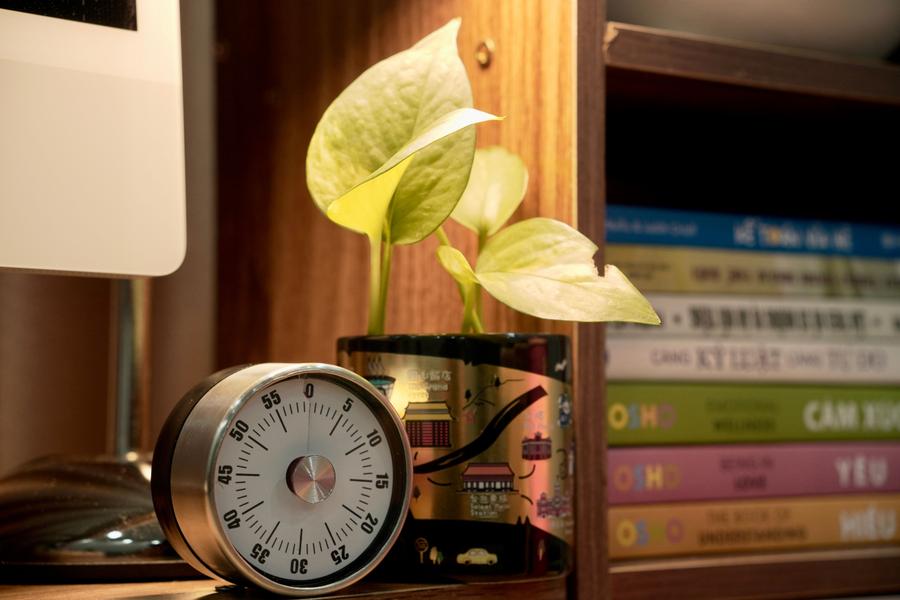
Desk options
A standing desk (an electric desk that raises and lowers) is the default recommendation. Look for a 48 to 60 inch top, a lift range of 25 to 50 inches, and a dual-motor frame, which is quieter and steadier than single-motor models.
- Budget ($250 to $400): Flexispot E7 or Fezibo dual-motor frames. Add a solid butcher block top from IKEA (Karlby, about $150).
- Mid-range ($600 to $900): Uplift V2 with a walnut or bamboo top. Five-year warranty, wobble-free at standing height.
- Statement piece ($1,200 and up): A solid walnut or white oak desk from Article or West Elm, or a vintage partner’s desk from a dealer. Beautiful, but fixed height.
The chair
This is the one place not to compromise. The Herman Miller Aeron (around $1,400 new, $500 to $700 refurbished) and Steelcase Leap are the proven picks. For under $450, the Branch Ergonomic Chair or Autonomous ErgoChair deliver 80% of the benefit.
But what if leather is the look you want? Leather executive chairs look sharp but trap heat and rarely offer lumbar adjustment. Try a mesh-back task chair at your desk and keep a leather armchair in the corner for reading. You get the aesthetic and the support.
Lighting: The Three-Layer System That Fixes 80% of Bad Offices
A single overhead fixture flattens a room and casts shadows on your face during calls. Fix this with three layers, built for under $200.
- Ambient (general light): Replace the overhead bulb with a dimmable LED at 2700K to 3000K (warm white), roughly 800 lumens per 100 square feet. Philips Hue or any dimmer-compatible bulb works.
- Task light (work light): A desk lamp with an adjustable arm and 4000K color temperature. The BenQ ScreenBar ($110) clips on your monitor and eliminates screen glare.
- Accent light (mood): A brass picture light over artwork or a small table lamp on a credenza. 2200K to 2700K bulbs, 40 watts equivalent or less.
The success test: turn off the overhead light at 6 p.m. and run on task plus accent only. The room should feel like a study, not a cubicle.
But what if you work in a windowless room? Add a daylight-spectrum bulb (5000K, CRI 90 or higher) in the task lamp during the day and shift to warm bulbs after sunset. Your energy and sleep will thank you.
One caution: avoid mixing bulb temperatures on the same layer. A 2700K bulb next to a 5000K bulb makes the room look like a hospital hallway and a candlelit bar at once.
Color and Materials: A Palette Formula That Never Looks Dated
Use a three-plus-one palette: two neutrals, one deep tone, and one accent. This stops the room from becoming a random collection of purchases.
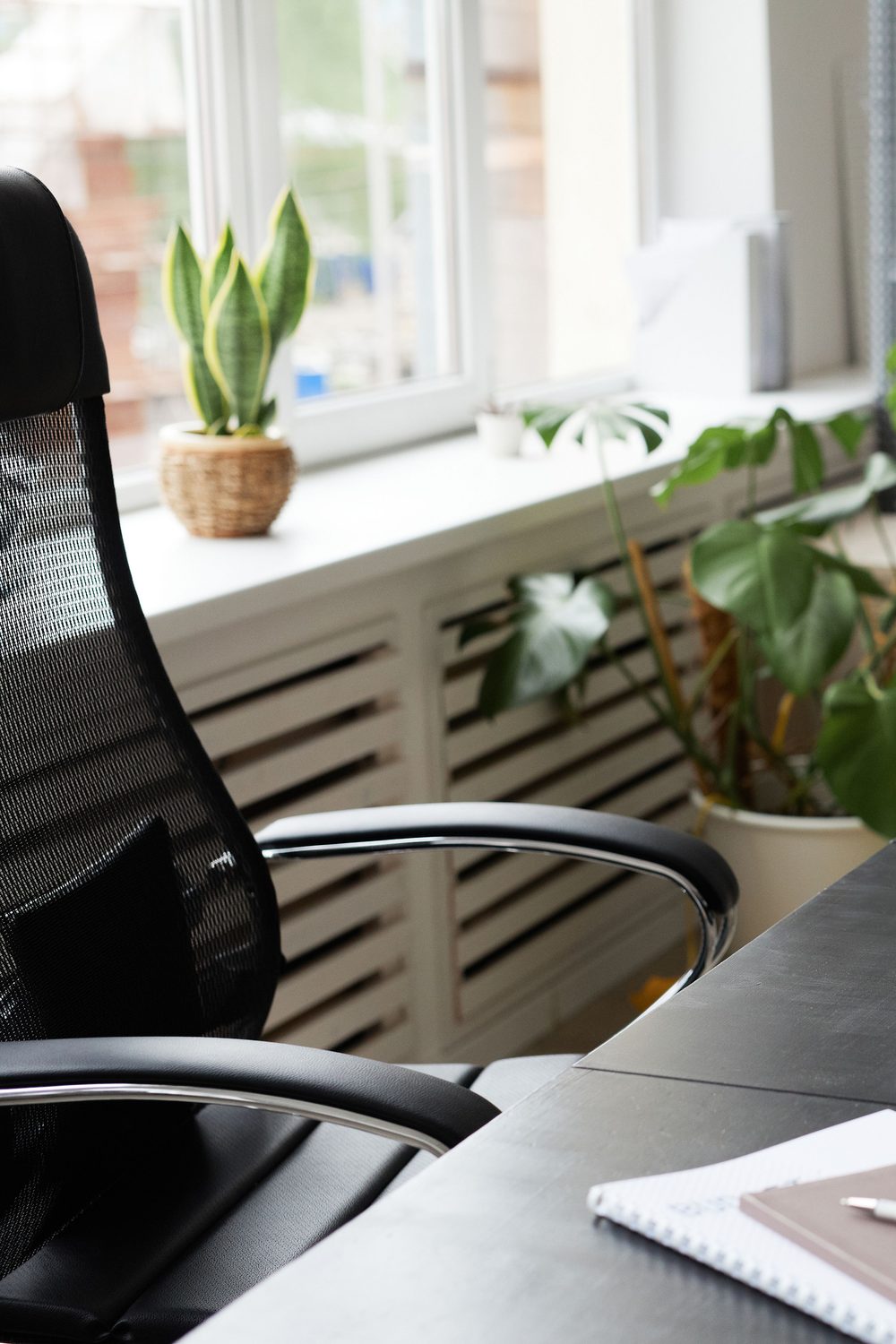
Wall color choices
Dark walls make a small office feel enclosed or intimate, depending on execution. These specific paints have proven themselves:
- Deep green: Farrow & Ball Studio Green or Benjamin Moore Hunter Green (HC-242). Reads as library without trying.
- Navy: Benjamin Moore Hale Navy (HC-154). Pairs with walnut and brass.
- Warm gray: Sherwin-Williams Agreeable Gray (SW 7029) for those who want calm over drama.
- Charcoal: Sherwin-Williams Iron Ore (SW 7069). Use matte or eggshell finish to avoid glare.
Budget $60 to $90 per gallon, plus $25 for quality painter’s tape and $20 for a roller kit. One gallon covers roughly 350 square feet, enough for a 10 x 12 room with one accent wall plus trim.
Materials that age well
Stick to wood (walnut, oak), leather, brass or blackened steel, and wool. Avoid glossy laminates and chrome, which date quickly. Mix at most three materials per sightline so the eye has somewhere to rest.
But what if you rent and cannot paint? Use removable wallpaper (Tempaper, around $40 per roll) or hang a large wool rug on the wall behind the desk as texture. Add a 5 x 8 area rug to anchor the floor.
Wall Art and Shelving: How to Style Without Cluttering
The common error is hanging too many small pieces too high. Fix it with a few rules.
Hanging height and spacing
Center art at 57 inches from the floor, the standard gallery height. Above a credenza or desk, leave 6 to 8 inches between the furniture top and the frame bottom. In a 10 foot wide room, one large piece (30 x 40 inches or bigger) beats six small ones.
Source affordable art from Society6, Etsy, or local print shops. Black-and-white photography, vintage maps, architectural prints, and abstract canvases all work. Frame them in black or walnut with white mats; professional framing runs $80 to $200 per piece, but ready-made frames from IKEA or Framebridge cost $25 to $60.
Shelving rules
Follow the one-third rule: fill one third of the shelf with books, one third with objects, one third with empty space. Stack some books horizontally to break the lines. Use wall-mounted floating shelves (Floyd or Rejuvenation, $90 to $200) rather than a bulky bookcase in rooms under 120 square feet.
But what if you have a huge book collection? Group by cover color or spine height, not subject. It looks intentional, and you will find books faster than you think.
Cable Management and Tech: The Details That Separate Polished from Messy
A beautiful desk with a rat’s nest underneath ruins the whole room. Spend $60 and one hour here.
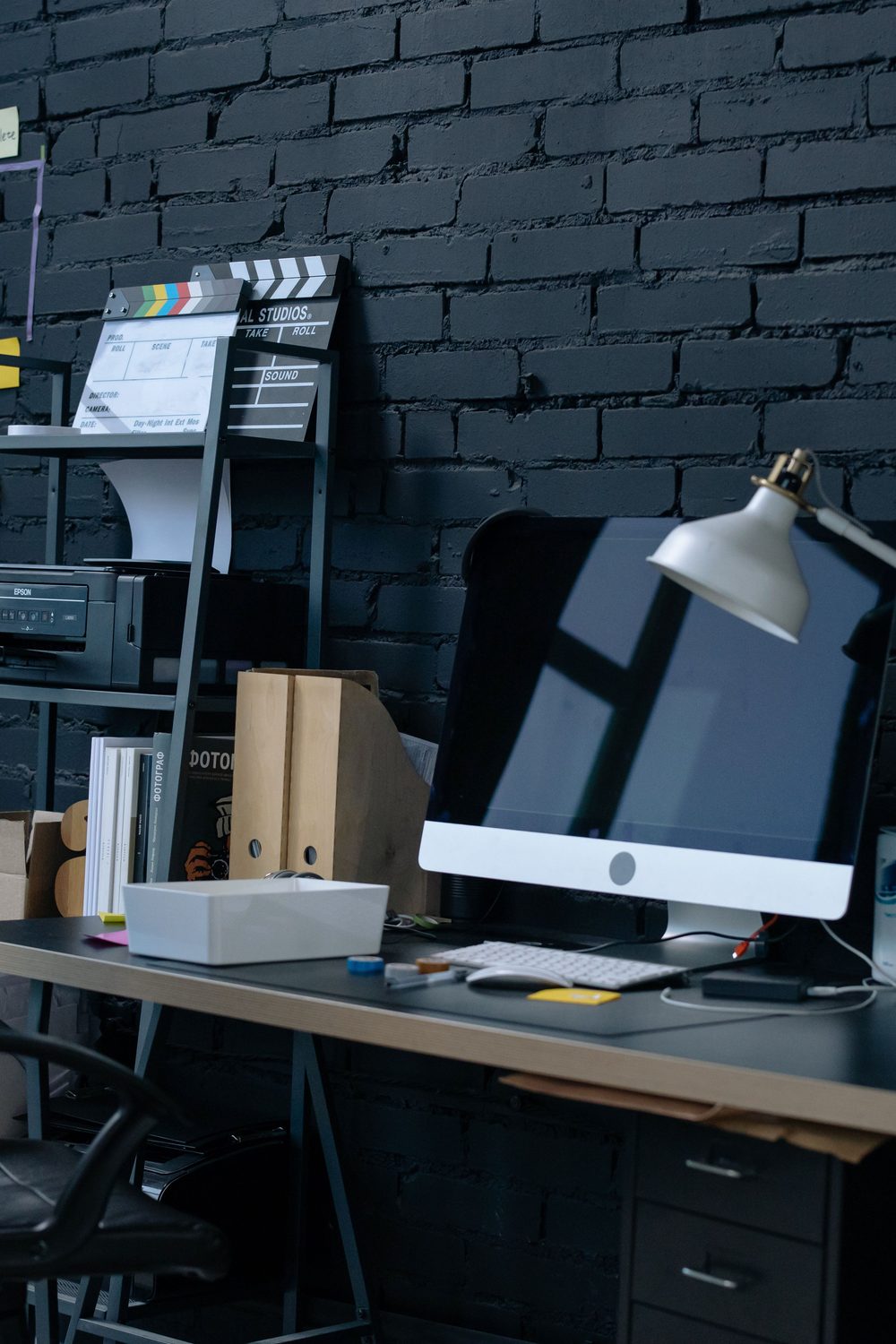
- Mount a cable tray: An under-desk wire basket (IKEA Signum, $15) holds your power strip and adapters.
- Bundle with Velcro: Use reusable Velcro ties ($8 for 50), not zip ties. You will add devices later.
- Label both ends: A $15 label maker or masking tape and a pen. Future you will be grateful.
- Run cables through the leg: Route power cables down a desk leg with adhesive cable clips ($7 for 30).
- Use a wireless setup where possible: A keyboard and mouse combo like the Logitech MX Keys and MX Master 3S ($190 together) removes two cables.
Success looks like this: from the doorway, you see no cords. From behind the desk, you see only a clean bundle going to the wall.
But what if your outlet is far from the desk? Use a 10-foot flat extension cord painted to match the baseboard, or have an electrician add an outlet for around $150 to $250. Never run cords under a rug; it is a fire hazard.
Finally, put your monitor on an arm (Ergotron LX, $140). It frees up 6 to 8 inches of desk depth and lets you adjust height to eye level, with the top of the screen at or slightly below eyebrow height.
Mens Office Decor Styles Compared: Which One Fits Your Job and Budget
Pick one direction and commit. Mixing styles is how you end up with a room that looks like a furniture showroom after an earthquake.
| Style | Typical Budget | Key Materials | Maintenance | Best For |
|---|---|---|---|---|
| Modern minimalist | $800 to $1,500 | White oak, matte black steel, glass | Low, but shows dust and clutter | Developers, designers, anyone on video calls daily |
| Classic executive | $2,000 to $5,000 | Dark walnut, leather, brass | Medium, leather needs conditioning twice a year | Lawyers, consultants, client-facing meetings |
| Industrial loft | $600 to $1,200 | Reclaimed wood, raw steel, concrete | Low, forgiving of wear | Creatives, small studios, rentals |
| Modern library | $1,200 to $2,500 | Deep paint, built-ins, wool, leather | Medium, books need dusting | Writers, executives, work-from-home professionals |
Recommendation: If you take client video calls, choose modern minimalist or modern library; both give you a clean background. If you host in-person meetings, go classic executive. If you rent or have under $800, industrial loft gives the best return per dollar.
5 Mistakes That Make a Mens Office Look Cheap (and Quick Fixes)
These errors show up in almost every home office makeover. Each has a fix that costs under $100.

- Buying a desk that is too large: A 72-inch desk in a 9 x 10 room leaves no walkway. Fix: measure with tape, and aim for a desk that covers no more than 25% of floor area.
- Ignoring the video call background: Whatever sits behind your head is your brand. Fix: add a floating shelf with two plants and a framed print, and keep it 4 to 6 feet behind you.
- Matching everything: A matching desk, bookcase, and credenza from one catalog looks like a hotel lobby. Fix: mix at least two wood tones and one metal finish.
- Skipping the rug: Hard floors echo on calls and feel cold. Fix: a 5 x 8 or 6 x 9 wool or jute rug ($120 to $350) under the chair and front half of the desk.
- Overloading with trophies and memorabilia: Forty objects read as clutter. Fix: display five to seven meaningful items, rotate them seasonally, and store the rest.
Each fix takes under an hour. Do the rug and lighting first; they transform the room fastest per dollar spent.
“What If…” Scenarios: Small Rooms, Rentals, and Tight Budgets
Most advice assumes a spare bedroom and a blank check. Here is how to handle the real situations.
What if I have a tiny space (under 80 square feet)?
Use a wall-mounted fold-down desk (Bestar or custom, $200 to $500) and a compact chair. Go vertical with shelves up to 80 inches high. Choose light wall colors, since dark paint shrinks a small room visually, and use mirrors sparingly to bounce light.
What if I rent and cannot alter the walls?
Lean on furniture, lighting, rugs, and leaning art. A 36 x 48 inch canvas leaned against the wall on a credenza looks intentional and leaves no holes. Use Command strips rated for 16 pounds for lighter frames.
What if I only have $400?
Prioritize in this order: chair ($150 refurbished Steelcase or Herman Miller from a local office liquidator), desk lamp ($45), rug ($90), and one large framed print ($60). Use a secondhand desk from Facebook Marketplace, where solid-wood desks regularly sell for $75 to $200.
What if my partner shares the space?
Divide the room by function, not by territory. Use a shared neutral palette and give each person one wall or shelf to personalize. Add separate task lamps so lighting preferences do not clash.
Your One-Weekend Build Plan, Hour by Hour
Planning beats improvising. Here is the schedule that gets a full office done in two days.
Saturday
- 8:00 a.m. to 9:00 a.m.: Clear the room completely. Tape your layout and test with cardboard.
- 9:00 a.m. to 12:00 p.m.: Paint walls (two coats, with 2 hours of drying time between). Use a 9-inch roller and 2.5-inch angled brush.
- 1:00 p.m. to 4:00 p.m.: Assemble the desk and chair. Expect 90 minutes for an electric standing desk with a helper, 2 hours alone.
- 4:00 p.m. to 6:00 p.m.: Install lighting, including the monitor light bar and ambient bulb swap.
Sunday
- 9:00 a.m. to 11:00 a.m.: Cable management and tech setup.
- 11:00 a.m. to 1:00 p.m.: Hang art at 57 inches center, install shelving, position the rug.
- 2:00 p.m. to 4:00 p.m.: Style: place books, plants, and your five to seven personal objects.
- 4:00 p.m.: Sit at the desk for 15 minutes. Adjust monitor height and chair settings.
Today, take a tape measure to your room and mark out the desk footprint on the floor with painter’s tape. Ten minutes of measuring will save you from a $900 mistake, and it is the first real step toward an office you will actually want to work in.